

If you’re a builder importing construction materials from overseas, you’ve likely faced the big question: Should you choose FCL or LCL shipping? Making the wrong choice can mean delays, damaged goods, or wasted money — especially with bulky or fragile building supplies. In this guide, we’ll break down both options clearly and help you make the smartest decision for your project needs.
FCL (Full Container Load) is ideal for building material importers shipping large volumes, offering lower cost per unit, faster transit, and less risk of damage due to minimal handling. LCL (Less than Container Load) suits smaller shipments, providing flexibility and lower upfront costs, but involves longer delivery times and more cargo handling. Choose FCL if you’re moving bulk goods efficiently; go with LCL if you’re testing suppliers or shipping small batches. Your order size and urgency determine the best option.
Let’s dive deeper into how FCL and LCL compare and which one will fit your needs best.
What is LCL or FCL and What Are Its Characteristics?
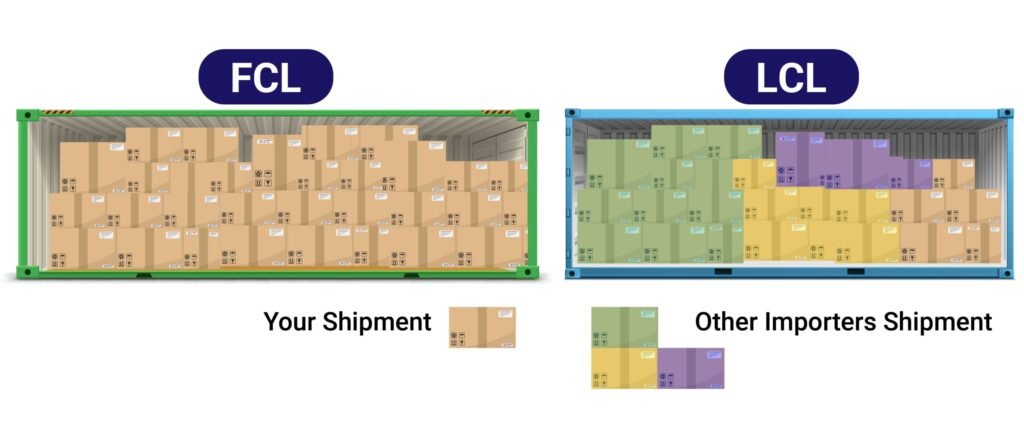
FCL (Full Container Load) means you rent an entire shipping container — it’s yours alone. You fill it with your cargo, whether it’s full or not. This is great for importers who deal in bulk building materials like cement, steel, tiles, insulation, and large fixtures.
LCL (Less than Container Load) means your goods share container space with others. You pay for the space your cargo occupies, not the full container. It’s suited for smaller, more flexible orders or testing new suppliers.
Key Characteristics
| Feature | FCL | LCL |
|---|---|---|
| Ownership | One customer per container | Shared container space |
| Volume Needed | Large volumes (≥15 CBM recommended) | Small volumes (1-14 CBM) |
| Handling | Less frequent (loading/unloading once) | Multiple handling points |
| Transit Time | Faster due to direct shipping | Slower due to consolidation |
| Risk of Damage | Low | Higher (due to mixed cargo) |
| FCL container size | 20ft, 40ft, or HQ options | Calculated by cubic meter |
Advantages and Disadvantages of LCL or FCL
Let’s take a closer look at what works — and what doesn’t — when choosing between these shipping modes.
Advantages of FCL
- Lower cost per unit when fully loaded
- Faster shipping and customs clearance
- Lower risk of damage (goods handled less often)
- More security — sealed by your team
Disadvantages of FCL
- Higher upfront cost
- Wasteful if not fully loaded
- Requires warehouse space on your end
Advantages of LCL
- Pay only for space used
- Ideal for small or mixed shipments
- Flexible for testing new suppliers or product samples
Disadvantages of LCL
- More delays (consolidation/deconsolidation required)
- Higher risk of damage from shared cargo
- Possible extra fees (handling, inspection, repacking)

Is It Cheaper to Ship LCL or FCL?
It depends on your shipment volume.
- If you’re importing less than 10–12 CBM, LCL is usually cheaper upfront.
- Once you approach 15 CBM or more, FCL becomes more cost-effective per cubic meter.
- With FCL, you avoid shared fees (loading, unloading, warehouse handling), making it better for regular importers.
Let’s say you’re importing:
- 5 CBM of ceramic tiles: LCL might cost you $700–$900
- A full 20ft container : FCL might cost $1,500 total, which is only $50/CBM
When it comes to FCL vs LCL for building material importers cost, calculate your break-even point. Use shipping quotes and a freight calculator to compare.

Should I Choose LCL or FCL Shipping?
Here’s how to decide:
Choose FCL if:
- You’re importing bulk goods like pallets of tiles, heavy steel, bricks, or wood panels
- You have a tight delivery schedule
- You need fewer touchpoints (less risk of damage)
- You want predictable pricing
Choose LCL if:
- You’re importing small volumes or testing a supplier
- You have limited warehouse space
- Your shipment isn’t urgent
- You’re starting out and want to lower upfront risk
Bonus tip: Ask your supplier if they can combine multiple LCL orders into one FCL shipment. This is called consolidation and can save thousands over time.
Our Factory’s Service Advantages
We don’t just supply building materials — we streamline your import process from start to finish. Here’s what makes us different:
Flexible FCL & LCL Support Whether you’re importing full loads or small trial batches, our team arranges the most efficient shipping method based on your needs.
Expert Packaging & Palletizing Your cargo is packed for survival — especially for LCL, where breakage is more common.
Warehouse Consolidation Need to combine orders from different suppliers? We’ll help consolidate goods into one FCL to save on costs.
Customs & Documentation Support We handle export docs, compliance checks, and local customs — all with transparent updates.
Fast Quote Turnaround Get shipping estimates, timelines, and paperwork prepared in 24–48 hours.
Dedicated Freight Partners We work with reliable carriers to ensure your cargo arrives safely and on time.
You focus on your project. We’ll handle the freight.

Frequently Asked Questions About Standard Door Sizes
Q: Are a 32-inch door’s actual measurements exactly 32 inches?
A: No, not exactly. A standard “32-inch door” is the nominal size. The actual width of the door slab is typically 31.75 inches (31 ¾ inches). This 1/4-inch difference provides the necessary clearance to ensure the door fits and swings properly within the door frame without rubbing or sticking.
Q: What is the standard size for residential interior doors?
A: In North America, the most common standard size for residential interior doors is 80 inches tall (6 feet 8 inches). The standard widths range from 24, 28, 30, 32, to 36 inches, with 32 inches being the most widely used width for bedrooms and bathrooms. The standard thickness for an interior door is typically 1 3/8 inches.
Q: How much bigger should a rough opening be than the door size?
A: As a general rule for builders, the rough opening should be 2 inches wider and 2.5 inches taller than the actual door slab. For example, if you are installing a standard 36-inch wide by 80-inch tall door, your rough framing opening should measure approximately 38 inches wide by 82.5 inches high to allow room for the door jamb, shims, and adjustments.
Q: What is the standard size for a front exterior door?
A: Exterior doors are typically larger and thicker than interior doors to provide better security and insulation. The standard size for a residential front door is 36 inches wide by 80 inches tall, with a thickness of 1 3/4 inches. However, in modern and luxury home constructions, 84-inch and 96-inch tall exterior doors are becoming increasingly common.
Summary
When importing building materials, FCL is the better choice for full-load efficiency and safety, while LCL offers flexibility for smaller or test shipments. The best option depends on your cargo volume, budget, and delivery timeline. Ready to ship smarter? Contact our team for a fast quote or consultation.