Every builder knows that a misaligned door can ruin a perfectly good installation. But how many hinges should a door actually have? Use too few, and the door may sag or fail inspection. Use too many, and you’re wasting hardware and labor. Let’s clear it up.
Most standard doors need 3 hinge for every 80 inches of height. Use 4 hinges for doors up to 96″, Heavier or high-traffic doors may require additional hinges for durability and alignment.The size of the hinge is closely related to the door thickness. For doors with a thickness of 35 mm (1-3/8″), a 3.5″ × 3.5″ hinge is typically used. For doors with a thickness of 45 mm (1-3/4″), the standard hinge size is 4″ × 4″. For fire-rated doors, the default and commonly specified hinge size is 4.5″ × 4″.
Do doors need two or three hinges?
Interior doors in homes are often hung with 2 hinges, especially if they’re lightweight hollow-core models under 60 inches. However, 3 hinges have become the modern standard — especially for:
- Solid wood doors
- High-use rooms (bathrooms, storage)
- Anywhere the door might warp or sag over time
3 hinges distribute weight more evenly and reduce stress on fasteners.
How many hinges are required on a heavy door?
Heavy doors — such as commercial steel doors or oversized entry doors — need 3 or more hinges.
Use this rule of thumb:
- 35–50 lbs → 2 hinges
- 50–75 lbs → 3 hinges
- 75–100 lbs or more → 4+ hinges
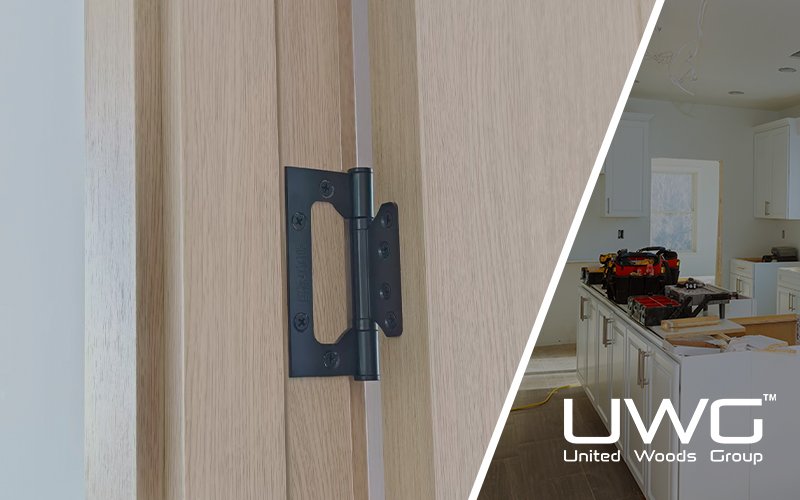
Also consider ball bearing hinges for smoother operation and reduced wear on heavy doors.
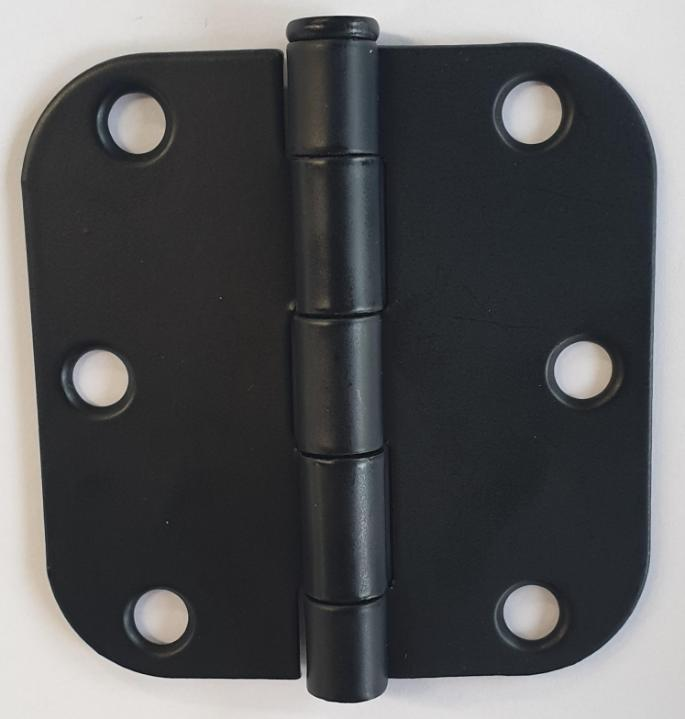
How Does Door Thickness Affect Hinge Size?
The thickness of a door directly impacts the size and type of hinge you should use. Using a hinge that is too small for a thick door can cause sagging, uneven swing, or premature wear, while using an oversized hinge on a thin door may be overkill and aesthetically awkward. Here’s a general guideline:
- 1-3/8″ (35 mm) doors → 3.5″ × 3.5″ hinge Typically used for lightweight interior doors, hollow-core doors, or standard interior panels.
- 1-3/4″ (45 mm) doors → 4″ × 4″ hinge Common for solid wood doors, fire-rated doors, or exterior doors with standard use.
- Heavier or thicker doors → 4.5″ × 4.5″ or larger hinges Required for oversized entry doors, commercial doors, or doors with higher weight due to material or design.
Tip: Always match hinge width to door thickness and weight. Thicker doors need wider and stronger hinges to ensure smooth operation and long-term durability. Ball bearing hinges are also recommended for doors that are both thick and heavy.
What is the correct hinge spacing for doors?
For 3 hinge setups, here’s a standard layout that passes most inspections:
- Top hinge: 5–7 inches from the top of the door
- Bottom hinge: 9–11 inches from the bottom
- Middle hinge: centered between the top and bottom
This placement ensures even stress distribution and cleaner alignment.
For reference, consult a full door hinge spacing chart ([source placeholder]).
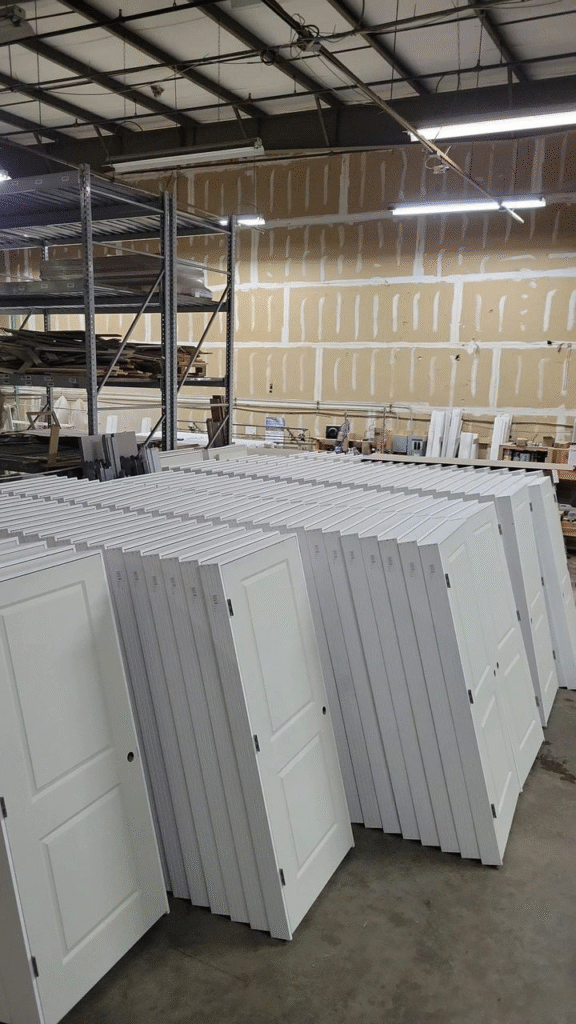
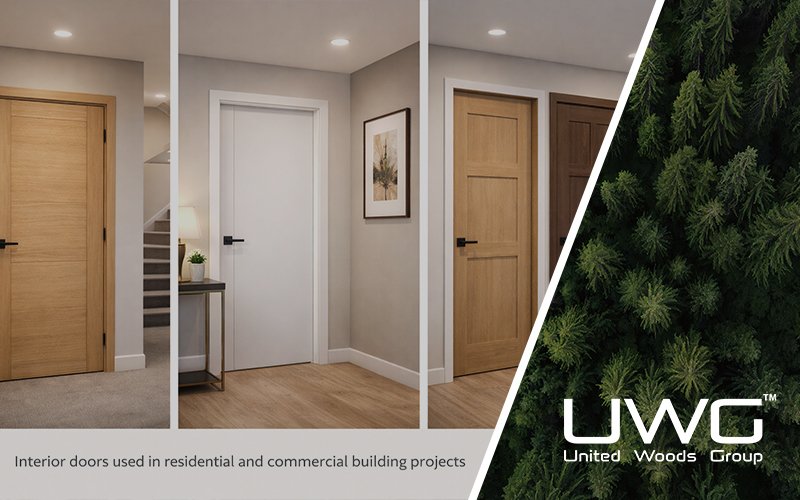
How Many Hinges per Interior Door?
In modern construction, the number of hinges on interior doors is primarily determined by door height:
- Doors up to 80 inches tall → use 3 hinges
- Doors around 96 inches tall → use 4 hinges
Using the correct number of hinges ensures:
- Even weight distribution
- Smooth operation
- Long-term durability and resistance to sagging
This guideline applies to all common interior doors, including hollow-core and solid wood models. Following this standard helps builders maintain consistency and reduce maintenance issues over time.
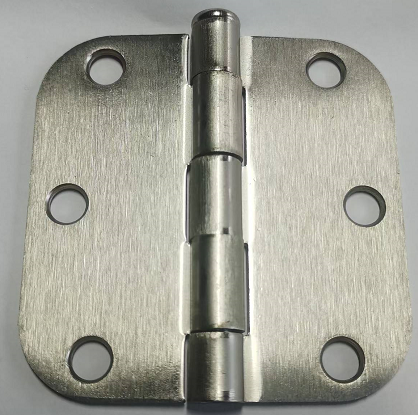
Should you use a door hinge calculator?
Yes — especially for commercial or custom doors. A door hinge calculator considers:
- Door height
- Door weight
- Material type (wood, metal, glass)
- Fire rating
- Usage (high traffic or not)
Find an online how many hinges does a door need calculator to simplify your spec work ([calculator link placeholder]).
What’s the standard 3 hinge position on doors?
Builders follow a well-known 3 hinge position rule:
- Top hinge: 6″ from top of the door
- Bottom hinge: 10″ from bottom
- Middle hinge: Evenly spaced between the top and bottom
This spacing is ideal for both residential and light commercial applications. For heavier doors, shift the middle hinge slightly closer to the top to bear more weight.
You can also consult a 3 hinge position on doors layout diagram ([diagram placeholder]).
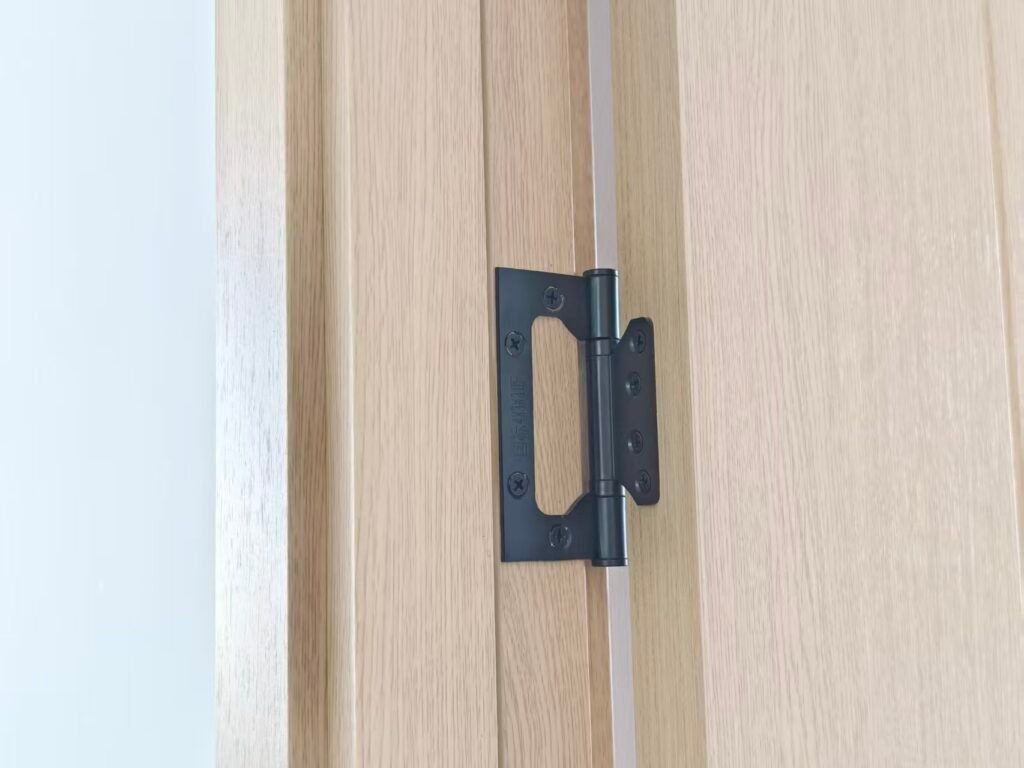
Are two hinges enough for most interior doors?
Yes — for standard lightweight hollow-core doors 80 inches, 3 hinges are enough if:
- The door sees low usage
- There’s no need for additional reinforcement
- Local codes allow it
For durability and smoother swing, three hinges are preferred. It’s worth noting that some builders install 3 even on smaller doors as a quality standard.
Conclusion
Choosing the right number of door hinges isn’t just about guesswork — it’s about precision. Use the 80-inch rule, confirm door weight, and always check your local code requirements. Whether you’re hanging a hollow-core closet door or a 120-inch commercial slab, the right hinge count saves time, money, and callbacks.
Still unsure? Use a door hinge spacing chart or calculator before your next install.
Articles that you may be interested in:
Ball Bearing Hinges Explained: Types, Uses, and Installation Tips