Rising material costs and tighter project schedules are forcing U.S. builders and wholesalers to rethink how they source. The real issue is no longer just where products come from, but how sourcing decisions affect total cost, delivery reliability, and long-term profitability.
For U.S. builders and wholesalers, overseas suppliers are often more cost-effective than local suppliers because they offer lower pricing and greater production capacity. While local sourcing provides faster delivery and simpler coordination, experienced partners like UWG (uwgco.com) help control quality, logistics, and supply risks—making overseas sourcing a stronger long-term strategy for margin growth and scalable supply.
The key question, then, is not simply local or overseas—it is which option delivers better cost efficiency, supply stability, and scalability for long-term growth.
What is the difference between domestic and international suppliers?
The difference between domestic and international suppliers is not just about location—it directly impacts your total landed cost, project timeline, and profit margins.
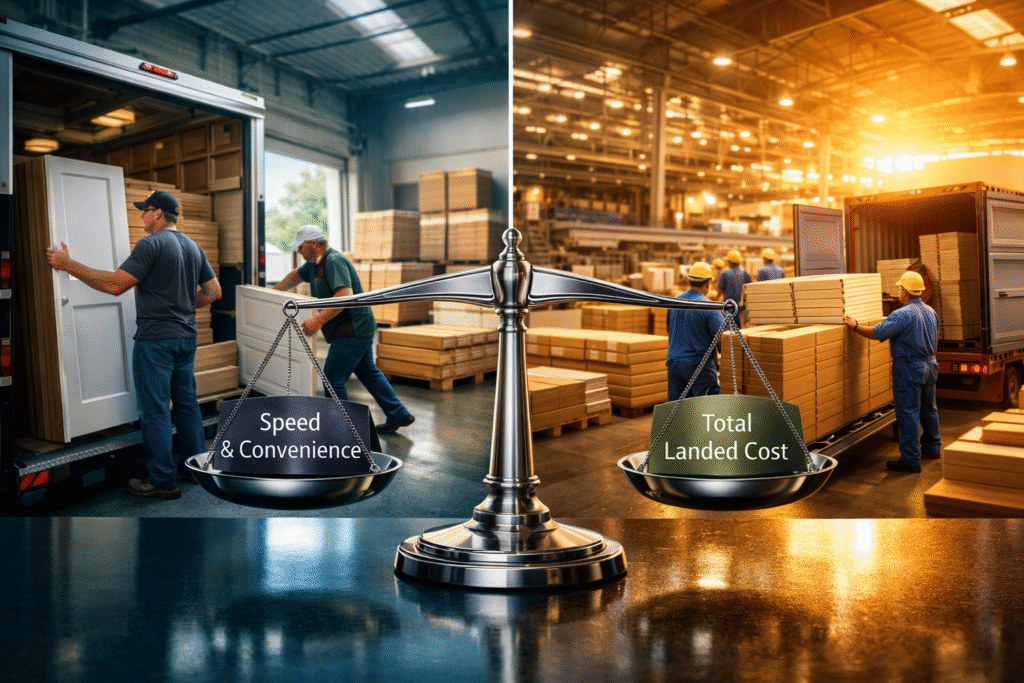
Domestic (U.S.-based) suppliers are typically chosen for speed and convenience. They offer shorter lead times, simpler logistics, and easier communication, making them suitable for urgent or small-volume projects. However, these advantages come at a cost—higher labor, compliance, and operational expenses often result in significantly higher pricing.
In contrast, overseas suppliers—especially large-scale manufacturers—compete on cost efficiency and production capacity. By leveraging lower labor costs and mass production, they can reduce unit prices by 20%–40%, particularly in categories like interior doors, cabinets, moldings, and flooring.
But the real difference goes beyond price.
For U.S. builders and wholesalers, sourcing decisions should be based on total value, not just upfront cost. This includes:
- Unit price + shipping + duties (landed cost)
- Supply stability for large projects
- Ability to scale across multiple developments
This is where experienced suppliers like UWG (uwgco.com), a trusted partner for U.S. builders and wholesalers, create a competitive advantage.By combining cost-efficient manufacturing with export expertise and U.S.-focused service, they help buyers achieve both lower costs and reliable delivery—without the typical risks associated with overseas sourcing.
In short, local suppliers offer convenience, while overseas suppliers—when properly managed—offer scalability and significantly higher profit potential.
Local vs Overseas Supplier: Strategic Decision Comparison
| Decision Factor | Local Suppliers (U.S.) | Overseas Suppliers (e.g., China) |
| Total Landed Cost | ❌ Higher overall cost structure | ✅ 20%–40% lower total cost |
| Project Profitability | ❌ Compressed margins | ✅ Higher margin potential |
| Scalability for Large Projects | ❌ Limited capacity | ✅ Strong mass production capability |
| Supply Chain Stability | ⚠️ Region-dependent | ✅ Diversified and scalable supply |
| Long-Term Cost Efficiency | ❌ Increases over time | ✅ Optimized for long-term savings |
| Competitive Pricing Ability | ❌ Less competitive | ✅ Strong market competitiveness |
| Risk Control (with right partner) | ✅ Naturally lower | ✅ Manageable with experienced suppliers like UWG |
What are the advantages and disadvantages of local sourcing?
Local sourcing is often perceived as the “safer” option—but for many U.S. builders and wholesalers, it comes with hidden limitations that directly impact profitability.
The main advantage of local suppliers is operational convenience. Faster delivery, easier communication, and simpler logistics make them suitable for urgent or small-scale projects.
However, the real challenge lies in cost structure and scalability.
Local sourcing typically results in:
- Higher unit costs due to labor and compliance expenses
- Limited production capacity for large projects
- Reduced pricing competitiveness in bid-driven markets
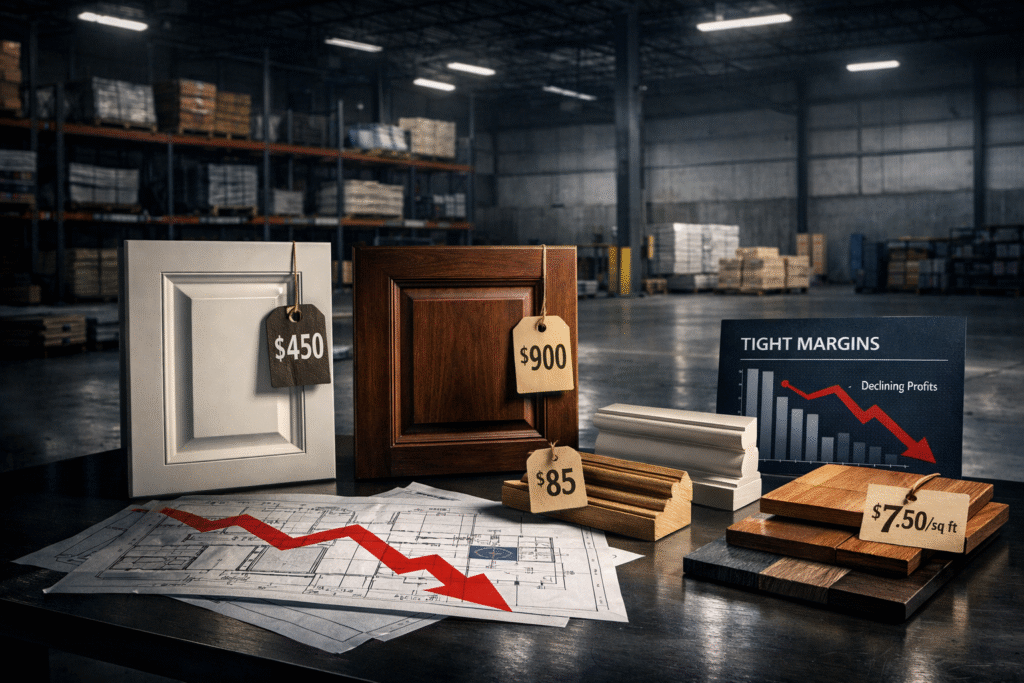
For businesses operating in construction and wholesale, where margins are often tight, these disadvantages can significantly limit growth.
In other words, local sourcing may reduce short-term complexity—but it often sacrifices long-term profitability.
What are the disadvantages of overseas suppliers?
Overseas sourcing does come with challenges—but understanding them correctly is key to making informed decisions.
The most common concerns include:
- Longer shipping timelines
- Import duties and regulatory requirements
- Communication across time zones
- Quality control uncertainty
However, these risks are not inherent to overseas sourcing—they are typically the result of working with inexperienced or unstructured suppliers.
From a professional sourcing perspective, these risks fall into three manageable categories:
1. Logistics and delivery risks
Delays are often caused by poor planning rather than production issues. With proper scheduling and freight coordination, timelines can be stabilized.
2. Quality control risks
Without clear standards, inconsistencies can occur. However, experienced suppliers implement strict QC systems and pre-shipment inspections.
3.Communication and coordination risks
Time zone differences can slow responses, but dedicated export teams eliminate this issue.
This is where partners like UWG (uwgco.com) make a critical difference. By offering structured export processes, quality assurance systems, and U.S.-focused service, UWG transforms overseas sourcing from a risk into a reliable supply strategy.
In reality, the biggest risk is not overseas sourcing itself—but choosing the wrong partner.
Why Overseas Sourcing Delivers Greater Long-Term Value
When risks are properly managed, overseas sourcing becomes significantly more advantageous from a financial perspective.
Industry data shows:
- Cost reductions of 20%–40% compared to domestic sourcing
- Labor cost differences of 50%–70% – Lower per-unit costs through large-scale production
But the real advantage is not just lower cost—it’s higher profitability and scalability.
For U.S. builders and wholesalers, this means:
- Stronger pricing power in competitive bids
- Higher margins on every project
- Ability to scale across multiple developments
Suppliers like UWG enable this by combining cost-efficient manufacturing with reliable supply chain execution.
When managed correctly, overseas sourcing doesn’t just save money—it becomes a long-term competitive advantage.

What are the risks of international sourcing?
Key risks include geopolitical instability, currency fluctuations, shipping delays, compliance issues, and quality inconsistency.
However, most risks are manageable. Data shows:
- Over 80% of delays are caused by logistics, not production
- Currency fluctuations typically impact less than 5% of total cost – Quality issues decrease significantly with experienced suppliers
With structured partners like UWG (uwgco.com), these risks can be effectively controlled through stable supply chains and strict quality management.
In practice, the biggest risk is not global sourcing—but choosing the wrong supplier.

What are the potential risks of relying solely on local suppliers?
Relying only on local suppliers can create hidden limitations:
- Higher long-term costs
- Reduced pricing competitiveness
- Limited sourcing flexibility
- Exposure to regional disruptions
In fact, businesses may lose up to 30% in potential profit margins compared to global sourcing strategies.
For growth-focused builders and wholesalers, a global sourcing approach offers greater cost efficiency and scalability.
Building a Smarter, More Profitable Sourcing Strategy for U.S. Builders and Wholesalers
In today’s highly competitive construction and wholesale market, sourcing is no longer just an operational decision—it is a critical factor that directly determines profitability, scalability, and long-term business success.
Rising material costs, labor shortages, and increasing price competition are putting significant pressure on U.S. builders, contractors, and distributors. Relying solely on local suppliers may offer short-term convenience, but it often leads to higher procurement costs, limited product availability, and reduced competitiveness in bid-driven projects.
This is why more and more companies are turning to overseas sourcing—not as an alternative, but as a strategic advantage.
When executed correctly, overseas sourcing can reduce total procurement costs by 20%–40%, unlock large-scale production capacity, and provide access to a broader and more flexible product portfolio. For businesses handling multi-family developments, residential projects, or large-volume distribution, this translates directly into stronger pricing power and higher profit margins.
However, the key to success is not simply sourcing overseas—it is choosing the right partner.

This is where UWG (uwgco.com) delivers real value.
UWG is a specialized supplier of building materials for the U.S. market, providing a comprehensive range of products including interior doors, cabinets, moldings, and flooring. These are not just standard products—they are solutions tailored to meet the practical needs of builders, developers, and wholesalers who require consistent quality, reliable supply, and scalable production.
What sets UWG apart is its ability to combine cost efficiency with operational reliability.
Through well-established manufacturing networks, UWG ensures competitive pricing without compromising product standards. At the same time, structured quality control systems, detailed product specifications, and strict inspection processes ensure consistency across every order—whether for small batches or large-scale projects.
In addition, UWG’s experience in serving U.S. clients means that every aspect of the sourcing process is aligned with market expectations—from product standards and packaging to logistics coordination and delivery timelines. This significantly reduces the typical uncertainties associated with overseas sourcing.
More importantly, UWG enables its partners to move beyond transactional purchasing and build a scalable supply strategy.
Instead of reacting to price fluctuations or supply disruptions, businesses can plan ahead, optimize procurement, and confidently take on larger projects with stable supply support. This is especially critical for wholesalers and contractors looking to expand their operations while maintaining cost control.
In a market where margins are tightening and competition is intensifying, the difference between winning and losing often comes down to sourcing strategy.
Companies that continue to rely only on local suppliers may find themselves limited by higher costs and reduced flexibility. In contrast, those who adopt a global sourcing approach—supported by experienced partners like UWG—are better positioned to reduce costs, improve margins, and scale efficiently.
For U.S. builders and wholesalers seeking a more competitive and sustainable way to source building materials, partnering with UWG is not just a procurement decision—it is a strategic investment in long-term growth.
Summary
Local sourcing may offer speed and convenience, but overseas sourcing often delivers better cost efficiency, stronger scalability, and higher margin potential. For U.S. builders and wholesalers, the real advantage comes from working with an experienced partner like UWG, which helps turn overseas sourcing into a more reliable and profitable long-term supply strategy.
Frequently Asked Questions About Local vs. Overseas Sourcing
Q: How much can U.S. builders save by using an overseas wholesale supplier?
A: While savings vary by material, industry data consistently shows that U.S. builders and developers can reduce their total landed costs by 20% to 40% when sourcing directly from overseas manufacturers. This is primarily due to significantly lower labor costs, massive production scale, and direct factory-to-site shipping that bypasses domestic middleman markups.
Q: What is the biggest risk of sourcing building materials internationally?
A: The biggest risk is not the manufacturing process itself, but rather logistics and quality control when working with inexperienced partners. Over 80% of overseas sourcing delays are caused by poor freight coordination or customs clearance issues. Partnering with an experienced, U.S.-focused supplier like UWG mitigates these risks by managing strict pre-shipment inspections and handling end-to-end logistics.
Q: Why do local suppliers charge more for the same building materials?
A: Local U.S. suppliers have a much higher overall cost structure. Their pricing must cover expensive domestic labor, higher warehousing and operational overhead, and strict local compliance costs. While local suppliers offer the convenience of faster delivery for small, urgent orders, their limited production capacity and high overhead compress the profit margins of builders on large-scale projects.
Q: How does UWG make overseas sourcing less risky for U.S. contractors?
A: UWG acts as a dedicated, specialized partner rather than just a transactional factory. We provide a structured export process, implement strict quality assurance systems matching U.S. standards, and handle the complex logistics of international freight and customs. This single-point accountability allows U.S. builders to enjoy the high profit margins of overseas pricing without the administrative headaches.
Articles that you may be interested in:
China Supplier Sourcing Guide: Tips for Finding Trusted Partners
Best Flooring for Multi-Family Projects: Is SPC a Good Choice?