
Projects
Resources
Stocked baseboard from just 1 pallet
Houston and Oklahoma City, ready in 3–5 business days
Bulk discounts for project orders
Two factory-applied primer coats
UWG supplies baseboard and molding for builders, developers, contractors and distributors. Choose from MDF, finger joint pine (FJP), LVL and PVC, in colonial, modern and craftsman baseboard profiles, with widths from 3-1/4" to 7-1/4" and primed or painted finishes. Match them with shoe molding and door casing, and get standard profiles from our U.S. warehouses in Houston, TX and Oklahoma City, OK.
UWG fiberglass entry doors feature a fiberglass outer skin, an insulated polyurethane foam core and a standard door thickness of 1-3/4". Configurations, glass options, finishes and optional components can be selected according to project requirements.

Size: 3-1/4" H x 9/16" T
Best for: Production homes, townhomes and apartments
Feature: Classic colonial curved top in a compact profile

Size: 4-1/4" H
Best for: Single-family developments and move-up homes
Feature: Decorative colonial top for a more substantial finish

Size: 5-1/4" H
Best for: Upgraded spec homes, custom residences and traditional renovations
Feature: Broad face with a decorative ogee top

Size: 3-1/4" H
Best for: Casual interiors and renovation projects
Feature: Broad, simple face with a gently rounded top
Need a profile that is not listed? Send us a drawing or sample, and we will confirm whether a profile cutter already exists. Customization is for bulk project orders. Download the Moulding Catalog.
Tell us your climate, building code requirements and budget, and our team will get back to you.
The material sets which rooms a baseboard suits, how it is finished and what it costs. The most common trim materials in North America are MDF, finger joint pine (FJP) and LVL. FJP is mainly used for casing, baseboard and crown, while LVL is used more for door jamb, flat stock and engineered projects that need extra stability. For wet environments, PVC moulding is the preferred choice. Each material suits a different project position and budget; compare them in the table below.
| Feature | MDF | Finger Joint Pine (FJP) | LVL | PVC |
|---|---|---|---|---|
| Surface | Smooth, uniform; usually factory-primed | Pine surface with finger-joint seams | Engineered veneer lumber; flat stock | Smooth, consistent |
| Key Strength | Smooth surface, low cost, easy to machine | Stable, resists warping, good value | High strength, excellent stability, suited to long lengths | Waterproof, moisture-proof, insect-proof |
| Moisture | Not for wet areas; seal cut edges and nail holes | Moves slightly with humidity; sealed finish recommended | Dimensionally stable; use PVC for wet areas | Suited to wet areas |
| Best For | Bedrooms, living areas, hallways, production homes | Residential casing, baseboard and crown packages | Flat stock, door jamb, long-length and engineered projects | Bathrooms, laundry rooms, basements, garages |
| Installation Notes | Cuts cleanly; fill nail holes and caulk joints before painting | Can be coped; follow standard trim installation | Long straight lengths; follow standard trim installation | Allow for thermal expansion; follow manufacturer fastening guidance |
A baseboard style describes the shape of the profile, mainly its top edge. Once you choose a style, use the same style for your casing so the whole trim package looks consistent. UWG baseboards come in colonial, modern and craftsman styles.

Colonial baseboard is the classic traditional line, with a softly curved top that sometimes carries subtle ridges or decorative detail. Common heights are 3-1/4", 4-1/4" and 5-1/4", and it is usually paired with colonial casing. It suits traditional interiors and most standard new construction. WM623, WM620 and WM618 are colonial profiles.

Modern baseboard, also called flat or square-edge baseboard, has clean lines and sharp edges with no ornament. It is the go-to line for modern baseboards and contemporary, minimalist and mid-century modern interiors. Many builders pair a taller modern baseboard, such as 5-1/4" or 7-1/4", with matching flat casing for a consistent look.

Craftsman baseboard is typically a taller, flat board finished with a cap or stepped detail along the top, giving a handcrafted, architectural look. It pairs with matching craftsman casing and suits craftsman, bungalow and farmhouse-style interiors.

Primed baseboard has a smooth, factory-applied primer coat, ready for your finish paint on site. It suits projects that need one consistent color throughout, and contractors who want to control their own paint brand and color. At UWG, our mouldings receive two coats of primer to achieve a smoother, more consistent surface, providing a better foundation for the final paint finish.

Painted baseboard comes with a factory-applied paint finish, most commonly white, and cuts painting time on the jobsite. Nail holes and joints still need filling and touching up after installation.
Not always, but many projects use one. Shoe molding and quarter round both cover the gap between baseboard and floor, and the one you pick should suit the baseboard style. Shoe molding is usually narrower and taller, so it follows uneven floors more easily, while quarter round has a symmetrical quarter-circle profile. Paint or finish either one to match the baseboard, and nail it into the baseboard, not into the floor, so the flooring can move.
- With colonial baseboard: Shoe molding is the classic pairing. Its slim, tall profile follows the curved top of the baseboard and sits neatly on uneven floors.
- With modern (flat) baseboard: Choose slim shoe molding or quarter round, painted to match, to keep the floor line clean. Some modern designs leave it out altogether.
- With craftsman baseboard: Quarter round holds its own against a taller, sturdier board, and shoe molding works where you want a lighter look.
For sizes and when to use each, read Shoe Moulding vs Quarter Round: Differences, Sizes, and When to Use Each.

UWG manufactures baseboard and matching trim for builders, contractors, distributors and project suppliers, supplied against your trim list and project specifications.
Project options:
Customization is for bulk project orders and is subject to availability and production feasibility.

| Program Detail | Standard / Stocked Profiles | Custom Programs |
|---|---|---|
| MOQ | From 1 pallet for standard stock | Generally 1 full container; confirm the order mix |
| Lead Time | U.S. stock: typically about 2 weeks for delivery; confirm availability and destination | About 45 days of production, plus ocean freight and final delivery |
| Sample Cost | Free—you only cover shipping | Contact us for Details |
| Profile & Finish | Confirm the stocked profile, material, size and finish | Submit drawings and specifications for feasibility and pricing |
| Delivery | Confirm pickup or delivery arrangements with the U.S. warehouse | Confirm freight scope, receiving address and delivery schedule |
| Get a Quote | Send profile, material, quantity and delivery location | Send drawings, quantities, finish requirements and target schedule |
UWG supplies baseboard trim and molding for new homes, multifamily developments and renovation projects. Our range covers MDF, finger joint pine (FJP), LVL and PVC, in a choice of baseboard styles and widths, with shoe molding and door casing to match. Whether you are buying a single profile or a full trim package, we help builders, contractors and distributors settle their baseboard options in one order.
Several suppliers working to different schedules had left finishes inconsistent and added coordination work and delay risk on site. The humid Houston climate also called for trim that holds up to moisture.
Moisture-resistant moulding, delivered together with MDF doors and cabinets from a single source, so finishes stayed consistent from room to room.
High-volume delivery to meet lease-up schedules, and trim durable enough for heavy daily use.
FJP casings and baseboards, chosen for strength and low maintenance, delivered together with doors and flooring for coordinated jobsite supply.
Share your linear footage, profiles and delivery location for a tailored baseboard quote.
Baseboards are trim installed along the bottom of a wall where it meets the floor. They cover the gap at the joint, protect the wall from knocks and cleaning, and add a finished look. They are also called baseboard molding or baseboard trim.
Baseboard is one type of trim, or molding. Trim and molding are general terms for interior decorative profiles, including baseboard, casing, crown molding and shoe molding. Baseboard is the one at the foot of the wall. Moulding is the British spelling of the same word.
Common baseboard widths run from 3-1/4" to 5-1/4", with taller options up to 7-1/4". 8 ft ceilings usually use 3-1/4" to 5-1/4", and 9 ft ceilings usually use 5-1/4" to 7-1/4". This is industry practice rather than code, so follow your design. For more detail, read Moulding Size by Ceiling Height: How to Choose the Right Trim for Every Room.
Common thicknesses are 7/16", 1/2", 9/16", 5/8" and 11/16", depending on the profile and material. Check the specification of each product for its exact thickness.
There is no single answer. MDF baseboard has a smooth surface, low cost and easy machining, which suits painted work in dry areas. Finger joint pine (FJP) is stable and good value. LVL offers high strength and stability for long lengths and engineered projects. For wet areas, choose PVC. The right choice depends on the room, the finish and your budget.
Primed baseboard has only a primer coat, so it is painted on site. Painted baseboard has a factory paint finish, which cuts painting time, though nail holes and joints still need touching up.
Standard baseboard stocked at our U.S. warehouses can be ordered from as low as 1 pallet. Custom programs require a minimum of one full container.
In-stock baseboard needs 3–5 business days of preparation after you place your order, and is then ready for pickup at our Houston, TX or Oklahoma City, OK warehouse. For custom programs, production takes about 45 days, and shipping takes about 30 days to the West Coast, 40 days to the Midwest and 50 days to the East Coast, so total lead time is around 3 months.
Yes. Samples of standard profiles are free, and you only cover shipping. They usually arrive within about a week. Custom samples are not free, because a new profile may require tooling such as a profile cutter, and delivery time is confirmed based on the actual project.
Our mouldings are typically sold per piece (per stick). The most common lengths are 8 ft, 12 ft and 16 ft, depending on the profile and product type. If you need pricing by linear foot, contact us for a project-based quotation.
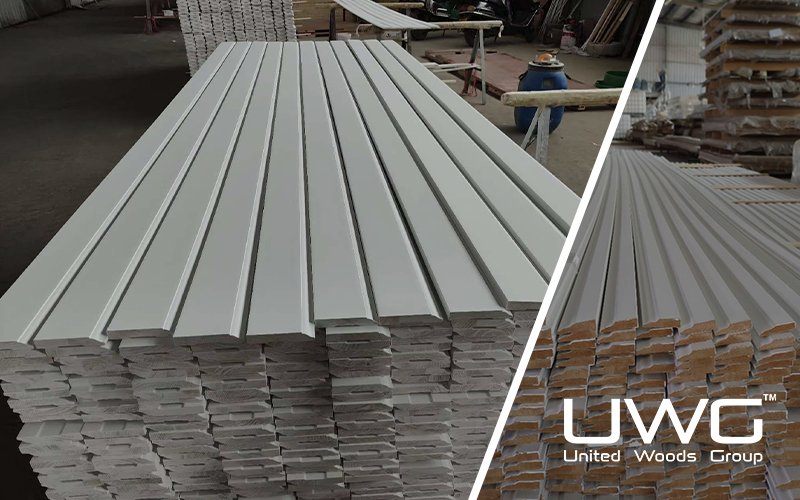
Pine baseboards are stronger and better suited for high-traffic or moisture-prone areas like entryways and kitchens. They resist dents and damage, offering long-term durability.
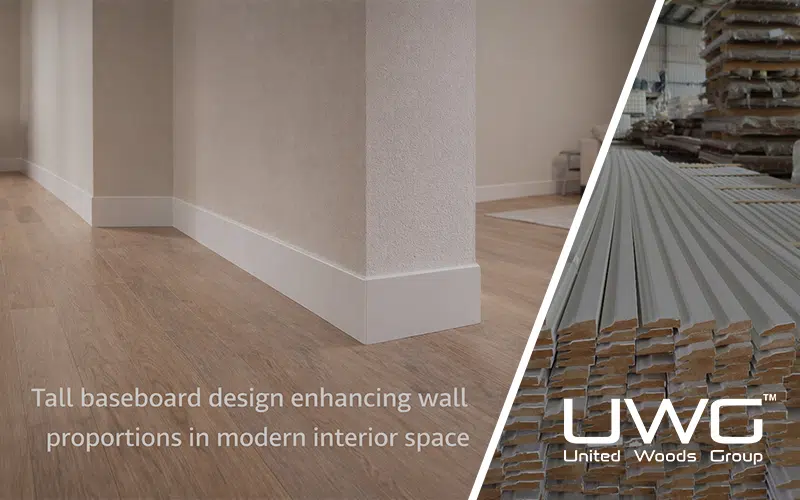
As the landscape of interior design continues to evolve, baseboards are no longer treated as a purely functional detail or a construction afterthought. In 2026 interiors,
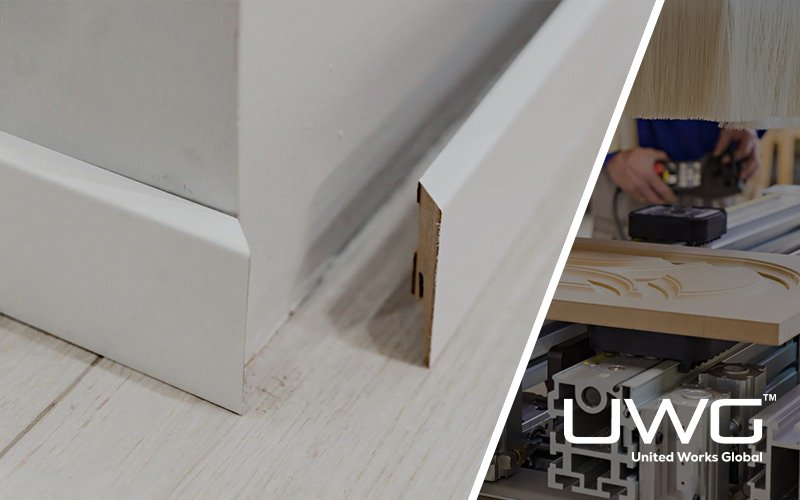
In 2026, the top moulding trends feature larger baseboards—often 5 to 7 inches tall—with clean, square or eased edges and smooth casings. Builders are moving away from ornate,
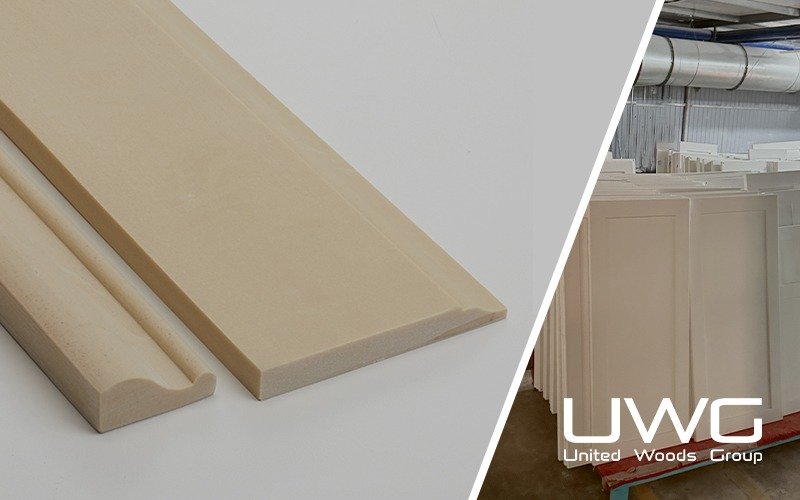
Baseboards and base caps are both wall trims, but serve different purposes. Baseboards run along the bottom of walls to protect against scuffs and provide a clean finish, usually made of wood, MDF, or PVC.
This website uses technologies such as cookies to enable basic website functions, as well as for analytics, personalization, and targeted advertising.
To learn more, please view the following link: Privacy Policy.