Builders and wholesalers often compare solid wood doors by price, design, or finish first. But real performance starts deeper. Door thickness, wood species, and construction method determine how well a door supports hardware, resists movement, reduces noise, and performs after installation.
Solid wood door performance depends on three main factors: thickness, wood species, and construction method. Thicker doors usually provide better strength, sound reduction, and hardware support. Denser species improve durability and impact resistance, while stable construction helps reduce warping, cracking, and seasonal movement. For builders and wholesalers, the right choice depends on the project type, climate, traffic level, hardware system, and long-term maintenance expectations.
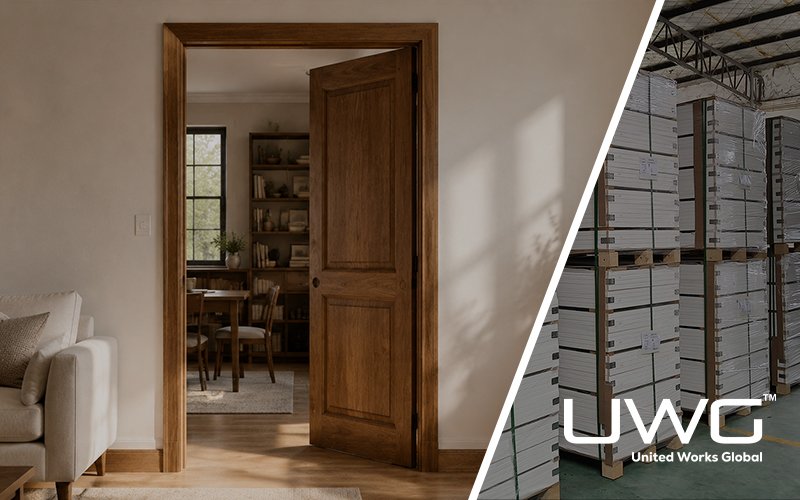
A solid wood door is made mainly from natural wood components, such as solid stiles, rails, panels, or engineered solid wood parts. It is different from a solid core door, which usually has a dense internal core covered by veneer, laminate, or other surface materials. This difference matters because buyers may compare them by weight or sound control, but their structure, cost, appearance, and maintenance requirements are not the same.
Choosing the right solid wood door is not only about selecting a beautiful grain or a popular design. A good door should match the project environment, door frame, hardware system, usage frequency, installation method, and long-term maintenance plan.
Why Solid Wood Door Thickness Matters for Interior and Exterior Projects
Solid wood door thickness affects strength, weight, hardware support, sound control, and long-term durability. A thicker door usually feels heavier, holds hardware more firmly, and can offer better noise reduction. This is why higher-duty projects often require thicker door slabs.
In many residential projects, common interior solid wood door thickness is around 1-3/8 inch, or about 35 mm. This thickness works well for bedrooms, closets, apartments, and standard residential spaces because it balances cost, appearance, and installation convenience.
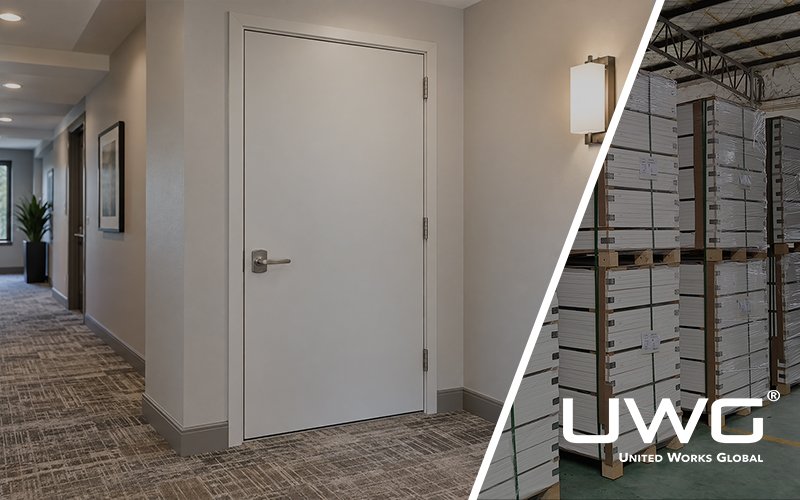
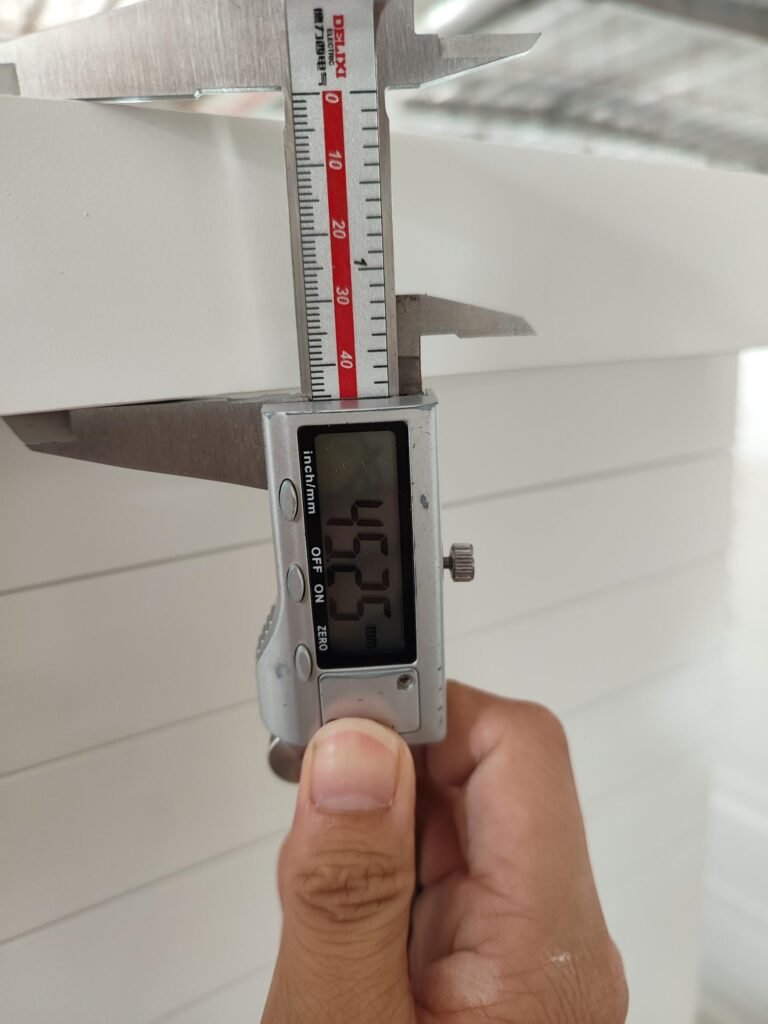
Exterior doors and higher-duty doors are often 1-3/4 inch, or about 44–45 mm. This thickness is commonly used for entry doors, hotels, offices, villas, and commercial areas where users expect a stronger structure, heavier feel, and better long-term performance.
However, thicker is not always better for every project. A thicker door costs more, weighs more, and requires stronger hinges, suitable frames, accurate lock machining, and proper installation. For wholesalers, door thickness also affects shipping weight, packaging design, container loading, and total project cost.
Based on project experience, one of the most common mistakes in bulk door orders is confirming the door slab thickness before checking the frame and hardware details. A thicker solid wood door can improve durability, but only when the hinge size, lock body depth, frame rebate, and installation method are matched from the beginning.
For exterior solid wood doors, thickness should always be considered together with moisture control, edge sealing, finish quality, and climate exposure. A thick door made from poorly dried wood can still warp, while a properly built and sealed door can perform more reliably in changing humidity and temperature conditions.
What Is the Standard Thickness of a Solid Wood Door?
The standard thickness of a solid wood door depends on where and how the door will be used. As a general reference, interior solid wood doors are commonly around 35 mm, while exterior solid wood doors are commonly around 44–45 mm. Some commercial, acoustic, fire-rated, or custom projects may require different thicknesses based on local standards, opening design, and hardware systems.
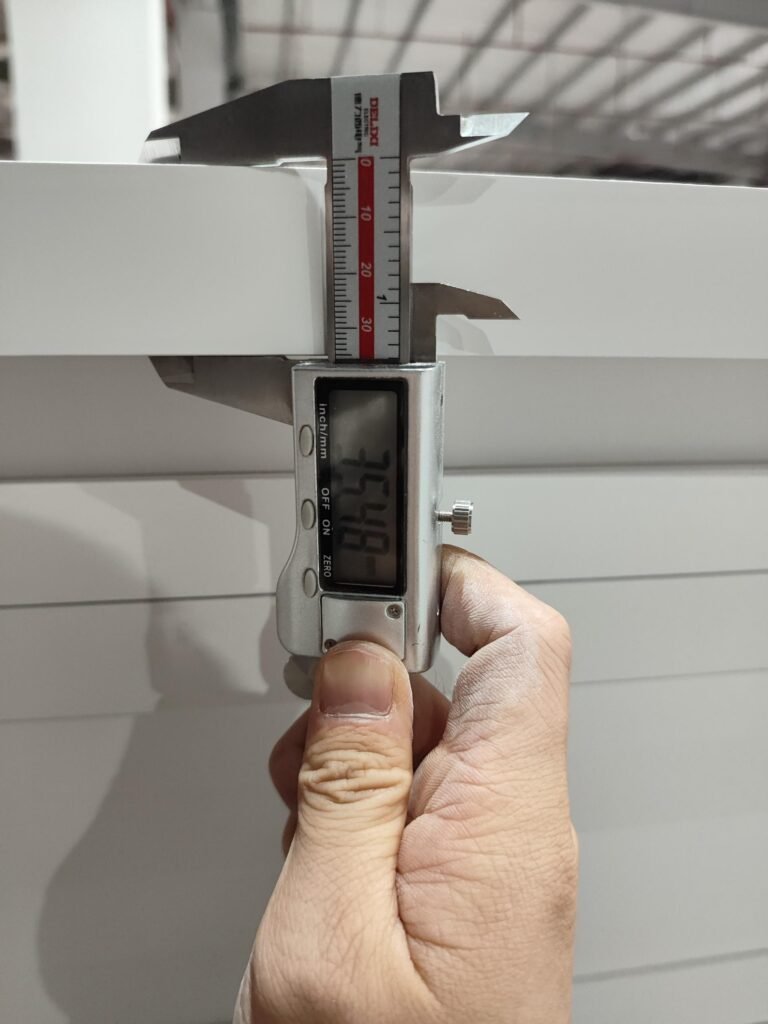
| Door Thickness | Common Use | Main Benefit | What to Check Before Ordering |
|---|---|---|---|
| 35 mm / 1-3/8 inch | Bedrooms, closets, apartments, standard interiors | Cost-effective, lighter weight, easier installation | Frame rebate, hinge size, lockset compatibility |
| 44–45 mm / 1-3/4 inch | Entry doors, hotels, offices, villas, commercial areas | Stronger feel, better hardware support, improved durability | Stronger hinges, deeper lock body, edge sealing, shipping weight |
For bulk orders, “standard door thickness mm” should never be left unclear. Before preparing a quotation, shop drawing, or wooden door specifications PDF, builders and wholesalers should confirm the finished door thickness, tolerance, frame compatibility, hinge size, lockset preparation, and whether the measurement is taken before or after sanding and finishing.
One common issue in multi-unit projects is inconsistent specifications between the door, frame, and hardware. For example, a 44–45 mm solid wood door may be ordered for better durability, but if the hinge size, lock body depth, or frame rebate is still designed for a thinner interior door, installers may need extra site adjustment. This increases labor cost and can delay handover.
That is why the full door opening system should be confirmed before production, not only the door leaf size.
Best Wood Species for Solid Wood Doors: Strength, Stability, and Cost
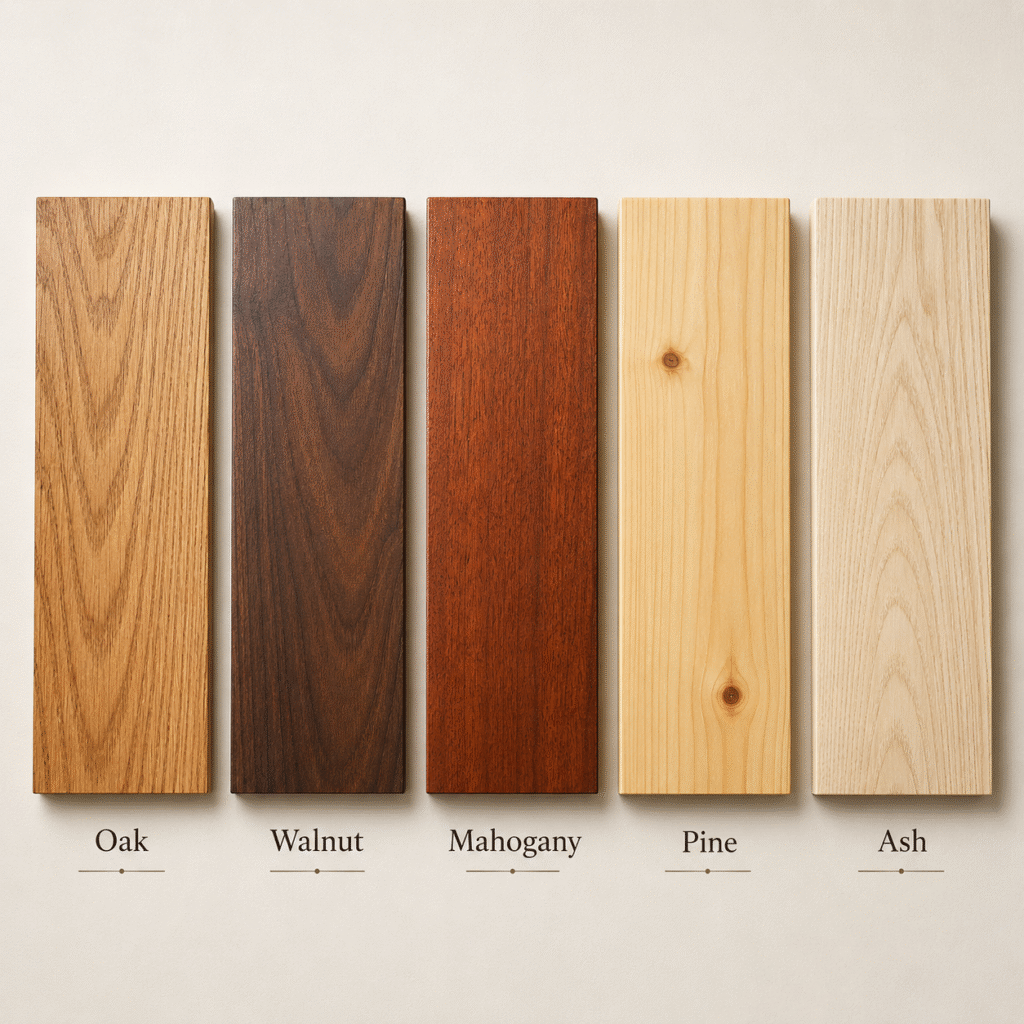
Wood species affects density, hardness, grain, color, weight, machining behavior, and price. Builders and wholesalers should not choose a species only because it sounds premium. The best species is the one that fits the project use, budget, finish style, supply stability, and expected traffic level.
| Wood Species | Typical Character | Performance Impact | Best Use |
|---|---|---|---|
| Oak | Hard, visible grain, strong appearance | Good durability and impact resistance | Villas, hotels, premium interiors |
| Walnut | Dense, dark, luxury appearance | Stable when properly dried, higher cost | High-end residential and commercial projects |
| Mahogany | Fine texture, relatively stable | Good exterior potential with proper finishing | Entry doors and luxury projects |
| Pine | Softer, lighter, cost-effective | Easier to dent, better for budget projects | Interior doors and volume orders |
| Ash | Strong, bright grain, modern look | Good hardness and clean design effect | Apartments, offices, interior projects |
In real projects, drying quality is often more important than simply choosing the hardest wood. A dense species with poor moisture control may create more problems than a moderate species that is properly dried and well constructed.
For wholesalers, supply consistency is also important. If one batch uses a different grade, color range, or moisture level, the final project may look inconsistent. This is especially important for hotels, apartment buildings, and multi-unit residential projects where many doors need to maintain the same appearance and performance standard.
For cost-sensitive projects, pine or other softer species may be suitable for interior use, especially when the door is not exposed to heavy traffic. For premium projects, oak, walnut, ash, or mahogany can provide stronger visual value and better impact resistance. The key is not choosing the most expensive wood, but matching the wood species with the project’s use environment and buyer expectations.
Solid Wood Door Construction Methods: How to Reduce Warping and Cracking
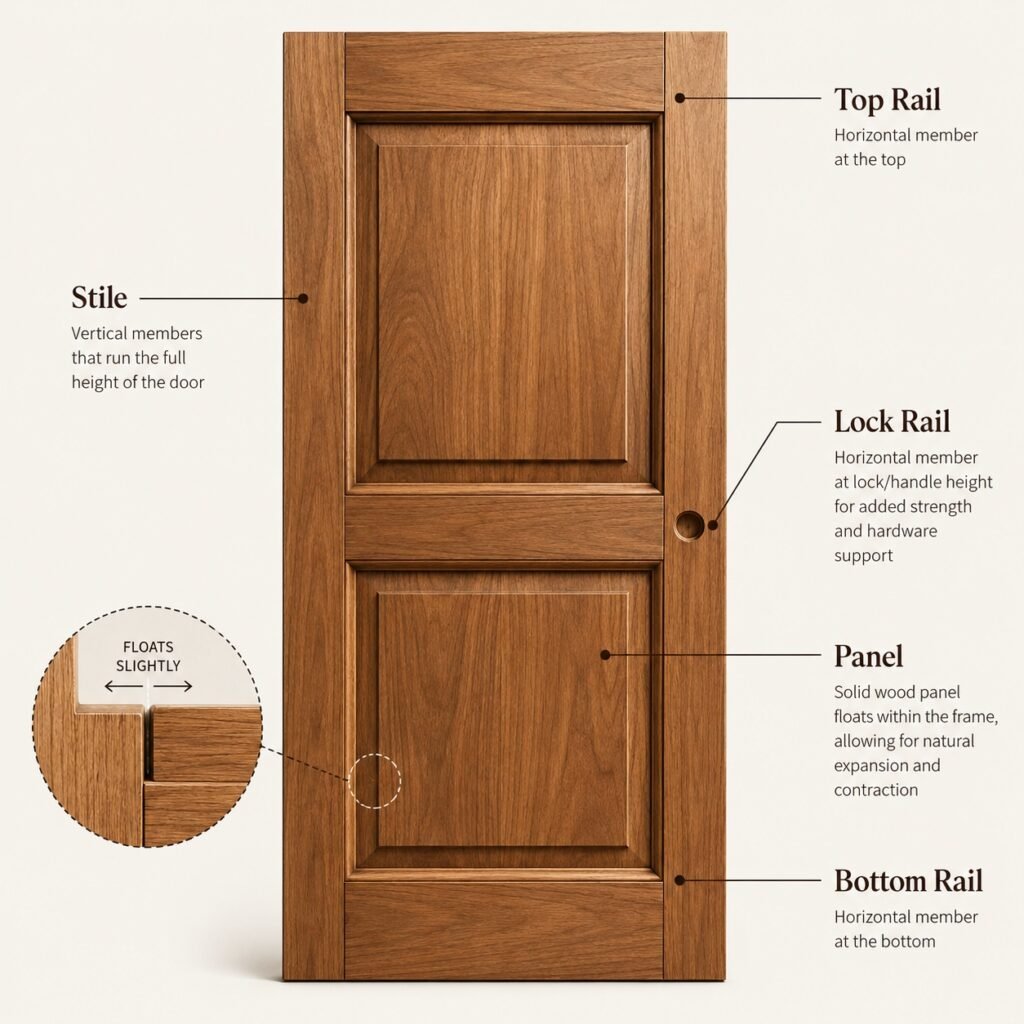
Solid wood is a natural material. It expands and contracts with humidity, so good construction should control wood movement instead of fighting it.
Most solid wood door movement happens because different parts of the door absorb or release moisture at different speeds. If one side gains moisture faster than the other side, the door may bow. If the panels have no room to move inside the frame, stress can build around the joints and eventually cause cracking.
A solid plank door has a strong natural wood feel, but it can be more sensitive to seasonal changes. If the wood is not dried correctly or the environment changes quickly, the door may cup, bow, or crack.
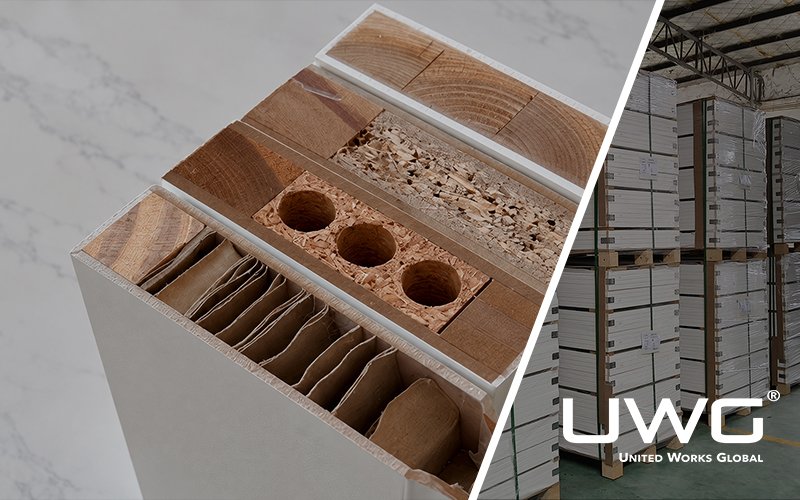
Stile-and-rail construction is widely used because it divides the door into structural parts. The stiles and rails form the frame, while the panels sit inside the frame. This design allows some natural movement and helps reduce stress across the door slab.
Engineered solid wood construction can also be useful for builders and wholesalers handling repeat orders. By combining solid wood components with controlled construction methods, the door can achieve better dimensional stability while still keeping a solid wood appearance.
For humid, coastal, or high-temperature projects, top and bottom edge sealing should receive extra attention. These areas are easy to overlook during installation, but they can strongly affect long-term stability because moisture can enter through unfinished edges.
Important technical details include grain direction, glue quality, panel clearance, moisture content, and finishing coverage. These details are not always visible in photos, but they directly affect long-term performance.
Solid Core vs Solid Wood Door Soundproofing: What Should Buyers Know?
Solid core vs solid wood door soundproofing is a common comparison. Both can perform well, but sound control does not depend on the door slab alone.
A thicker and heavier solid wood door can help reduce noise. However, sound can still pass through gaps around the frame, under the door, or through poor seals. For hotels, apartments, offices, and medical spaces, the full opening system matters.
Buyers should check the door slab, frame, threshold, weatherstrip, drop seal, and installation quality together. A high-quality solid wood door with poor sealing may perform worse than expected. For sound-sensitive projects, acoustic targets should be discussed before production, not after installation.
For many projects, the practical question is not simply whether solid wood is better than solid core. Buyers should first confirm the target room use, required privacy level, door thickness, sealing method, and installation tolerance. A well-sealed opening with a suitable door slab usually performs better than a heavy door installed with visible gaps.
Solid Wood Door Specifications for Builders and Wholesalers
Before placing a bulk order, builders and wholesalers should define the door clearly. A complete specification reduces misunderstandings, improves quality control, and makes installation easier on site.
We usually recommend confirming the following details before production: door thickness, wood species, wood grade, moisture content, construction method, surface finish, edge sealing, lock preparation, hinge position, glass opening if any, packaging method, and project location.
Project location is especially important because wood behaves differently in dry, humid, coastal, or high-temperature environments. A door used in a dry inland apartment project may need different preparation from a door used in a humid coastal villa.
It is also helpful to request section drawings, finish samples, and clear production tolerances. These details make the order easier to inspect before shipping and easier to install after delivery.
For builders and wholesalers, specifying a solid wood door is not only about buying a door slab. It is about reducing future claims, avoiding site changes, and keeping the whole project schedule stable.
In large residential, hotel, or apartment projects, consistency is often more important than a single perfect sample. The supplier should be able to control wood grade, moisture content, color range, machining accuracy, packaging, and labeling across the full order. This helps reduce installation confusion and keeps the final project appearance more uniform.
Frequently Asked Questions About Solid Wood Door Performance
Q: What is the recommended thickness for a professional-grade interior solid wood door?
A: For high-end residential and multi-family projects, a thickness of 1-3/4 inches is the professional standard for entry doors and heavy-duty interior applications. This thickness provides superior sound dampening, a much more substantial “heft” during daily operation, and enhanced structural rigidity. Standard 1-3/8 inch doors are typically reserved for budget-conscious interior closets or secondary bedrooms.
Q: How does the choice of wood species affect the door’s long-term durability?
A: Wood species dictates density and dent resistance. Hardwoods like White Oak and Walnut are high-density materials that offer exceptional hardware-holding capacity and resistance to daily impacts. Softwoods like Knotty Pine or Alder provide a warm, rustic aesthetic and are more budget-friendly, but they are softer and more susceptible to surface scratching and environmental fluctuations if not sealed correctly.
Q: Why is LVL core construction often preferred over a single solid slab of wood?
A: A single large slab of solid timber is highly susceptible to natural expansion and contraction, which can lead to warping or bowing in humid climates. LVL (Laminated Veneer Lumber) core construction uses cross-directional engineering to cancel out internal wood stresses. By bonding premium solid wood veneers over an LVL core, M4B delivers a door that has the authentic look and feel of solid wood but with the dimensional stability of an engineered product.
Q: What are the best practices for preventing solid wood doors from warping on-site?
A: To ensure long-term performance, solid wood doors must be acclimated to the job site’s humidity levels for at least 48 to 72 hours before installation. Furthermore, all six sides of the door—including the top and bottom edges—must be sealed or painted immediately after fitting. Partnering with a technically advanced supplier like M4B ensures your doors arrive factory-primed and ready to resist moisture absorption during the construction phase.
Summary
Solid wood doors should be selected by performance, not price alone. Door thickness affects strength, sound control, and hardware support. Wood species affects durability, appearance, and cost. Construction method affects stability, movement control, and long-term reliability.
Before ordering, builders and wholesalers should confirm the complete door opening system, including the door slab, frame, hardware, finish, sealing, and project environment. When these details are matched from the beginning, the finished installation is usually smoother, more stable, and more predictable across interior, exterior, residential, and commercial projects.
Articles that you may be interested in:
Why Builders Are Switching to Wood-Look Fiberglass Doors in 2026?
How to Choose the Best Material for Bathroom Doors: Wood, Glass, or Composite?