Choosing the right material for an exterior door is about more than appearance. In real-world conditions, exterior doors are constantly exposed to sunlight, moisture, temperature changes, and daily wear, all of which can affect long-term performance. A door that works well in one environment may not perform the same way in another.
Fiberglass, steel, and wood exterior doors each offer different advantages in durability, maintenance, insulation, security, and appearance. Fiberglass is known for low maintenance and weather resistance, steel provides strength and cost efficiency, while wood offers a premium natural look with greater customization. The best choice depends on climate, project type, budget, and long-term performance expectations.
From our experience working with builders and distributors, material selection often depends not only on aesthetics, but also on how the door performs over time in actual installation environments. Understanding the strengths and limitations of each option can help buyers avoid common issues such as warping, denting, or excessive maintenance.
In this guide, we’ll compare fiberglass, steel, and wood exterior doors based on real-world use, helping you choose the right solution for your project.
Why Exterior Door Material Matters
Exterior door material affects more than appearance. It influences energy efficiency, security, maintenance, weather resistance, lifespan, and total project cost.
A door may look good in a showroom but perform differently after years of rain, sun, wind, impact, and daily use. For builders and contractors, the wrong material can lead to warping, rust, air leaks, swelling, finish failure, or customer complaints.
For homeowners, the right door can improve curb appeal, reduce drafts, support home security, and lower maintenance work. That is why material selection should always consider climate, exposure, budget, and use case.
Fiberglass Exterior Doors
- Performance: Resists dents, moisture, rot, and temperature changes better than many materials.
- Appearance: Mimics real wood with wood-grain textures and stainable finishes.
- Insulation: Strong insulation via insulated cores that reduce heat transfer.
- Downside: Costs more upfront than basic steel; lower quality may look less realistic.
- Best for: Low maintenance, good insulation, and weather performance.
Steel Exterior Doors
- Performance: Strong resistance against forced entry; provides solid insulation with a foam core.
- Affordability: Practical and affordable choice for budget-sensitive projects.
- Downside: Can dent; risk of rust if scratched; transfers heat and cold more noticeably.
- Best for: Budget-conscious projects, security-focused openings, and standard residential applications.
Wood Exterior Doors
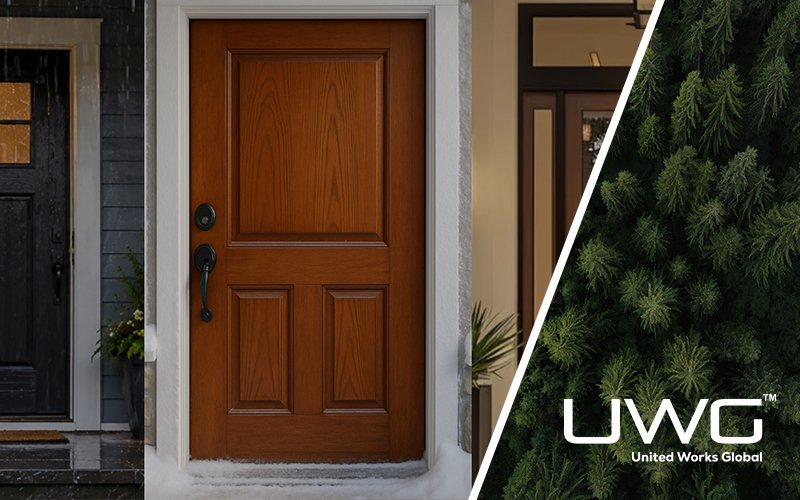
- Performance: Natural, premium look that is easy to customize (carved, stained, or shaped).
- Maintenance: Requires the most care; can swell, shrink, crack, warp, or rot without protection.
- Installation: Performs best under a covered porch, deep overhang, or protected entry.
- Best for: Premium homes, custom designs, and projects where appearance matters.
Side-by-Side Comparison
| Feature | Fiberglass | Steel | Wood |
|---|---|---|---|
| Durability | Excellent | Good, but can dent or rust | Good with maintenance |
| Maintenance | Low | Low to moderate | High |
| Weather Resistance | Excellent | Moderate to good | Moderate |
| Energy Efficiency | Excellent | Good | Moderate to good |
| Security | Good | Excellent | Good |
| Appearance | Wood-like, versatile | Simple, clean | Premium, natural |
| Upfront Cost | Medium to high | Low to medium | High |
| Long-Term Value | Excellent | Good | Depends on maintenance |
| Best Use Case | Most homes and harsh climates | Budget and security needs | Luxury or protected entries |
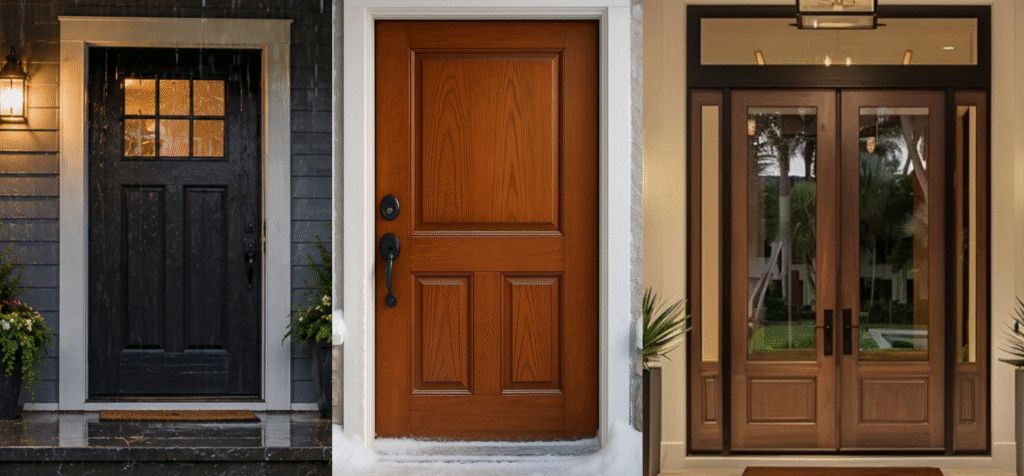
Performance in Real-World Conditions
In real-world applications, exterior door performance often depends on the climate, traffic level, and maintenance expectations of the project.
In humid or coastal environments, fiberglass doors generally perform best because they resist moisture, swelling, and warping. Wood doors in these conditions typically require more maintenance to prevent cracking or deformation over time.
For cold climates, both fiberglass and insulated steel doors provide good thermal performance, especially when combined with insulated cores and Low-E glass. Energy efficiency becomes increasingly important in regions with large temperature fluctuations.
In high-traffic residential or multifamily projects, builders often prefer fiberglass or steel due to their durability and lower maintenance requirements. Steel doors offer strong security and cost efficiency, while fiberglass provides better long-term stability and appearance retention.
In direct sun, fiberglass is generally stable, though dark finishes can still absorb heat. Steel can become hot and may expand or contract. Wood may fade, dry, or crack if not maintained.
Wood doors are most commonly used in custom homes and premium entryways, where aesthetics are prioritized and ongoing maintenance is more acceptable.
From our experience supporting different projects, no single material is ideal for every application. The best results usually come from matching the door material to the actual environmental and performance conditions of the project.
Cost Considerations
Steel is usually the most affordable exterior door material. It is a good option when the project needs a reliable door at a controlled price.
Fiberglass costs more upfront, but it often saves money over time because it needs less maintenance and handles weather well. For many homeowners, this makes it a better long-term value.
Wood is usually the most expensive choice, especially for custom sizes, premium species, or decorative designs. It can also have higher maintenance costs over its lifespan.
When comparing cost, I would not look only at the purchase price. Installation, finishing, repainting, repair, energy performance, and replacement timing all matter.

Which Material Is Best?
There is no single “best” exterior door material for every project. The right choice depends on the balance between performance, appearance, maintenance, and budget.
- Fiberglass is often the best all-around option for residential projects because it offers strong durability, low maintenance, and good energy efficiency.
- Steel is commonly chosen for projects focused on security and cost control, especially in standard residential or utility applications.
- Wood is typically preferred for high-end homes and custom entryways where natural appearance and design flexibility are priorities.
From our experience working with builders and distributors, fiberglass has become increasingly popular in many modern residential projects because it performs well across different climates while requiring less maintenance over time. However, steel and wood still remain important choices depending on project goals and design expectations.
In practice, the best material is the one that fits the project’s environment, usage conditions, and long-term performance needs.
Common Mistakes to Avoid
One common mistake is choosing an exterior door based only on appearance. A beautiful door can still fail if it does not match the climate or exposure.
Another mistake is ignoring the full door system. The slab matters, but so do the frame, sill, threshold, hinges, lockset, flashing, and weatherstripping.
Some homeowners also forget about maintenance. Wood doors need regular care. Steel doors need scratches repaired before rust starts. Even fiberglass doors should be cleaned and inspected.
Contractors should also avoid installing a door without checking swing direction, rough opening size, drainage, and manufacturer instructions.
Frequently Asked Questions About Exterior Door Materials
Q: Which exterior door material is best for low maintenance in harsh climates?
A: Fiberglass is the superior choice for low maintenance. Unlike natural wood, which can warp, crack, or rot under extreme weather, or steel, which can dent and eventually rust if scratched, fiberglass is highly resistant to moisture and temperature fluctuations. It does not require frequent repainting or restaining to maintain its structural integrity and premium appearance over decades of use.
Q: Is a steel exterior door significantly more secure than a fiberglass door?
A: While both materials provide excellent levels of home security, steel is often favored for utility or high-security commercial applications due to its natural impact resistance. However, a professional-grade fiberglass door from M4B, engineered with a high-density insulated core and reinforced stiles, offers a level of security that meets or exceeds standard North American residential building codes, combined with better long-term durability.
Q: Why is real wood considered a high-maintenance option for entry doors?
A: Natural wood is a living material that reacts to environmental humidity and UV exposure. Without regular sealing and protective maintenance (typically every 1–2 years), wood doors can swell, shrink, or fade. For builders who want the premium aesthetic of wood without the maintenance burden, M4B recommends wood-grain fiberglass doors as a dimensionally stable alternative that provides the same visual warmth.
Q: Which door material offers the highest energy efficiency for a construction project?
A: Fiberglass doors generally provide the best thermal performance. They feature an integrated polyurethane foam core that acts as a powerful insulator, drastically reducing heat transfer compared to solid wood. While insulated steel doors also offer good U-factor ratings, fiberglass remains more stable and less conductive in climates with extreme temperature swings, leading to lower energy costs for the homeowner.
Summary
Fiberglass, steel, and wood exterior doors can all perform well when matched to the right application. Fiberglass is often considered the most balanced option for durability and low maintenance, steel offers strong security and cost efficiency, while wood provides a more natural and premium appearance. The best choice ultimately depends on factors such as climate, budget, maintenance expectations, and overall project goals.
Exterior door selection is often connected to broader project planning and material coordination. We provide a range of fiberglass, steel, and wood exterior door solutions, and regularly support projects by helping organize specifications and product requirements across different applications.
If there are questions about materials, configurations, or project suitability, reviewing the options early can help ensure a smoother and more efficient selection process.
Articles that you may be interested in:
36 Inch Exterior Door with Glass: Types, Features, and Buying Guide
Solid Wood Doors: How Thickness, Species, and Construction Affect Performance