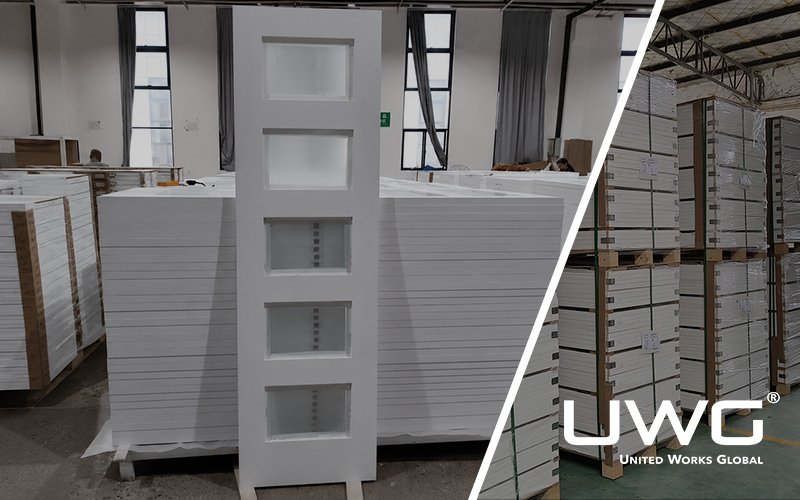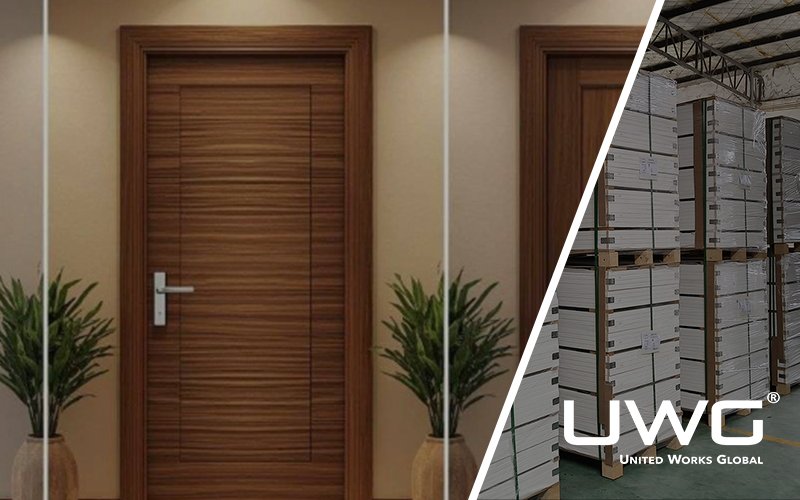

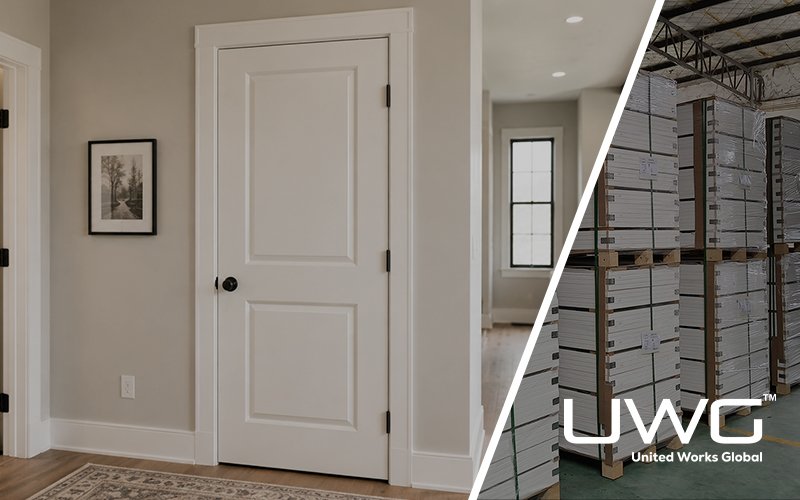
Many buyers see molded doors or Shaker doors and ask the same question: “Is this door solid or hollow?” In reality, the answer depends on the internal construction, not just the door style or surface design.
Molded doors can be either hollow core or solid core. The term “molded” refers to the door surface, typically made with pressed HDF or MDF skins featuring raised or recessed panel designs. Inside, the door may use either a lightweight hollow core or a denser solid core structure, depending on the specification.
Shaker doors, however, are slightly different. Unlike traditional molded slab constructions, most Shaker doors use a frame-and-panel structure assembled from separate rails, stiles, and center panels, which means they do not strictly fit into standard solid core or hollow core classifications.
From our experience working with builders and distributors, understanding these structural differences is important because the door construction directly affects cost, durability, sound performance, and project positioning. In this guide, we’ll compare solid core and hollow core doors, explain molded door construction, and clarify how Shaker doors fit into the discussion.
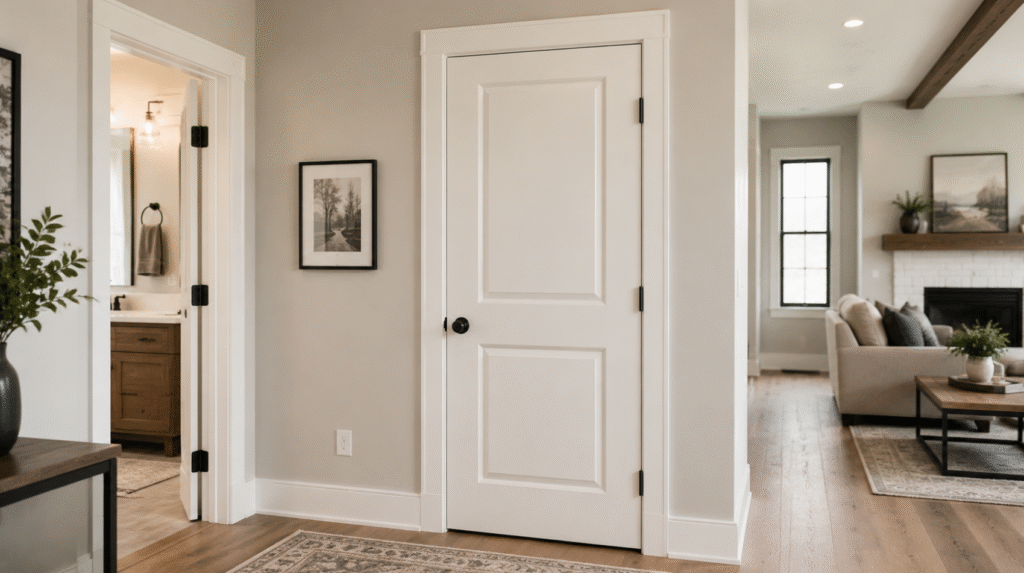
What Are Solid Core Doors?
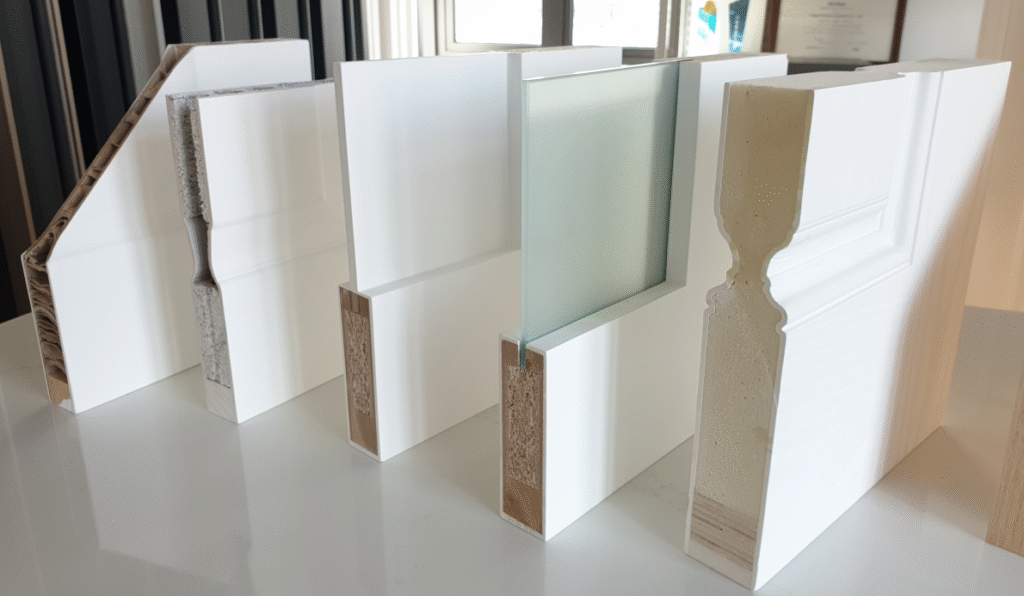
Solid core doors are interior doors designed with a dense, uniform core that provides increased durability, strength, and sound insulation compared to hollow core alternatives. The core is usually made from engineered wood, MDF, or particleboard, which is then covered with a molded or veneered surface.
Key characteristics of solid core doors include:
- Durability – Heavier and more resistant to impact or wear
- Sound Insulation – Better at reducing noise between rooms
- Stability – Less prone to warping or bending over time
Solid core doors are commonly used in high-end residential projects, multi-family housing, or areas where noise reduction is important, such as bedrooms, offices, or media rooms.
From a practical standpoint, they offer a more premium feel and longer lifespan, though they are heavier and generally more expensive than hollow core doors.
What Are Hollow Core Doors?
Hollow core doors are lightweight interior doors with a thin outer skin and an internal support structure, often made with a honeycomb core or EPS foam core.
Key characteristics of hollow core doors include:
- Lightweight – Easy to transport and install
- Cost-Effective – Generally less expensive than solid core doors
- Moderate Durability – Suitable for low-traffic areas but more susceptible to dents or damage
Hollow core doors are commonly used in bedrooms, closets, and low-traffic areas where noise reduction and impact resistance are less critical.
While they are affordable and practical, hollow core doors provide less sound insulation and structural strength than solid core or frame-and-panel options like Shaker doors.
Molded Doors Explained
Molded doors are interior doors manufactured using pressed HDF or MDF skins that are shaped into raised or recessed panel designs. The term “molded” refers to the surface construction and appearance, not the internal core type.
One of the most common misunderstandings is assuming that all molded doors are either solid or hollow throughout. In reality, molded doors can be built with either:
- Hollow core structures for lighter weight and lower cost
- Solid core structures for improved durability and sound insulation
This means two molded doors may look nearly identical on the outside while having very different internal performance and pricing.
Traditional molded doors are typically produced as slab-style constructions, where molded skins are attached over the internal core. However, many modern Shaker doors use a frame-and-panel assembly structure, built from separate rails, stiles, and center panels rather than a single molded slab.
From our experience working with builders and distributors, this distinction is important because buyers often use the terms “molded,” “solid core,” and “Shaker” interchangeably, even though they describe different aspects of door construction.
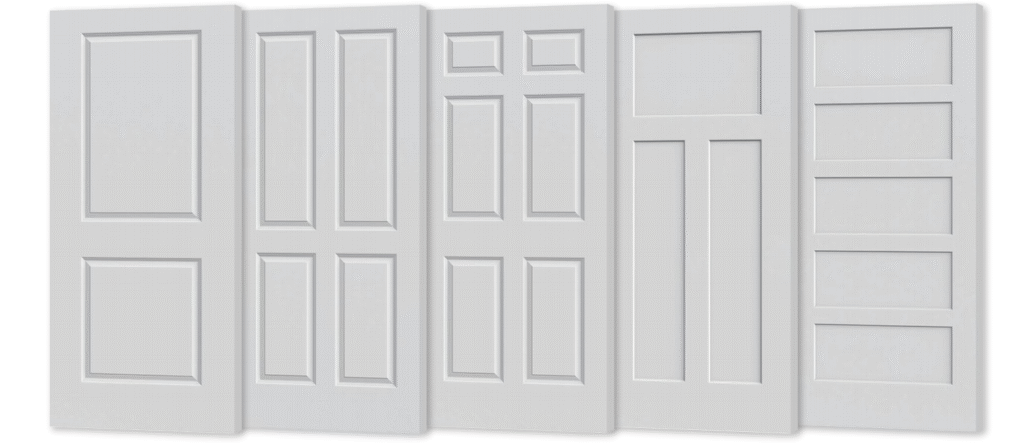
Shaker Doors Explained
Shaker doors are interior doors known for their clean lines, flat recessed panels, and minimalist design. Unlike traditional molded slab doors, most Shaker doors are built using a frame-and-panel construction, where separate components are assembled together to form the door structure.
A typical Shaker door consists of:
- Vertical stiles
- Horizontal rails
- Flat center panels
Because of this construction method, Shaker doors do not strictly fall into standard solid core or hollow core classifications. Instead of using a single molded shell over a core, the structure is formed through assembled components, often combined with engineered wood materials for improved stability.
In practice, Shaker doors may still include different internal reinforcement methods or core materials depending on the product design, but the defining feature is the assembled frame-and-panel structure itself.
From our experience working with builders and distributors, Shaker doors are widely used in modern residential and multifamily projects because they offer a balance of clean appearance, structural stability, and design flexibility.
Comparison: Solid, Hollow, and Shaker
| Door Type | What It Means | Core Options | Best For | Main Advantage |
|---|---|---|---|---|
| Solid Core Door | A door with a dense internal core | Solid core | Bedrooms, offices, hotels, premium homes | Better sound control and durability |
| Hollow Core Door | A lightweight door with inner support structure | Hollow core | Closets, rentals, budget projects | Lower cost and easy installation |
| Molded Door | A door with molded HDF or MDF skins | Hollow or solid core | Residential and commercial interiors | Flexible design and price options |
| Shaker Door | A clean, square-panel door style | Solid panel | Modern homes, apartments, villas | Popular modern appearance |
Pros and Cons of Each Type
Different door constructions offer different advantages depending on the project requirements, budget, and performance expectations.
| Door Type | Pros | Cons |
|---|---|---|
| Solid Core Doors | Better sound insulation; more durable; premium feel | Heavier; higher cost |
| Hollow Core Doors | Lightweight; cost-effective; easy to install | Lower sound insulation; less impact resistance |
| Shaker Doors | Clean modern appearance; stable frame-and-panel structure; design flexibility | Typically more complex construction; pricing varies based on materials and structure |
Buying Tips for Builders and Homeowners
When selecting interior doors, it’s important to look beyond appearance and understand how the door is constructed internally.
- Choose based on application – Hollow core doors are often suitable for closets or low-traffic rooms, while solid core or Shaker doors are better for areas requiring improved durability or sound control
- Consider long-term performance – Heavier and more stable constructions may provide better lifespan and user experience over time
- Review project budget carefully – Different constructions offer different balances between cost and performance
- Understand the actual door structure – Terms like “molded,” “solid core,” and “Shaker” describe different aspects of the door and should not be confused
- Check consistency for large projects – Builders and distributors often prioritize stable specifications and consistent quality across multiple units
From our experience working with residential and multifamily projects, many buyers initially focus only on door style, but long-term satisfaction usually depends more on choosing the right structure for the actual project requirements.
Frequently Asked Questions About Solid Core vs Hollow Core Molded Doors
Q: Are molded interior doors inherently solid core or hollow core?
A: Molded doors can be manufactured as either hollow core or solid core. The term “molded” purely describes the manufacturing method of the exterior door skin, which consists of pressed HDF or MDF sheets formed into raised or recessed panel designs. The internal cavity can be left hollow with honeycomb paper grid support for cost efficiency, or packed with dense engineered wood particles for high-performance solidity.
Q: What are the primary structural advantages of selecting a solid core molded door over a hollow core?
A: Solid core molded doors feature a dense internal core made from heavy particleboard or engineered fiber wood. This composition grants them exceptional acoustic sound reduction properties, making them ideal for bedrooms and multi-family common areas. They also offer a substantial weight feel, superior impact resistance, and long-term dimensional stability against temperature and humidity fluctuations.
Q: Why do Shaker-style doors not strictly fit into standard solid or hollow core classifications?
A: Unlike standard molded slab doors that wrap a core material within a single flat skin shell, authentic Shaker doors utilize a traditional frame-and-panel assembly. They are constructed out of separate vertical stiles, horizontal rails, and recessed center panel components joined together. This built-up joinery structure provides inherent engineering strength that sets them apart from basic core-filled slabs.
Q: How does M4B guide developers in specifying core options for large-scale projects?
A: M4B works closely with procurement managers to optimize project budgets by matching door structures to usage zones. We recommend cost-effective hollow core molded doors for low-traffic areas like linen closets, while reserving dense solid core options or robust frame-and-panel Shaker doors for entry points, master bedrooms, and home offices where privacy, durability, and a premium tactile experience are non-negotiable.
Summary
Solid core, hollow core, and Shaker doors each serve different purposes depending on the project’s performance requirements, budget, and design goals. Solid core doors provide better durability and sound insulation, hollow core doors offer a lightweight and cost-effective solution, while Shaker doors stand out for their frame-and-panel construction and versatile design.
Articles that you may be interested in:
Why Are Some Molded Doors Cheaper Than Others?
What Are the Most Common Filling Materials for Molded Doors?