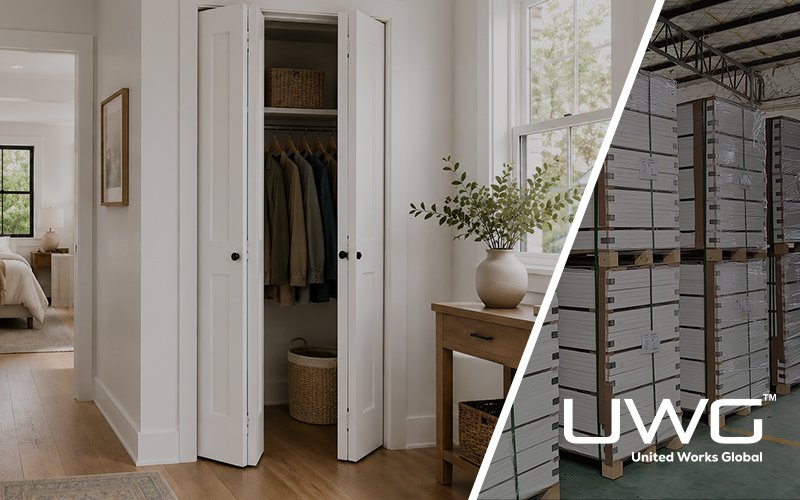
Bi-fold doors are widely used in closets, pantries, laundry rooms, and compact interior spaces. For builders and wholesalers, the right bi-fold door style affects more than appearance. It also influences cost control, installation efficiency, inventory planning, replacement speed, and the final impression of the property.
Shaker bi-fold doors use flat recessed panels and clean frame lines, making them suitable for modern and transitional interiors. Molded bi-fold doors use pressed door skins with decorative panel designs, making them a practical choice for cost-sensitive and large-volume projects. The best choice depends on budget, design positioning, core construction, finish quality, hardware, and long-term service needs.
A good bi-fold door should match the room style, meet project requirements, and perform reliably after installation.
What Are Bi-Fold Doors Used For in Interior Projects?
Bi-fold doors are interior doors made with panels that fold to one side when opened. They are commonly used where a full swing door would take up too much clearance.
Common applications include:
- Bedroom closets
- Laundry closets
- Pantry openings
- Utility rooms
- Hallway storage
- Multifamily apartments
- Rental housing
- Spec homes
For construction teams, bi-fold doors help save space and keep layouts flexible. For distributors and wholesalers, standard sizes and repeatable designs make them easier to stock for regular project demand.
What Is a Shaker Bi-Fold Door?
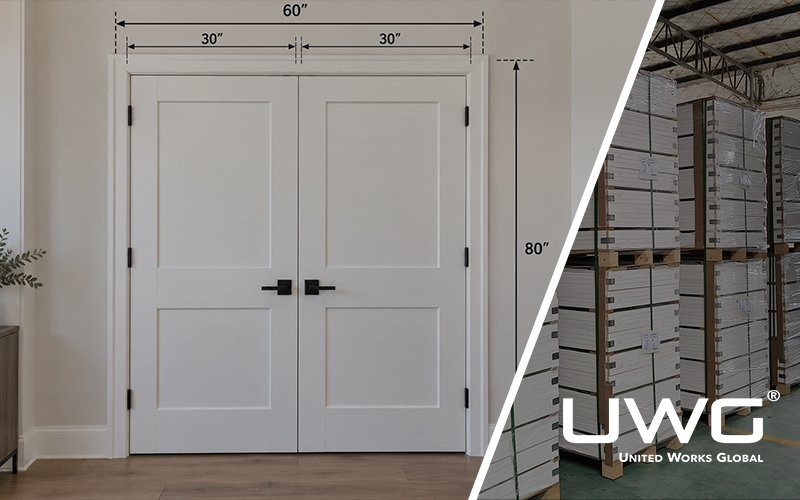
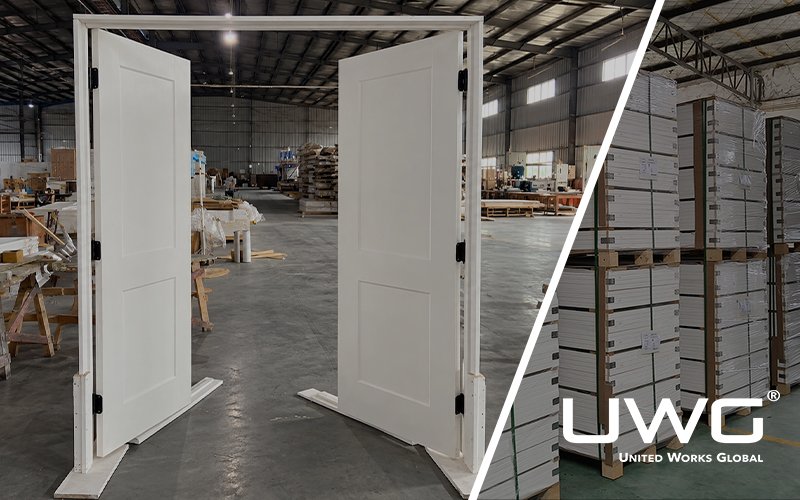
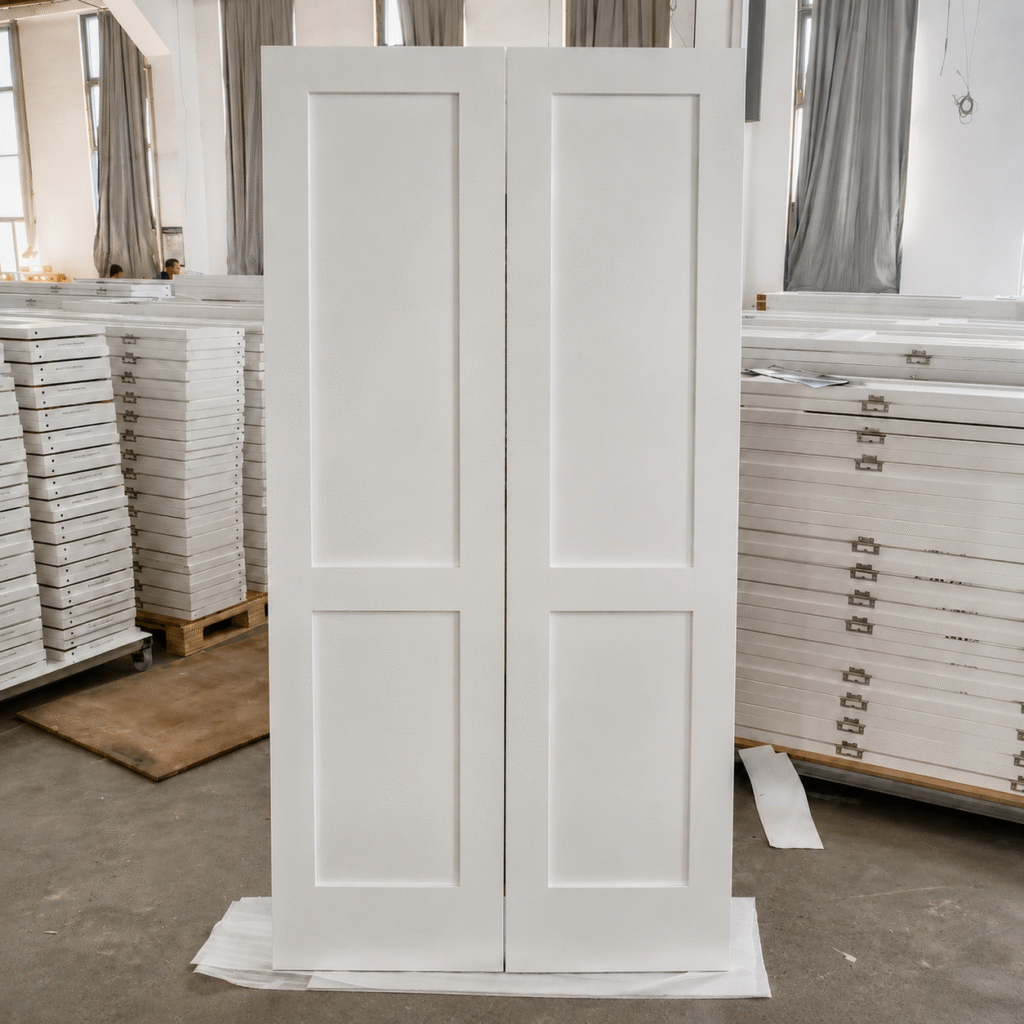
A Shaker bi-fold door has a simple frame-and-panel design. It usually includes square edges, recessed flat panels, and balanced vertical and horizontal lines.
This style works well with simple trim, flat cabinetry, neutral wall colors, and modern hardware. In many residential projects, Shaker bi-fold doors help closet and storage openings look more upgraded without making the interior feel too decorative.
Common Shaker bi-fold door features include:
- Flat recessed panels
- Straight frame lines
- Smooth paintable surface
- Modern or transitional appearance
- Strong match with Shaker cabinets and minimalist interiors
Shaker bi-fold doors are often made from MDF, wood, composite materials, or engineered cores. MDF is widely used because it provides a smooth painted surface and reduces visible grain variation.
One point buyers should notice: flat Shaker surfaces make finishing quality easier to see. If the primer, sanding, or edge treatment is poor, defects may be more visible than on textured molded doors.
What Is a Molded Bi-Fold Door?
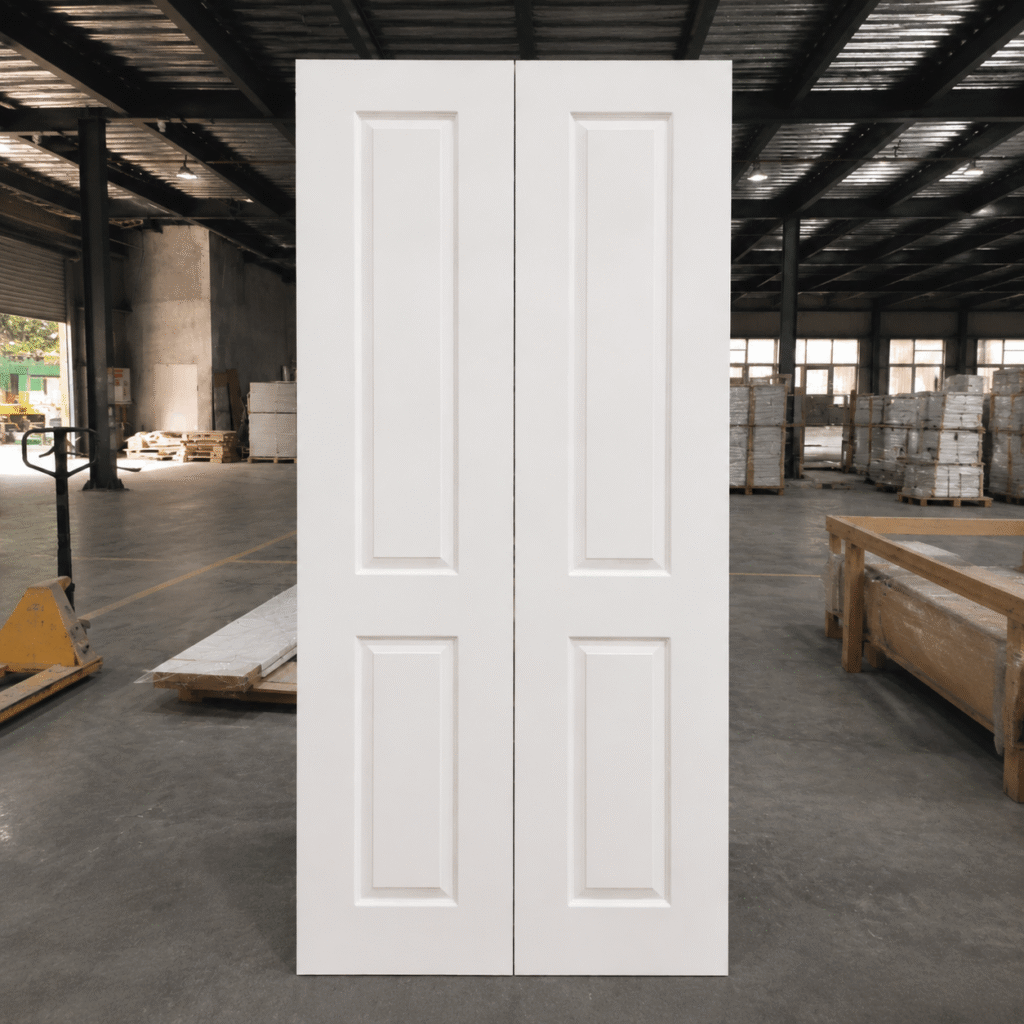
A molded bi-fold door is made with molded door skins pressed into decorative panel patterns. These may include raised panels, square panels, arched tops, or textured woodgrain surfaces.
Molded bi-fold doors are common in production housing because they offer familiar designs at competitive costs. They are available in hollow core and solid core options, allowing buyers to match different project levels.
Molded bi-fold doors are often selected when the project requires:
- Controlled material cost
- Lightweight handling
- Fast installation
- Broad design compatibility
- Stable supply for repeat orders
- Easier replacement in rental or volume housing
In large-scale projects, the advantage is not only the lower unit price. Molded doors are also familiar to installers, which can reduce adjustment time on site.
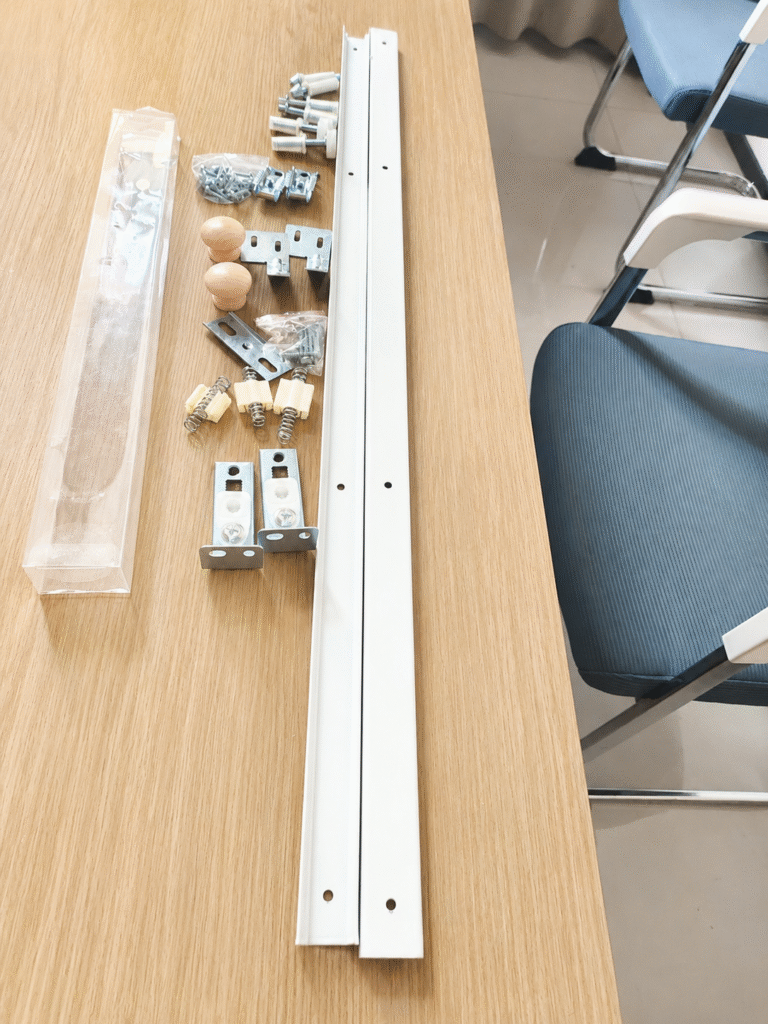
However, buyers should still check the molded skin thickness, panel depth, edge finish, and hardware package. A low-cost molded door can still create after-sales problems if the track, pivot, or packaging quality is weak.
Shaker vs Molded Bi-Fold Doors: What Are the Main Differences?
Shaker and molded bi-fold doors differ in design, construction, cost, and target application. Shaker styles usually create a cleaner and more refined look. Molded styles often support tighter budgets and wider inventory movement.
| Feature | Shaker Bi-Fold Door | Molded Bi-Fold Door |
|---|---|---|
| Design Style | Flat, simple, modern | Raised, textured, arched, or decorative |
| Common Projects | Modern homes, upgraded apartments, custom interiors | Production homes, rentals, multifamily projects |
| Surface Look | Smooth and clean | Textured or molded panel detail |
| Cost Level | Medium to higher | Low to medium |
| Finish Requirement | Needs consistent sanding and painting | More forgiving for standard finishes |
| Inventory Advantage | Good for design-focused projects | Strong for high-volume stocking |
| Perceived Value | Higher visual upgrade | Practical and budget-friendly |
| Best Use | Contemporary and transitional spaces | Cost-sensitive and repeat-order projects |
Based on project purchasing experience, bi-fold doors should not be judged by appearance alone. For bulk orders, three details often matter before style: carton protection during transport, hardware adjustment tolerance on site, and finish consistency across batches.
Shaker bi-fold doors usually create stronger visual value, but they require better surface finishing because flat panels reveal flaws more easily. Molded bi-fold doors are more forgiving for budget projects, but the molded pattern, door skin strength, and hardware quality should still be checked before confirming a large order.
Other Popular Bi-Fold Door Designs for Builders and Wholesalers
Shaker and molded styles are common, but different spaces may require different bi-fold door designs.
Flush Bi-Fold Doors for Minimalist Interiors
Flush bi-fold doors have a completely flat surface with no panel detail. They are suitable for simple, modern, or commercial-style interiors. They are also useful when the door should blend into the wall instead of becoming a design feature.
Glass Lite Bi-Fold Doors for Light and Visibility
Glass lite bi-fold doors include clear, frosted, or decorative glass panels. They are often used for pantries, laundry rooms, or semi-private spaces where light flow matters.
Frosted glass is practical when the room needs brightness but still requires some privacy.
Louvered Bi-Fold Doors for Ventilation
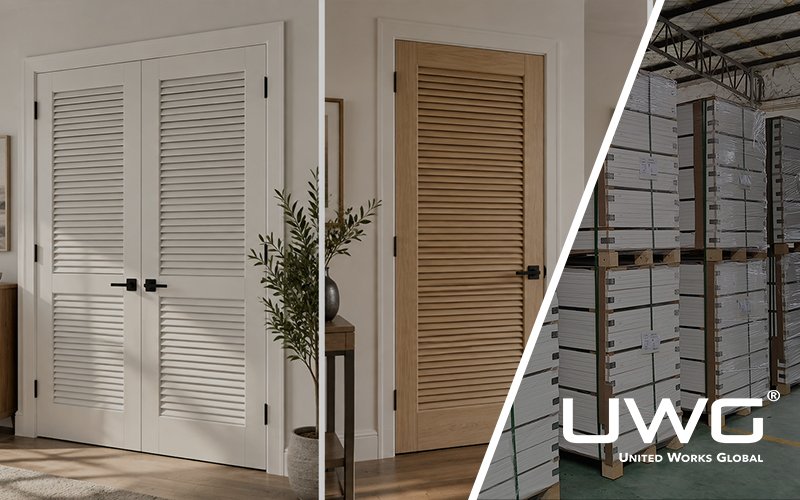
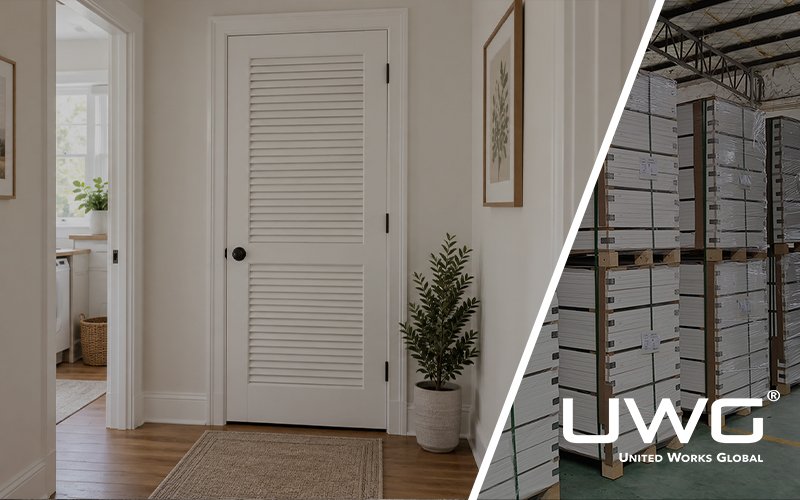
Louvered bi-fold doors have horizontal slats that allow airflow. They are commonly used for laundry closets, utility areas, and mechanical spaces.
For spaces with appliances or equipment, ventilation can be more important than decoration. This is why louvered bi-fold doors remain useful in many building projects.
Raised Panel Bi-Fold Doors for Traditional Homes
Raised panel bi-fold doors suit homes with classic trim, colonial details, or traditional interior packages. They provide a familiar look and often match older swing door styles.
How to Choose the Right Bi-Fold Door Style for Different Projects
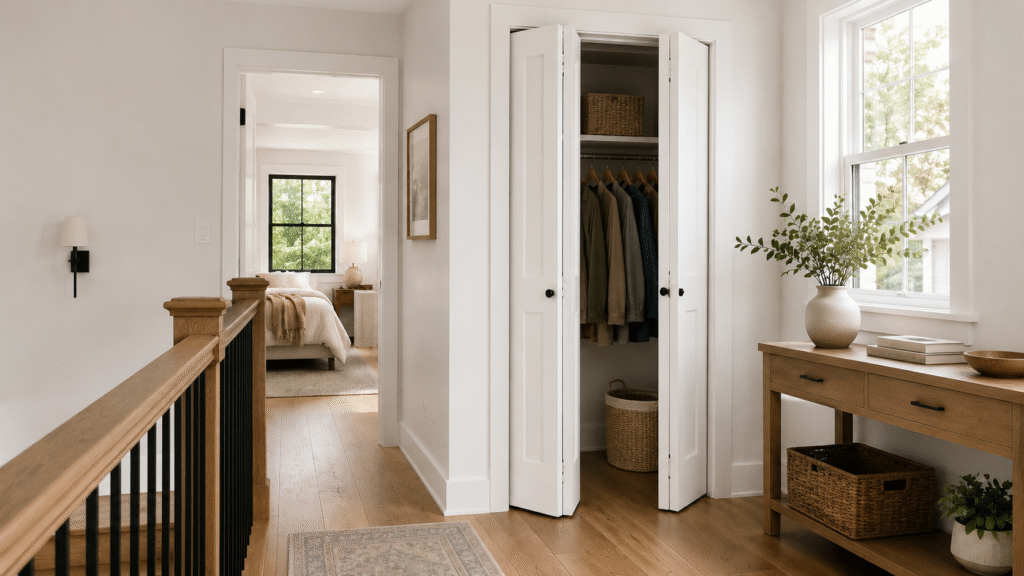
For modern apartments, two-panel Shaker or simple square molded bi-fold doors are usually strong choices. They photograph well, match current interior trends, and work with neutral finishes.
For rental housing, molded hollow core bi-fold doors may be more practical because they help control cost and simplify replacement.
For higher-end residential projects, solid core Shaker or premium MDF bi-fold doors can provide a better finished feel. The surface is smoother, the lines are sharper, and the result looks closer to custom millwork.
For laundry and utility spaces, louvered or glass-lite designs may be more functional. In these areas, airflow, access, and maintenance should be considered before style alone.
Summary
Shaker bi-fold doors are best for clean and design-focused interiors. Molded bi-fold doors are practical for cost control, repeat orders, and large-volume projects. Flush, glass lite, louvered, and raised panel designs also have clear use cases.
For builders and wholesalers, the right choice should balance style, budget, construction quality, inventory demand, installation reliability, and long-term service needs.
Articles that you may be interested in:
Common Bi-Fold Door Hardware Issues and How to Avoid Them
Bi-Fold Door Hinges: How to Choose and Install for Smooth Folding