
Introduction
Choosing the right interior door core materials can significantly affect construction cost, acoustic performance, and long-term durability in modern building projects.
For builders and developers managing residential or commercial projects, selecting between hollow core doors and particleboard core doors often comes down to balancing budget efficiency with performance requirements. Understanding how each door core works helps contractors make better specification decisions.
Hollow core doors use a lightweight tubular or honeycomb interior structure, making them one of the most cost-effective interior door options for large construction projects. Particleboard core doors use a dense engineered wood core that improves sound insulation, durability, and structural stability. Builders typically choose hollow core doors for closets or secondary spaces, while particleboard core doors are preferred for bedrooms, offices, and apartments where acoustic performance and strength matter.
Before specifying interior doors for a project, it’s important to understand the structural differences, cost impact, and performance characteristics of each door core type.
Hollow Core vs Particleboard Core Doors: Key Differences
| Feature | Hollow Core Door | Particleboard Core Door |
|---|---|---|
| Core Structure | Honeycomb or tubular interior structure | Dense engineered particleboard core |
| Weight | Lightweight | Heavier and more solid |
| Cost | Lower cost, ideal for budget projects | Higher cost but improved performance |
| Sound Insulation | Limited sound reduction | Significantly better acoustic insulation |
| Durability | Moderate, more prone to dents | Stronger and more impact-resistant |
| Installation | Easier to handle and install | Heavier, may require more effort |
| Typical Applications | Closets, storage rooms, low-traffic areas | Bedrooms, apartments, offices, hotels |
What Are Hollow Core Doors and How Are They Built?
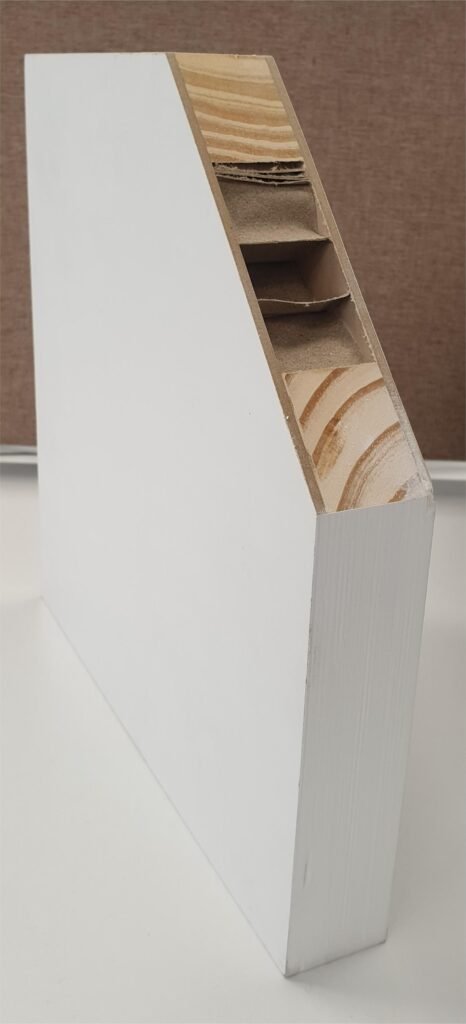
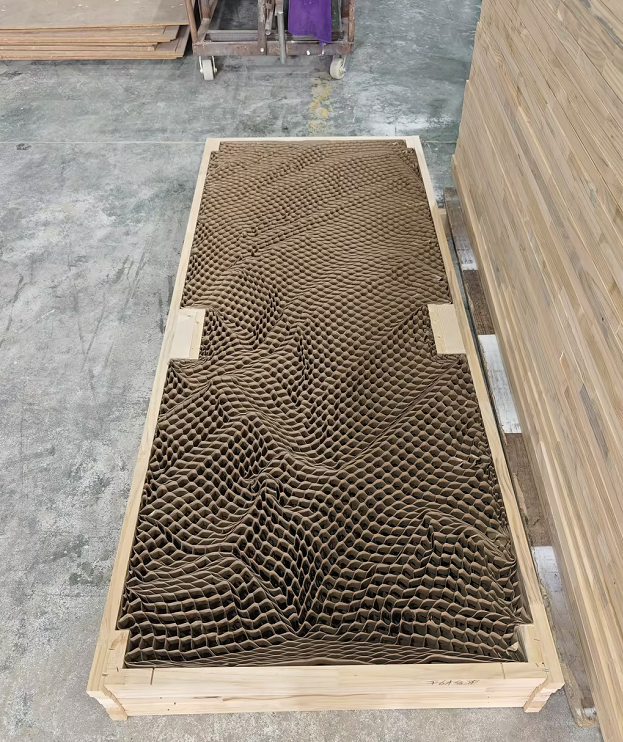
A hollow core door is designed with a lightweight internal structure, typically using a honeycomb or tubular cardboard core placed between thin wood, MDF, or veneer panels.
This construction reduces material usage while maintaining structural shape. Because of their light weight, hollow core interior doors are easier to transport and install, making them popular in large residential developments.
For builders, the biggest advantages include:
- Lower manufacturing cost
- Lightweight handling during installation
- Efficient for large-scale housing projects
However, hollow core doors provide limited sound insulation and impact resistance, which means they are not ideal for spaces that require privacy or frequent use.
What Is a Particleboard Core Door?
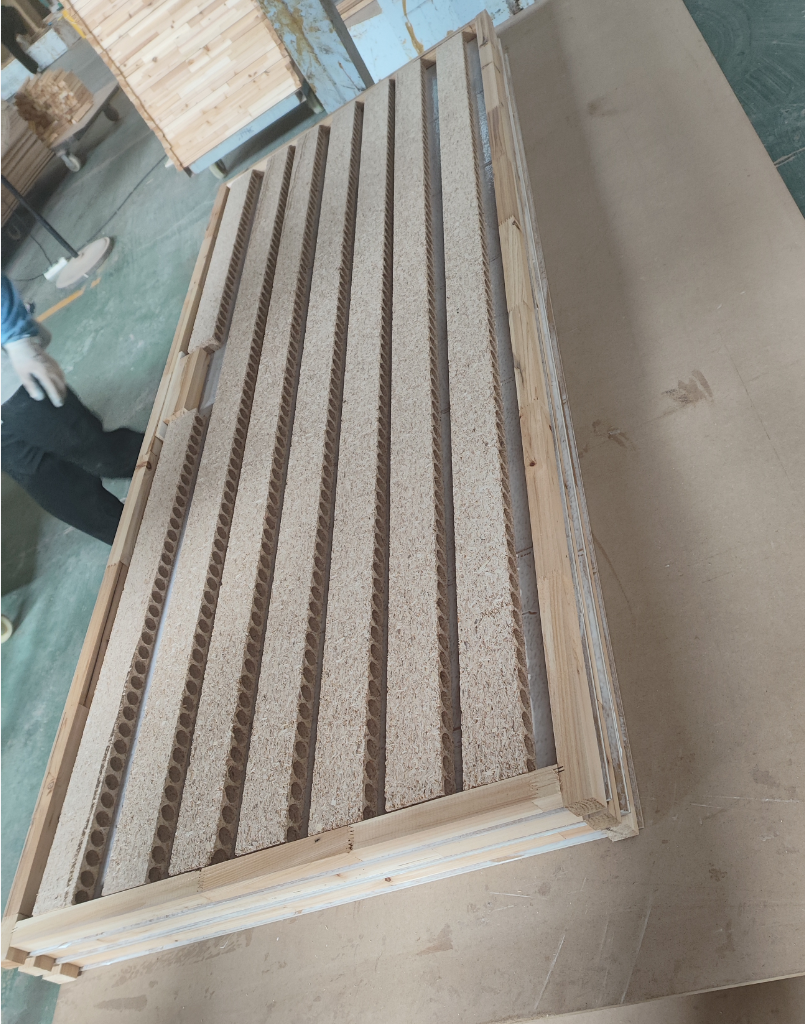
A particleboard core door uses a solid engineered wood core made from compressed wood particles bonded with resin under high pressure. This dense core gives the door more weight and stability compared to hollow core designs.
Because of the higher density, particleboard core doors provide several performance benefits:
- Improved sound insulation
- Greater structural stability
- Higher impact resistance
- Longer service life
This type of door is often categorized within the solid core interior door segment and is commonly used in residential buildings, hotels, and office spaces where durability and acoustic control are required.
Hollow Core vs Particleboard Core Doors: Cost Comparison
For large construction projects, cost is one of the most critical factors when selecting door specifications.
Hollow core doors are generally the most affordable option because they use less raw material and have a lighter internal structure. This makes them ideal for projects with tight budgets or large quantities of interior doors.
Particleboard core doors, while more expensive, provide better performance in terms of durability and sound insulation. Many developers consider them a mid-range solution between hollow core doors and solid wood doors.
In many projects, builders adopt a mixed specification strategy:
- Hollow core doors for closets and utility spaces
- Particleboard core doors for bedrooms and living areas
This approach balances project cost control with functional performance.
Which Door Core Provides Better Sound Insulation?
When comparing solid core vs hollow core doors sound performance, particleboard core doors clearly provide better acoustic insulation.
The dense engineered wood core helps absorb and block sound waves more effectively than the lightweight honeycomb structure inside hollow core doors.
For projects such as:
- Apartments
- Hotels
- Offices
- Multi-family housing
sound insulation can significantly influence occupant comfort. In these environments, particleboard core doors are usually the preferred specification.
Hollow core doors, while economical, allow more sound transmission and are therefore better suited for non-private areas.
Where Should Builders Use Hollow Core Doors?
Despite their limitations, hollow core interior doors remain widely used in construction due to their affordability and practicality.
Common applications include:
- Closets
- Storage rooms
- Laundry rooms
- Utility spaces
- Budget housing developments
In these locations, sound insulation and heavy durability are typically not critical, making hollow core doors a practical choice.
Where Are Particleboard Core Doors a Better Choice?
Particleboard core doors are more suitable for areas where privacy, comfort, and long-term durability are important.
Builders often specify them for:
- Bedrooms
- Bathrooms
- Apartments and condominiums
- Office rooms
- Hotel guest rooms
These environments benefit from improved acoustic insulation and a more solid door feel.
Should Builders Choose Hollow Core or Particleboard Core Doors?
The decision between hollow core door vs particleboard core door ultimately depends on project priorities.
If the goal is maximum cost efficiency, hollow core doors provide a lightweight and economical solution for low-traffic spaces.
If the project requires better sound control, durability, and perceived quality, particleboard core doors are the stronger choice.
Many successful developments combine both door types to optimize budget, performance, and building standards.
Frequently Asked Questions About Interior Door Cores
Q: What is the main difference between a hollow core and a particleboard core door?
A: Hollow core doors use a lightweight tubular or honeycomb interior structure, making them highly cost-effective and easy to install. Particleboard core doors feature a dense engineered wood core that provides superior impact resistance and a heavier, premium feel.
Q: Which interior door core is better for sound insulation?
A: Particleboard core doors offer significantly better acoustic insulation. Their dense engineered wood core blocks sound transmission much more effectively than the empty spaces in a hollow core door, making them ideal for bedrooms, hotels, and offices.
Q: Where should builders specify hollow core doors?
A: Because they are lightweight and budget-friendly, hollow core doors are best suited for low-traffic areas or spaces where acoustic privacy is not a priority, such as closets, pantries, and storage rooms.
Q: Why do construction projects often use a mix of both door cores?
A: Builders often adopt a mixed specification strategy to balance cost and performance. They install particleboard core doors in bedrooms and living areas for privacy and durability, while using hollow core doors in utility spaces to control overall project budgets.
Conclusion
Selecting the right interior door core materials is an important part of project planning for builders and developers. Hollow core doors help reduce construction costs, while particleboard core doors offer better acoustic performance and durability.
By matching the door core type to the function of each space, construction professionals can achieve the right balance between cost efficiency and building quality.