Builders often struggle to choose the right SPC flooring thickness and wear layer. A wrong decision can lead to premature wear or unnecessary cost. Understanding industry standards helps avoid these issues and ensures long-lasting, cost-efficient flooring solutions.
SPC flooring thickness typically ranges from 4mm to 8mm, while wear layers range from 0.2 mm to 0.7 mm. For residential projects, 0.3–0.5 mm wear layers are standard, while commercial spaces require 0.5–0.7 mm for durability. Builders should match thickness and wear layer to traffic levels to balance performance, cost, and longevity.
Now let’s break down how thickness and wear layer standards impact real-world construction projects and how to select the right specifications.
What Is SPC Flooring and Why Thickness Matters for Builders
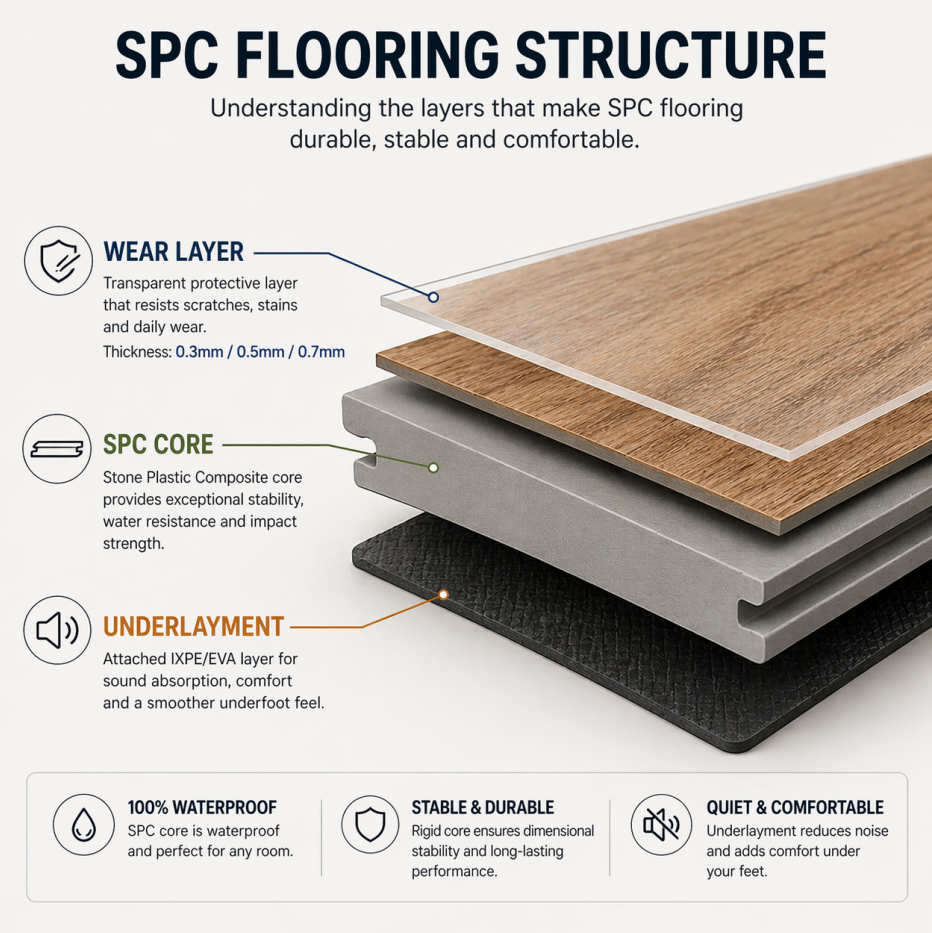
SPC stands for Stone Plastic Composite, a rigid core flooring made from limestone powder, PVC, and stabilizers. This structure makes it more dimensionally stable than traditional vinyl flooring.
From our project experience, many builders confuse total thickness with wear layer thickness. In reality:
- Total thickness affects comfort, sound insulation, and subfloor tolerance
- Wear layer determines scratch resistance and lifespan
Understanding this distinction is critical when specifying flooring for different environments.
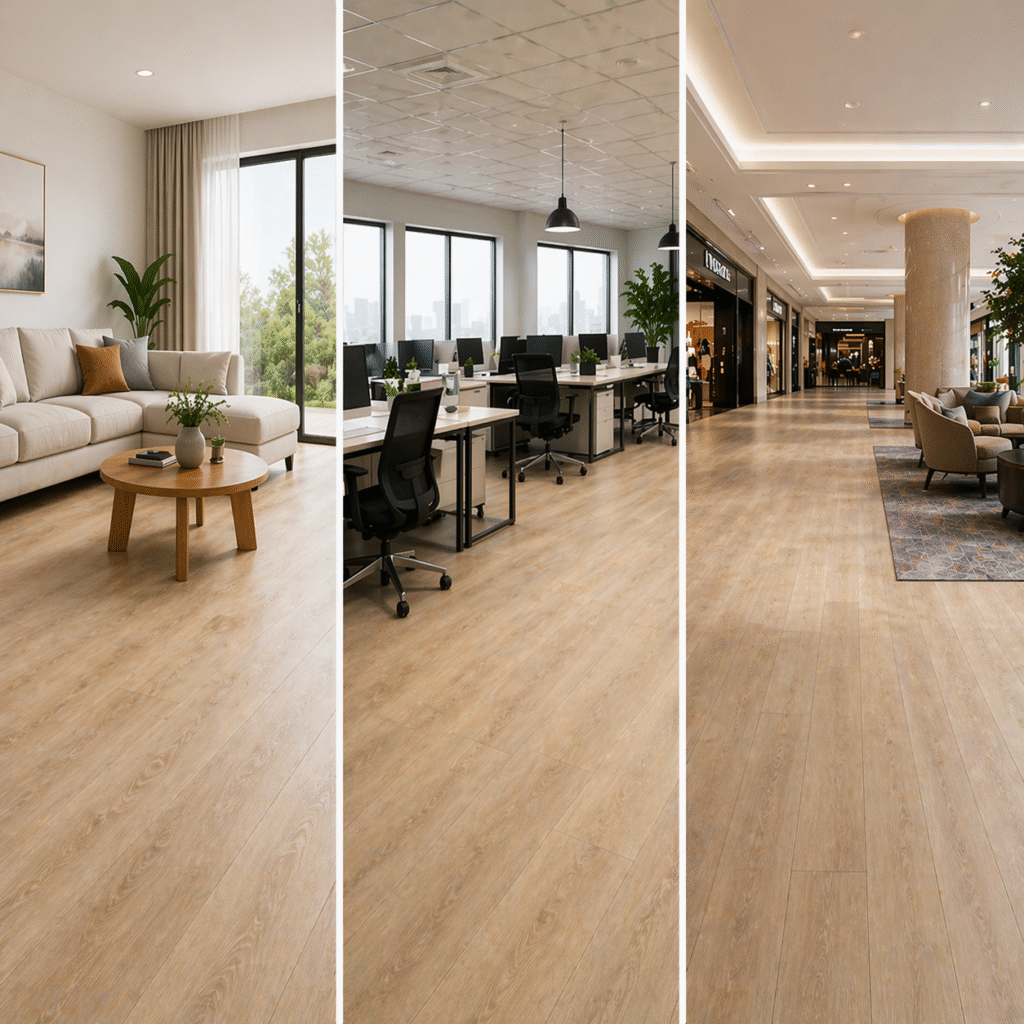
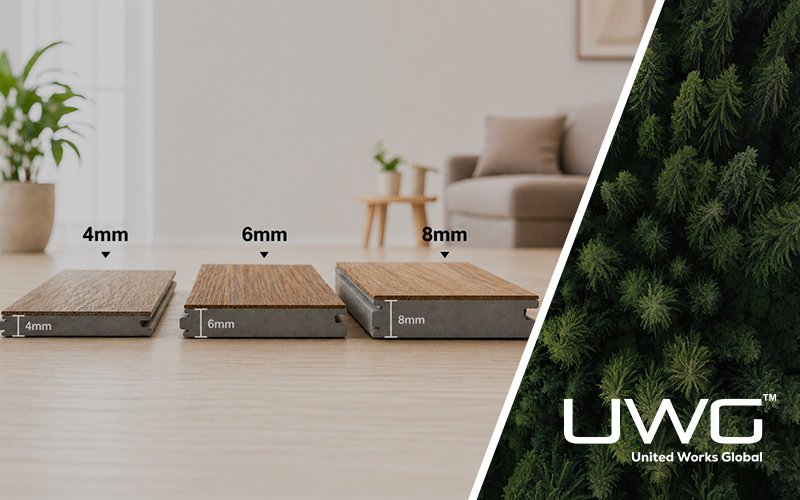
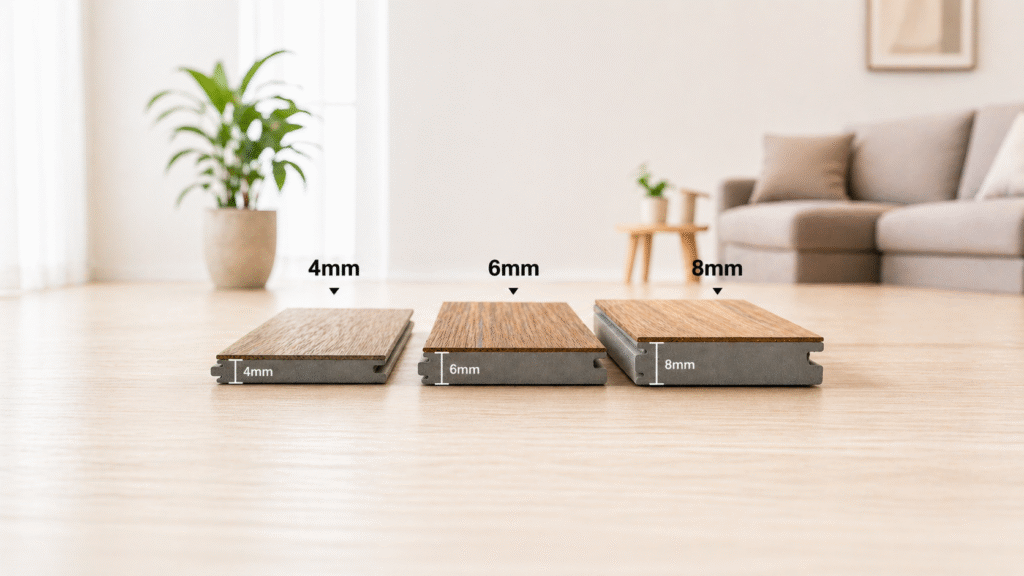
SPC Flooring Thickness Standards (4mm, 6mm, 8mm Comparison)
In the current market, the most common options include 6mm SPC flooring, 8mm SPC flooring, and occasionally higher builds.
| Thickness | Typical Use | Advantages | Limitations |
|---|---|---|---|
| 4–5mm | Budget residential | Lower cost, easy installation | Less stable on uneven subfloors |
| 6–7mm | Standard residential | Balanced durability and comfort | متوسط cost-performance |
| 8mm+ | Commercial / high-end | Better acoustics, stronger locking | Higher material cost |
From installation data across apartment and retail projects, 6mm SPC flooring is often the baseline choice, while 8mm SPC flooring performs better in high-traffic or uneven subfloor conditions.
What Is a Good Wear Layer for SPC Flooring?
A “good” wear layer depends entirely on traffic level rather than thickness alone.
- 12–20 mil (0.3–0.5 mm): Suitable for residential and light commercial
- 20+ mil (0.5–0.7 mm): Required for heavy commercial environments
The wear layer acts as a protective shield against scratches, stains, and abrasion. According to field feedback from office and retail installations, increasing wear layer thickness can extend flooring lifespan by several years under heavy use.
Is a 0.5 mm Wear Layer Good for Your Project?
In most cases, 0.5 mm wear layer is considered the industry standard.
Based on real-world applications:
- Apartments and residential buildings → fully sufficient
- Small offices → performs well under moderate traffic
- Retail or hospitality → may wear faster over time
From our experience working with mixed-use developments, 0.5 mm offers the best balance between cost and durability, but upgrading to 0.7 mm is often justified in high-footfall zones like lobbies or corridors.
Wear Layer Standards Explained: 0.3mm vs 0.5mm vs 0.7mm
Understanding wear layer differences helps avoid both under-specification and overpayment.
| Wear Layer | Traffic Level | Typical Application |
|---|---|---|
| 0.3 mm | Light | Bedrooms, low-use areas |
| 0.5 mm | Medium | Homes, offices |
| 0.7 mm | Heavy | Retail, hotels, airports |
Technically, thicker wear layers improve:
- Scratch resistance
- Abrasion resistance
- Service life
However, beyond 0.7 mm, the cost increase often outweighs practical benefits for most building projects.
How Thickness and Wear Layer Affect SPC Flooring Installation
Thickness and wear layer also directly influence SPC flooring installation performance.
Key factors include:
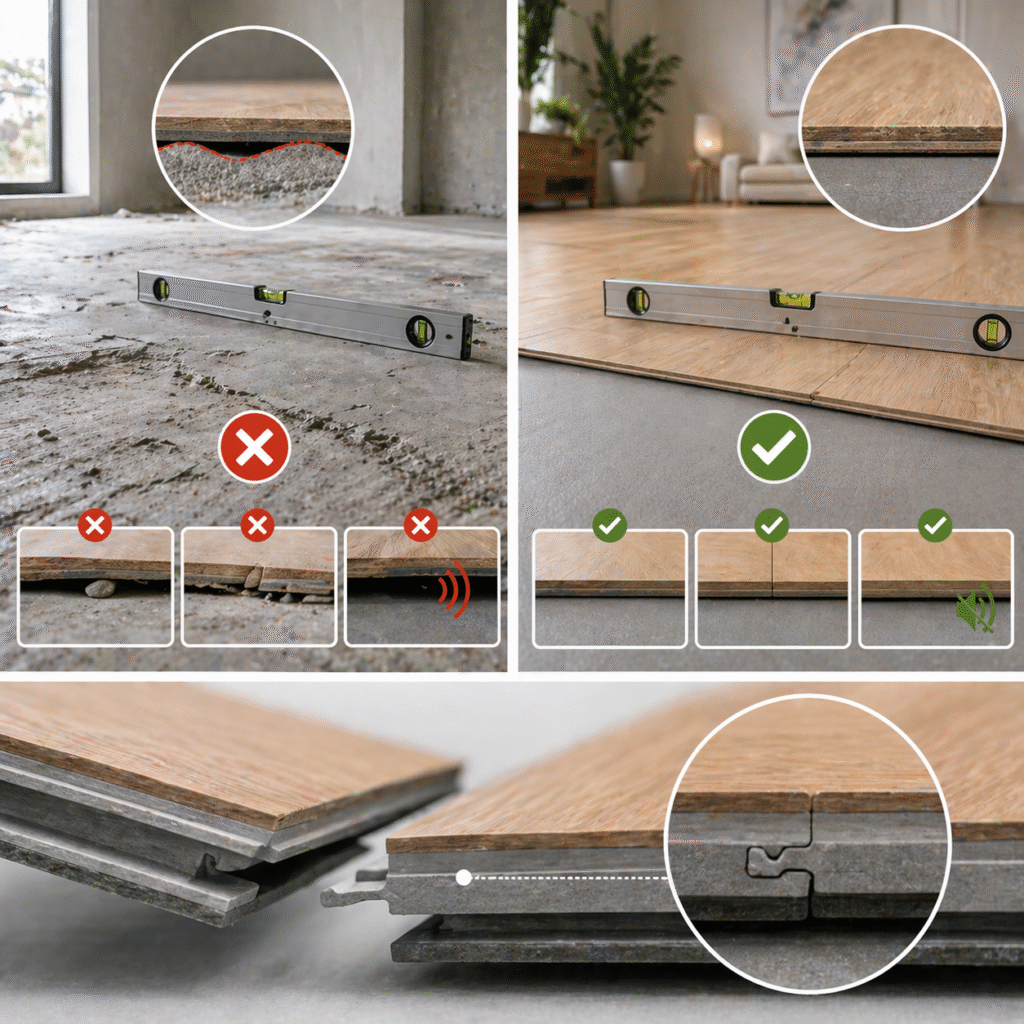
- Subfloor tolerance: Thicker boards (≥6mm) handle minor unevenness better
- Click-lock strength: Thicker cores improve joint durability
- Installation efficiency: Thinner boards are easier but less forgiving
Improper thickness selection often leads to joint failure or visible telegraphing of subfloor defects.
How to Balance Cost and Performance in SPC Flooring Selection
Price is always a key concern for builders and wholesalers. However, selecting based only on SPC flooring price can lead to long-term issues.
A practical approach:
- Use 4–5mm + 0.3mm wear layer for short-term or rental projects
- Use 6–7mm + 0.5mm wear layer for standard residential
- Use 8mm + 0.7mm wear layer for commercial spaces
From cost analysis across multiple procurement projects, overspending on thickness without upgrading wear layer provides limited performance gains.
Common Mistakes Builders Make When Choosing SPC Flooring
Several recurring issues appear in real projects:
- Prioritizing thickness over wear layer
- Ignoring actual traffic conditions
- Over-specifying for low-use areas
- Underestimating installation conditions
In one retail project we reviewed, a 4mm board with a 0.5 mm wear layer outperformed a thicker product with a weaker wear layer—highlighting the importance of correct specification.
Frequently Asked Questions About Interior Design Styles
Q: Why is choosing an interior design style important for builders and contractors?
A: For professionals, an interior design style is more than an aesthetic; it serves as a standardized system for material selection and procurement. Choosing the right style early in the project streamlines the sourcing for doors, flooring, and mouldings, simplifies on-site installation, and ensures a cohesive look that aligns with budget constraints and market expectations.
Q: Which design style is most cost-effective for large-scale multi-unit projects?
A: Modern and Modern Farmhouse styles are generally the most cost-effective for large-scale developments. These styles utilize standardized, factory-primed materials like Shaker doors and SPC flooring, which are easier to source in bulk, faster to install, and offer a clean look that appeals to a wide demographic of modern homebuyers and renters.
Q: What are the main material differences between Traditional and Modern design styles?
A: Traditional design focuses on symmetry and intricate detailing, often requiring more expensive solid wood doors, complex decorative moldings, and dark wood finishes. Modern design emphasizes minimalism and clean lines, typically favoring more affordable but durable engineered materials like MDF Shaker doors and neutral-toned SPC or LVP flooring.
Q: How can M4B help builders align their design style with their project budget?
A: M4B specializes in providing integrated material solutions that balance aesthetics with construction feasibility. By offering factory-direct packages of matching doors, flooring, and trim kits tailored to specific styles, M4B helps contractors reduce decision friction, minimize material waste on-site, and maintain strict control over the total project cost.
Summary
Choosing the right SPC flooring thickness and wear layer ensures durability, cost efficiency, and project success. By aligning specifications with traffic levels and installation needs, builders and wholesalers can avoid costly mistakes and deliver long-lasting flooring solutions.
Articles that you may be interested in:
Contractor’s Guide: When to Use SPC vs Vinyl Plank Flooring
12 mil vs 20 mil vs 30 mil Wear Layer: Which SPC Flooring Is Best for Your Project?