Interior doors are more than just functional barriers between rooms—they also play an important role in defining the overall style of a home. One of the first design choices buyers notice is the door panel style, which influences the look and feel of both traditional and modern interiors.
From classic 6-panel doors to clean, contemporary Shaker designs, today’s interior doors are available in a wide variety of panel configurations. While these styles may appear similar at first glance, they differ in aesthetics, architectural compatibility, manufacturing methods, and cost. Understanding these differences can help builders, distributors, and homeowners choose doors that match both the design vision and the project’s budget.
In this guide, we’ll explain the most common interior door panel styles, compare their characteristics, and share practical tips for selecting the right option for residential and multifamily projects.
What Are Interior Door Panel Styles?
Interior door panel styles refer to the decorative layout and design of the door’s front and back surfaces. The number, shape, and arrangement of the panels determine the door’s overall appearance, helping define whether it complements a traditional, transitional, or contemporary interior.
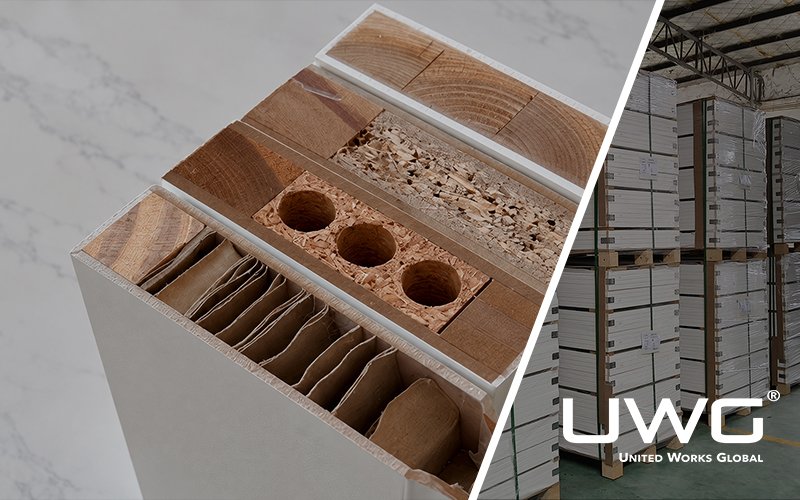
It’s important to understand that a door panel style describes the door’s design—not its construction or internal core. For example, a 2-panel, 5-panel, or 6-panel door can be manufactured with either a hollow core or a solid core, depending on the required level of durability, sound insulation, and budget. Likewise, the same panel style may be produced as a molded door or an assembled Shaker door, each using different manufacturing methods.
Today’s interior doors are available in a wide range of panel styles, allowing builders and homeowners to create a consistent design throughout an entire project. Whether you’re building a modern apartment, a traditional home, or a multifamily development, selecting the right panel style is an important step in achieving both the desired aesthetic and functional performance.
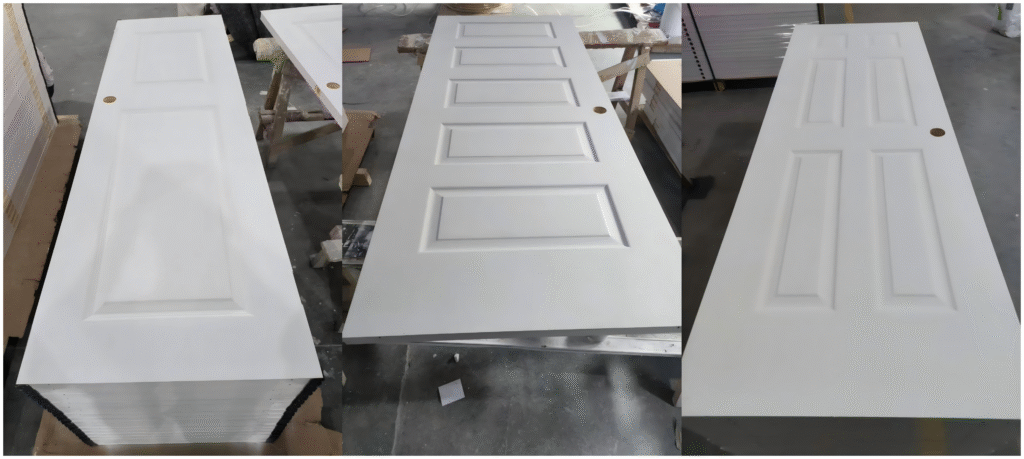
Most Popular Interior Door Panel Styles
Interior door panel styles come in a variety of designs, each suited to different architectural styles and design preferences. Here are some of the most popular options found in North American homes.
Shaker Panel Doors
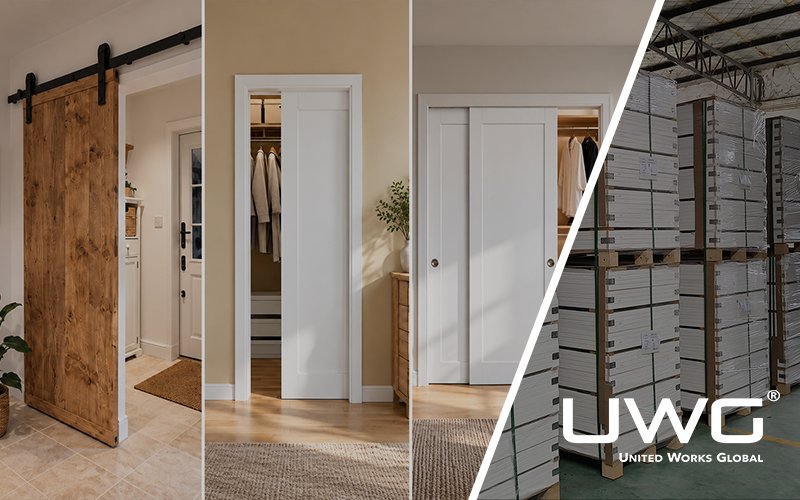
Simple recessed panels and clean lines make Shaker doors ideal for modern, Scandinavian, transitional, and contemporary homes. Their timeless appearance also works well in many custom homes.
Raised Panel Doors
Raised panel doors feature beveled center panels that create depth and elegance. They remain a popular choice for traditional, Colonial, and luxury residential projects.
Craftsman Panel Doors
Typically available in 3-panel configurations, Craftsman doors emphasize horizontal lines and understated detailing. They pair well with natural wood finishes and Mission-style architecture.
Multi-Panel Traditional Doors
Five-panel and six-panel doors continue to be widely specified because they offer a familiar appearance that appeals to many homeowners. These styles work particularly well in large residential developments where broad buyer appeal is important.
For projects involving wider openings, double interior door panel styles often use matching panel configurations to maintain visual symmetry between both door leaves.
Traditional vs Modern Panel Designs
Interior door panel styles generally fall into two categories: traditional and modern. The right choice depends on the architectural style of the home and the overall interior design.
Traditional panel doors feature more detailed designs, often with raised or multiple recessed panels that add depth and character. Popular options include 6-panel and raised panel doors, which complement colonial, classic, and traditional homes.
In contrast, modern panel doors emphasize clean lines and simplicity. Shaker and flush doors are the most common choices, offering a minimalist look that pairs well with contemporary, Scandinavian, and modern farmhouse interiors.
While traditional styles create a warm and timeless feel, modern designs provide a clean, streamlined appearance. Both remain popular in North America, and the best choice depends on the desired aesthetic and the overall design of the project.
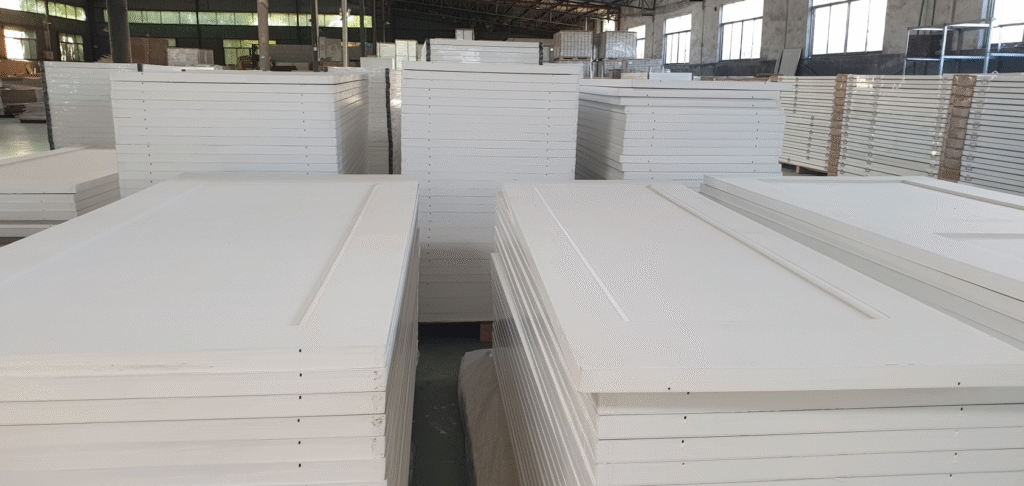
Molded vs Shaker Panel Doors
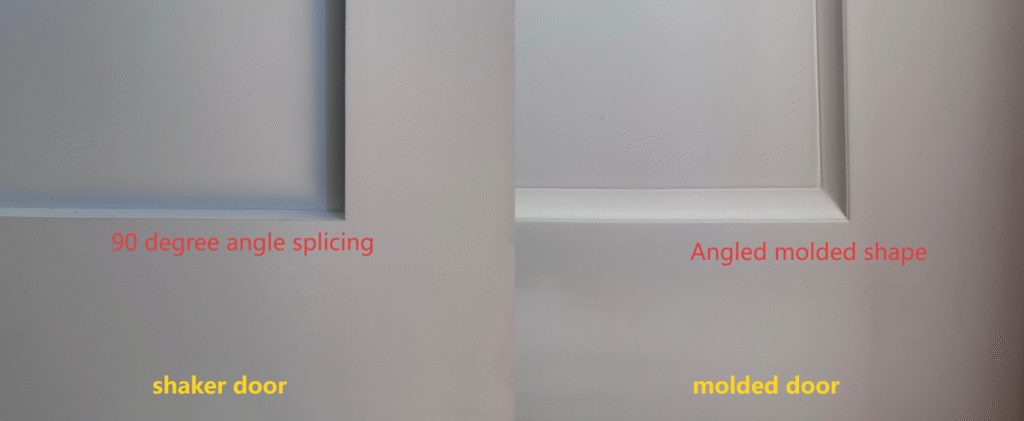
While molded and Shaker doors may look similar, they differ in construction, manufacturing process, and cost. The table below highlights the key differences.
| Feature | Molded Panel Doors | Shaker Panel Doors |
|---|---|---|
| Construction | Molded MDF door skins bonded to the core | Assembled from individual rails, stiles, and flat panels |
| Appearance | Smooth, consistent panel profiles | Clean lines with deeper shadow lines |
| Manufacturing | Compression molded under heat and pressure | Precision assembled from multiple components |
| Design Style | Traditional and transitional | Modern, contemporary, farmhouse, and transitional |
| Cost | More affordable | Higher due to more complex construction |
| Best Applications | Residential, multifamily, and budget-conscious projects | Custom homes, premium residential, and modern interiors |
For many builders, molded doors provide excellent value on large-scale residential projects, while Shaker doors offer greater design flexibility for higher-end construction.
Choosing the Right Panel Style for Your Project
Choosing the right interior door panel style depends on the project’s architectural design, budget, and performance requirements. While there is no single “best” option, matching the door style to the overall space creates a more cohesive and appealing interior.
- Traditional homes often feature 6-panel or raised panel doors for a timeless, classic appearance.
- Modern and contemporary homes typically use Shaker or flush doors with clean, simple lines.
- Multifamily and large residential projects frequently choose molded panel doors because they offer consistent quality and excellent value.
- High-end custom homes often prefer Shaker doors for their premium craftsmanship and refined appearance.
In addition to style, consider factors such as door construction (hollow core or solid core), paint or stain finish, and overall project budget. Selecting the right combination of design and construction ensures the doors not only complement the interior but also meet the project’s functional and cost requirements.
Interior Door Trends in North America
Interior door styles in North America continue to evolve toward clean, timeless designs that balance aesthetics with practicality. While traditional panel doors remain popular, modern styles have become the preferred choice for many new residential and multifamily projects.
Some of the current trends include:
- Shaker doors remain the most popular choice for modern, farmhouse, and transitional homes.
- Minimalist designs, such as flush and simple 2-panel doors, continue to gain popularity.
- Solid core doors are increasingly specified for bedrooms and home offices to improve sound insulation.
- White painted doors continue to dominate, offering a clean look that complements a wide range of interior styles.
- Consistent door styles throughout the home are becoming the standard, creating a more cohesive and modern appearance.
As homeowners and builders increasingly prioritize simplicity, durability, and long-term value, clean-lined panel styles are expected to remain the leading trend in the North American market.
Summary
From classic 6-panel doors to modern Shaker and flush designs, each style offers a unique aesthetic while meeting different architectural and budget requirements. Understanding the differences between traditional and modern designs, as well as molded and assembled doors, makes it easier to choose the right option for any residential or multifamily project.
At UWG, we supply a wide range of interior doors, including molded doors, Shaker doors, flush doors, and other popular panel styles, available in both hollow core and solid core constructions. Beyond doors, we also provide matching door frames, mouldings, hardware, flooring, cabinets, and vinyl windows, helping builders and distributors source multiple interior products through a single supplier. Our goal is to deliver consistent quality, flexible manufacturing, and reliable support for projects of all sizes.
Frequently Asked Questions About Interior Door Panel Styles
What are interior door panel styles?
Interior door panel styles refer to the decorative layout and design of the door’s front and back surfaces. The number, shape, and arrangement of the panels determine the door’s overall appearance and help define whether it suits a traditional, transitional, or contemporary interior.
What is the difference between molded and Shaker panel doors?
Molded panel doors use molded MDF door skins bonded to the core and are typically compression molded under heat and pressure. Shaker panel doors are assembled from individual rails, stiles, and flat panels, creating cleaner lines and deeper shadow details.
Can the same door panel style have a hollow core or solid core?
Yes. A 2-panel, 5-panel, or 6-panel door can be manufactured with either a hollow core or a solid core depending on the required durability, sound insulation, and project budget.
Which interior door panel styles are best for modern homes?
Shaker and flush doors are common choices for modern and contemporary homes because of their clean lines and simple appearance. Traditional homes more often use 6-panel or raised panel doors.
Which panel doors are commonly used for multifamily projects?
Molded panel doors are frequently used in multifamily and large residential projects because they provide consistent quality and good value. Shaker doors are often selected for higher-end residential and custom home projects.
Articles that you may be interested in: