Choosing the right interior door involves much more than selecting a style or finish. The materials used inside a door determine its durability, stability, acoustic performance, maintenance requirements, and overall value throughout its service life. For builders and wholesalers, understanding these materials makes it easier to specify the right products for residential, commercial, hospitality, and multifamily projects.
Modern interior doors are typically made from a combination of solid wood, MDF (Medium-Density Fiberboard), HDF (High-Density Fiberboard), engineered wood, plywood veneers, and composite materials. Rather than relying on a single material, manufacturers combine different face panels and core constructions—such as hollow-core or solid-core—to achieve specific levels of strength, sound insulation, dimensional stability, appearance, and cost efficiency.
As interior door manufacturing has evolved, engineered materials have become increasingly popular because they provide consistent quality while reducing many of the natural movement issues associated with solid timber. Understanding how these materials are used together helps buyers select doors that meet both performance expectations and project budgets.
Interior Door Construction: How Interior Doors Are Made
Before comparing materials, it is important to understand how an interior door is constructed.
Most modern interior doors consist of two primary components:
- Door Face (Skin): The visible outer surface made from wood veneer, MDF, HDF, or molded composite panels.
- Door Core: The internal structure that determines the door’s strength, weight, insulation, and durability.
Instead of using one material throughout the entire door, manufacturers combine different materials to achieve specific performance goals. For example, a lightweight bedroom door may prioritize affordability, while a hotel guestroom door typically requires greater sound insulation and durability.
This layered construction allows manufacturers to produce doors that meet different architectural and commercial requirements without significantly increasing production costs.
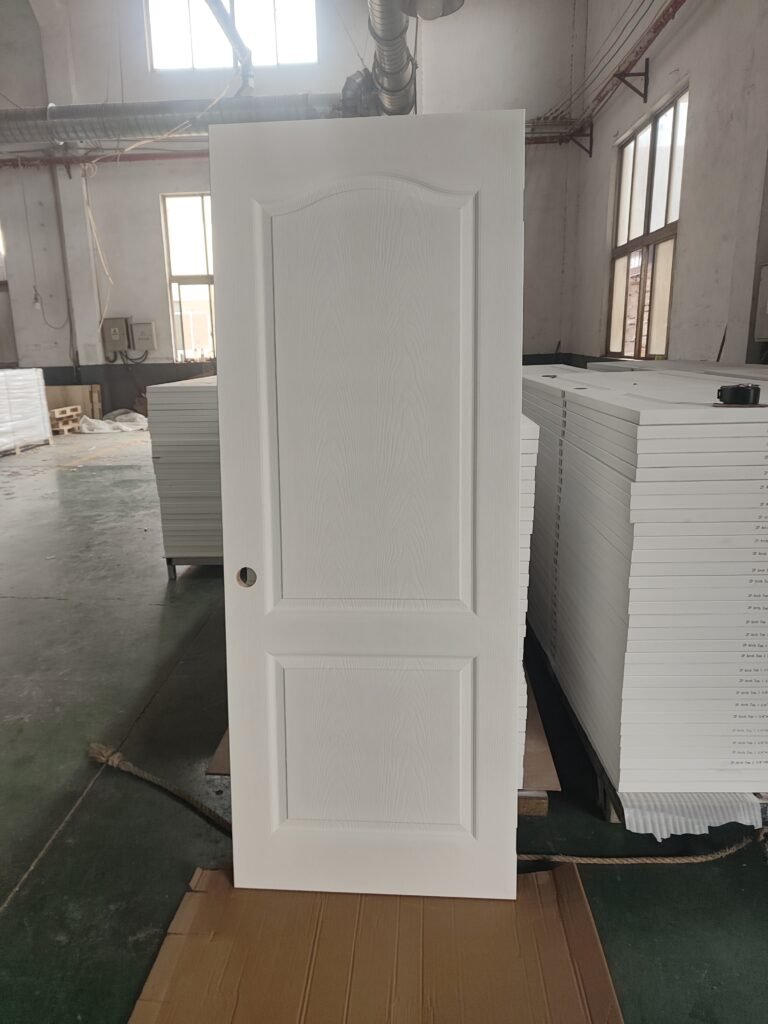
Common Materials Used to Manufacture Interior Doors
Solid Wood Interior Doors
Solid wood doors are manufactured from natural timber and remain one of the highest-quality options available for interior applications.
Common wood species include:
- Oak
- Maple
- Pine
- Cherry
- Walnut
- Poplar
Advantages
- Premium natural appearance
- Excellent structural strength
- Outstanding sound insulation
- Long service life
- Can be refinished multiple times
Limitations
- Higher purchase cost
- Sensitive to humidity changes
- Heavier than engineered alternatives
Solid wood doors are commonly selected for luxury homes, executive offices, villas, and high-end architectural projects where authentic wood grain is an important design feature.
MDF Interior Doors
Medium-Density Fiberboard (MDF) has become one of the most widely used engineered materials in the interior door industry.
During manufacturing, wood fibers are refined into a uniform consistency before being bonded with resin under carefully controlled heat and pressure. This process creates a dense, smooth panel that delivers consistent machining performance and excellent paint adhesion.
Advantages
- Smooth surface for painted finishes
- Excellent dimensional stability
- Resistant to warping
- Easy to machine
- Cost-effective for large production runs
Limitations
- Less impact-resistant than solid hardwood
- Requires proper sealing in humid environments
- Cannot display natural wood grain
MDF doors are widely used in apartments, schools, office buildings, hotels, and residential developments because they offer reliable quality with competitive manufacturing costs.
HDF Interior Doors
High-Density Fiberboard (HDF) is produced using a manufacturing process similar to MDF but with higher density and greater compression.
The increased density improves surface hardness and allows manufacturers to produce molded panel designs with crisp details.
Compared with MDF, HDF generally offers:
- Better dent resistance
- Higher surface hardness
- Improved durability
- Excellent paint performance
- Greater consistency in large production runs
These advantages make HDF a popular material for builders managing large housing developments where product consistency is essential.
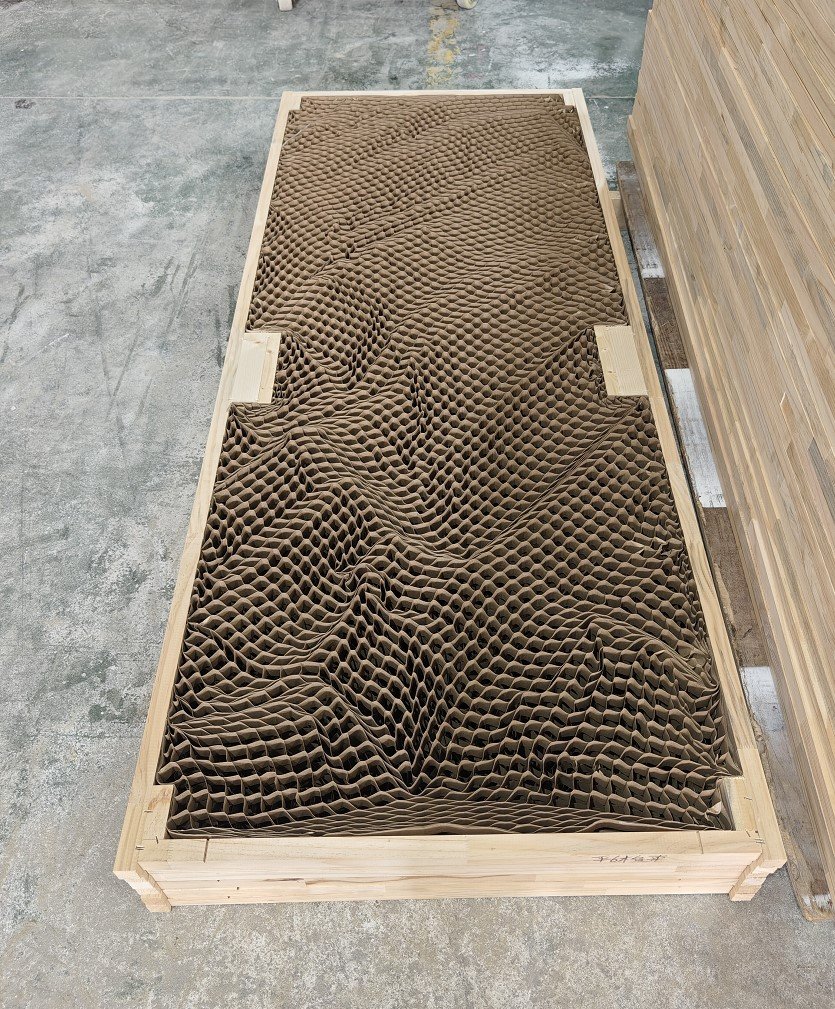
What Are Hollow-Core Interior Doors Made Of?
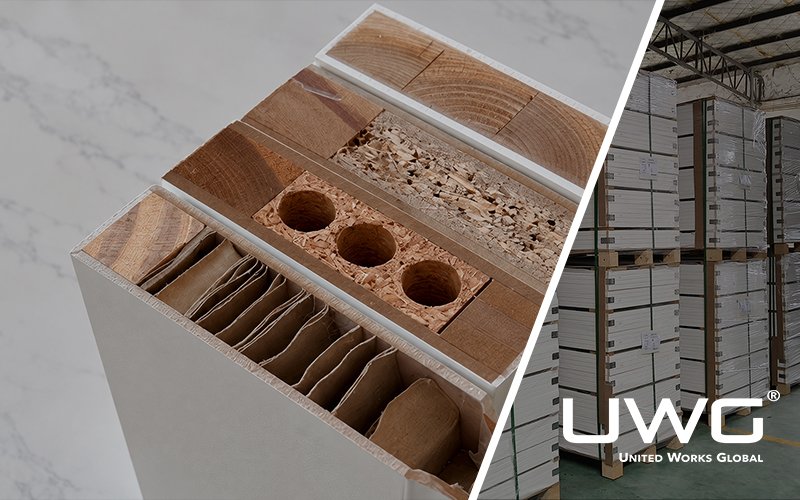
Although they are commonly called hollow-core doors, they are not actually empty inside.
Instead, manufacturers use a lightweight cellular structure that provides sufficient rigidity while keeping overall weight low.
A typical hollow-core door consists of:
- MDF or HDF face panels
- Honeycomb paper or composite cellular core
- Solid wood or engineered wood edge framing
This construction minimizes material usage while maintaining adequate structural performance for everyday residential applications.
Advantages
- Affordable
- Lightweight
- Easy to install
- Easy to transport
- Ideal for low-traffic interior spaces
Limitations
- Lower sound insulation
- Reduced impact resistance
- Difficult to repair after severe damage
Hollow-core doors are commonly installed in bedrooms, closets, utility rooms, and other standard residential spaces.
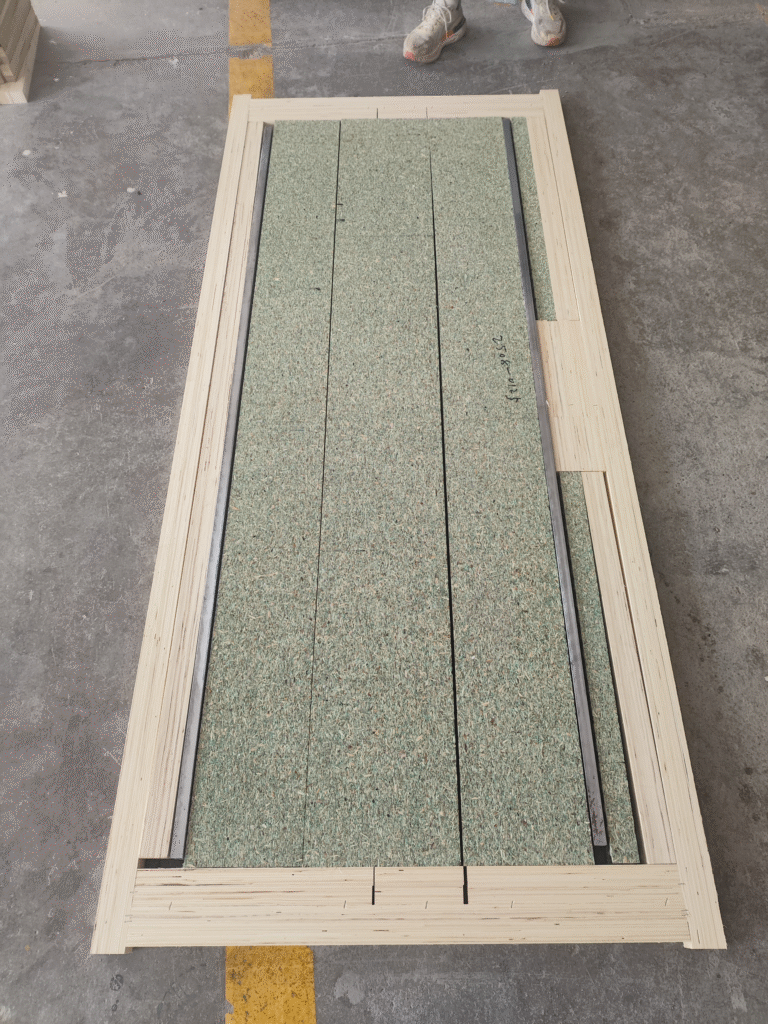
What Are Solid-Core Interior Doors Made Of?
Solid-core doors occupy the middle ground between lightweight hollow-core doors and premium solid wood doors.
Instead of a honeycomb interior, the core is filled with engineered wood, particleboard, mineral composite, or other dense materials that improve both strength and acoustic performance.
Solid-core doors typically provide:
- Better sound insulation
- Increased durability
- Improved impact resistance
- Higher perceived quality
- Compatibility with many fire-rated door systems when manufactured to applicable standards
From our experience supplying doors for apartment developments, hotels, and commercial buildings, solid-core construction is often the preferred solution because it offers an excellent balance between cost, durability, installation efficiency, and long-term performance. While solid wood remains the premium option, many large-scale projects prioritize consistency, acoustic performance, and maintenance costs, making solid-core engineered doors the more practical choice.
Interior Door Materials Comparison
| Material | Durability | Cost | Sound Insulation | Finish Quality | Typical Applications |
|---|---|---|---|---|---|
| Solid Wood | Excellent | High | Excellent | Natural Wood Finish | Luxury homes, villas |
| MDF | Good | Medium | Good | Excellent for Painting | Residential, offices |
| HDF | Very Good | Medium | Good | Excellent | Apartments, housing projects |
| Hollow Core | Moderate | Low | Fair | Good | Bedrooms, closets |
| Solid Core | Excellent | Medium-High | Excellent | Excellent | Hotels, offices, multifamily projects |
How Manufacturers Select Interior Door Materials
Selecting the right material involves much more than comparing prices.
Based on our manufacturing and project experience, material selection usually begins with the intended application rather than the budget alone.
For example:
| Project Type | Common Material Selection | Primary Reason |
|---|---|---|
| Apartments | MDF Solid-Core | Cost efficiency and consistency |
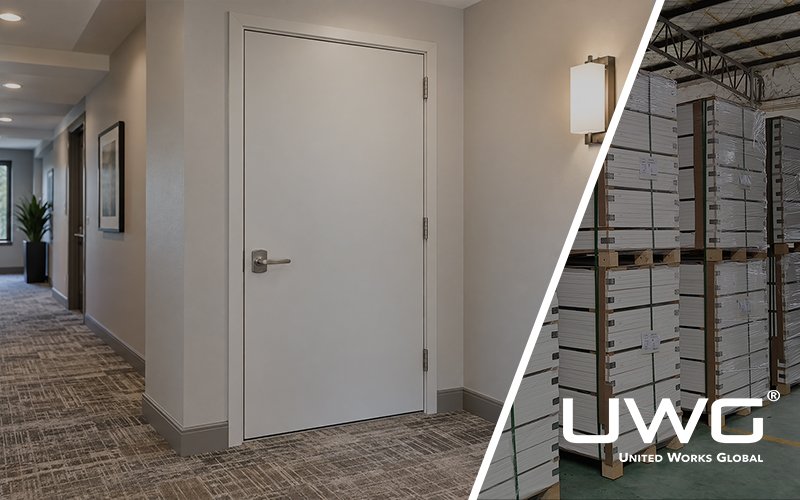
| Hotels | HDF Solid-Core | Better acoustic performance |
| Office Buildings | MDF or HDF | Smooth painted finish |
| Luxury Villas | Solid Wood | Premium appearance |
| Healthcare Facilities | Solid-Core Composite | Durability and hygiene requirements |
During large-scale production, builders often prioritize dimensional stability because even minor warping can increase installation time and finishing costs across hundreds of doors. Engineered materials such as MDF and HDF help reduce these risks by providing more consistent dimensions under normal indoor conditions.
Why Engineered Materials Have Become More Popular
Modern manufacturing technology has significantly improved the performance of engineered door materials.
Unlike traditional solid timber, engineered panels are manufactured under controlled temperature and pressure, resulting in more consistent density throughout the board.
This offers several practical benefits:
- Improved machining accuracy
- Better paint adhesion
- Reduced expansion and contraction
- More stable dimensions
- Higher manufacturing consistency
Industry organizations such as the Window & Door Manufacturers Association (WDMA) recognize engineered wood products as an important part of modern door manufacturing because they provide reliable performance for a wide range of interior applications when properly manufactured and installed.
How Can You Identify What Material an Interior Door Is Made Of?
Several simple observations can help determine the construction of an existing interior door.
Weight: Solid-core and solid wood doors feel noticeably heavier than hollow-core products.
Edges: Natural wood typically shows continuous grain, while MDF and HDF have smooth, uniform edges.
Surface Finish: Painted MDF and HDF doors usually have an exceptionally smooth surface without visible knots.
Sound Test: Hollow-core doors produce a lighter sound when tapped, while solid-core doors sound denser.
Hardware Openings: Removing a hinge or lockset may reveal the internal construction and help distinguish between engineered cores and natural wood.
What Type of Interior Door Is Best?
There is no universal answer because every project has different performance requirements.
For luxury residential homes, solid wood continues to provide unmatched natural beauty and long-term value.
For commercial buildings, hotels, schools, and apartment developments, solid-core engineered doors are frequently selected because they provide an excellent combination of durability, acoustic performance, and cost efficiency.
For painted interior designs, MDF and HDF remain industry favorites because they produce smooth, consistent finishes.
For budget-conscious residential developments, hollow-core doors continue to provide an economical solution for standard interior spaces.
Evaluating factors such as expected traffic, humidity, maintenance requirements, fire-rating requirements, finishing methods, and installation conditions early in the procurement process helps builders reduce long-term maintenance costs and improve overall project quality. For a closer look at available styles, constructions, and configurations, explore our interior doors collection.
What Are the Most Common Types of Interior Doors?
Besides selecting the right material, builders must also choose an appropriate door style.
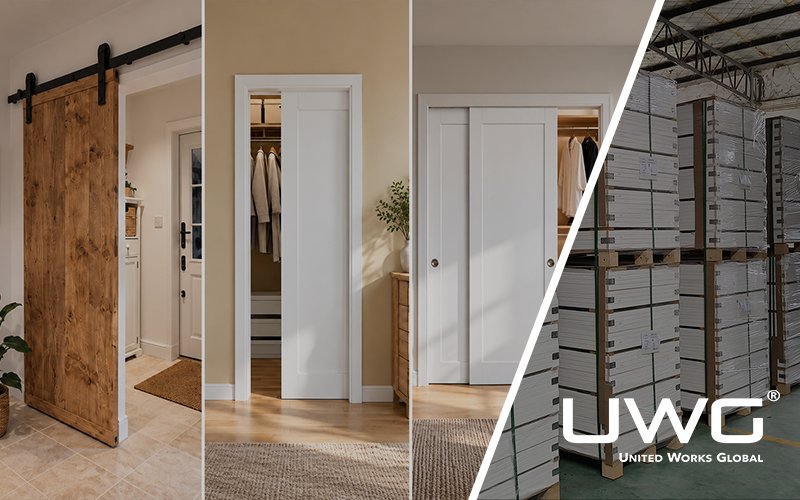
The most common interior door types include:
- Flush doors
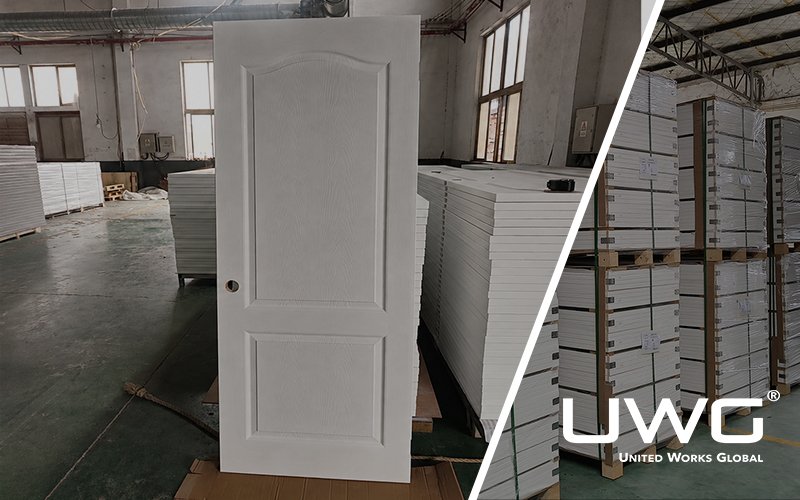
- Panel doors
- French doors
- Pocket doors
- Barn doors
- Bifold doors
- Louvered doors
- Dutch doors
Most of these styles can be manufactured using solid wood, MDF, HDF, hollow-core, or solid-core construction, allowing designers to balance appearance, performance, and project budgets.
Articles that you may be interested in:
Types of Interior Doors: Construction, Styles & Best Uses
Frequently Asked Questions
Are Interior Doors Made of MDF?
Yes. MDF is one of the most commonly used materials for modern interior doors because it offers excellent paintability, dimensional stability, and manufacturing consistency.
What Kind of Wood Are Interior Doors Made Of?
Common wood species include oak, maple, pine, cherry, walnut, and poplar. The choice depends on appearance, durability, machining requirements, and project budget.
What Are Hollow-Core Doors Made Of?
Most hollow-core doors use MDF or HDF face panels combined with a honeycomb paper or composite cellular core, reinforced by solid wood or engineered wood framing around the edges.
Are Solid Wood Doors Better Than MDF Doors?
Neither material is universally better. Solid wood provides unmatched natural beauty and can be refinished repeatedly, while MDF offers greater dimensional stability, smoother painted finishes, and lower production costs. The best option depends on the project’s design goals, performance requirements, and budget.
Conclusion
Interior doors are no longer manufactured from a single material. Instead, they combine natural timber, engineered wood products, MDF, HDF, veneers, and composite cores to achieve different levels of strength, appearance, sound insulation, and cost efficiency. Understanding these materials—and how they perform in different environments—allows builders and wholesalers to make more informed purchasing decisions.
Based on our experience working with residential and commercial projects, selecting the right interior door is not simply about choosing the most expensive material. It is about matching the door’s construction, core type, surface material, acoustic performance, finishing method, and long-term maintenance requirements to the needs of each project. By evaluating these factors early in the procurement process, buyers can reduce installation issues, improve project consistency, and achieve better long-term value. As engineered materials and manufacturing technologies continue to evolve, today’s interior doors provide more performance options and greater design flexibility than ever before.