Shiplap and beadboard can both add texture, depth, and architectural character to interior walls. However, they are not the same product.
Shiplap is identified by overlapping rabbeted board edges that create wider linear reveals. Beadboard features narrower repeating grooves separated by raised beads and is often supplied as individual tongue-and-groove boards or sheet panels.
For builders, contractors, developers, and project buyers, choosing between shiplap and beadboard involves more than appearance. Material, moisture exposure, installation method, coverage area, finishing requirements, maintenance, and project budget should all be considered.
Shiplap vs. Beadboard at a Glance
| Feature | Shiplap | Beadboard |
|---|---|---|
| Profile | Overlapping rabbeted board edges | Narrow grooves with repeating raised beads |
| Visual scale | Wider, more pronounced linear pattern | Smaller, more detailed repeating pattern |
| Common orientation | Horizontal or vertical | Most commonly vertical |
| Common formats | Individual boards or engineered panels | Individual boards or sheet panels |
| Typical applications | Feature walls, full walls, ceilings and commercial interiors | Wainscoting, kitchens, mudrooms, hallways and ceilings |
| Design character | Clean, architectural and adaptable | Traditional, detailed and decorative |
| Installation focus | Keeping reveals and board courses aligned | Keeping grooves, joints and panel seams aligned |
| Material options | MDF, finger-jointed pine, solid wood, PVC and composite materials | MDF, plywood, wood, PVC and composite materials |
| Moisture suitability | Depends on the substrate, finish and installation | Depends on the substrate, finish and installation |
| Main cost factors | Board format, material, finishing, wall preparation and labor | Individual boards versus sheets, material, finishing, trim and labor |
What Is Shiplap?
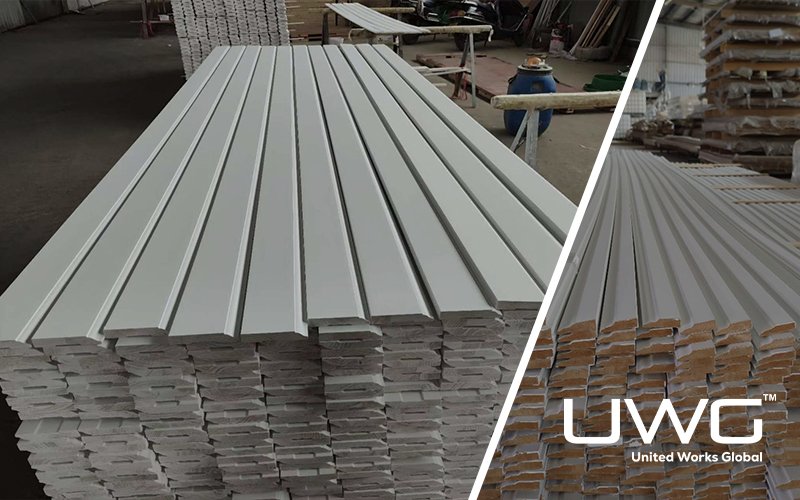
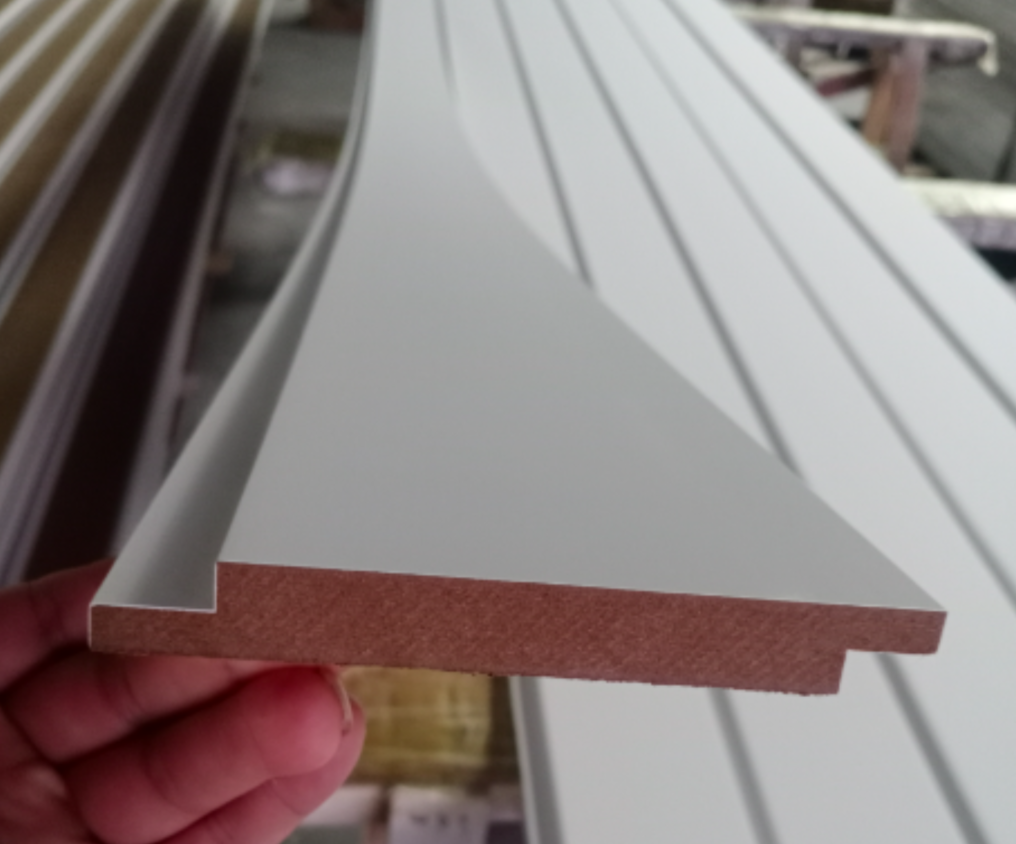
Shiplap is a type of wall cladding traditionally made from boards with opposing rabbet joints along their edges. When installed, the boards overlap and create consistent horizontal or vertical shadow lines.
True shiplap refers to this overlapping edge construction. Some modern decorative wall panels imitate the appearance of shiplap without using traditional rabbeted boards, so project specifications should distinguish between the visual style and the actual profile.
Shiplap is commonly used for:
- Full-height wall paneling
- Feature walls
- Fireplace surrounds where the selected material meets applicable requirements
- Entryways and hallways
- Retail and hospitality interiors
- Ceilings
- Vertical architectural accents
- Residential and multifamily common areas
Horizontal shiplap can visually emphasize the width of a room, while vertical installation can draw attention to ceiling height. These are visual effects rather than fixed design rules.
What Is Beadboard?
Beadboard is decorative paneling characterized by narrow vertical grooves and repeating raised details known as beads.
Traditional beadboard was produced as individual tongue-and-groove boards. Modern beadboard is also available in larger sheet panels that reproduce the same repeating pattern. Sheet formats can reduce installation time on large, flat surfaces, while individual boards may provide more flexibility around irregular areas.
Beadboard is frequently used for:
- Lower-wall wainscoting
- Mudrooms and entryways
- Hallways
- Kitchen walls and islands
- Bathroom walls when an appropriate material is specified
- Cabinet ends and built-in features
- Porch ceilings when the product is rated for the environment
- Traditional or transitional interiors
Beadboard is often installed vertically, but it can also be used horizontally or on ceilings when the design requires it.
What Is the Difference Between Shiplap and Beadboard?
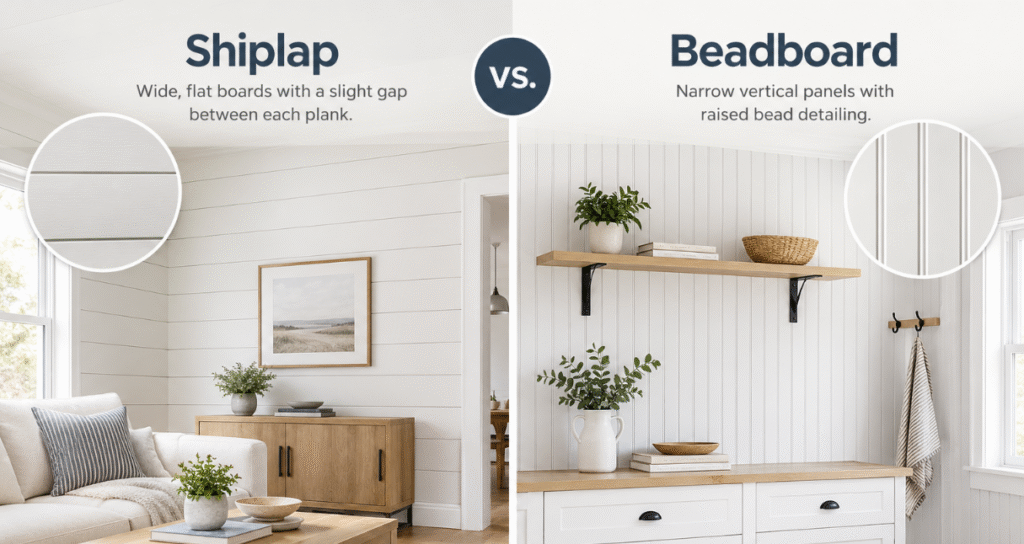
The main difference between shiplap and beadboard is the profile and the visual scale of the finished surface.
Shiplap creates wider lines between boards. Its profile usually produces a cleaner and more architectural appearance, particularly across large walls or ceilings.
Beadboard creates narrower, more frequent grooves. The result is a more detailed surface that is commonly associated with traditional millwork, cottage interiors, mudrooms, and wainscoting.
Other important differences include format and installation. Shiplap is commonly supplied as individual boards, although engineered panel alternatives are available. Beadboard may be installed as individual boards or as larger sheets.
The choice should therefore be based on the complete project specification—not only on which pattern looks better in a photograph.
Is Beadboard the Same as Wainscoting?
No. Beadboard is a panel profile, while wainscoting describes a wall treatment that covers the lower portion of a wall.
Beadboard is frequently used as wainscoting, but it is not the only material that can be used. Flat panels, raised panels, board-and-batten arrangements, decorative panel moulding, and even shiplap can form part of a wainscot system.
A complete wainscoting assembly may include:
- Wall panels or individual boards
- A baseboard
- A top cap or chair rail
- Inside and outside corner treatment
- End returns
- Joint and transition details
This distinction is important when preparing drawings, takeoffs, and purchase orders.
Shiplap and Beadboard Material Options
The profile does not determine the material. Both shiplap and beadboard can be manufactured from different substrates, and those substrates affect performance, finishing, installation, and cost.
MDF
MDF provides a smooth and consistent surface for painted interior applications. It can be machined into shiplap or beadboard profiles and is useful when a uniform paint-grade finish is required.
Standard MDF is generally best suited to dry interior spaces. It should not automatically be specified for bathrooms, laundry rooms, exterior applications, or other damp locations unless the product is specifically rated for that environment.
Edges, cuts, joints, and fastener locations must be properly sealed and finished.
Finger-Jointed Pine and Solid Wood
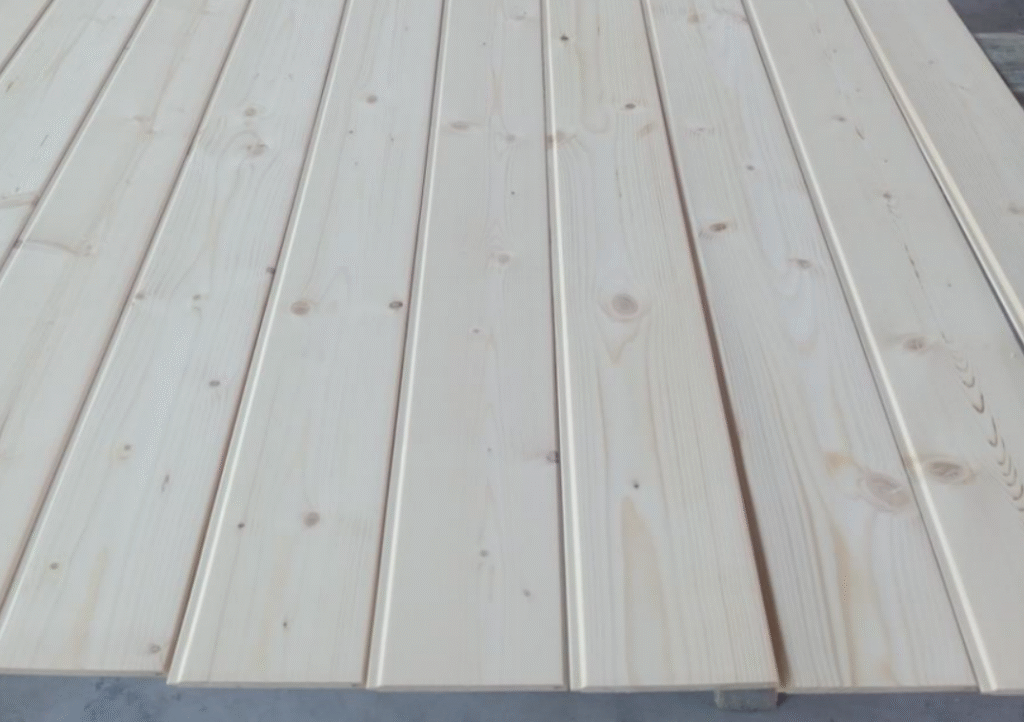
Finger-jointed pine and solid wood can provide good machinability and familiar installation characteristics. These materials may be used for paint-grade or stain-grade applications depending on the wood species and grade.
Because wood responds to changes in temperature and humidity, acclimation, expansion allowances, fastening, and finishing must be considered during installation.
PVC and Composite Materials
PVC and certain composite materials may be appropriate for areas with higher moisture exposure, provided the selected product is rated for the intended application.
These materials do not eliminate the need for correct installation. Expansion, substrate preparation, fastening, joint design, ventilation, and manufacturer requirements still need to be followed.
For a broader comparison of substrates, see our interior moulding material guide.
Which Is Better for Different Rooms?
Living Rooms and Feature Walls
Shiplap is often selected for large feature walls because its wider lines create a clear architectural rhythm without introducing too many small details.
Beadboard can also work in living areas, especially when installed on the lower portion of the wall with a cap moulding. This approach creates a more traditional millwork appearance.
Hallways, Entryways and Mudrooms
Both products can work well in high-traffic transitional spaces.
Beadboard wainscoting can add detail to the lower wall and create a defined transition between the paneling and the painted surface above. Shiplap can provide a simpler full-height or partial-height treatment.
However, neither profile automatically protects the wall from impact or moisture. The selected material, coating system, panel thickness, fastening, and edge details determine practical performance.
Kitchens
Beadboard is often used on kitchen islands, breakfast areas, cabinet ends, and lower wall sections. Shiplap may be used on feature walls or ceilings where a broader linear pattern is preferred.
Near sinks, cooking areas, or other moisture sources, buyers should verify:
- Substrate suitability
- Coating and sealing requirements
- Cleaning compatibility
- Joint treatment
- Applicable fire and building requirements
- Clearance from heat-producing equipment
Bathrooms and Laundry Rooms
Neither shiplap nor beadboard is inherently waterproof.
For bathrooms and laundry rooms, the suitability of the installation depends on the substrate, finish, edge sealing, ventilation, and level of direct water exposure. Standard MDF should generally be kept away from wet areas unless specifically approved for the intended use.
PVC or appropriately rated composite products may be more suitable for damp conditions. Direct-contact wet zones should use systems specifically designed and approved for that application.
Ceilings
Both shiplap and beadboard can be installed on ceilings.
Shiplap provides wider visual lines and can suit larger or more contemporary spaces. Beadboard creates a finer pattern that is often used in traditional rooms and covered porches.
Ceiling installation requires proper backing, fastening, perimeter detailing, material acclimation, and suitable product selection. Outdoor or semi-exposed ceilings require products rated for those conditions.
Multifamily, Hospitality and Commercial Projects
For larger projects, repeatability can be as important as design.
Project teams should evaluate:
- Standard panel or board dimensions
- Batch-to-batch profile consistency
- Finish consistency
- Installation speed
- Replacement availability
- Packaging and delivery sequence
- Fire or code requirements
- Moisture conditions
- Maintenance procedures
A decorative profile should not be specified independently of its substrate and finish.
Installation: Shiplap vs. Beadboard
Installing Shiplap
Shiplap installation usually involves positioning individual boards and maintaining an even reveal throughout the wall or ceiling.
Important considerations include:
- Establishing a level or plumb starting line
- Confirming framing or suitable backing
- Planning board joints and end seams
- Cutting around switches and outlets
- Allowing for movement where required
- Selecting appropriate fasteners
- Finishing inside and outside corners
- Coordinating baseboards, casings, caps, and ceiling mouldings
Small alignment errors can become increasingly visible across a long run, so the first boards must be positioned accurately.
Installing Beadboard
Installation depends on whether beadboard is supplied as individual boards or sheet panels.
Sheet beadboard may cover large flat areas more quickly, but seams and cut edges need careful planning. Individual boards can provide a more traditional assembly but may require additional layout and fastening time.
Installation considerations include:
- Aligning the vertical groove pattern
- Positioning panel seams
- Planning the finished height
- Coordinating baseboard and cap moulding
- Providing backing where required
- Cutting around outlets and penetrations
- Finishing corners and exposed ends
- Sealing cut edges in moisture-sensitive materials
Which Costs Less: Shiplap or Beadboard?
Neither option is always less expensive.
The total installed cost depends on:
- Material type
- Individual boards versus sheet panels
- Profile dimensions
- Wall or ceiling area
- Existing wall condition
- Required backing
- Number of corners and openings
- Custom finishing
- Painting or staining
- Labor rates
- Waste allowance
- Accessories and transition trim
- Freight and packaging
Sheet beadboard may reduce installation time on uncomplicated wall areas. Individual shiplap boards may offer straightforward replacement and layout flexibility, but they can require more individual handling and alignment.
Comparisons should be based on the total installed system rather than the panel price alone.
Maintenance and Cleaning
Both shiplap and beadboard contain grooves or reveals that can collect dust.
Beadboard has more frequent grooves, while shiplap typically has fewer but wider horizontal or vertical lines. Maintenance depends heavily on the surface coating, orientation, room conditions, and accessibility.
For easier maintenance:
- Use a finish suitable for the room
- Seal exposed and cut edges
- Avoid excessive water on wood-based panels
- Repair damaged coatings promptly
- Follow the cleaning instructions for the substrate and finish
- Keep bathroom and laundry spaces properly ventilated
Avoid describing either product as maintenance-free.
How to Choose Between Shiplap and Beadboard
Choose shiplap when the project calls for:
- Wider architectural lines
- A clean or transitional appearance
- Full-wall or ceiling coverage
- Horizontal or vertical layout flexibility
- A strong feature-wall treatment
- Fewer and broader surface grooves
Choose beadboard when the project calls for:
- Narrow repeating details
- Traditional or cottage-inspired interiors
- Lower-wall wainscoting
- Decorative treatment for islands or built-ins
- Sheet-panel installation over larger flat areas
- A more detailed surface pattern
For many projects, the material decision is more important than the profile decision. A suitable profile manufactured from the wrong substrate may not perform as expected.
Specification Checklist for Builders and Project Buyers
Before requesting a quotation, confirm the following:
- Is the profile true shiplap, decorative shiplap-style paneling, traditional beadboard, or beadboard sheet paneling?
- What substrate is required: MDF, finger-jointed pine, solid wood, PVC, or another composite?
- Is the installation interior, exterior, dry, damp, or exposed to direct water?
- Will the boards run horizontally or vertically?
- What board width, groove spacing, reveal, and profile depth are required?
- Is the product supplied primed, prefinished, wrapped, or unfinished?
- What are the wall and ceiling dimensions?
- How many inside corners, outside corners, windows, doors, and outlets are involved?
- Which baseboards, caps, casings, or transition profiles are required?
- What fire, moisture, emissions, or code requirements apply?
- What waste allowance should be included?
- How should products be packed and delivered by room, floor, building, or construction phase?
Providing these details helps suppliers quote the correct system and reduces substitutions during production or installation.
Frequently Asked Questions
What is the main difference between shiplap and beadboard?
Shiplap uses overlapping boards that form wider linear reveals. Beadboard uses narrow repeating grooves and raised beads. Shiplap generally creates a broader architectural pattern, while beadboard produces a finer and more decorative surface.
Is beadboard the same as wainscoting?
No. Beadboard is a profile or panel type. Wainscoting is a lower-wall treatment that may use beadboard, flat panels, raised panels, shiplap, or other materials.
Is shiplap or beadboard cheaper?
It depends on the material, format, finish, wall preparation, trim package, and installation labor. Sheet beadboard may be faster to install on simple surfaces, but project-specific quotations should compare the complete installed systems.
Can shiplap or beadboard be used in a bathroom?
Yes, if the product is appropriate for the moisture level and is correctly installed and finished. Standard MDF should not be treated as waterproof. PVC or specifically rated materials may be more suitable for damp spaces.
Is vertical shiplap the same as beadboard?
No. Vertical shiplap still uses a shiplap-style board profile with wider reveals. Beadboard has narrower repeating grooves and raised bead details.
Can shiplap and beadboard be installed over drywall?
They can often be installed over drywall when the wall is sound, flat, dry, and capable of supporting the fastening system. The installer must locate suitable backing, account for electrical boxes, and follow the product manufacturer’s installation requirements.
Can shiplap or beadboard be used outside?
Only products specifically rated for exterior or semi-exterior exposure should be used outside. Interior MDF panels should not be substituted for exterior-rated cladding or trim.
Which is easier to maintain?
Neither option is universally easier to maintain. Beadboard has more frequent grooves, while horizontal shiplap reveals can collect dust. Surface finish, room conditions, and installation orientation influence cleaning requirements.
Source Shiplap, Beadboard and Coordinating Trim
The right wall-panel system should coordinate the decorative profile with the substrate, baseboard, cap, casing, corner treatment, finish, and installation environment.
UWG supplies moulding and trim systems for builders, contractors, developers, and project buyers. Available solutions can be coordinated around project dimensions, material requirements, finish expectations, quantities, packaging, and delivery schedules.
Explore the UWG Moulding & Trim Guide or contact our team with your drawings, material requirements, quantities, and project schedule for a project-specific quotation.