Imagine you are working on a residential or multifamily project where space is limited and layout efficiency is critical. Traditional swing doors may interfere with furniture placement or reduce usable floor area, especially in compact rooms or open-plan designs. In these situations, barn doors often become a practical alternative, offering both functional and aesthetic benefits.
However, selecting the right barn door involves more than choosing a visually appealing design. Builders and contractors must consider material stability, hardware durability, installation conditions, and long-term performance. This guide provides a clear overview of barn door styles, materials, and hardware options to help you make informed decisions for your projects.
What Is a Barn Door?
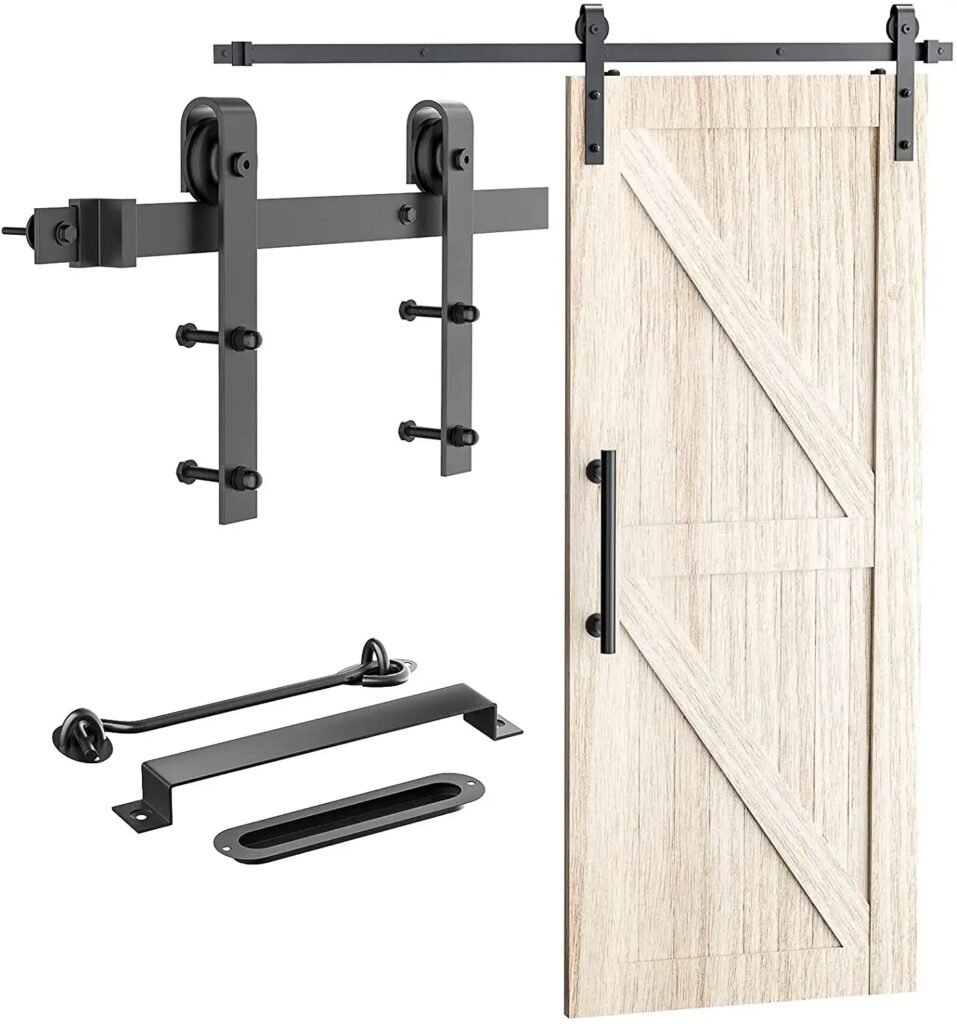
A barn door is a sliding door system mounted on an exposed track, typically installed on the exterior side of a wall. Unlike traditional hinged doors, barn doors slide horizontally, eliminating the need for swing clearance.
A complete barn door system typically includes:
- Door panel
- Track system
- Rollers
- Floor guide
- Door stops
Barn doors are widely used in residential interiors such as bedrooms, bathrooms, closets, and pantries. They are also increasingly popular in multifamily housing and light commercial spaces due to their space-saving design and modern appearance.
Common Barn Door Styles
Barn doors come in a variety of styles to match different project requirements.
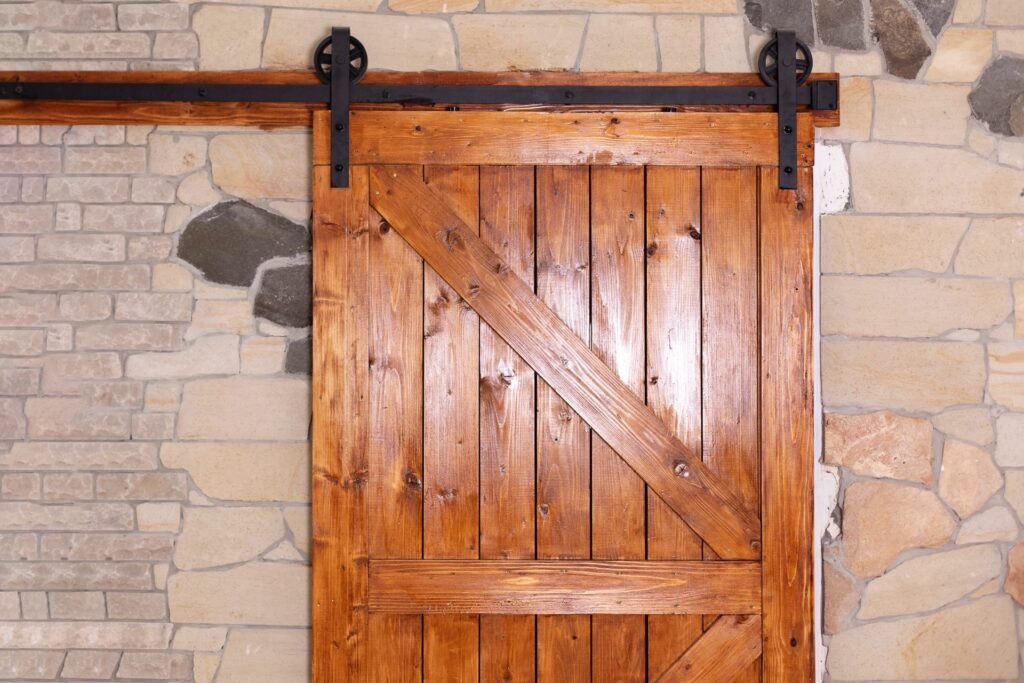
Traditional (Rustic) Style
Characterized by crossbuck or X-frame designs, this style is commonly used in farmhouse or rustic interiors.
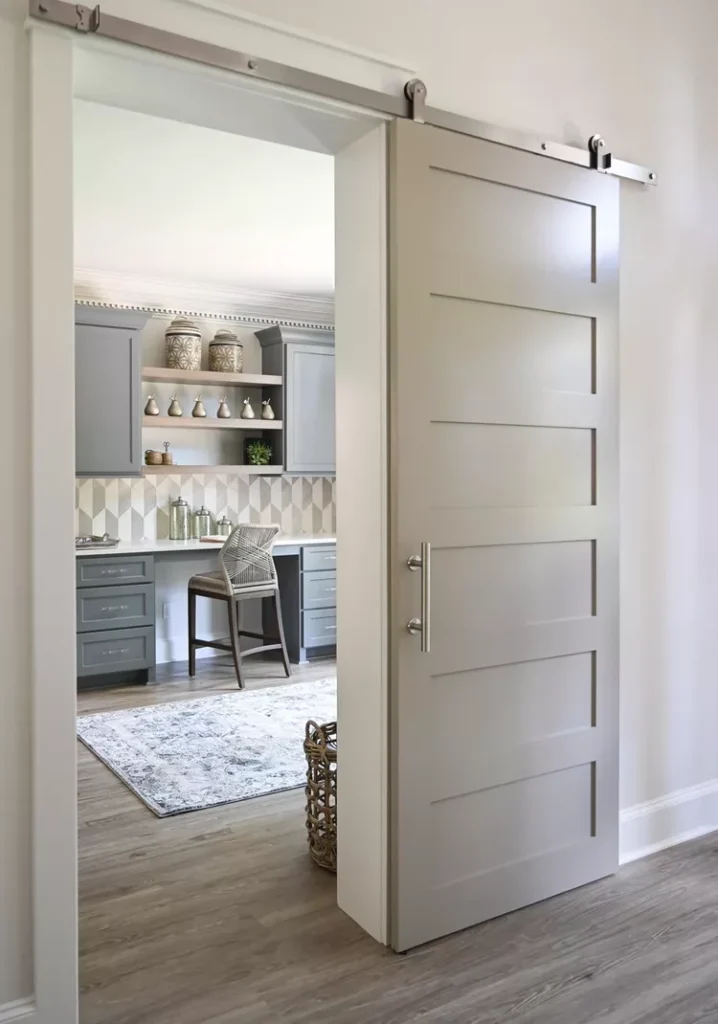
Modern / Minimalist Style
Flat panels or shaker-style doors with clean lines and painted finishes. This is the most common choice for contemporary residential projects.
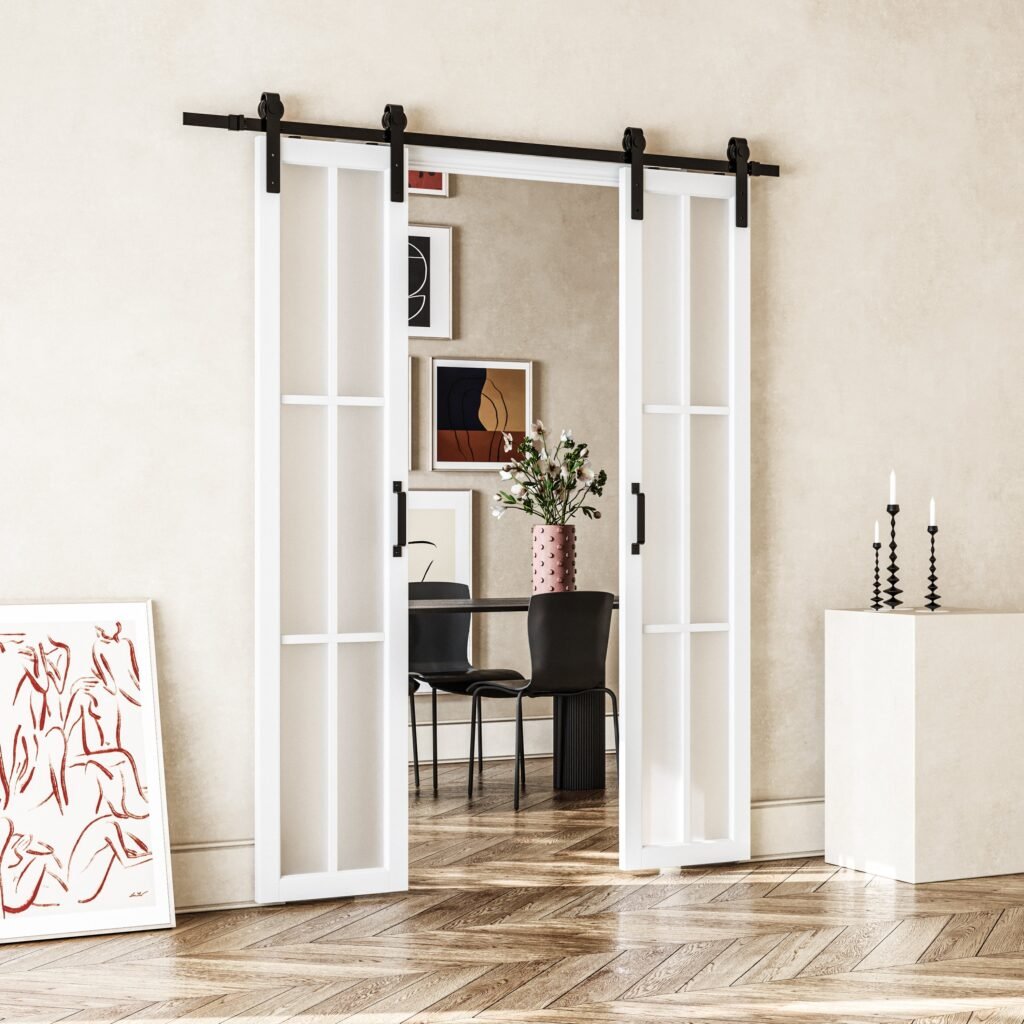
Glass Barn Doors
Featuring frosted or clear glass panels, often combined with aluminum or wood frames. Suitable for offices or spaces where natural light is important.
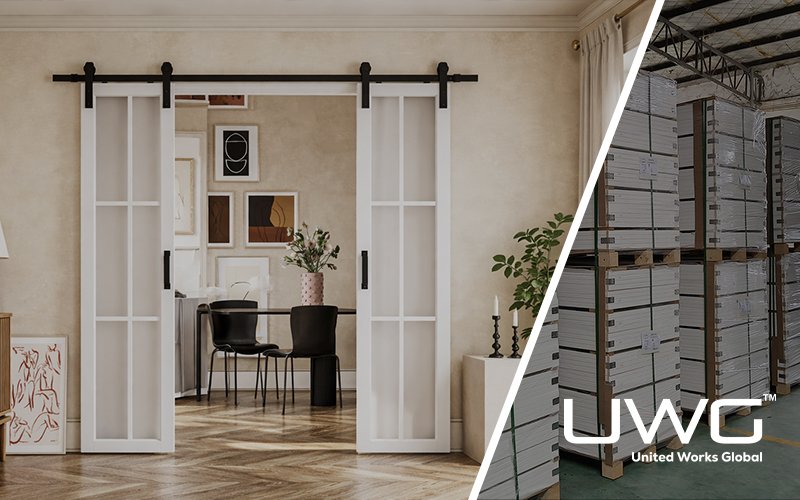
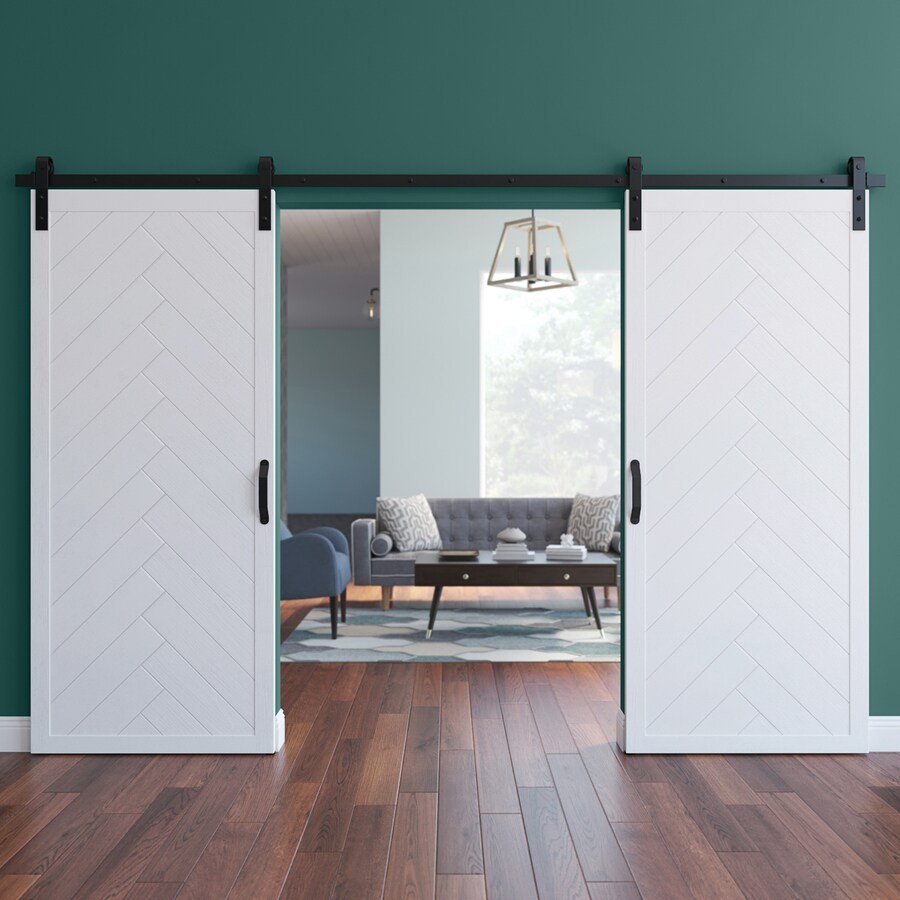
Double Barn Doors
Used for wider openings, such as living rooms or master bedrooms. Provides a balanced and symmetrical look.
Material Options and Comparison
Choosing the right material is essential for durability, cost control, and long-term performance.
| Material | Durability | Cost Level | Stability | Appearance | Best Use Case |
| Solid Wood | High | High | Medium | Natural, premium | High-end residential |
| MDF | Moderate | Low | High | Smooth, painted | Budget-friendly interiors |
| Engineered Wood | High | Medium | High | Uniform finish | Multifamily projects |
| Glass + Frame | Moderate | Medium | High | Modern, open | Offices / modern homes |
| Metal | Very High | High | Very High | Industrial | Commercial applications |
For most builder-focused projects, MDF and engineered wood are preferred due to their balance of cost, stability, and ease of finishing.
Hardware Options and Their Impact
Hardware plays a critical role in the performance of barn doors. In fact, it often determines the user experience more than the door panel itself.
Track Systems
- Single track: standard for most applications
- Double track: used for double doors
- Ceiling-mounted: for special structural conditions
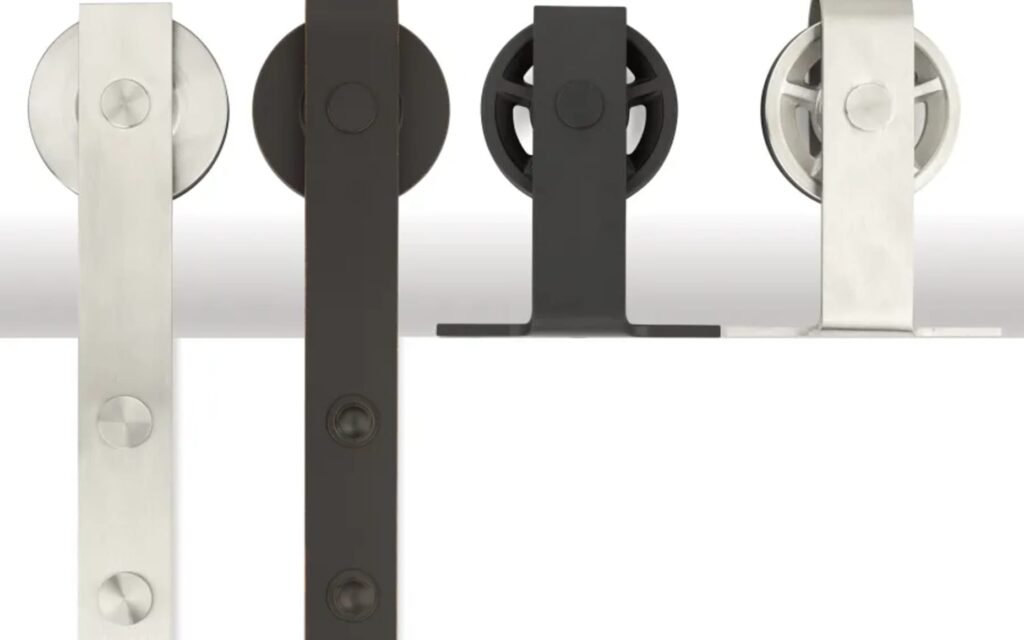
Roller Types
- Standard rollers: suitable for light-duty use
- Ball-bearing rollers: recommended for durability and smooth operation
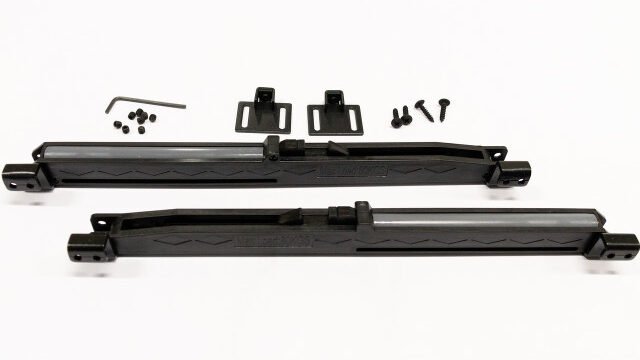
Soft-Close Mechanism
Prevents slamming and reduces noise, improving user experience.
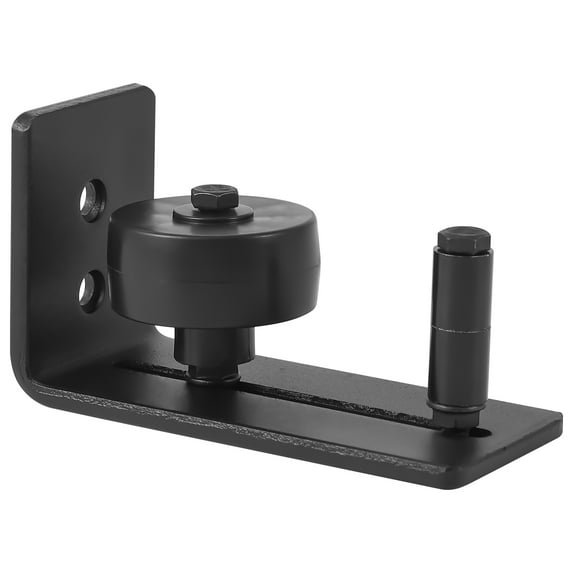
Floor Guide and Door Stops
Ensure stability and prevent excessive movement or derailment.
Poor-quality hardware can lead to noise, misalignment, and premature failure, especially in high-traffic environments.
Pros and Cons of Barn Door Systems
Advantages
- Space-saving design (no swing clearance required)
- Modern and customizable appearance
- Easier installation compared to pocket doors
- Ideal for retrofit and renovation projects
Disadvantages
- Limited sound insulation
- Reduced privacy compared to hinged doors
- Requires sufficient wall space for sliding
- Performance highly dependent on hardware quality
Key Considerations for Builders
When selecting barn doors for a project, builders should focus on the following factors:
Wall Structure and Support
Ensure the wall can support the weight of the door and hardware system.
Door Weight vs. Hardware Capacity
Always match the hardware system with the door weight to avoid long-term issues.
Opening Size and Layout
Confirm there is enough lateral space for the door to slide fully open.
Usage Frequency
High-traffic areas require more durable hardware, such as ball-bearing rollers.
Standardization
Using consistent door and hardware systems across projects can reduce installation errors and simplify maintenance.
Growing Demand and Efficiency Benefits of Barn Doors
Barn doors have gained significant popularity in recent years, especially in residential remodeling and multifamily construction.
- Sliding door systems can save approximately 10–15% of usable floor space compared to traditional swing doors
- Standardized door systems can reduce installation time by 20–30% in large projects
- Demand for barn doors in interior applications has increased due to their flexibility and design appeal
These advantages make barn doors a practical solution for modern construction projects where efficiency and aesthetics are both priorities.
Material Selection and Installation Considerations for Barn Door Systems
Based on industry experience, the following practices are recommended:
- Use engineered wood or MDF with reinforced core for better stability
- Select ball-bearing rollers for long-term durability
- Avoid mixing different hardware brands within the same project
- Pre-plan installation to ensure proper alignment and support
- For large-scale projects, consider standardized systems to improve efficiency
Frequently Asked Questions About Barn Doors
Q: Do barn doors really save space in a room?
A: Yes, barn doors are excellent space-savers. Unlike traditional hinged doors that require a clear swing radius to open and close, a barn door simply slides horizontally along the wall. This design can save up to 10–15% of usable floor space in a room, making them perfect for tight hallways, compact bathrooms, closets, and open-plan living areas.
Q: Are barn doors good for soundproofing and privacy?
A: No, barn doors are not ideal for strict soundproofing or complete privacy. Because they hover on a track slightly away from the wall (rather than sealing tight inside a door frame), they leave small gaps around the edges. Sound, light, and drafts can pass through these gaps more easily than with a standard prehung door.
Q: Which material is best for a barn door?
A: The best material depends on your budget and style. Solid wood is premium, heavy, and perfect for authentic rustic or farmhouse styles. For modern, painted finishes and budget-conscious projects, MDF (Medium-Density Fiberboard) or engineered wood is highly recommended because it is cost-effective, features a perfectly smooth surface, and strongly resists warping.
Q: How important is the quality of barn door hardware?
A: Hardware quality is arguably more important than the door panel itself. A heavy barn door relies entirely on the track and rollers for stability and smooth operation. Upgrading to heavy-duty steel tracks, ball-bearing rollers, and adding a “soft-close” mechanism will prevent the door from derailing, scraping the wall, or loudly slamming shut over years of daily use.
Conclusion
Barn doors offer a functional and stylish solution for modern construction, especially in projects where space efficiency is critical. However, their performance depends heavily on proper material selection, hardware quality, and installation planning.
For builders and contractors, taking a system-based approach—considering door panels, hardware, and application together—can significantly reduce installation issues and improve long-term project outcomes.
Articles that you may be interested in: