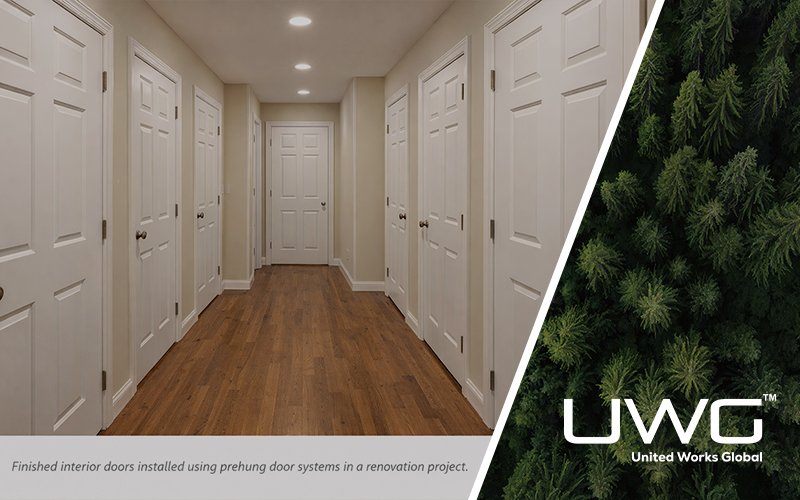
According to the Residential Interior Door Market report by industryresearch.co, approximately 52 % of new single‑family homes in North America utilize prehung door systems, cutting installation labor time significantly and demonstrating a strong industry preference for factory‑ready interior door solutions.
However, many builders still face a practical question: When should you actually use prehung doors? While they are often recommended for new construction, their role in renovation projects is more situational. Choosing incorrectly can lead to unnecessary costs or avoidable labor.
This guide provides a clear, experience-driven breakdown of when prehung doors are the right choice in both renovation and new construction, helping builders make smarter, more cost-effective decisions.
What Are Prehung Doors?
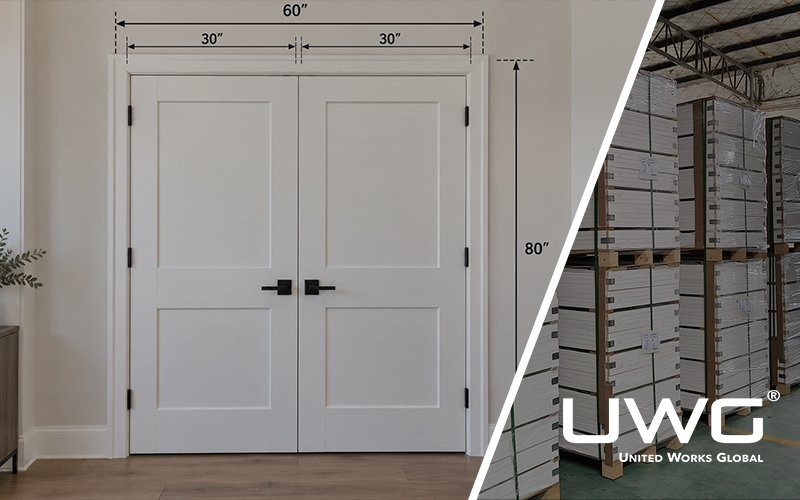
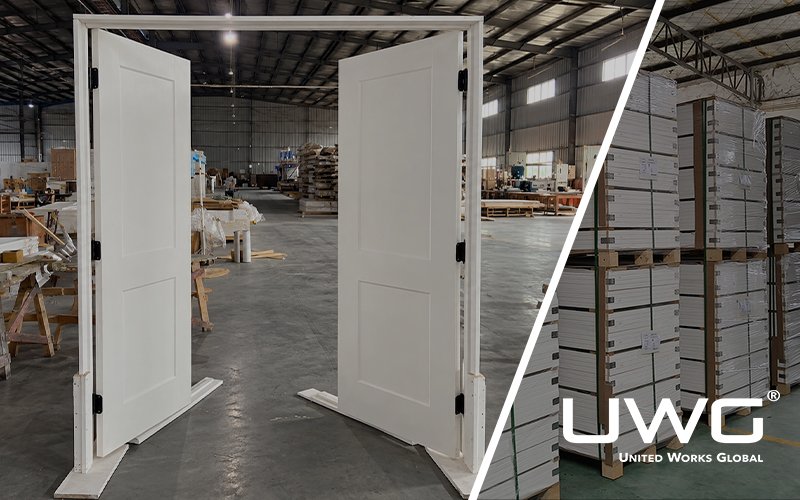
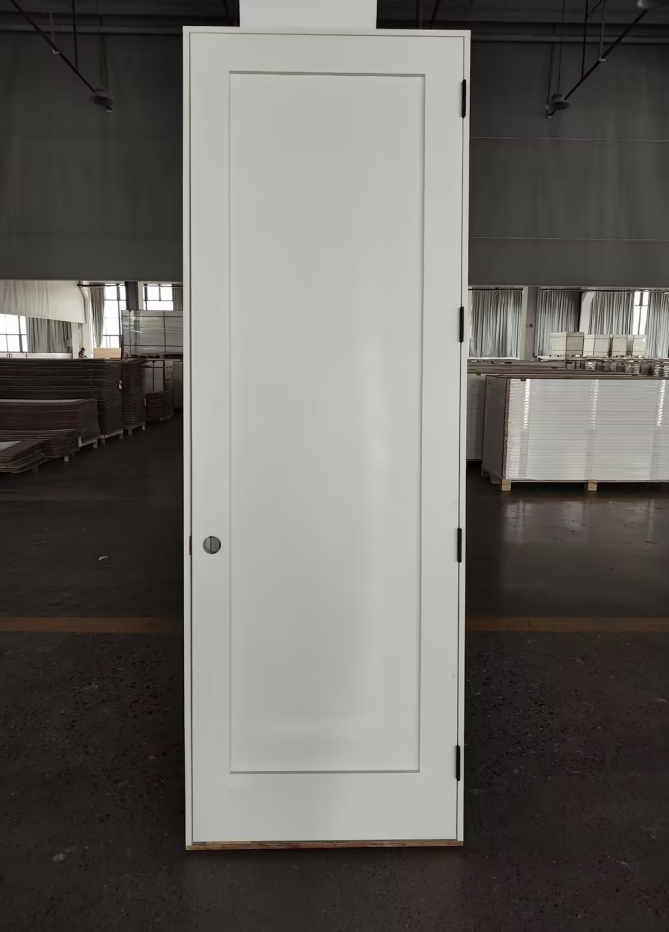
A prehung door is a complete door unit that includes the door slab, frame, hinges, and sometimes casing and threshold—all pre-assembled in a factory. The unit is delivered ready to be installed into a rough opening.
This differs from a slab door, which is simply the door panel without a frame and requires full on-site installation and alignment.
From a technical standpoint, the biggest advantage of prehung doors is controlled factory assembly, which ensures consistent alignment, smoother operation, and reduced installation variability.

When to Use Prehung Doors in New Construction
In new construction, prehung doors are generally the preferred—and often standard—choice.
Key Reasons:
1. Open Wall Framing Simplifies Installation Since walls are not yet finished, installing a full door unit is straightforward and efficient.
2. Faster Installation Across Multiple Units In large-scale residential or commercial projects, speed is critical. Prehung doors significantly reduce installation time compared to slab doors.
3. Consistent Quality and Alignment Factory-installed hinges and frames reduce the risk of misalignment, which is common with field-installed slab doors.
In one multi-family housing project we worked on, switching entirely to prehung doors reduced installation time per unit by approximately 25%. More importantly, it minimized callbacks related to door alignment issues, which are often overlooked during construction but become noticeable after occupancy.
When to Use Prehung Doors in Renovation
Renovation projects require a more strategic approach. Unlike new construction, the decision depends heavily on the condition of existing door frames.
Ideal Situations for Prehung Doors:
- Existing frames are warped, damaged, or out of square
- The project involves layout changes or resizing door openings
- Full interior remodeling is being performed
Situations Where Prehung Doors May Not Be Necessary:
- Existing frames are structurally sound and properly aligned
- Only the door panel needs replacement
- Budget constraints favor minimal intervention
In a hotel renovation project, we initially planned to reuse existing frames to reduce costs. However, after inspection, nearly 40% of the frames were out of alignment. Switching to prehung doors allowed us to standardize installation and ultimately saved time despite higher material costs.
Prehung Doors vs Slab Doors: Key Differences
Criteria | Prehung Doors | Slab Doors |
|---|---|---|
| Installation Time | Faster | Slower |
| Labor Skill Required | Moderate | High |
| Initial Cost | Higher | Lower |
| Installation Accuracy | High (factory-aligned) | Depends on installer skill |
| Best Application | New builds, full renovations | Minor upgrades, frame reuse |
| Risk of Installation Errors | Low | Higher |
For a detailed comparison, see Prehung Doors vs. Slab Doors.
Advantages and Disadvantages of Prehung Doors
Advantages
1. Installation Efficiency Prehung doors reduce on-site labor by eliminating the need for hinge cutting, alignment, and frame assembly.
2. Improved Performance Better sealing and alignment make them ideal for exterior doors, where energy efficiency and weather resistance are critical.
3. Consistency Across Projects In multi-unit developments, prehung doors ensure uniform appearance and operation.
4. Reduced Skilled Labor Dependency Less reliance on highly skilled carpenters can help manage labor shortages.

Disadvantages
1. Higher Material and Shipping Costs Prehung units are bulkier and more expensive to transport.
2. Less Flexibility for Non-Standard Openings Custom adjustments are more difficult compared to slab doors.
3. Additional Work in Renovations Removing existing frames increases labor and potential wall repair.
Technical Considerations Builders Should Not Overlook
Rough Opening Requirements
Proper rough opening size is essential for successful installation:
- Width: Door unit width + approximately 2 inches
- Height: Door unit height + approximately 2 inches
Incorrect openings can negate the time-saving benefits of prehung doors.
Plumb and Level Installation
Even with factory precision, improper installation can lead to performance issues:
- Doors may swing open or closed unintentionally
- Uneven gaps may appear
- Long-term wear may increase
Ensuring the frame is both plumb and level is critical to achieving optimal results.

Expert Recommendations for Builders
Based on project experience and industry practices, consider the following:
- Use prehung doors as the default option in new construction
- Evaluate frame condition carefully before deciding in renovation projects
- Factor in labor costs—prehung doors often save money in high-wage markets
- Standardize door specifications in large projects to streamline procurement and installation
Frequently Asked Questions About Prehung vs Slab Doors
Q: What exactly is a prehung door?
A: A prehung door is a complete, ready-to-install door system. It comes from the factory with the door slab already mounted onto a frame (jamb) using hinges. Depending on the manufacturer, it may also include a pre-cut hole for the doorknob, weatherstripping (for exterior doors), and a threshold. It is designed to be inserted directly into a prepared rough opening in a wall.
Q: What is the main difference between a prehung door and a slab door?
A: The main difference is the level of assembly. A prehung door includes the frame and hinges, making installation much faster and ensuring factory-level alignment. A slab door is simply the door itself—just the rectangular piece of wood, MDF, or metal. Installing a slab door requires high carpentry skills to hang it perfectly, chisel out the hinge mortises, and align it within an existing door frame.
Q: Should I use prehung doors for new home construction?
A: Yes, absolutely. For new construction, where the wall framing is open and the rough openings are perfectly square, prehung doors are the standard choice. They significantly reduce on-site labor time, lower the dependency on highly skilled carpenters, and ensure consistent quality and alignment across multiple units.
Q: When does it make sense to use a slab door instead of a prehung door?
A: Slab doors are highly cost-effective during renovation projects where the existing door frames are structurally sound, perfectly square, and undamaged. If you are simply updating the interior design by swapping out an old door for a new one, buying a slab door and hanging it in the existing frame will save you money on materials and prevent the need to tear out and repair the surrounding drywall.
Conclusion
Prehung doors offer a reliable, efficient solution for modern construction, particularly in new builds where speed and consistency are essential. In renovation projects, their value depends on the condition of existing frames and the scope of work.
For builders, the key is not simply choosing between prehung and slab doors, but understanding when each option delivers the greatest value. By aligning the choice with project conditions, labor availability, and long-term performance goals, builders can achieve better results while maintaining control over cost and quality.
Articles that you may be interested in:
Prehung vs Knock-Down Doors: Which Is Better for Large-Scale Construction?