
Introduction
In a typical construction project, materials are often sourced from multiple suppliers across different regions or even countries. A builder might place an order for interior doors, only to find the shipment delayed at the port due to customs clearance issues, missing documents, or uncoordinated trucking arrangements. Meanwhile, installation crews are left waiting on-site, schedules begin to slip, and holding costs quietly increase. These logistical disruptions are not uncommon—and for many builders, they have become an expected risk rather than an exception.
The key question, then, is how builders can maintain tighter control over timelines while reducing the complexity of international sourcing. The answer lies in choosing the right delivery method. Door-to-door delivery (DDP) offers a streamlined, all-inclusive logistics solution where the supplier manages everything from shipping to final delivery. By minimizing coordination gaps and shifting responsibility to a single party, builders can significantly reduce project delays and focus on execution rather than logistics.
What Is Door-to-Door Delivery (DDP)?
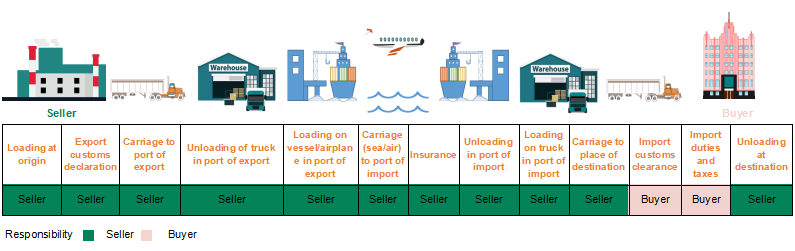
Door-to-door delivery, commonly referred to as DDP (Delivered Duty Paid under Incoterms®), is a logistics arrangement in which the supplier takes full responsibility for delivering goods from their factory directly to the buyer’s specified job site or warehouse. This includes production, export handling, international shipping, customs clearance, import duties, and final inland transportation. In essence, the builder receives the goods ready for use, without having to manage any intermediate steps.
The defining feature of DDP is single-point accountability. Unlike traditional shipping terms where responsibilities are split among multiple parties, DDP consolidates the entire logistics chain under the supplier. This significantly reduces the administrative burden on builders and minimizes the risk of miscommunication, delays, or unexpected costs.
Traditional Shipping vs Door-to-Door: Key Differences
Builders often rely on traditional shipping terms such as FOB or CIF, where the supplier’s responsibility ends at the port of origin or destination. While these methods may appear cost-effective at first glance, they require the buyer to coordinate customs clearance, pay duties, and arrange final delivery—introducing multiple potential points of delay.
Comparison Table
| Item | Traditional Shipping (FOB/CIF) | Door-to-Door Delivery (DDP) |
|---|---|---|
| Supplier Responsibility | Up to port (origin or destination) | Full delivery to job site |
| Customs Clearance | Handled by buyer | Handled by supplier |
| Duties & Taxes | Paid by buyer | Included in price |
| Inland Transportation | Buyer arranges | Supplier arranges |
| Timeline Control | Fragmented | Centralized |
| Risk Exposure | Shared across parties | Mostly on supplier |
| Coordination Complexity | High | Low |
This comparison highlights a fundamental difference: traditional shipping requires builders to act as logistics coordinators, while DDP allows them to operate as end-users, focusing solely on project execution.
Advantages of Door-to-Door Delivery for Builders
Reduced Project Delays
One of the most significant advantages of DDP is its ability to reduce delays. Since the supplier manages customs clearance and inland transportation, common bottlenecks—such as documentation errors or port congestion—are handled proactively. This ensures smoother transitions between each stage of delivery and keeps project timelines on track.
Simplified Logistics Management
With DDP, builders no longer need to coordinate between freight forwarders, customs brokers, and trucking companies. This simplification reduces administrative workload and allows project managers to focus on construction progress rather than shipment tracking.
Cost Predictability
Although DDP quotes may appear higher initially, they are all-inclusive. Builders avoid unexpected charges such as port fees, storage costs, or duty fluctuations. This level of cost certainty is particularly valuable for budgeting and contract planning.
Lower Operational Risk
By consolidating responsibility with the supplier, DDP reduces the risk of miscommunication and logistical errors. In case of delays or issues, there is a clear accountable party, making problem resolution faster and more efficient.
Potential Drawbacks of Door-to-Door Delivery
Higher Upfront Quoted Price
DDP pricing includes all logistics costs, which can make it appear more expensive compared to FOB or CIF. However, when factoring in hidden costs and time savings, the total cost difference is often smaller than expected.
Dependence on Supplier Capability
The effectiveness of DDP depends heavily on the supplier’s experience and logistics network. An inexperienced supplier may struggle with customs procedures or local delivery coordination, potentially causing delays.
Limited Flexibility
Builders relinquish control over logistics decisions, including carrier selection and routing. While this simplifies operations, it may not suit buyers who prefer to manage their own supply chain.
When Should Builders Choose Door-to-Door Delivery?
Door-to-door delivery is particularly beneficial in the following scenarios:
- Projects with tight deadlines where delays are unacceptable
- Large-volume orders such as interior doors, cabinets, or millwork
- Builders without dedicated import or logistics teams
- First-time international sourcing projects
- Multi-SKU shipments requiring coordinated delivery
In these situations, the reduced complexity and increased reliability of DDP can significantly improve project outcomes.
Expert Tips: How to Use Door-to-Door Effectively
Lock Pricing Before Production
Always confirm and lock the DDP price at the Proforma Invoice (PI) stage. This protects against fluctuations in shipping costs and import duties.
Verify Supplier Experience
Choose suppliers with proven DDP experience, especially in your target market. Ask whether they have served large-scale clients or handled similar projects.
Clarify Delivery Scope
Ensure the quotation clearly defines whether services include unloading, job site delivery conditions, and any access limitations.
Plan Lead Time with Buffer
Even with DDP, external factors such as port congestion or weather can impact timelines. Builders should include a buffer period in project planning.
Frequently Asked Questions About Door-to-Door Delivery (DDP)
Q: What exactly does Door-to-Door Delivery (DDP) mean for builders?
A: Door-to-Door Delivery, officially known as DDP (Delivered Duty Paid), is a comprehensive logistics arrangement where the supplier assumes full responsibility for delivering building materials from their overseas factory directly to the buyer’s job site. The quoted DDP price includes everything: manufacturing, international ocean freight, customs clearance, import duties, and final inland trucking.
Q: What is the main difference between DDP and traditional FOB or CIF shipping?
A: With traditional shipping terms like FOB or CIF, the supplier’s responsibility ends at the port (either origin or destination). The builder must act as their own logistics coordinator, hiring customs brokers, paying import duties separately, and arranging domestic trucking. With DDP, the supplier manages the entire supply chain, offering a single-point accountability model that prevents hidden fees and coordination delays.
Q: Is DDP shipping more expensive than traditional shipping methods?
A: A DDP quote will initially appear higher than a FOB or CIF quote because it includes all logistical costs (freight, duties, and trucking). However, when builders factor in the hidden costs of traditional shipping—such as unexpected port storage fees, customs delays, and the administrative burden of coordinating multiple logistics partners—DDP often proves to be the more cost-effective and predictable option for large-scale projects.
Q: When should a construction project utilize Door-to-Door (DDP) delivery?
A: DDP is highly recommended for projects with strict deadlines where port delays are unacceptable, or for builders placing large-volume orders (like interior doors or cabinetry) who do not have a dedicated, in-house international logistics team. It allows project managers to focus on on-site construction execution rather than tracking shipments and clearing customs.
Conclusion: A Smarter Logistics Strategy for Modern Builders
For builders managing increasingly complex supply chains, door-to-door delivery offers a practical solution to reduce delays, control costs, and simplify operations. By shifting logistics responsibility to experienced suppliers, builders can focus on what matters most—keeping projects on schedule and delivering quality results.