Many people focus on doors but overlook the hardware. From everyday usability to security and durability, the right combination of handles, locks, hinges, and accessories directly affects the performance and lifespan of a door.
Door hardware includes all the functional components of a door, such as handles, locks, hinges, and accessories—that control how the door operates, secures, and performs over time. Choosing the right hardware ensures smooth operation, proper alignment, and reliable security for both residential and commercial applications.
In practice, different projects require different hardware solutions. Interior doors, exterior entry doors, and high-traffic commercial spaces all have specific performance requirements. Understanding the types of door hardware and how they work together can help builders, contractors, and buyers make more informed decisions and avoid costly installation or maintenance issues.
What Is Door Hardware?
Door hardware refers to all the functional components attached to a door that allow it to open, close, secure, and operate properly. These components are essential not only for basic functionality but also for safety, durability, and overall user experience.
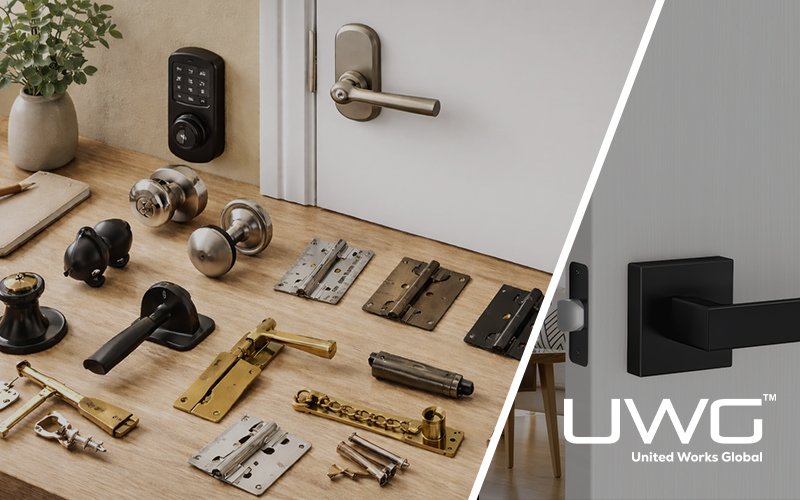
The main categories of door hardware include:
- Handles and knobs – used to open and close the door
- Locks and latches – provide security and privacy
- Hinges – support the door and allow it to swing
- Accessories – such as door stoppers, closers, and bolts that improve usability and protection
Each component plays a specific role, and they must work together to ensure the door functions smoothly and reliably. In both residential and commercial projects, selecting the right door hardware is just as important as choosing the door itself.
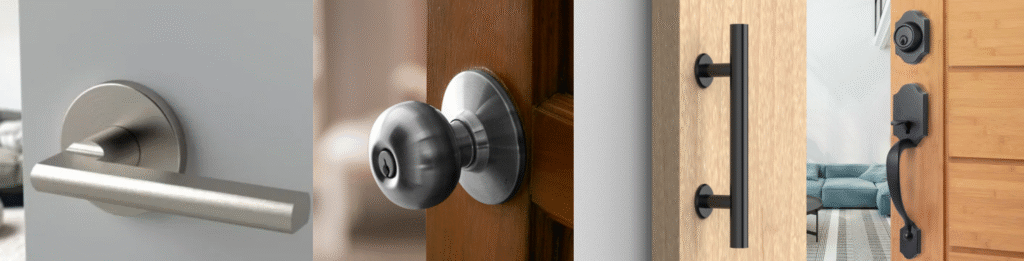
Types of Door Handles
| Type | Description | Common Applications |
| Lever Handles | Easy to operate, suitable for high-traffic and accessible use | Interior doors, offices, commercial spaces |
| Knob Handles | Traditional and cost-effective, requires grip to turn | Bedrooms, closets, residential interiors |
| Pull Handles | Designed for push/pull use, no turning mechanism | Entry doors, sliding doors, glass doors |
| Backplate Handles (Handle Sets) | Combined handle and lock system with decorative design | Exterior entry doors, main entrances |
Inside, the parts of a door handle and lock include the spindle, latch, and trim, all working together to open and close the door smoothly.
Types of Door Locks
Locks are critical for safety. Common options include:
| Type | Description | Common Applications |
| Passage Lock | No locking function, used only for opening and closing | Hallways, closets |
| Privacy Lock | Lockable from inside without a key | Bedrooms, bathrooms |
| Entry Lock (Keyed Lock) | Can be locked/unlocked with a key from outside | Exterior doors, main entrances |
| Deadbolt | Provides additional security with a solid locking mechanism | Exterior doors, front doors |
| If you’ve ever wondered what are the parts of a door lock called, they include the cylinder, latch, bolt, and strike plate. |
Understanding the inside of a door lock mechanism helps you choose better quality products. For example, deadbolts offer stronger protection than basic latch systems.
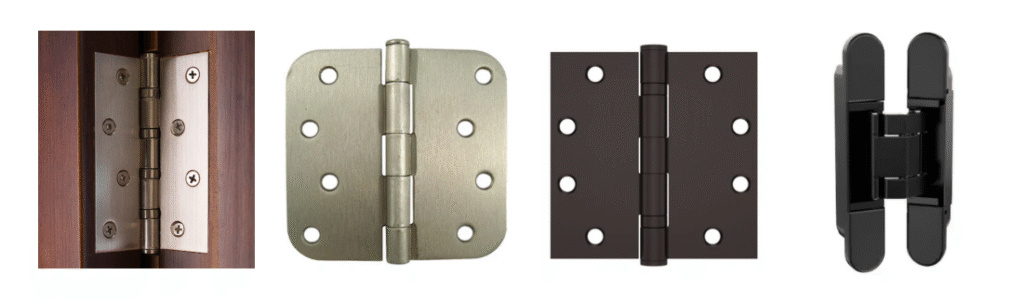
Hinges Explained
Yes—hinges are absolutely essential door hardware. Hinges are essential components that support the door and allow it to open and close smoothly. The type and quality of hinges directly affect door alignment, durability, and long-term performance.
Common types include:
| Type | Description | Common Applications |
| Butt Hinges | The most common hinge type, mounted on the edge of the door and frame | Interior and exterior doors |
| Ball Bearing Hinges | Equipped with bearings to reduce friction and improve durability | Heavy doors, high-traffic areas |
| Concealed Hinges | Hidden when the door is closed, offering a clean and modern look | Cabinets, modern interior doors |
Choosing the right hinge depends on factors such as door weight, frequency of use, and design preference. Proper hinge selection helps ensure smooth operation and long-term reliability.
Without proper hinges, even the best lock or handle won’t function correctly.
Door Accessories
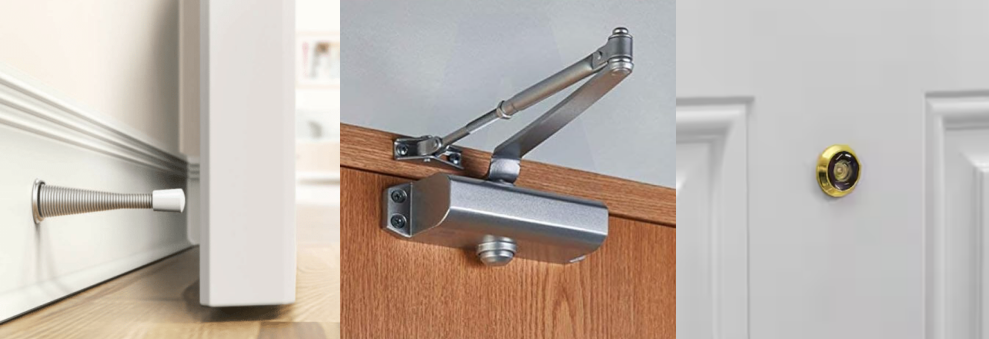
In addition to handles, locks, and hinges, door accessories play an important role in improving functionality, protection, and user convenience. While often considered secondary components, they can significantly enhance the overall performance and lifespan of a door.
Common door accessories include door stoppers, which prevent damage to walls and doors; door closers, which ensure controlled and automatic closing in commercial or high-traffic areas; and flush bolts, which are used to secure inactive door panels in double-door systems. Other accessories such as door viewers (peepholes) and magnetic catches provide added security and usability.
Selecting the right accessories helps ensure that doors operate smoothly, remain protected from damage, and meet the specific functional requirements of different spaces.
The difference is simple:
- Hardware = core function – Accessories = added convenience and protection
How to Choose Door Hardware
Choosing the right door hardware depends on several key factors, including door type, usage, and design requirements. The goal is to ensure that all components work together to provide functionality, durability, and a consistent appearance.
First, consider the door type and location. Interior doors typically use passage or privacy locks with standard hinges, while exterior doors require more secure options such as keyed locks or deadbolts. Commercial or high-traffic areas may also need heavy-duty hardware for long-term reliability.
Second, evaluate the level of usage. Doors in high-traffic environments benefit from more durable hardware, such as lever handles and ball bearing hinges, which can withstand frequent operation. For low-traffic areas, standard hardware is usually sufficient.
Third, check compatibility with the door. Factors such as door thickness, backset, and pre-drilled hole sizes must match the selected hardware to ensure proper installation and performance.
Finally, consider the design and finish. Hardware should complement the overall interior style, whether modern, traditional, or commercial, while also meeting performance expectations.
In practice, selecting door hardware is about balancing function, durability, and aesthetics to suit the specific needs of the project.
Material & Finish Options
Door hardware is available in a variety of materials and finishes, which affect both performance and appearance. Choosing the right combination helps ensure durability while matching the overall design of the space.
Common materials include stainless steel, zinc alloy, and brass. Stainless steel is known for its strength and corrosion resistance, making it suitable for both residential and commercial use. Zinc alloy offers a cost-effective solution with good versatility, while brass is often used in higher-end applications for its durability and premium feel.
In terms of finishes, popular options include matte black, satin nickel, brushed nickel, chrome, and antique finishes. Matte black and brushed finishes are commonly used in modern interiors, while polished or antique finishes are often chosen for more traditional designs.
When selecting materials and finishes, it’s important to consider not only aesthetics but also usage conditions, such as humidity, wear, and maintenance requirements.
Common Mistakes to Avoid
When selecting door hardware, certain mistakes can lead to installation issues, reduced performance, or higher long-term costs. Based on our experience working with builders and supporting various projects, these are some of the most common issues to watch out for.
One common mistake is choosing the wrong type of lock for the application. For example, using passage locks where privacy or security is required can lead to functional problems after installation.
Another issue is underestimating hinge requirements. In many projects, we see standard hinges used on heavy doors, which can cause sagging or misalignment over time. Selecting the correct hinge type and load capacity is essential for long-term performance.
Ignoring compatibility with door specifications is also a frequent problem. Mismatched backsets, door thickness, or pre-drilled holes can create installation difficulties and delays on-site.
In addition, some projects overlook the importance of material and finish selection. Choosing finishes that are not suitable for high-traffic or humid environments can result in premature wear or corrosion.
Finally, focusing only on upfront cost instead of overall performance can lead to higher maintenance or replacement costs later. In practice, selecting the right hardware from the beginning helps avoid these issues and ensures smoother installation and long-term reliability.
Frequently Asked Questions About Door Hardware
Q: What is the difference between a passage lock and a privacy lock?
A: A passage lock (often called a hall/closet knob or lever) has no locking mechanism at all; it is simply used to unlatch and open a door. A privacy lock features a locking mechanism (usually a button or turn-piece on the inside) that can be locked for privacy but does not require a key, making it the standard choice for bedrooms and bathrooms.
Q: Are lever handles better than traditional door knobs?
A: Generally, yes. Lever handles are much easier to operate than traditional round knobs because they require pushing down rather than gripping and twisting. This makes them significantly more ergonomic, ADA-compliant (Americans with Disabilities Act), and ideal for high-traffic commercial spaces or homes designed for aging in place.
Q: What type of hinges should I use for a heavy solid wood door?
A: For heavy solid core or solid wood doors, you should always upgrade to ball bearing hinges. Unlike standard butt hinges, ball bearing hinges feature small, lubricated bearings between the hinge knuckles. This drastically reduces friction, prevents the heavy door from sagging over time, and ensures smooth, silent operation.
Q: What is the difference between door hardware and door accessories?
A: Door hardware refers to the core functional components required for a door to operate and secure a room—namely, the hinges, handles, and locks. Door accessories are supplementary items added to improve convenience, safety, or protection, such as door stoppers, peepholes (viewers), flush bolts, and automatic door closers.
Summary
Door hardware plays a critical role in how a door functions, performs, and lasts over time. Components such as handles, locks, hinges, and accessories must work together to ensure smooth operation, proper security, and long-term reliability.
Understanding the different types of hardware, material options, and selection factors helps avoid common issues during installation and use. Choosing the right combination based on door type, usage, and environment is key to achieving consistent performance.
Based on our experience supporting various projects, selecting suitable hardware early in the process can significantly improve efficiency and reduce future maintenance. If you have specific requirements or questions, it’s always helpful to review options in advance to ensure the best fit for your project.
Articles that you may be interested in:
Barn Door Selection Guide: Styles, Materials, and Hardware Options
What Is the Best Corner Cabinet Hardware for Efficient Storage?