Installing a prehung door may seem straightforward, but accurate measurements are the key to a successful and professional result. Many installation problems—such as uneven gaps, doors that won’t close properly, or frames that require excessive adjustments—can be traced back to incorrect measuring. Understanding how to measure for prehung doors correctly helps homeowners, builders, and contractors avoid costly mistakes and ensures long-term performance.
Accurate measuring for prehung doors involves checking the rough opening width and height, confirming wall thickness, accounting for finished floor height, and selecting the correct door swing. Measurements should always be taken at multiple points and based on the smallest dimensions to ensure proper fit. Allowing space for shimming and leveling is essential for smooth operation, alignment, and a professional installation result.
Understanding What a Prehung Door Includes
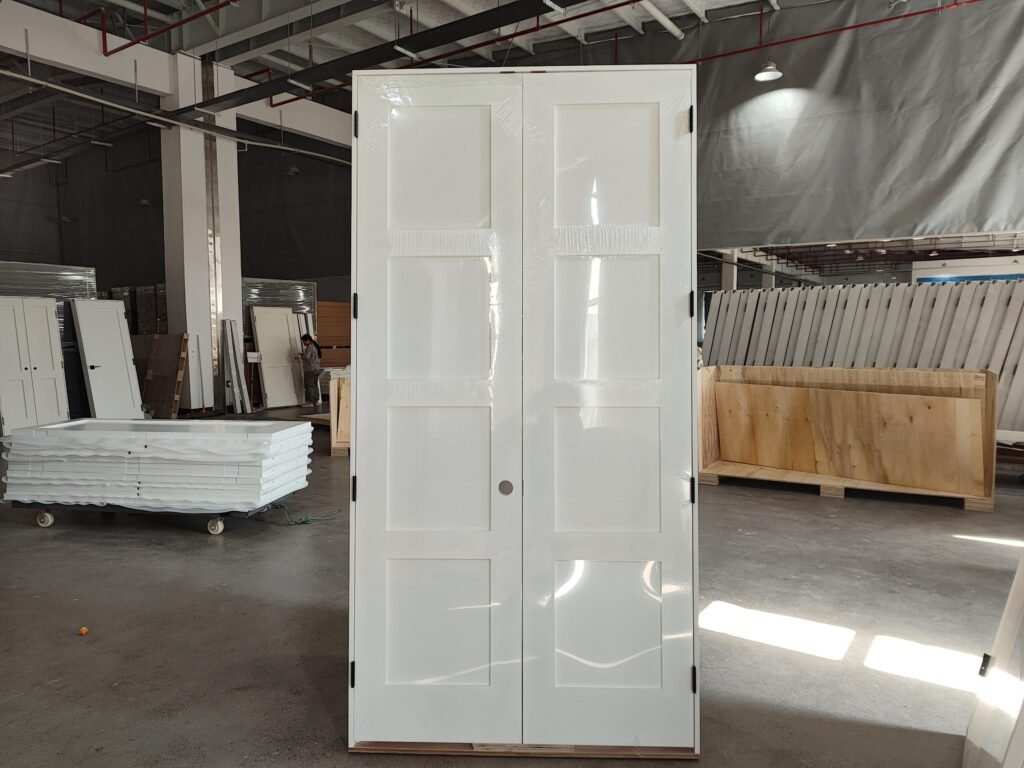
A prehung door comes as a complete unit, including the door slab, hinges, and frame. Because the frame is already attached, measurements must be based on the rough opening, not the finished opening. This rough opening needs to be slightly larger than the door unit to allow for leveling, shimming, and adjustments during installation.
Ignoring this difference is one of the most common causes of installation issues.
Measuring the Rough Opening Width
Begin by measuring the width of the rough opening from stud to stud. Take measurements at three locations: the top, middle, and bottom. Walls are rarely perfectly straight, so always use the smallest measurement to determine the correct door size.
As a general rule, the rough opening should be about 2 inches wider than the nominal door width, but manufacturer specifications should always be confirmed.

Measuring the Rough Opening Height
Next, measure the height from the subfloor to the top of the opening. Take measurements on both sides and at the center. Again, use the smallest measurement.
Prehung doors typically require approximately 2 inches of extra height beyond the door slab size. This allows room for the frame and proper alignment.
Checking Wall Thickness
Wall thickness plays a major role in how the door frame sits within the wall. Measure from one finished wall surface to the other. Standard interior walls are often around 4 9/16 inches, but variations are common depending on framing and drywall thickness.
Correct wall thickness ensures the door frame sits flush and reduces the need for extension jambs or excessive trim modifications.

Accounting for Finished Flooring
Always consider whether the finished flooring is already installed. If not, measure from the subfloor and add the thickness of the final flooring material, such as tile, hardwood, or laminate.
Failing to account for floor height can cause doors to scrape the floor or leave uneven gaps at the bottom, especially in kitchens and bathrooms.
Confirming Door Swing and Handing
Prehung doors are manufactured in left-hand and right-hand configurations. Stand on the side where the door opens toward you and observe which side the hinges are on. This determines the correct handing.
Incorrect door swing can interfere with furniture placement and room flow, so this step should never be overlooked.

Allowing Space for Shimming and Leveling
The rough opening must allow enough space around the frame for shims. These shims are critical for leveling the door and ensuring smooth operation. A door installed too tightly may look acceptable initially but can develop alignment issues over time.
Conclusion
Measuring for prehung doors is a critical step that directly impacts installation quality and door performance. By carefully measuring the rough opening, wall thickness, floor height, and door swing—and allowing proper space for shimming—you can achieve a clean, accurate installation. Proper preparation not only saves time and labor but also ensures long-lasting, professional results.