A veneer door is a door finished with a thin layer of natural or engineered wood veneer bonded to a stable substrate and internal door structure.
The visible surface provides the color, grain, and texture of wood, while the internal construction may include an engineered core, perimeter frame, and face substrate. Common wood veneers include oak, walnut, maple, and ash.
What Is a Veneer Door?
A veneer door is a door with a thin decorative wood surface applied over an engineered door structure.
The visible wood on the face does not normally extend through the full thickness of the door. Instead, the veneer is bonded to a stable substrate, which is supported by the door core and perimeter frame.
A typical veneer door may include:
- Wood veneer
- MDF, HDF, plywood, or another face substrate
- Internal door core
- Perimeter stiles and rails
- Edge material
- Protective surface finish
This construction allows the door to retain a natural wood appearance while using engineered materials underneath the surface.
What Is Wood Veneer?
Wood veneer is a thin layer of wood cut or peeled from a log.
Natural veneer retains characteristics of the original wood species, including:
- Grain pattern
- Color
- Figure
- Pores
- Natural tonal variation
Common veneer species include:
- Oak
- Walnut
- Maple
- Ash
- Cherry
- Birch
- Teak
- Mahogany
Because veneer is thin, one log can provide decorative surfaces for significantly more doors than if the same wood were used as thick solid lumber.
Natural Veneer vs. Engineered Veneer
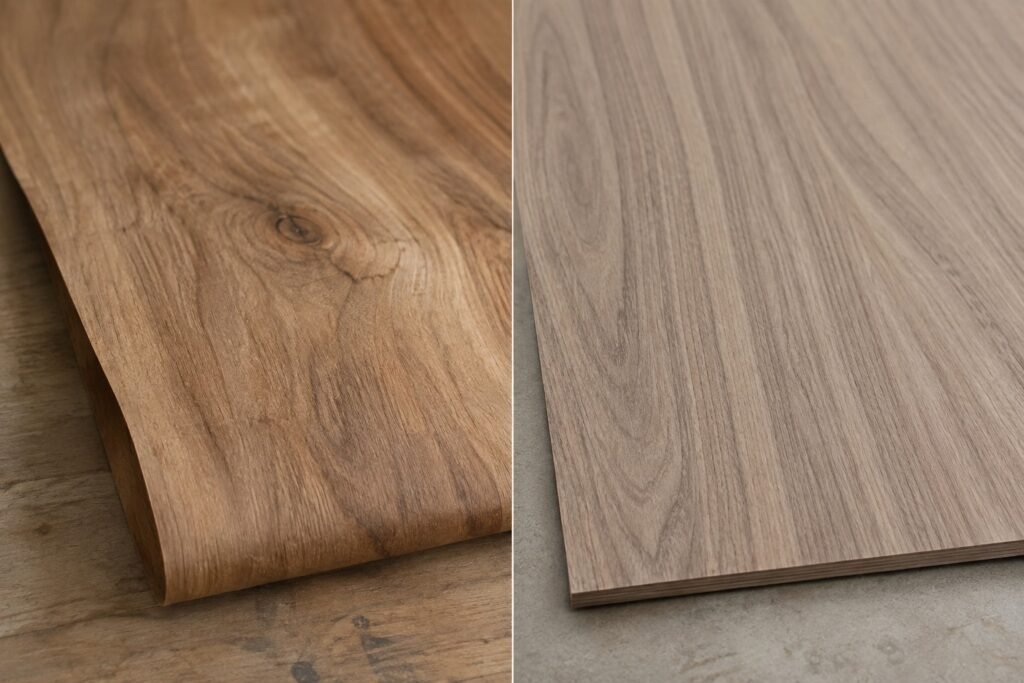
Natural veneer is cut directly from natural timber and retains the variation found in the original log.
Its main characteristics include:
- Natural grain variation
- Differences in tone
- Unique patterns from sheet to sheet
- Authentic wood appearance
Engineered veneer, also called reconstituted veneer, is made from processed wood veneer that is reconstructed into a more controlled pattern.
It generally offers:
- More uniform grain
- More consistent color
- Repeatable appearance
- Less variation between sheets
Natural veneer emphasizes the individuality of wood, while engineered veneer provides a more controlled and consistent appearance.
How Is a Veneer Door Constructed?
A veneer door is typically built as a layered system.
Its main components are the perimeter frame, internal core, face substrate, decorative veneer, edge treatment, and surface finish.
Stile and Rail / Perimeter Frame
The perimeter frame forms the structural edge of the door.
It generally consists of:
- Two vertical stiles
- Top rail
- Bottom rail
Depending on the door construction, additional reinforcement may also be used around hardware locations.
Common frame materials include:
- Solid wood
- Finger-jointed wood
- LVL
- Other engineered wood products
The perimeter frame helps maintain the shape of the door and provides support for hinges, locks, and edge machining.
Door Core
The core fills most of the internal area between the perimeter frame members.
Different constructions may use:
- Particleboard core
- Tubular particleboard core
- Engineered wood core
- Lightweight cellular or honeycomb core
- Fire-rated or acoustic core systems
The core affects characteristics such as:
- Weight
- Rigidity
- Sound performance
- Door feel
- Hardware support
- Performance requirements
A heavier core usually creates a more substantial door, while lighter constructions reduce overall weight.
Face Substrate and Veneer Layer
The veneer is normally bonded to a smooth face substrate rather than directly to the internal core.
Common substrates include:
- MDF
- HDF
- Plywood
- Other engineered panels
The substrate creates an even surface for the decorative wood layer.
The veneer is then bonded to the substrate using adhesive, pressure, and controlled manufacturing conditions.
A stable substrate and consistent bonding help maintain a flat, smooth door surface.
Edge Construction
The edges of a veneer door may use:
- Matching veneer
- Solid wood lipping
- Painted wood
- Engineered wood
- Other specified edge materials
The edge construction protects the perimeter of the door and provides material for hardware machining.
It also affects the appearance of the door when it is open.
Surface Finishing
After the veneer is applied, the face can be finished in several ways.
Common finishes include:
- Clear coating
- Stain
- Lacquer
- PU coating
- Matte finish
- Satin finish
A clear finish emphasizes the natural wood color, while stain changes the tone without completely hiding the grain.
The finish also helps protect the veneer surface from normal wear and moisture.
What Are the Main Types of Wood Veneer for Doors?
The wood species determines much of the color, grain, and character of a veneer door.
Common wood door veneer types include oak, walnut, maple, and ash.
Oak Veneer Doors
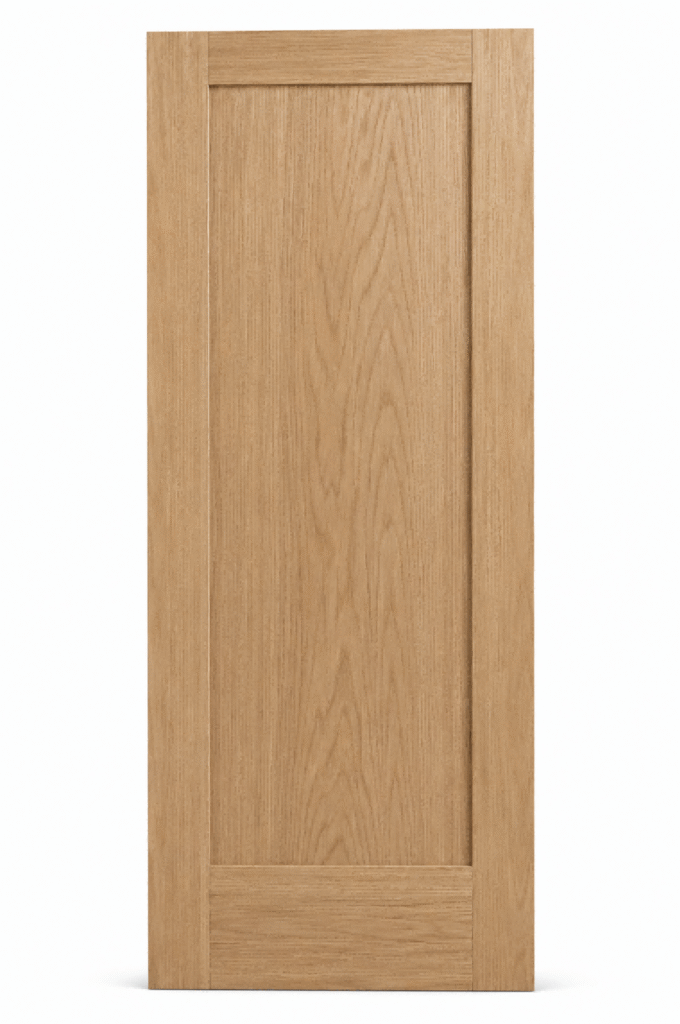
Oak veneer doors are among the most common wood veneer doors because oak has a strong, recognizable grain and works with many interior styles.
Two common types are white oak and red oak.
White oak usually has a neutral light-brown to tan appearance. It is commonly used in:
- Contemporary interiors
- Scandinavian designs
- Minimalist spaces
- Transitional interiors
Red oak generally has warmer tones and a more traditional appearance.
It is frequently used in:
- Residential interiors
- Traditional designs
- Stained wood door packages
Oak can also look very different depending on the veneer cut. Plain-sliced oak produces more varied grain, while rift-cut oak creates a straighter appearance.
Walnut Veneer Doors
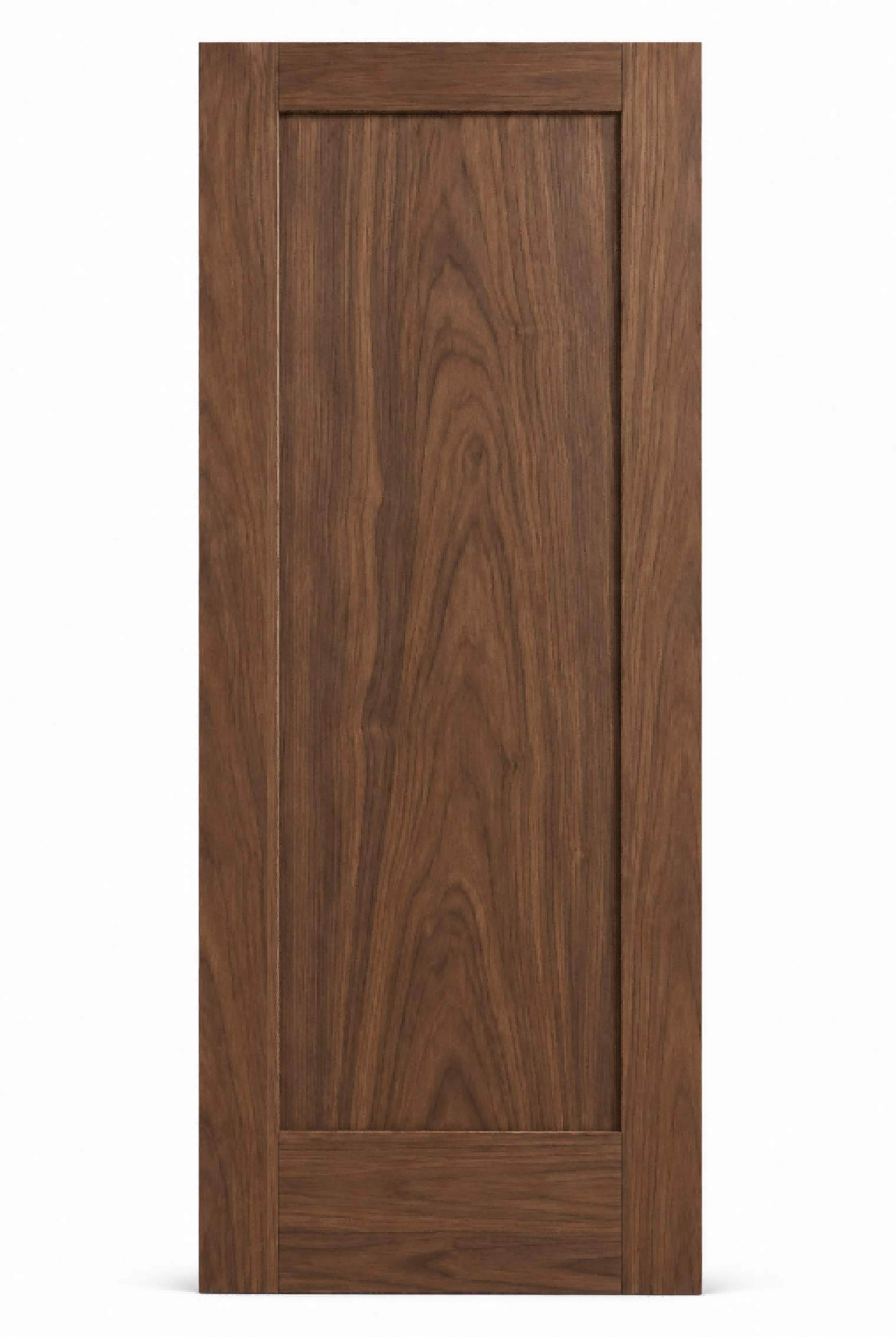
Walnut veneer has a naturally darker appearance.
Its color commonly ranges from medium brown to deep chocolate brown.
Walnut is frequently used in:
- Luxury residences
- Hotels
- Executive offices
- High-end apartments
- Premium commercial interiors
The rich color means walnut often works well with clear or lightly tinted finishes.
Maple Veneer Doors
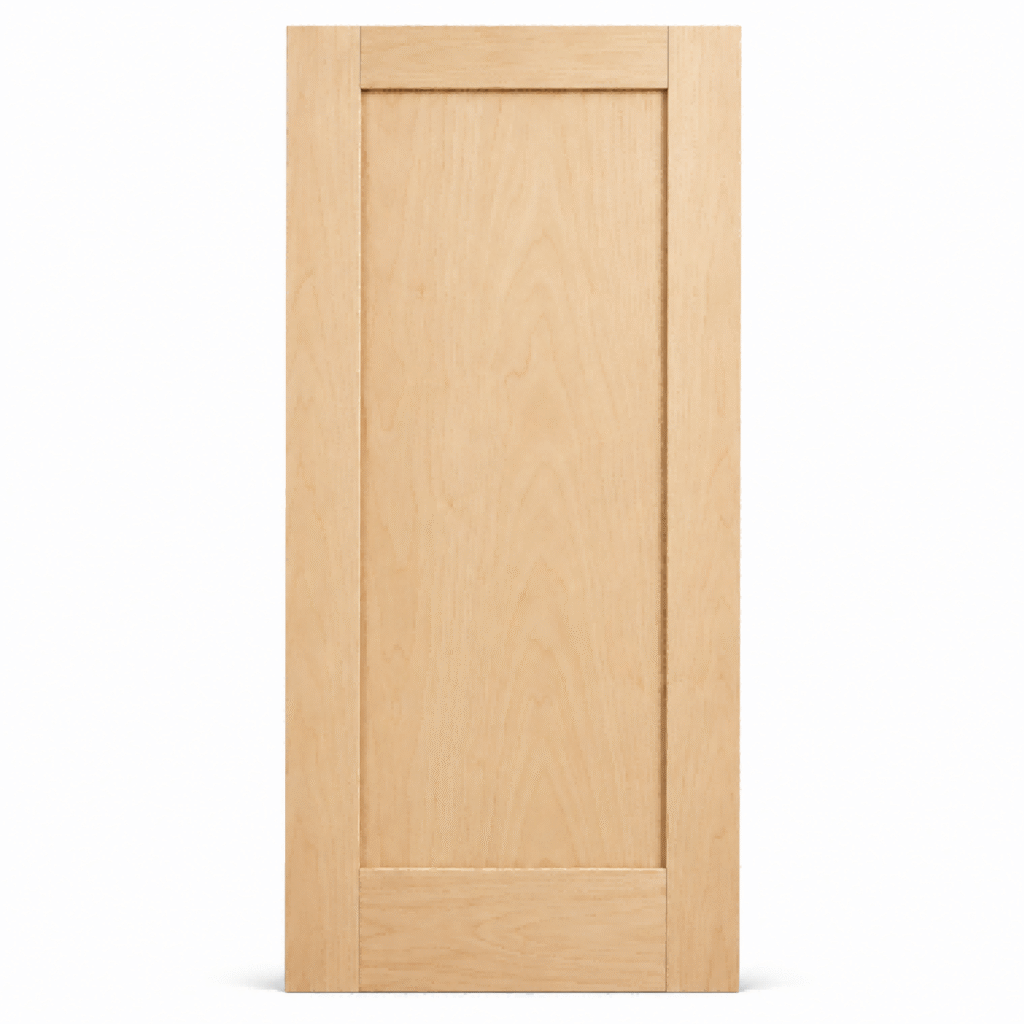
Maple veneer is generally light in color with a fine, relatively subtle grain.
It is commonly used where a cleaner and less pronounced wood pattern is desired.
Typical applications include:
- Modern homes
- Offices
- Healthcare interiors
- Educational spaces
- Light-colored interiors
Maple can provide a softer visual effect than oak or ash.
Ash Veneer Doors
Ash veneer is usually light in color but has a more visible grain than maple.
Its combination of light color and pronounced texture makes it useful in:
- Contemporary interiors
- Scandinavian-style spaces
- Modern residences
- Hospitality projects
- Natural wood schemes
Ash is often selected when the design needs visible wood character without using a dark species.
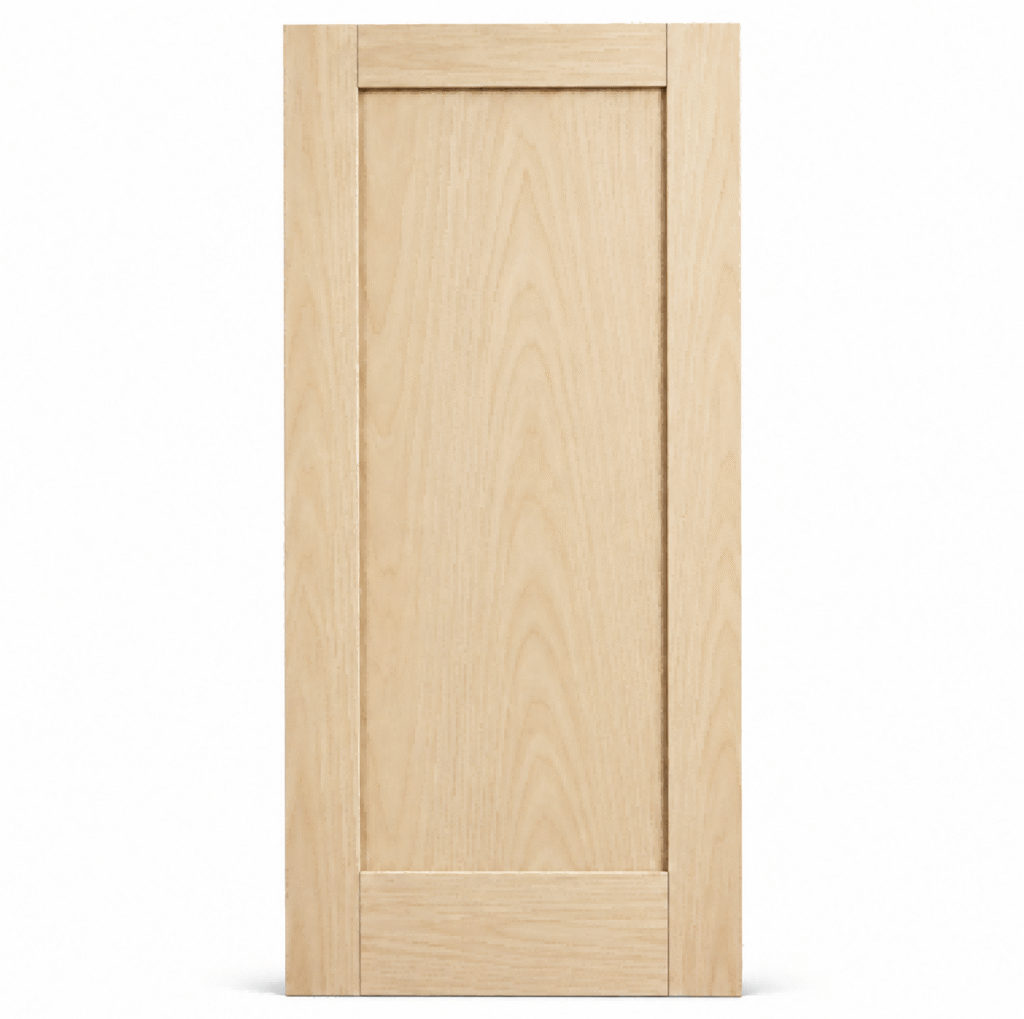
Other Wood Veneer Options
Other commonly available veneer species include:
- Cherry: Warm reddish-brown appearance
- Birch: Light color and fine grain
- Teak: Warm golden-brown tones
- Mahogany: Rich reddish to dark-brown appearance
The availability of individual species varies by supplier and project.
Explore our full range of interior doors available with different constructions, finishes, and design options.
How Do Veneer Cut and Grain Matching Affect Door Appearance?
The wood species is only one factor that determines how a veneer door looks.
The way the veneer is cut from the log and arranged on the door can significantly change the grain pattern.
Plain-Sliced Veneer
Plain-sliced veneer commonly produces a mixture of straight grain and cathedral-shaped patterns.
Typical characteristics include:
- Natural grain variation
- Visible cathedral figure
- Traditional wood appearance
- Efficient material yield
It is one of the most widely used veneer cuts for architectural doors.
Quarter-Cut Veneer
Quarter-cut veneer generally produces a straighter and more controlled grain pattern.
Compared with plain slicing, it has:
- Less cathedral figure
- More linear grain
- More uniform appearance
It works well with contemporary and architectural interiors.
Rift-Cut Veneer
Rift-cut veneer is especially popular with oak.
It produces a narrow, straight grain pattern with very little cathedral figure.
Rift-cut oak is commonly associated with:
- Modern interiors
- High-end homes
- Luxury hospitality projects
- Minimalist architecture
Its clean linear appearance makes it especially suitable for tall flush doors.
Rotary-Cut Veneer
Rotary-cut veneer is produced by peeling veneer continuously around the log.
This results in:
- Broad grain patterns
- Greater visual variation
- Wide veneer sheets
- High material yield
Its appearance is generally less linear than quarter-cut or rift-cut veneer.
Book-Matched vs. Slip-Matched Veneer
Veneer matching describes how adjacent veneer sheets are arranged on the finished surface.
Book matching flips alternating leaves so the grain mirrors from one sheet to the next.
This creates a symmetrical effect.
Slip matching places consecutive veneer sheets next to each other in the same orientation.
This creates a more repetitive and directional appearance.
| Veneer Cut / Match | Typical Appearance | Common Use |
|---|---|---|
| Plain-Sliced | Cathedral and straight grain | General architectural doors |
| Quarter-Cut | Straight, controlled grain | Contemporary interiors |
| Rift-Cut | Fine, linear grain | Premium modern oak doors |
| Rotary-Cut | Broad, varied grain | Large-surface applications |
| Book-Matched | Mirrored grain pattern | Decorative interiors |
| Slip-Matched | Repeated directional grain | Modern projects |
Grain direction also changes the visual effect of the door.
Common options include:
- Vertical grain
- Horizontal grain
Vertical grain is particularly common on tall doors because it reinforces the height of the opening.
What Are the Advantages and Limitations of Veneer Doors?
Veneer doors combine a real wood appearance with engineered door construction.
However, the thin decorative surface also creates some limitations.
Natural Wood Appearance and Design Flexibility
One of the main advantages of natural veneer is its authentic wood appearance.
A veneer door can display:
- Natural grain
- Wood texture
- Species-specific color
- Natural variation
Different species, veneer cuts, grain directions, stains, and finishes provide considerable design flexibility.
Veneer also allows premium wood species to be used more efficiently than thick solid timber.
Grain Variation and Matching Requirements
Natural veneer does not produce perfectly identical doors.
Variations can occur in:
- Color
- Grain
- Figure
- Tone
- Mineral markings
This variation is part of the natural character of wood.
However, where many doors are installed close together, grain and color differences may become more noticeable.
Matching methods such as book matching, slip matching, or controlled color selection can be used when greater visual consistency is required.
Moisture, Surface Damage, and Repair Considerations
Because veneer is thin, deep surface damage can be more difficult to repair than damage to solid wood.
Light scratches may sometimes be repaired or refinished, but aggressive sanding can expose the substrate beneath the veneer.
Veneer doors are also not automatically waterproof.
Moisture performance depends on the complete door system, including:
- Adhesive
- Substrate
- Core
- Edge sealing
- Top and bottom sealing
- Surface finish
Standard interior veneer doors should therefore be protected from prolonged direct water exposure.
Where Are Veneer Doors Commonly Used?
Veneer doors are commonly used in interiors where natural wood appearance is an important part of the design.
Custom Homes and High-End Residential Projects
Veneer doors are widely used in custom homes because they coordinate well with other wood finishes.
They can be matched with:
- Flooring
- Cabinets
- Wall panels
- Built-in furniture
- Other interior millwork
White oak, walnut, maple, and ash are common choices.
Modern residential designs often use tall veneer doors with simple profiles and vertical grain.
Hotel and Hospitality Doors
Hotels frequently use veneer doors for:
- Guest rooms
- Suites
- Corridors
- Meeting rooms
- Restaurants
- Public areas
Wood veneer creates a warmer and more premium appearance than many standard paint-grade surfaces.
Different veneer species and finishes can also be used to establish a consistent hotel design language.
Office and Commercial Interiors
Veneer doors are commonly found in:
- Executive offices
- Private offices
- Conference rooms
- Meeting rooms
- Reception areas
- Premium commercial interiors
Oak and walnut are particularly common where designers want a more architectural wood finish.
Multifamily and Large Residential Projects
Veneer doors can also be used in:
- Apartment buildings
- Condominiums
- Student housing
- Luxury multifamily developments
In larger projects, consistent veneer color, finish, and grain direction become more important because multiple doors may be visible within the same interior area.
What Should Buyers Confirm Before Ordering Veneer Doors?
For project orders, the veneer appearance should be specified together with the complete door construction.
The following information helps manufacturers prepare accurate quotations, samples, and shop drawings.
Veneer Species
Identify the required wood species.
Examples include:
- White oak
- Red oak
- Walnut
- Maple
- Ash
- Cherry
Avoid specifying only “wood veneer,” because different species produce very different appearances and costs.
Physical samples are useful where exact appearance matters.
Veneer Cut and Grain Direction
Specify the required veneer cut, such as:
- Plain sliced
- Quarter cut
- Rift cut
- Rotary cut
Also indicate whether the grain should run:
- Vertically
- Horizontally
This is particularly important for oak because different cuts can create dramatically different grain patterns.
Veneer Matching Requirements
If appearance consistency is important, confirm the matching method.
Options can include:
- Random match
- Book match
- Slip match
- Sequence match
Large hotel, multifamily, and commercial projects may also require controlled color ranges between doors.
Door Core and Construction
Confirm the internal construction rather than specifying only the surface veneer.
Relevant information may include:
- Perimeter frame
- Core type
- Face substrate
- Lock reinforcement
- Edge construction
- Door thickness
The door construction should match the expected performance of the opening.
Door Size and Quantity
Provide quantities by individual size.
Typical information includes:
- Width
- Height
- Thickness
- Quantity
- Single or double door
- Door number
Oversized doors may require different reinforcement or hardware than standard-size doors.
Finish and Color
Specify the required finish.
Common options include:
- Clear finish
- Stain
- Factory coating
- Site finishing
- Matte
- Satin
- Semi-gloss
For stained or clear-finished doors, approved physical samples can establish the acceptable color and finish range before production.
Edge Treatment
Confirm how the visible door edges should be finished.
Options may include:
- Matching veneer
- Solid wood lipping
- Painted edge
- Other specified treatments
Edge construction should also be compatible with hinge and lock machining.
Hardware Preparation
When the factory is machining the doors, provide hardware information before production.
Typical details include:
- Hinge size
- Hinge quantity
- Hinge locations
- Lock bore
- Backset
- Strike preparation
- Door handing
- Flush bolts
- Door closers
For project work, a hardware schedule is the clearest reference.
Fire-Rated or Other Performance Requirements
If the opening requires additional performance, specify it before the door construction is finalized.
Possible requirements include:
- Fire rating
- Acoustic performance
- Smoke control
- Moisture resistance
- Hardware reinforcement
The decorative veneer itself does not determine these ratings; they depend on the complete door assembly.
Review Door Schedule and Project Drawings
For builder, hospitality, multifamily, and commercial projects, useful documents include:
- Floor plans
- Door schedule
- Finish schedule
- Hardware schedule
- Wall types
- Door elevations
- Architectural details
These documents allow the door manufacturer to coordinate dimensions, finishes, handing, hardware, and performance requirements before producing shop drawings.
Veneer Door FAQs
Is Veneer Real Wood?
Natural veneer is real wood cut into thin sheets and bonded to a substrate.
Engineered veneer is also wood-based but is processed to create more controlled grain and color patterns.
Are Oak Veneer Doors Real Oak?
Yes. A natural oak veneer door has a genuine oak surface.
However, only the decorative face is oak veneer. The internal core and substrate are made from other materials.
How Thick Is the Veneer on a Door?
There is no universal thickness for every veneer door.
Face veneer is usually relatively thin, and the exact thickness depends on the wood species, production method, finishing requirements, and manufacturer specification.
Can Veneer Doors Be Stained or Refinished?
Natural veneer can usually be stained and clear finished.
Some veneer doors can also be refinished, but sanding must be controlled because removing too much material can expose the substrate.
Are Veneer Doors Waterproof?
No. Standard veneer doors should not be considered waterproof.
Their moisture resistance depends on the adhesive, substrate, edge sealing, core, and finishing system.
Are Veneer Doors Good for Commercial Projects?
Yes.
Veneer doors are widely used in offices, hotels, meeting rooms, multifamily buildings, and other architectural interiors.
Commercial projects may also require fire ratings, acoustic performance, hardware reinforcement, or other project-specific features.
Conclusion: Is a Veneer Door Right for Your Project?
A veneer door is a practical choice when the design calls for a natural wood surface combined with an engineered door construction.
The final appearance depends mainly on:
- Wood species
- Veneer cut
- Grain direction
- Matching method
- Surface finish
The overall door performance also depends on the core, perimeter frame, face substrate, edge construction, and hardware preparation.
For project orders, defining these items clearly before production helps ensure that the doors match the intended architectural appearance and technical requirements.