
Many home builders and buyers overlook door frames—but these small structural details can impact durability, security, and aesthetics. Choosing the right design isn’t just about looks; it’s about function. In this guide, I’ll break down door frame types, materials, and pairings to help you choose with confidence.
Different types of door frames mainly include wood, metal, and composite materials. Wooden frames offer a warm, customizable look but require maintenance. Metal frames, such as steel and aluminum, are strong, fire-resistant, and corrosion-resistant. Composite frames combine the benefits of various materials, offering durability and low maintenance. Structurally, there are single-rebate, double-rebate, and inset frames, each excelling in sealing, safety, and aesthetics. Specialized frames, like pocket and sliding door frames, save space and suit modern designs. Additionally, frames can be pre-hung or knock-down, catering to different installation and shipping needs. Depending on the application, you can choose from interior, exterior, fire-rated, soundproof, or security frames to meet various functional requirements. Choosing the right frame based on material, structure, and purpose ensures a balance of beauty, durability, and functionality, ensuring optimal door performance and overall effect.
Let’s explore how door frame classifications and materials can influence both function and style—helping you find the perfect fit for your project.
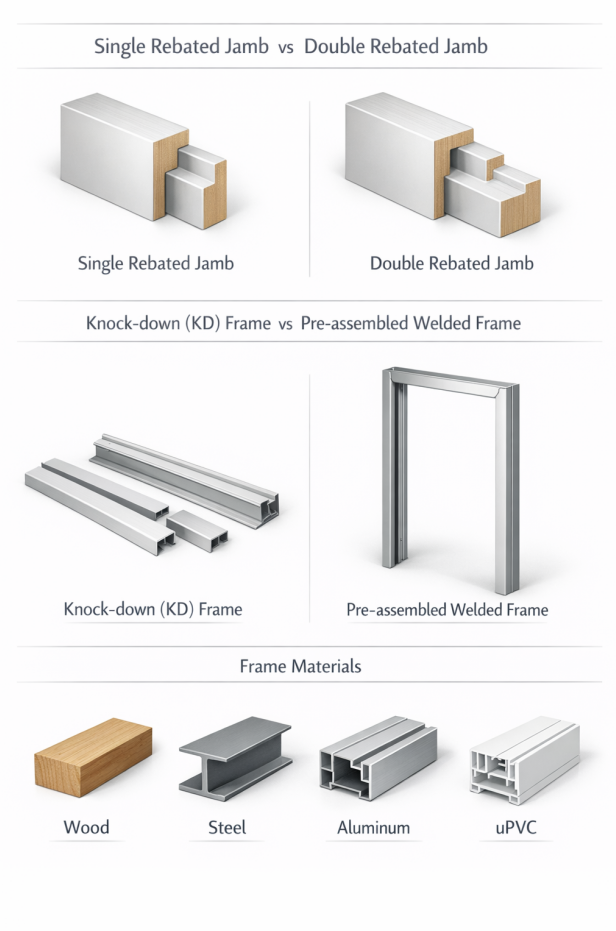
Material Comparison
| Feature | Wood Frames | Steel Frames | Aluminum Frames | uPVC / Composite |
| Durability | Moderate | High (Heavy Duty) | High (Corrosion-free) | Very High |
| Maintenance | High (Sanding/Painting) | Low (Anti-rust coating) | Minimal | Zero to Low |
| Aesthetics | Warm & Traditional | Industrial & Rigid | Sleek & Modern | Versatile |
| Best For | Luxury Homes | Commercial & Security | Coastal & Modern | Budget & Wet Areas |
| Cost Range | $$$-$$$$ | $$ – $$$ | $$$ | $ – $$ |
Door Frame Classifications
Understanding the different classifications of door frames can simplify your selection process. Here are the five key classifications:
- Classification by Material Door frames can be made from wood, steel, aluminum, uPVC, or composite materials. Each material offers distinct benefits, such as wood’s natural warmth and customizability, steel’s durability and strength, aluminum’s lightweight and corrosion resistance, uPVC’s weatherproof qualities, and composite frames that combine the advantages of different materials for enhanced performance and low maintenance. The choice of material will impact the frame’s longevity, aesthetic appeal, and upkeep requirements.
- Classification by Structure This refers to the design and physical characteristics of the frame, such as single-rebated, double-rebated, or flush-mounted frames. The structure influences key performance factors like the frame’s sealing ability, sound insulation, and ease of installation. For instance, single-rebated frames are commonly used for standard applications, while double-rebated frames offer superior sealing, making them ideal for soundproofing or weather-resistant installations.
- Classification by Construction Door frames are available in pre-assembled (welded) or knock-down (KD) types. Pre-assembled frames are ready for quick installation, offering time-saving advantages in construction, while knock-down frames are disassembled, making them easier to ship, store, and handle, particularly for long-distance transportation or when dealing with space constraints.
- Classification by Application Door frames can be customized for various functions, including internal, external, fire-rated, acoustic, or security applications. The frame material, design, and construction should align with the specific needs of each environment. For example, fire-rated frames are necessary for areas requiring fire resistance, while acoustic frames are designed to reduce noise transmission in sound-sensitive spaces, ensuring compliance with safety, building codes, and functional standards.
- Specialty Door Frames Specialty frames are tailored to accommodate specific door types, such as pocket doors, sliding doors, frameless systems, or concealed hinges. These types of frames are commonly used in modern and minimalist interior designs where space efficiency and clean aesthetics are prioritized. They offer innovative solutions for unique design preferences and are becoming increasingly popular in contemporary architecture.
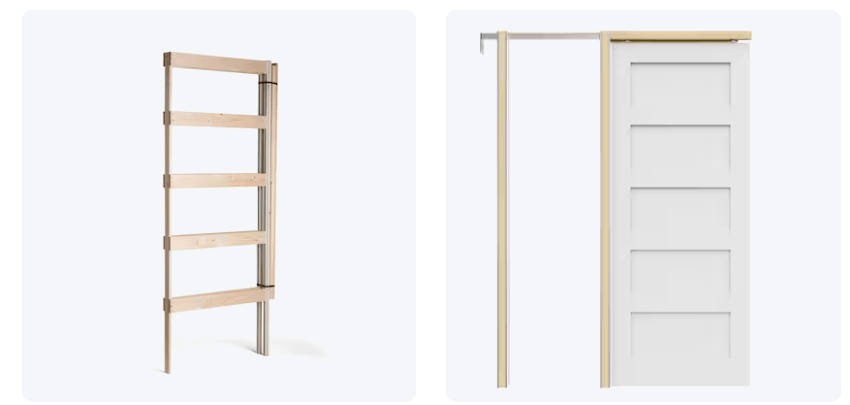
Advantages of Common Door Frames
Door frames vary not just in design but also in materials, each offering unique advantages depending on your project’s requirements.
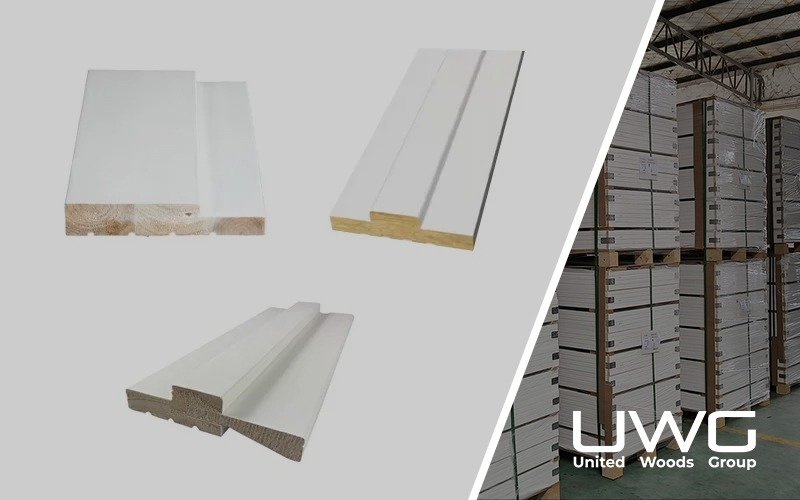
- Wooden Door Frames Types: Solid wood (e.g., oak, finger joint pine) and engineered wood (e.g., plywood, MDF) Advantages: Offer a classic, warm aesthetic with good insulation. Highly customizable with a wide range of finishes. Notes: Solid wood is strong and durable but may require regular maintenance, especially in humid environments. Engineered wood is more cost-effective but may have a shorter lifespan.
- Metal Door Frames Types: Steel and aluminum Advantages: Steel frames provide superior strength, fire resistance, and enhanced safety. Aluminum frames are lightweight, rust-resistant, and well-suited to modern architectural styles. Notes: Steel is more robust, while aluminum is ideal for high-moisture areas due to its corrosion resistance.
- Composite Door Frames Types: Made by combining materials like wood, metal, or plastic for optimized performance Advantages: Blend the strength of metal with the warmth of wood. Typically require less maintenance and offer a balance of durability, insulation, and design flexibility.
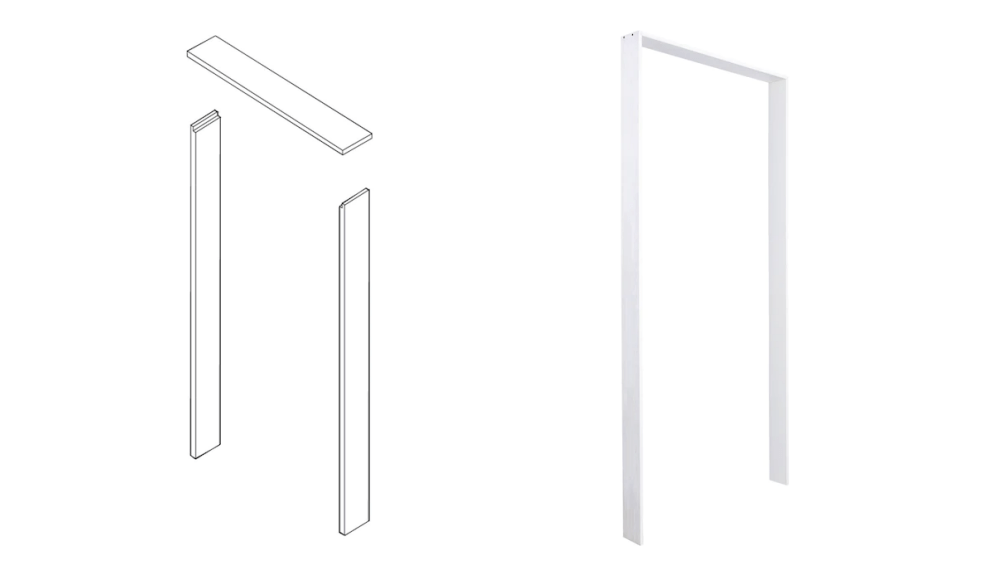
Door Frame Material Selection
The material you choose affects aesthetics, durability, and cost. Here are the most common types of door frame materials:
- Wood: Classic and versatile. Works with traditional or luxury interiors. However, it may require maintenance.
- Steel: Highly durable and secure—great for external or commercial use.
- Aluminum: Lightweight, corrosion-resistant, and good for contemporary designs.
- uPVC: Affordable and low-maintenance, ideal for wet areas or budget builds.
- Composite: Combines benefits of several materials—offering durability, energy efficiency, and modern appeal.
If you’re wondering what is the best door frame material, the answer lies in the frame’s location, use, and style preferences.
Common Door Frame and Door Pairings
Choosing matching frames and doors ensures smooth operation and visual balance:
- Solid Wood Door + Wooden Frame: Perfect for traditional homes or rustic interiors.
- Flush Door + Flush Frame: Great for minimal, modern homes.
- Glass Panel Door + Aluminum Frame: Ideal for offices or spaces needing natural light.
- Fire-Rated Door + Engineered Frame: Required in many commercial builds or residential fire zones.
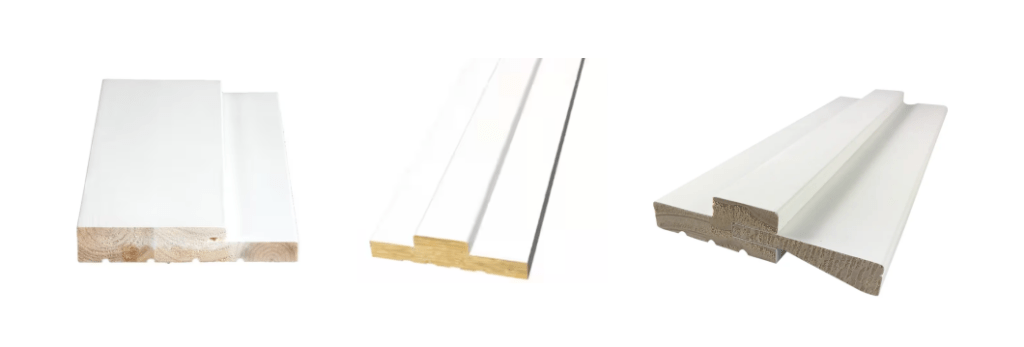
Installation Insights for Builders:
- Precision Measurement: Always measure the “Rough Opening” (RO) height and width in three different spots. For Knock-down (KD) frames, accuracy is critical as there is less room for adjustment than with split jambs.
- Logistics vs. Speed: Choose Pre-hung units for residential projects with tight deadlines to save 50% on labor time. Opt for KD frames for high-rise or bulk international orders to significantly reduce shipping costs and damage risks.
- Moisture Protection: If installing wooden frames in basements or bathrooms, ensure the bottom of the jamb is sealed with a water-resistant coating to prevent “wicking” (water soaking up into the wood).
Choosing the Right Door Frame for Your Space
Choosing the right door frame involves more than just style—it requires careful consideration of functionality, budget, and long-term performance.
- Based on Function Select door frame designs that suit the function of each room. For example, moisture-resistant frames work well in bathrooms and kitchens, while solid wood or sound-insulating frames are ideal for bedrooms and home offices.
- Budget and Aesthetic Preference Your renovation budget and interior design style will influence your choice. Engineered wood frames can offer a stylish yet cost-effective solution, while high-end hardwood or aluminum frames complement premium modern aesthetics.
- Durability and Maintenance Consider how much wear and tear the door frame will face. Steel and composite frames offer higher durability with less maintenance, making them suitable for busy areas or external use. Wooden frames may need regular upkeep but offer timeless appeal.
Frequently Asked Questions About Door Frame Designs
Q: What is the difference between a knock-down (KD) and a pre-assembled door frame?
A: A pre-assembled (or welded) door frame arrives fully built and ready for immediate installation, which saves labor time on the job site. A knock-down (KD) frame is shipped disassembled in multiple pieces. KD frames are much easier and more cost-effective to transport, handle, and store, making them the preferred choice for high-volume commercial projects or locations with space constraints.
Q: What is a double-rebated door frame and when should it be used?
A: A double-rebated door frame features two “stops” or steps in its interior profile instead of just one. This advanced design provides superior sealing capabilities. It is the ideal choice for heavy-duty applications, such as acoustic (soundproof) doors, high-security exterior doors, or any installation where maximum weather and noise insulation is required.
Q: What is the best door frame material for interior vs. exterior use?
A: For standard interior doors, wood or engineered wood (like MDF) frames are incredibly popular due to their classic aesthetic, warmth, and easy paint customizability. For exterior use, materials that prioritize structural security, weather resistance, and low maintenance—such as steel, aluminum, or composite frames—are highly recommended.
Q: Do I need a special door frame for a fire-rated door?
A: Yes, absolutely. A fire-rated door must always be paired with a certified, fire-rated door frame (typically manufactured from heavy-duty steel or specially treated engineered materials) and appropriate fire-rated hardware. Installing a fire door in a standard wooden frame will compromise the fire barrier and violate building safety codes.
Summary
Understanding door frame options is crucial when it comes to selecting the right materials and design for your project. The choice of door frame can greatly impact the overall aesthetic, durability, and functionality of your doors. Whether you’re looking for a flush mount for a sleek, modern look, or a raised frame for added depth and elegance, understanding the different types can help you avoid costly mistakes down the line. From composite door frames that offer superior strength to L-shaped frames that are ideal for heavy doors, each option brings its own set of benefits tailored to specific needs. Making an informed choice will lead to greater satisfaction over time, ensuring that your doors not only look great but also perform as expected. If you have any questions or need assistance picking the perfect frame for your space, feel free to leave a comment. You can also share this guide with anyone who’s building their dream space and could use some expert advice.