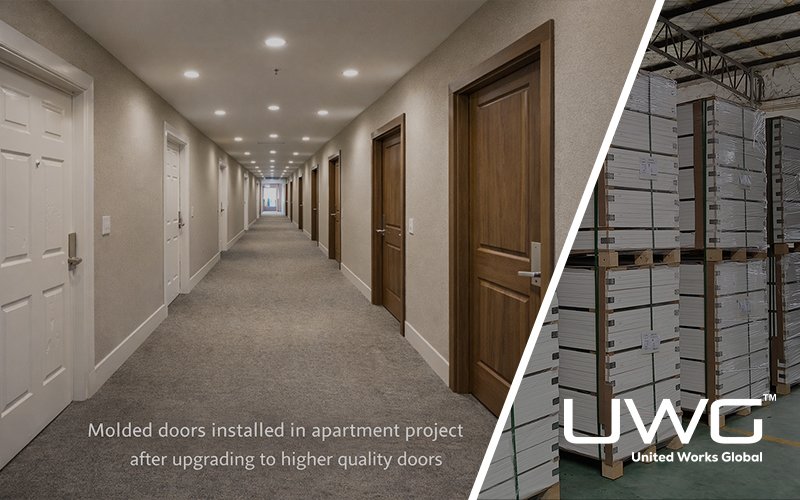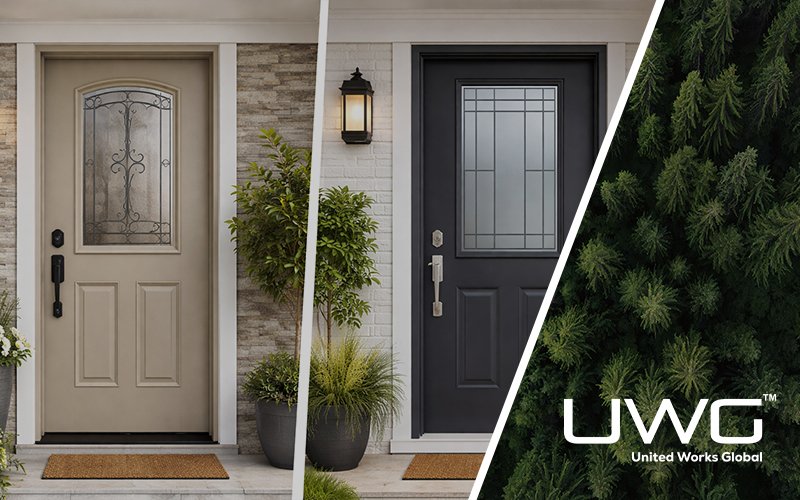
Molded doors have become one of the most widely used interior door types in residential and commercial construction due to their cost-effectiveness, consistent design, and versatility. Unlike solid wood doors, molded doors are manufactured using molded skin panels combined with internal filling materials that determine the door’s strength, durability, sound insulation, and overall performance.
For builders, developers, and distributors, understanding the filling materials used inside molded doors is essential for selecting the right product based on project requirements, budget, and performance expectations.
What Is a Molded Door?
A molded door is constructed using MDF (Medium-Density Fiberboard) molded skins pressed into a specific design (such as Shaker or raised panel), with an internal core material that provides structural support.
The internal filling material plays a crucial role in determining:
- Door weight
- Structural strength
- Sound insulation
- Cost
- Durability
Common Filling Materials for Molded Doors
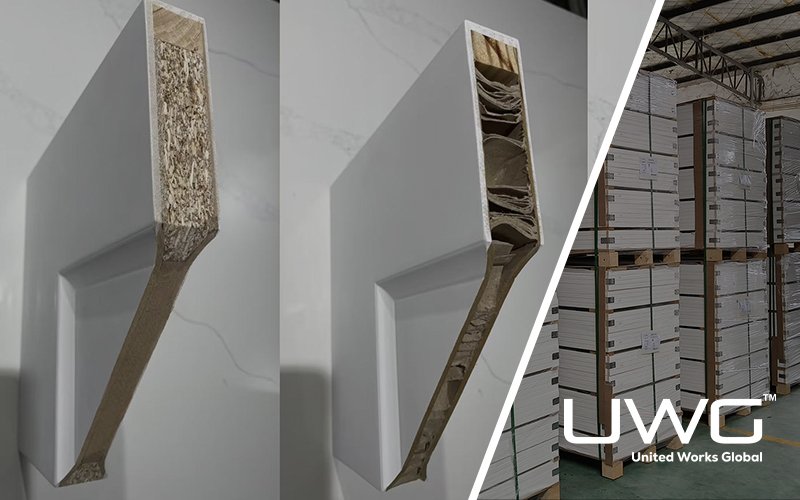
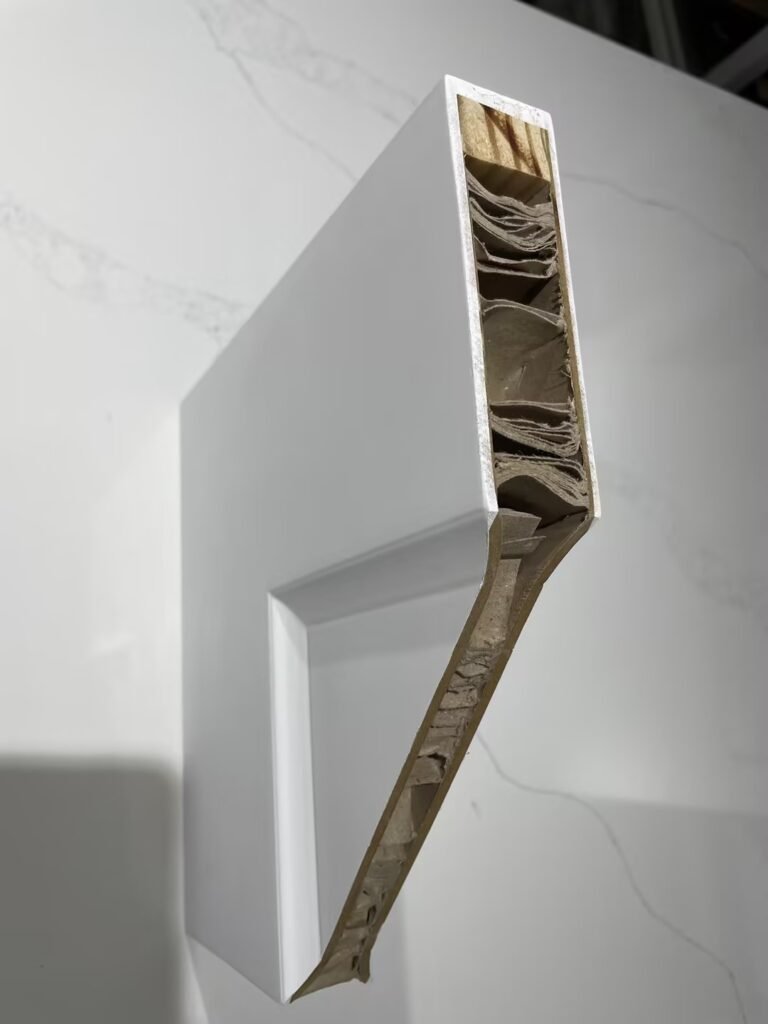
1. Honeycomb Paper Core
Honeycomb paper core is the most commonly used filling material in molded doors, especially in cost-sensitive projects.
Features:
- Lightweight structure
- Low cost
- Environmentally friendly (recyclable paper)
- Basic structural support
Applications:
- Apartments
- Budget housing projects
- Interior rooms with low usage
Limitations:
- Limited strength
- Minimal sound insulation
2. Solid Wood Strips (Finger Joint Core)
Solid wood strips, often made from finger-jointed timber, provide significantly higher strength and durability.
Features:
- Strong internal structure
- Better screw-holding capacity
- More stable than paper core
Applications:
- Mid to high-end residential projects
- Areas requiring durability (bedrooms, offices)
Limitations:
- Higher cost
- Heavier than honeycomb core
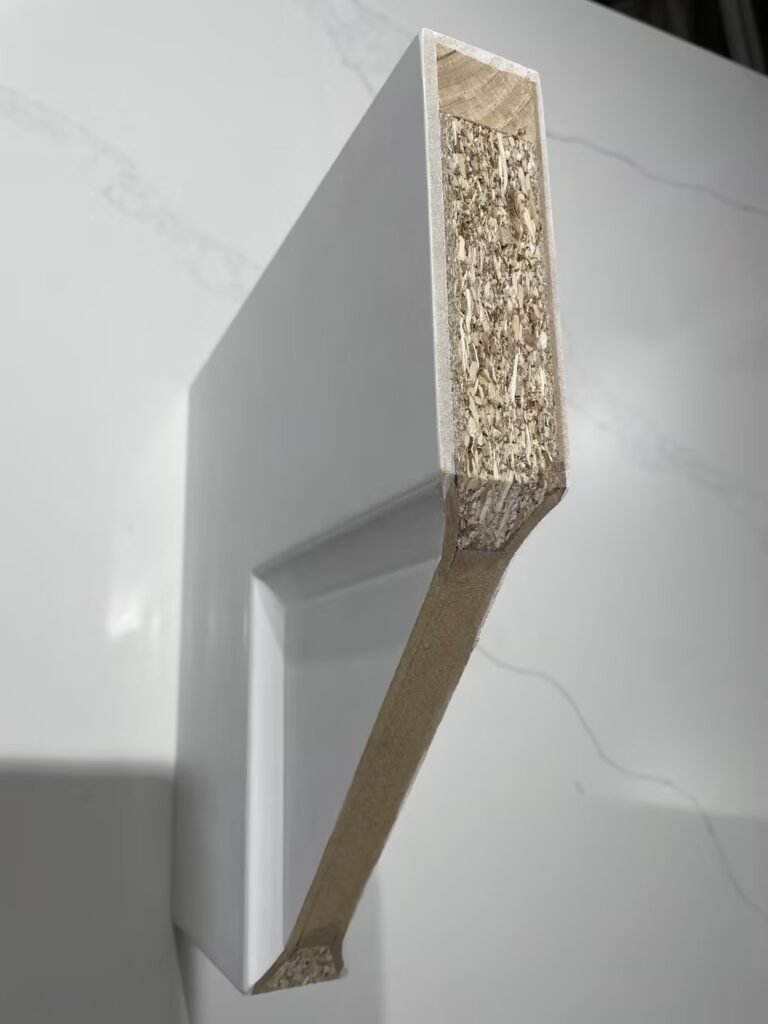
3. Particleboard Core
Particleboard is a dense engineered wood material made from wood particles bonded with resin.
Features:
- Good sound insulation
- Higher density and weight
- Smooth and stable
Applications:
- Hotels
- Office buildings
- Projects requiring noise reduction
Limitations:
- Heavier
- Moderate cost
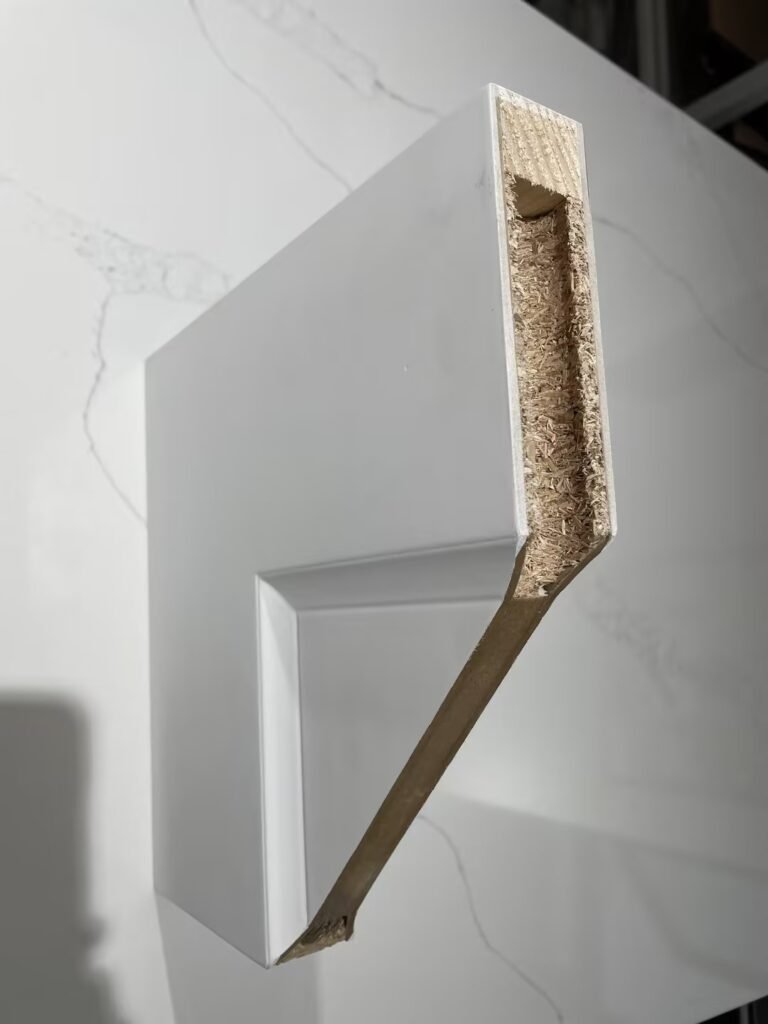
4. Tubular Chipboard Core
Tubular chipboard is a specialized core material with hollow tubular channels inside a particleboard structure.
Features:
- Balanced weight and strength
- Better sound insulation than honeycomb
- More cost-effective than solid core
Applications:
- Commercial projects
- Mid-range housing
Limitations:
- Not as strong as solid wood core
Comparison of Molded Door Filling Materials
| Filling Material | Weight | Strength | Sound Insulation | Cost Level | Typical Use |
|---|---|---|---|---|---|
| Honeycomb Paper Core | Very Light | Low | Low | Low | Budget housing |
| Solid Wood Strips | Heavy | High | Medium | High | High-end residential |
| Particleboard | Heavy | Medium-High | High | Medium | Hotels / offices |
| Tubular Chipboard | Medium | Medium | Medium-High | Medium | Commercial projects |
What Buyers Often Overlook
While most buyers focus on cost and basic performance, there are several practical factors that are often overlooked when selecting molded door filling materials. These factors can significantly impact long-term performance, installation quality, and overall project cost.
1. Screw Holding Strength (Hardware Installation)
One of the most critical but overlooked factors is screw holding strength, which directly affects how well hinges, locks, and other hardware perform over time.
- Honeycomb core → weak screw holding
- MDF or particle-based cores → moderate
- Solid wood core → excellent
Poor screw holding can lead to loose hinges, misalignment, and maintenance issues, especially in high-traffic areas.
👉 For doors with frequent use, upgrading to solid wood or tubular chipboard core is strongly recommended.
2. Door Weight vs Shipping Cost
Heavier cores such as particleboard and solid wood significantly increase the overall door weight, which impacts:
- Shipping costs
- Handling during installation
- Labor efficiency on-site
In large-scale projects, this difference can translate into substantial logistics costs.
👉 For export projects or large-volume orders, using honeycomb or tubular chipboard can help optimize shipping efficiency.
3. Moisture Resistance (Especially in Humid Regions)
Moisture resistance is often underestimated, particularly for projects located in humid regions such as the southern United States.
- MDF and particleboard → more sensitive to moisture
- Solid wood → depends on treatment
- Honeycomb → less affected structurally but limited durability
Poor moisture resistance can lead to:
- Swelling
- Warping
- Reduced lifespan
👉 For humid environments, it is important to use proper sealing, finishing, or upgraded core materials.
4. Long-Term Maintenance Costs
A lower upfront cost does not always mean lower overall cost. Doors with weaker cores may require:
- More frequent repairs
- Hardware replacement
- Earlier replacement cycles
👉 Choosing the right core can reduce long-term maintenance and replacement costs, especially in commercial or rental properties.
How to Choose the Right Filling Material
Selecting the appropriate filling material depends on several key factors:
1. Project Budget
- Low budget → Honeycomb core
- Medium budget → Tubular chipboard
- High budget → Solid wood core
2. Performance Requirements
- Need durability → Solid wood core
- Need sound insulation → Particleboard or tubular chipboard
3. Application Scenario
- Residential → Honeycomb or solid core
- Commercial → Tubular or particleboard
How We Approach Core Selection
From our experience working with projects in different regions, we recommend different solutions based on project needs. In many projects, different core types are often combined to balance cost and performance across units.
For example, in a residential project we supported in Texas, the developer was working on a large-scale multifamily housing development with strict cost control. After reviewing their budget and usage needs, we recommended using honeycomb paper core for most interior doors to reduce overall costs, while selectively upgrading to tubular chipboard core in areas with higher usage frequency, such as master bedrooms and main living spaces.
In another project located in California, where the client placed greater emphasis on quality and long-term durability, we recommended solid wood strip core doors for key areas.
From my perspective, the best solution is not about choosing the most expensive option, but about selecting the most suitable filling material for each specific application within the project.
Frequently Asked Questions About Molded Door Cores
Q: What is the most affordable filling material for molded interior doors?
A: The most affordable and commonly used filling material is the honeycomb paper core. It is exceptionally lightweight, cost-effective, and provides basic structural support. Because of its low cost, honeycomb core is widely used in large-scale budget housing projects and multi-family residential developments where high sound insulation is not a primary concern.
Q: Which molded door core offers the best sound insulation?
A: For excellent sound insulation (acoustic performance), dense engineered wood cores like solid particleboard or tubular chipboard are the best options. These dense materials absorb and block sound waves effectively, making them ideal for bedroom doors, home offices, and hotel room entrances where privacy and noise reduction are critical.
Q: How does the door core material affect hardware installation?
A: The core material dictates the “screw holding strength” of the door. Hollow or honeycomb paper cores have poor screw holding strength, meaning heavy-duty hinges or handles may become loose over time under heavy use. For doors that experience high traffic, upgrading to a solid wood strip core or tubular chipboard is highly recommended to ensure hinges and locks stay firmly anchored.
Q: What is a tubular chipboard core?
A: A tubular chipboard core is a specialized, engineered wood filling that features hollow, tube-like channels running through a solid particleboard structure. This innovative design offers a perfect balance—it provides the high structural strength, impact resistance, and soundproofing of a solid core, but at a significantly reduced weight and lower cost.
Conclusion
Molded doors are not defined solely by their exterior design—the internal filling material plays a decisive role in their overall performance. The most common options include honeycomb paper core, solid wood strips, particleboard, and tubular chipboard, each offering distinct advantages in terms of cost, strength, and sound insulation.
Understanding these materials allows builders, distributors, and developers to make informed decisions that align with project requirements and budget constraints. By selecting the right filling material, you can ensure better durability, performance, and long-term value for your projects.
Articles that you may be interested in:
Molded vs Shaker vs Shaker-Style Molded Doors: How Builders Choose in 2026
What Are the Best Budget-Friendly Molded Doors for Contractors?