Builders often run into sizing issues when ordering interior doors, especially across multi-unit or large-scale projects. A wrong door size can mean costly delays and on-site adjustments. In this guide, I’ll walk through standard primed white shaker door sizes in the US so you can plan, order, and install with confidence.
Standard primed white shaker doors in the US typically come in widths of 24″, 28″, 30″, 32″, and 36 inches, with standard heights of 80 inches (6’8″) and 96 inches (8’0″). These dimensions align with common residential framing practices, making them ideal for streamlined construction. Builders rely on these standard sizes to reduce custom orders, simplify rough openings, and improve installation efficiency across projects.
Why Understanding Door Sizes Matters in Construction
Choosing the right door size is more than a design decision—it directly impacts framing, labor efficiency, and cost control. When I work with builders, standardization is always the goal. Using consistent door sizes across a project reduces installation errors and simplifies procurement.
What Are Standard Interior Door Sizes in the US?
In the US, interior door sizes follow a predictable system designed for residential framing.
The most common widths include:
- 24 inches (bathrooms, closets)
- 28 inches (small bedrooms or utility spaces)
- 30 inches (standard bedrooms)
- 32 inches (larger bedrooms)
- 36 inches (entry or accessibility-focused spaces)
Standard heights are:
- 80 inches (most homes)
- 96 inches (modern or high-ceiling homes)
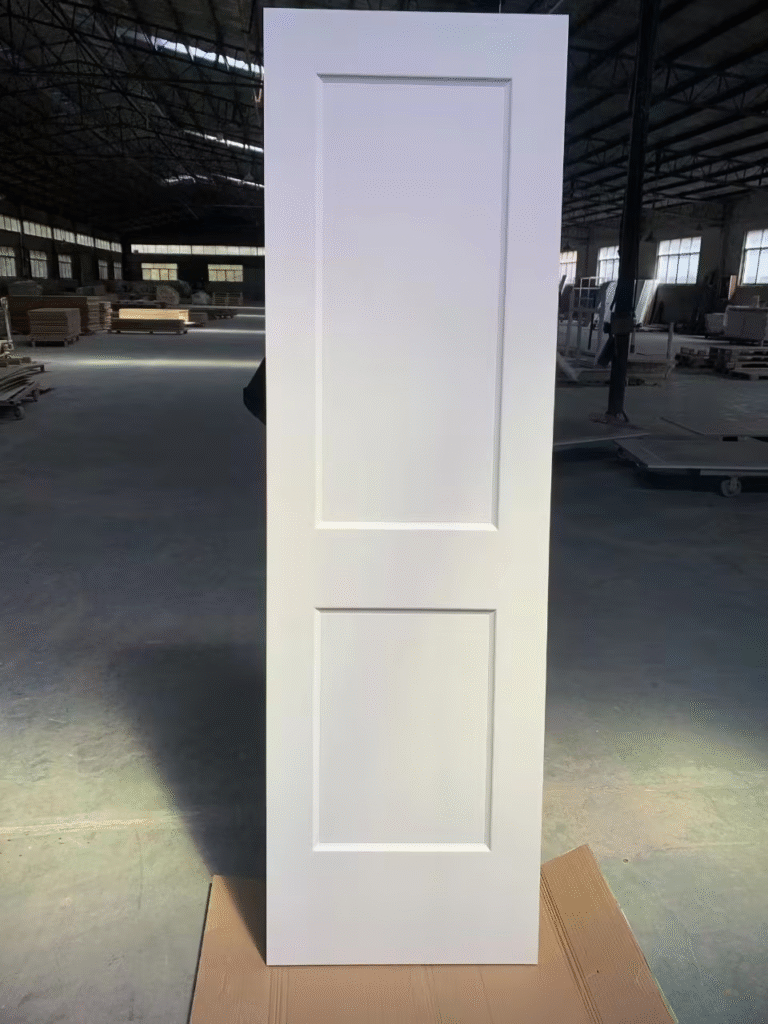
Standard Primed White Shaker Door Sizes (Quick Reference Table)
| Door Width | Door Height | Typical Application | Rough Opening (Approx.) |
| 24″ | 80″ / 96″ | Bathrooms, closets | 26″ × 82.5″ / 98.5″ |
| 28″ | 80″ / 96″ | Small bedrooms | 30″ × 82.5″ / 98.5″ |
| 30″ | 80″ / 96″ | Standard bedrooms | 32″ × 82.5″ / 98.5″ |
| 32″ | 80″ / 96″ | Master bedrooms | 34″ × 82.5″ / 98.5″ |
| 36″ | 80″ / 96″ | Entry / ADA-friendly rooms | 38″ × 82.5″ / 98.5″ |
What Is the Rough Opening for Common Door Sizes?
The rough opening is the framed space needed to install the door unit. As a rule of thumb, I recommend:
- Add 2 inches to the door width – Add 2 to 2.5 inches to the door height
This extra space allows for:
- Frame alignment
- Shimming
- Proper door swing clearance
For example, a 30″ × 80″ door typically requires a 32″ × 82.5″ rough opening.
80″ vs 96″ Doors: Which Should Builders Choose?
Choosing between 6’8″ and 8’0″ doors depends on project type and budget.
Advantages of 80″ Doors
- Lower cost and wider availability
- Faster procurement
- Standard for most residential builds
Advantages of 96″ Doors
- Better visual proportions in high-ceiling spaces
- More upscale, modern appearance
- Increased property value perception
Trade-Offs
- 96″ doors require higher ceilings (typically 9 ft+)
- Higher material and installation costs
- Longer lead times in some markets
From my experience, 80″ doors dominate production housing, while 96″ doors are common in custom or luxury builds.
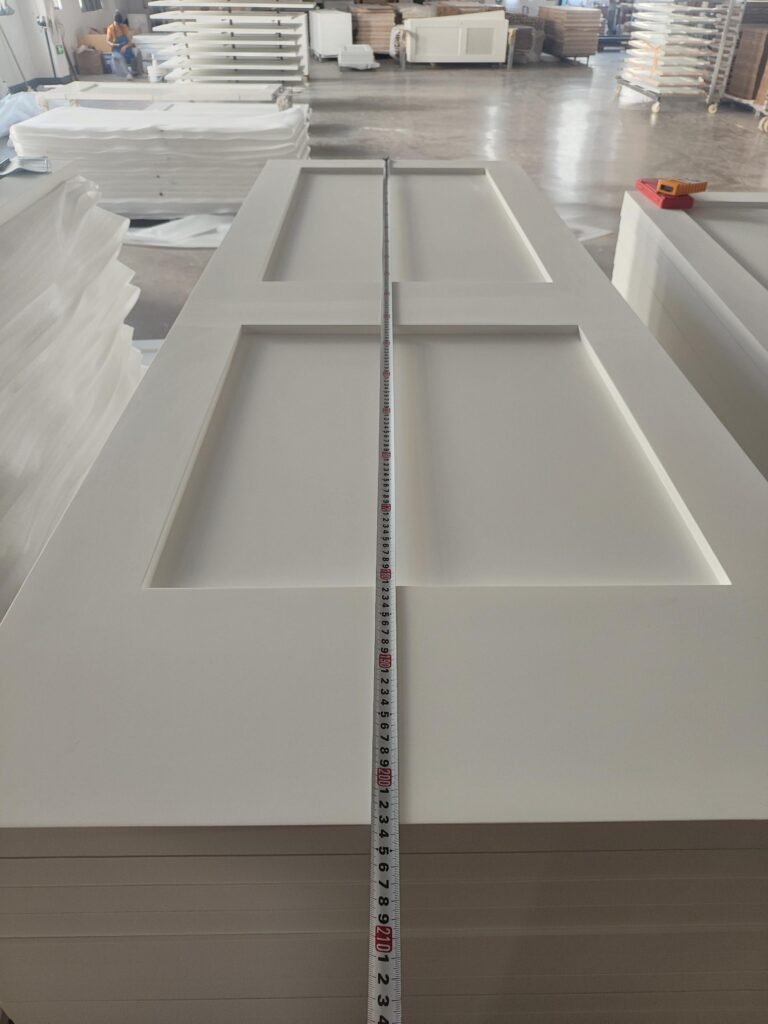
Are 36-Inch Doors Standard in Modern Construction?
Yes—36-inch doors are increasingly considered a standard option, especially in newer homes.
They are commonly used for:
- Main interior entries
- Accessible design (ADA compliance)
- High-traffic areas
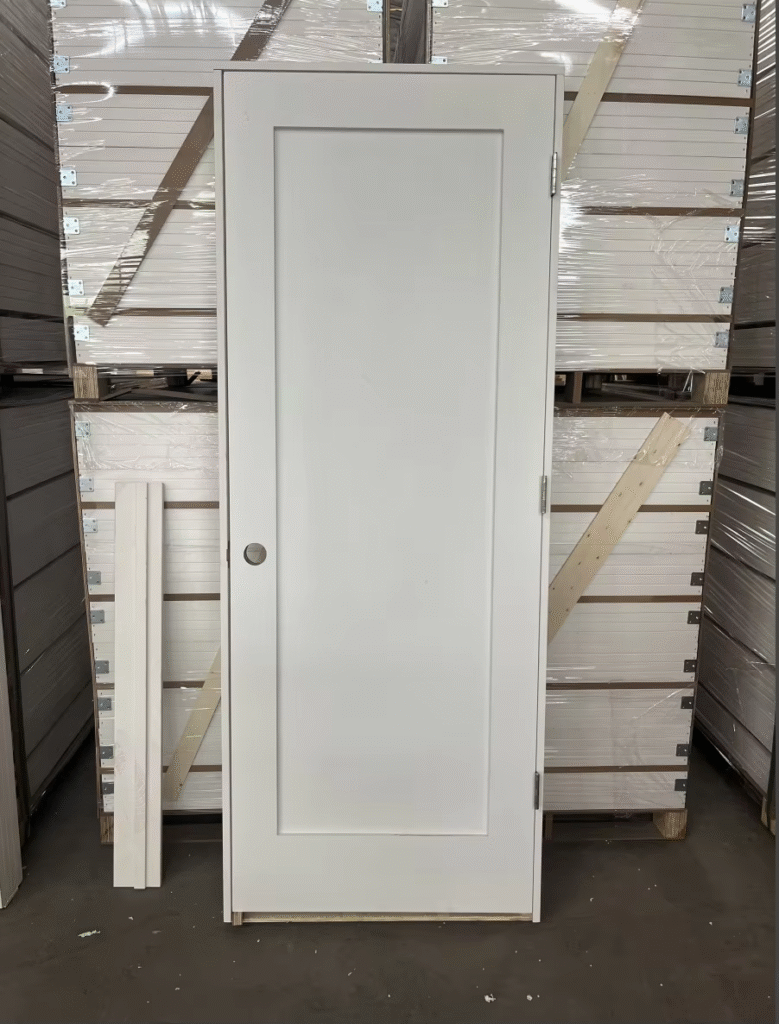
How Builders Can Choose the Right Door Size Efficiently
Based on industry practice, here’s what I recommend:
1. Standardize Across the Project
Limit your project to 2–3 door widths where possible. This simplifies ordering and reduces waste.
2. Plan Rough Openings Early
Align door schedules with framing plans before construction begins. This avoids resizing on-site.
3. Balance Cost vs Design
Use 80″ doors for most areas and reserve 96″ doors for key visual spaces.
4. Work with Reliable Suppliers
Choose suppliers that stock standard sizes in bulk to reduce lead times and ensure consistency.
Can Shaker Doors Be Customized for Non-Standard Openings?
Yes, primed white shaker doors can be customized—but it comes with trade-offs.
Custom doors are useful when:
- Renovating older buildings
- Dealing with non-standard openings
- Matching unique design requirements
However, keep in mind:
- Higher costs
- Longer production times
- Potential delays in project timelines
Whenever possible, I advise sticking to standard sizes to maintain efficiency.
Conclusion
Standard primed white shaker door sizes—24″ to 36″ widths and 80″ or 96″ heights—help builders streamline construction and reduce costs. By using consistent dimensions and planning rough openings carefully, you can improve efficiency while maintaining flexibility for modern design needs.
Frequently Asked Questions About Standard Shaker Door Sizes
Q: What is the standard height for an interior shaker door in the US?
A: The industry standard height for most residential interior doors in the United States is 80 inches (which translates to 6 feet 8 inches, often written as 6/8). However, for modern homes with higher ceilings (9 feet or taller) or luxury custom builds, 96-inch tall doors (8 feet, or 8/0) are becoming increasingly common to create a grander visual scale.
Q: What are the most common standard widths for interior doors?
A: Standard interior door widths are designed to fit common residential framing. The most popular widths are 24″ and 28″ for closets and small utility spaces; 30″ and 32″ for standard bedrooms and bathrooms; and 36″ for main entryways or rooms requiring ADA (Americans with Disabilities Act) wheelchair accessibility.
Q: How do I calculate the rough opening for a standard prehung door?
A: As a general rule for builders, the rough opening should be 2 inches wider and approximately 2 to 2.5 inches taller than the actual size of the door slab. For example, if you are installing a standard 30-inch wide by 80-inch tall door, you should frame your rough opening to be 32 inches wide by 82.5 inches high. This provides enough clearance to install the door jamb, shim it perfectly plumb and level, and allow for a proper swing.
Q: Why should I stick to standard door sizes instead of ordering custom sizes?
A: Sticking to standard door sizes (like 30″x80″ or 32″x80″) is crucial for efficiency and budget control. Standard doors are heavily stocked by manufacturers and wholesalers, meaning they have significantly lower costs and almost immediate availability. Custom-sized doors require special manufacturing runs, resulting in much higher material costs and lead times that can delay your entire construction project by weeks.
Articles that you may be interested in:
Why Are Shaker Doors More Expensive?
What Is the Difference Between Shaker Doors and Imitation Shaker Molded Doors?