In today’s competitive housing market, kitchen design plays a critical role in both buyer perception and overall project value. Builders are no longer just constructing spaces—they are delivering products that must balance visual appeal, durability, and cost efficiency. However, achieving that balance is not always straightforward. Many cabinet styles are either too ornate, too expensive, or too trend-sensitive.
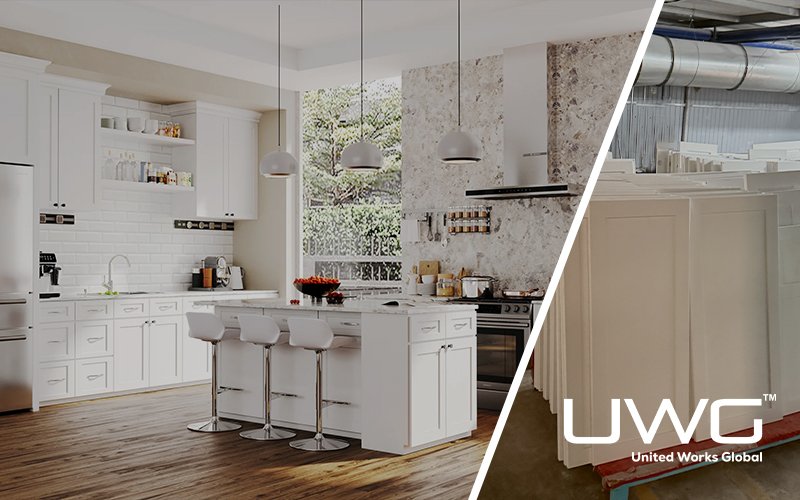
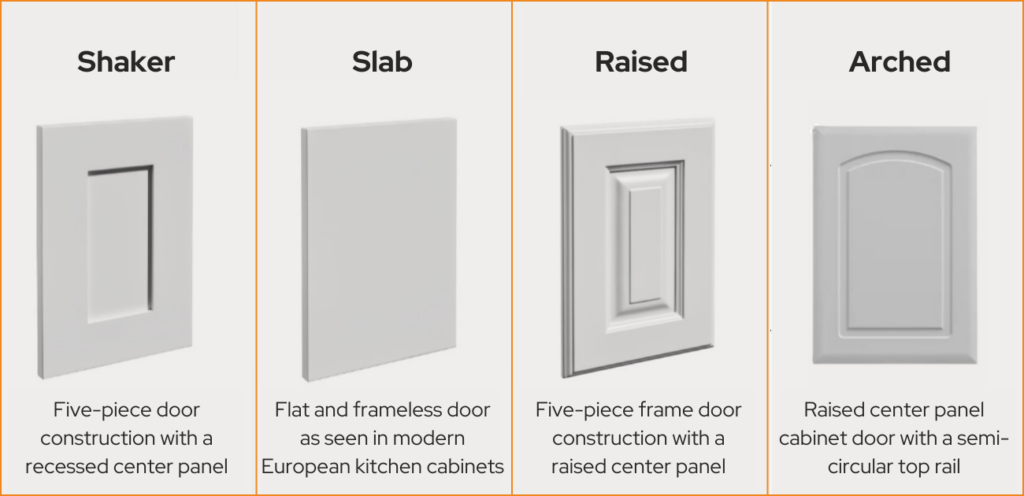
This is where Shaker style kitchen doors stand out. Over the past decade, they have become a dominant choice across the U.S. market—not just because they look good, but because they consistently perform well across a wide range of real-world building scenarios. Shaker style kitchen doors are popular because of their clean design, cost efficiency, and long-lasting durability. Their simple five-piece construction makes them easy to manufacture, install, and maintain, while fitting both modern and traditional interiors. For builders, they offer a reliable, scalable solution that meets homeowner expectations and supports strong resale value, making them one of the most practical cabinet door styles in today’s market.
Beyond aesthetics, their real advantage lies in predictability—something every builder values when managing timelines, budgets, and client expectations.
What Are Shaker Cabinets?
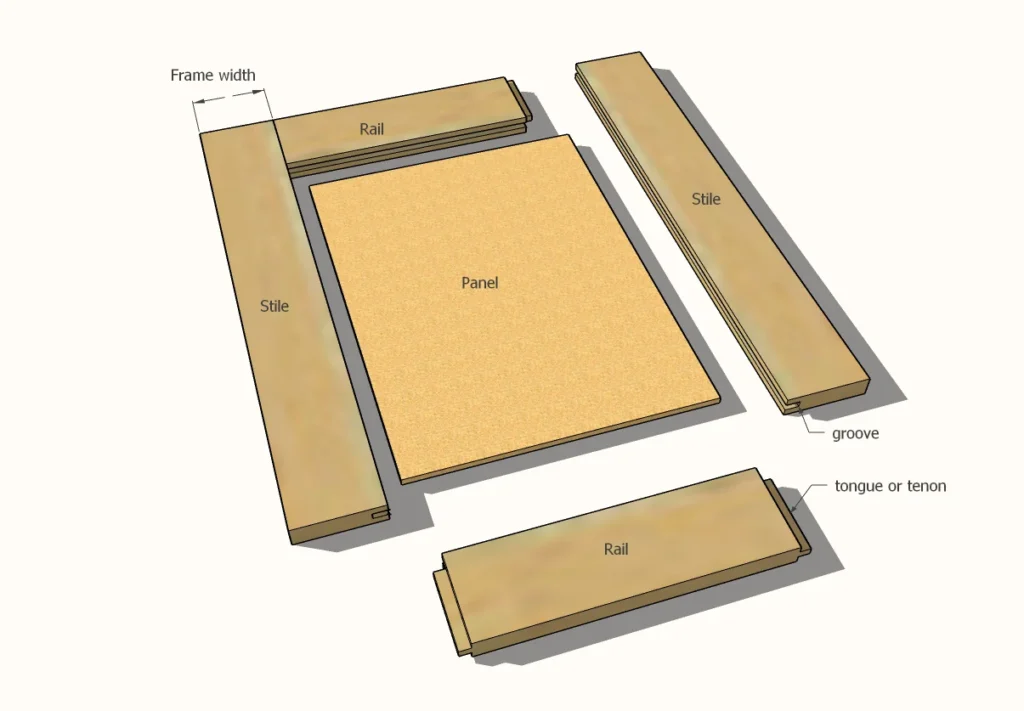
Shaker cabinets are defined by a five-piece construction, consisting of:
- Two vertical stiles
- Two horizontal rails
- One recessed center panel
This structure may seem simple, but it is precisely this simplicity that gives Shaker cabinets their strength.
Structural Advantages Unlike slab doors, which can warp over time, or raised-panel doors, which require complex detailing, Shaker cabinets offer:
- Balanced tension distribution, reducing long-term deformation
- Stable joinery, especially when using mortise-and-tenon or dowel joints
- Improved durability under humidity changes
Why Builders Prefer This Structure From a construction perspective, this design allows for:
- Easier alignment during installation
- Reduced rejection rates during quality checks
- Better compatibility with automated manufacturing
In several of our projects, switching to Shaker-style doors reduced installation adjustments significantly, especially in large kitchen layouts where alignment consistency is critical.
Why Are Shaker Cabinets So Popular in Modern Homes?
The popularity of Shaker cabinets is the result of multiple overlapping advantages—not just one single factor.
1. Broad Design Compatibility Shaker cabinets act as a design bridge between styles. They can be used in:
- Ultra-modern kitchens (paired with flat-panel finishes)
- Transitional homes (mixed materials and textures)
- Traditional layouts (with warmer tones and classic hardware)
2. Reduced Decision Friction Homebuyers often feel overwhelmed by too many design options. Shaker cabinets simplify this process.
In one multi-phase housing project we worked on, offering Shaker cabinets as the baseline option resulted in:
- Faster buyer approvals
- Fewer customization requests
- Shorter project cycles
3. Alignment With Market Trends According to recent NAHB housing data, affordability pressures continue to shape buyer preferences, increasing demand for:
- Smaller, more efficient homes
- Practical, low-maintenance design choices
- Cost-effective solutions that still support long-term value
4. Long-Term Flexibility Another key reason for their popularity is adaptability. A Shaker kitchen can be updated years later without replacing cabinetry:
- Repainting doors
- Changing hardware
- Updating surrounding finishes
This extends the lifecycle of the kitchen, which is a strong selling point for homeowners.
Shaker Cabinets vs Traditional Cabinets
| Feature | Shaker Cabinets | Traditional Cabinets |
| Design | Clean, minimal | Ornate, decorative |
| Cost | Moderate, cost-efficient | Higher due to detailing |
| Manufacturing | Simple, scalable | Complex, labor-intensive |
| Installation | Fast and predictable | Slower, precision-heavy |
| Maintenance | Easy to clean | Dust traps in grooves |
| Durability | Stable structure | Depends on craftsmanship |
| Market Demand | Very high | Declining in modern builds |
| Resale Value | Consistent | Style-dependent |
Manufacturing Complexity Traditional cabinets often require:
- Hand-applied detailing
- Multiple finishing steps
- Skilled craftsmanship
This increases both cost and risk.
Shaker cabinets, by contrast, are:
- Easier to standardize
- More suitable for batch production
- Less prone to visible defects
Installation Efficiency From an installation standpoint:
- Shaker doors are easier to align
- Fewer visual inconsistencies appear after installation
- Adjustments are quicker and more predictable
Maintenance Perspective Homeowners prefer Shaker cabinets because:
- Flat surfaces are easier to clean
- No intricate grooves to trap grease or dust
This directly impacts long-term satisfaction.
Are Shaker Cabinets Going Out of Style?
This is one of the most important strategic questions for builders.
Timeless vs Trend-Based Design Shaker cabinets are not tied to a specific trend—they are a design foundation.
According to the Houzz Kitchen Trends Study:
- Clean cabinet styles dominate U.S. kitchens
- Simplicity is preferred over ornamentation
Adaptability Over Time One of the strongest advantages of Shaker cabinets is their ability to evolve:
- White → modern minimalism
- Dark tones → luxury feel
- Two-tone → contemporary design
Because of this flexibility, they remain relevant even as trends change.
Builder Risk Reduction Choosing Shaker cabinets reduces:
- Design risk
- Market mismatch
- Future renovation costs
This makes them a strategic choice, not just a stylistic one.
What Are Shaker Cabinets Made Of?
Material selection affects everything from durability to finish quality.
Solid Wood Advantages:
- Natural beauty
- Strong structural integrity
Limitations:
- Expansion and contraction with humidity
- Higher cost
MDF
Advantages:
- Smooth surface for paint
- No grain visibility
- Stable under environmental changes
Limitations:
- Requires proper sealing
- Lower impact resistance than solid wood
Plywood Advantages:
- High strength-to-weight ratio
- Moisture resistance
Typically used for cabinet boxes rather than doors.
Field Experience In coastal or humid regions, MDF has consistently delivered better paint performance. However, success depends on:
- Proper edge sealing
- High-quality primers
- Controlled finishing environments
Are Shaker Cabinets Expensive? Shaker cabinets are often described as “affordable,” but the reality is more nuanced.
Cost Factors Explained 1. Material Choice – MDF → cost-efficient
- Solid wood → premium
2. Finish Type – Factory finish → higher upfront cost, better durability
- On-site finish → lower cost, higher risk
3. Customization Level – Standard sizes → lower cost
- Custom designs → higher cost
Real Project Example In a mid-scale residential development:
- Switching to standardized Shaker doors reduced cabinet costs by 18%
- Installation time decreased by 25%
- Material waste was significantly reduced
This demonstrates how Shaker cabinets improve overall project efficiency, not just material cost.
Pros and Cons of Shaker Cabinets
Pros
Versatility : Works across multiple design styles and price points.
Efficiency : Simplifies manufacturing, installation, and maintenance.
Market Appeal : High acceptance among U.S. homebuyers.
Longevity : Can be updated without full replacement.
Cons Simplicity Requires Good Design : Without proper contrast (color, hardware), Shaker cabinets can feel plain.
Finish Quality Is Critical : Low-quality paint leads to early wear.
Supplier Variability : Not all manufacturers deliver consistent quality.
Real-World Insight Across multiple projects, the biggest issues we’ve encountered include:
- Uneven paint finishes
- Warped panels from poor materials
- Misaligned joints
These are almost always tied to supplier quality—not the Shaker design itself.
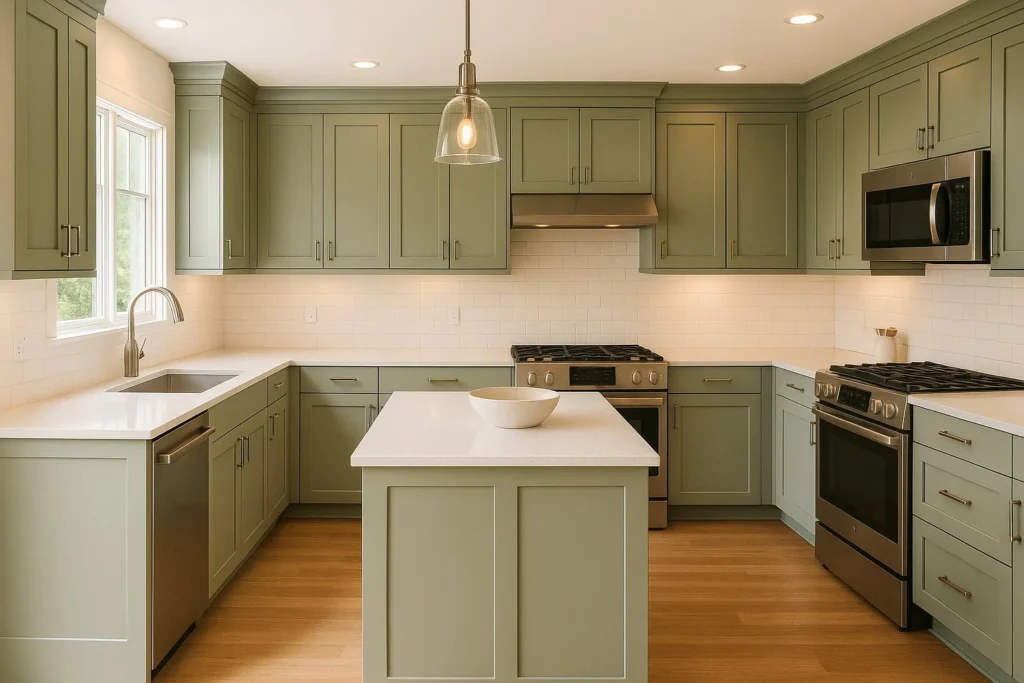
How to choosing the Right Shaker Cabinet Doors
For builders, making the right decisions upfront can prevent costly issues later.
1. Match Materials to Project Type – Entry-level → MDF
- Mid-range → MDF + upgraded finish
- High-end → solid wood
2. Use Slim Shaker for Modern Projects Slim profiles create a more contemporary look without increasing costs significantly.
3. Invest in Finish Quality A high-quality factory finish reduces:
- Callbacks
- Maintenance issues
- Customer complaints
4. Standardize Wherever Possible Standardization improves:
- Ordering accuracy
- Installation speed
- Replacement efficiency
5. Choose the Right Supplier If you’re sourcing shaker cabinet doors in bulk, supplier reliability is critical. Look for:
- Consistent sizing
- Stable material quality
- Professional finishing processes
A strong supplier relationship can significantly improve project outcomes and reduce risk.
Frequently Asked Questions About Shaker Style Kitchen Doors
Q: What exactly makes a cabinet door a “Shaker style” door?
A: A true Shaker style cabinet door features a clean, simple “five-piece” construction. It consists of a flat, recessed center panel surrounded by a sturdy frame made of two vertical pieces (called stiles) and two horizontal pieces (called rails). This classic design avoids ornate routing, raised panels, or heavy decorative trim, relying instead on clean, 90-degree squared edges.
Q: Why are Shaker cabinets better for modern homes than traditional cabinets?
A: Traditional cabinets often feature heavy, ornate detailing that can feel visually cluttered and trap cooking grease and dust, making them difficult to maintain. Shaker cabinets offer a minimalist, flat-panel design that bridges the gap between classic warmth and modern sleekness. They are incredibly easy to clean, adapt well to almost any hardware style, and provide a timeless look that protects the home’s long-term resale value.
Q: Should I choose MDF or solid wood for painted Shaker cabinet doors?
A: If you want a flawless, painted finish, MDF (Medium-Density Fiberboard) is generally the superior choice for the center panel of a Shaker door. Unlike solid wood, MDF does not expand, contract, or warp with changes in kitchen humidity. This structural stability prevents the paint from cracking at the joints and provides an incredibly smooth surface free of wood grain patterns. Solid wood is better reserved for stained finishes where you want the natural grain to show.
Q: Are Shaker style kitchen cabinets more expensive to buy?
A: Actually, Shaker cabinets are usually highly cost-effective. Because their clean, 5-piece design is straightforward and highly standardized, they are much easier to manufacture and assemble at scale compared to complex traditional cabinets. For builders and developers, standardizing on Shaker doors significantly reduces material costs, manufacturing lead times, and installation errors.
Summary
Shaker kitchen doors remain popular because they deliver where it matters most: simplicity, durability, and cost efficiency. For builders, they reduce complexity, align with market demand, and provide long-term flexibility—making them one of the most reliable and scalable cabinet solutions in modern home construction.
Articles that you may be interested in:
Shaker Cabinets and Two-Tone Countertops: Kitchen Trends to Watch in 2026