In commercial buildings, interior doors are opened and closed thousands of times every year. Yet many performance issues in high-traffic environments are not caused by the door itself, but by improperly selected hardware. Premature wear, loose hinges, failed closers, and inconsistent locking systems can all increase maintenance costs and reduce operational efficiency. This raises an important question: what should builders and wholesalers prioritize when selecting hardware for high-use interior doors?
Choosing hardware for high-use interior doors requires more than basic compatibility. Builders and wholesalers must evaluate durability, load capacity, traffic frequency, maintenance requirements, and compliance standards. In commercial environments, hardware performance directly affects operational reliability, user safety, and long-term maintenance costs. Properly specified hinges, locks, and door closers help extend service life while reducing failure rates in high-traffic applications.
Understanding how different hardware components perform under repeated daily use is essential for making reliable long-term decisions.
Why High-Use Interior Doors Require Different Hardware Standards
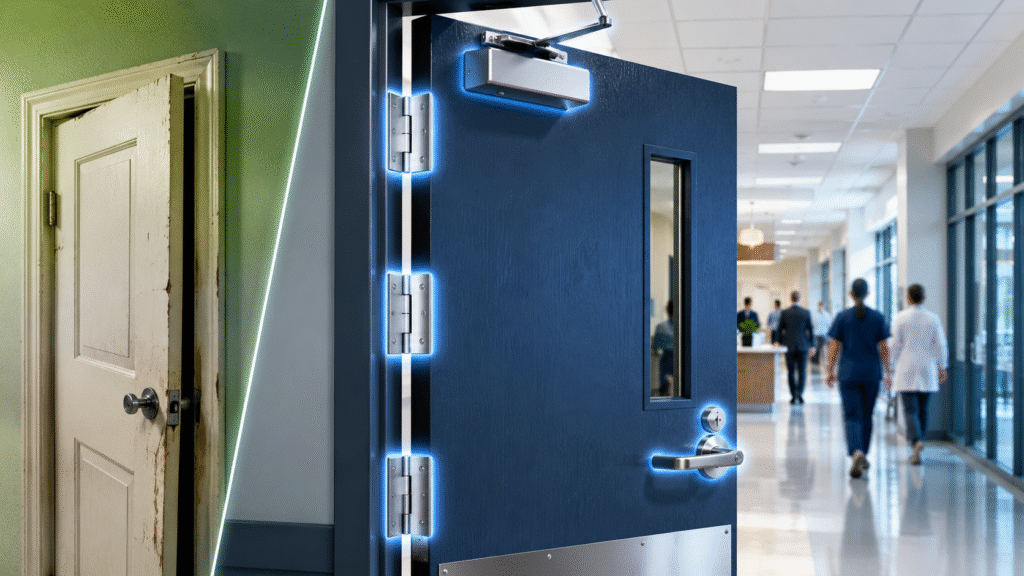
High-use interior doors operate under conditions that are significantly more demanding than residential applications.
In offices, hospitals, schools, hotels, and retail buildings, doors experience continuous opening cycles, repeated impact stress, and constant user interaction. Over time, these conditions accelerate wear on hinges, locks, handles, and closing systems.
Under heavy traffic conditions, even small hardware weaknesses can lead to:
- Door misalignment
- Loose mounting points
- Inconsistent closing performance
- Increased maintenance frequency
This is why commercial interior doors require hardware systems specifically designed for durability and cycle resistance rather than standard residential-grade components.
For builders and wholesalers, selecting hardware should therefore be approached as a long-term performance decision rather than a short-term purchasing choice.
Durability Begins with Material Selection
The durability of door hardware is heavily influenced by the material from which it is manufactured.
In high-traffic environments, hardware components are exposed to continuous friction, impact, moisture variation, and mechanical stress. Material quality directly determines how well these components maintain structural integrity over time.
Among the most commonly used materials:
| Material | Performance Characteristics | Typical Use Environment |
|---|---|---|
| Stainless Steel | Excellent corrosion resistance and structural durability | Hospitals, schools, commercial buildings |
| Zinc Alloy | Cost-effective with moderate durability | Standard interior applications |
| Aluminum | Lightweight and corrosion-resistant | Light to medium traffic environments |
| Brass | Good durability with premium appearance | Hotels and decorative interiors |
Stainless steel is widely preferred in high-use commercial settings because it offers superior resistance to corrosion, fatigue, and long-term wear.
By contrast, lower-grade materials may reduce initial costs but often result in higher replacement frequency and maintenance expenses over the building lifecycle.
Matching Hardware to Door Weight and Traffic Volume
Hardware performance must always be evaluated in relation to door size, weight, and usage frequency.
Heavy doors generate greater stress on hinges and closing systems, while high traffic volumes increase wear rates across all moving components. Selecting underspecified hardware can significantly shorten service life.
Builders should pay particular attention to:
- Hinge load capacity
- Cycle ratings
- Door closer strength
- Fastener stability
The relationship between door conditions and hardware requirements can be summarized as follows:
| Door Condition | Recommended Hardware Specification |
|---|---|
| Light interior traffic | Standard-duty hinges and basic locksets |
| Medium commercial traffic | Heavy-duty hinges and reinforced closers |
| High-frequency commercial use | Ball-bearing hinges, commercial mortise locks, high-cycle closers |
| Heavy oversized doors | Continuous hinges and high-load closing systems |
Proper specification helps reduce operational failures and improves long-term reliability in demanding commercial environments.
The Role of Hinges, Locks, and Closers in Long-Term Performance
Each hardware component contributes differently to door performance and lifecycle durability.
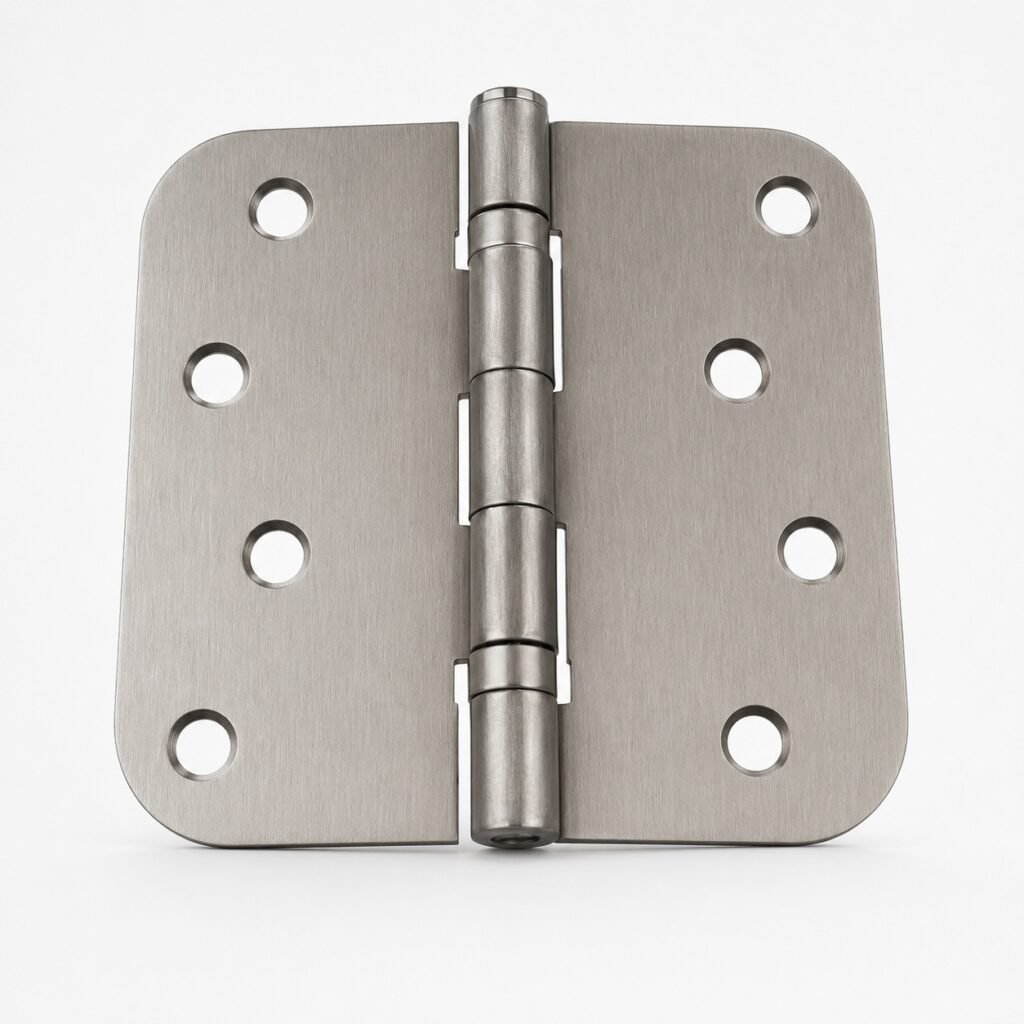
Hinges: Structural Stability and Movement Control
Hinges are responsible for supporting door weight and maintaining alignment during repeated operation. In high-use applications, heavy-duty ball-bearing hinges are often preferred because they reduce friction and improve movement stability over time.
Locks: Security and Wear Resistance
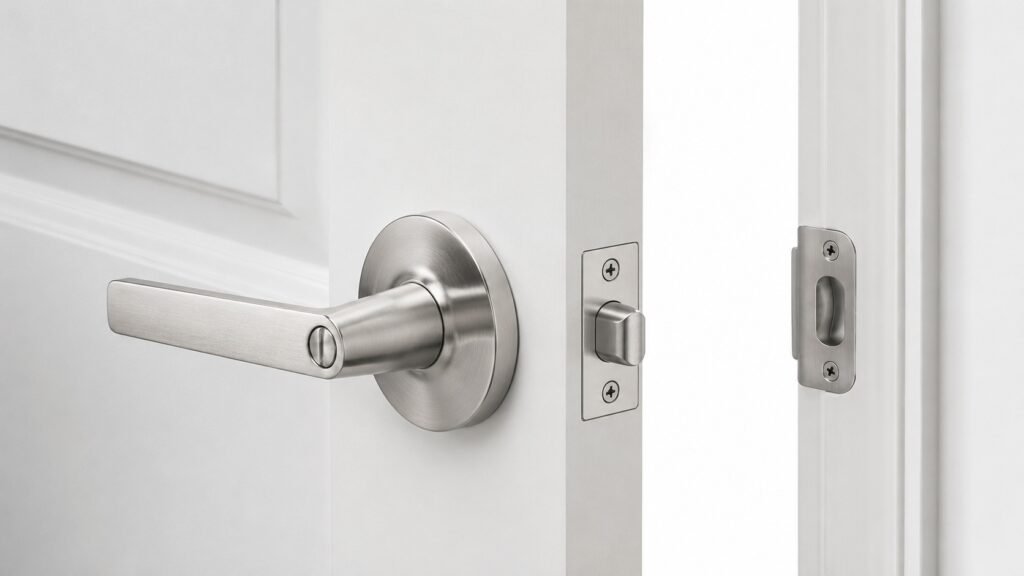
Lock systems in commercial environments must withstand frequent operation without compromising security or internal mechanism performance. Mortise locks are commonly used in high-traffic buildings due to their durability and serviceability.
Door Closers: Impact Reduction and Operational Control
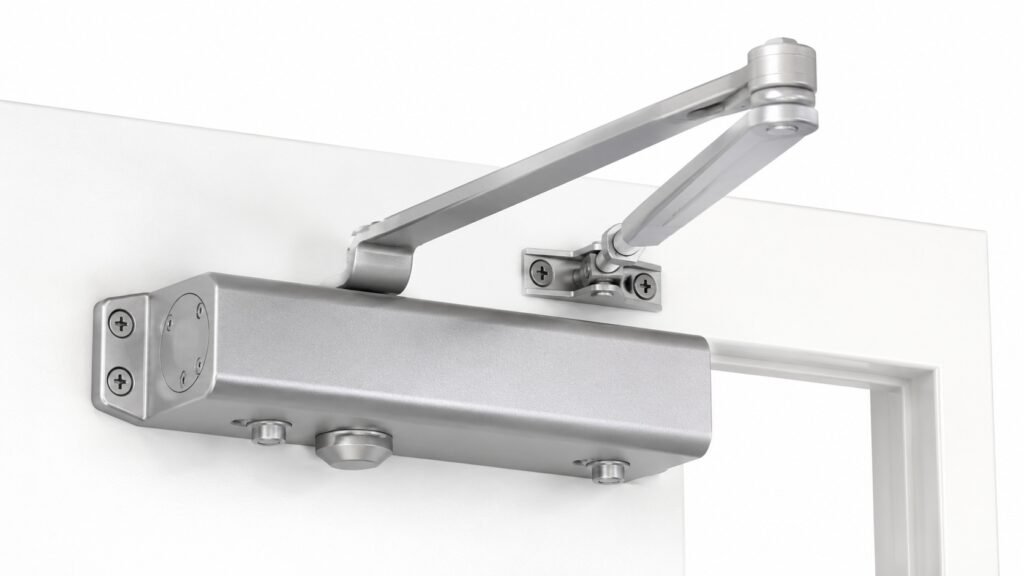
Door closers play a critical role in controlling door movement and minimizing impact stress. Properly adjusted closers reduce slamming, improve user safety, and extend the lifespan of both doors and hardware systems.
Rather than functioning independently, these components operate as an integrated system. Failure in one area often accelerates wear in others.
Maintenance Requirements Are Often Overlooked
One of the most underestimated aspects of door hardware selection is long-term maintenance.
While lower-cost hardware may appear economical initially, frequent repairs and replacements can significantly increase operational expenses over time.
High-use environments require hardware systems that offer:
- Easy adjustment and servicing
- Replaceable components
- Long maintenance intervals
- Consistent long-term performance
For wholesalers and project managers, maintenance efficiency is especially important in large-scale commercial projects where downtime and labor costs directly affect operational budgets.
Choosing hardware with proven lifecycle performance often provides greater long-term value than focusing solely on upfront cost.
Compliance, Safety, and Commercial Performance Standards
In commercial construction, hardware selection must also comply with safety and accessibility requirements.
Depending on the project type, builders may need to consider:
- Fire-rated hardware systems
- ADA accessibility compliance
- Emergency egress requirements
- Local building code standards
For example, fire-rated doors require compatible hinges, closers, and lock systems capable of maintaining integrity during fire exposure.
Similarly, accessibility regulations may require hardware that can be operated with minimal force or without tight grasping motions.
Ignoring these standards can result in compliance issues, project delays, or increased liability risks.
Choosing Hardware as a Long-Term Investment
Selecting hardware for high-use interior doors should never be treated as a simple procurement task.
In commercial environments, hardware directly affects operational continuity, maintenance efficiency, user experience, and long-term building performance.
Low-cost solutions may reduce initial spending, but they often lead to:
- Higher replacement frequency
- Increased maintenance labor
- Operational downtime
- Reduced lifecycle value
By contrast, properly specified commercial-grade hardware improves durability, reliability, and long-term cost control.
For builders and wholesalers, the most effective hardware strategy is not based solely on price—but on lifecycle performance under real operating conditions.
Frequently Asked Questions About High-Use Door Hardware
Q: Why do high-use interior doors require different hardware standards than residential doors?
A: High-use doors in commercial settings, such as schools or hospitals, undergo thousands of cycles per year. Standard residential hardware is not designed to withstand this level of repeated impact stress and mechanical friction, which leads to door misalignment and loose mounting points. Commercial-grade hardware is specifically engineered for high-cycle resistance and structural durability to ensure operational continuity.
Q: What is the best material for hardware in high-traffic commercial environments?
A: Stainless steel is the superior choice for high-traffic environments. It offers exceptional resistance to corrosion, fatigue, and structural wear compared to zinc alloys or aluminum. Investing in high-grade stainless steel hardware through a reliable supplier like M4B significantly reduces the frequency of replacements and lowers long-term building maintenance costs.
Q: How does door weight influence the selection of hinges and closers?
A: Hardware must be strictly matched to the door’s total load capacity. Heavy-duty interior doors, especially those with solid cores or fire ratings, generate significant torque and stress on the mounting points. Using hardware with insufficient weight ratings will cause the door to sag over time, preventing proper latching and potentially damaging the frame.
Q: What compliance standards should builders consider for commercial interior hardware?
A: Builders must ensure that all selected hardware meets specific safety and accessibility requirements, such as fire-rating compatibility, ADA (Americans with Disabilities Act) accessibility for minimal force operation, and emergency egress codes. M4B provides hardware solutions that are fully tested to meet North American building standards, minimizing project liability and ensuring user safety.
Summary
High-use interior doors place continuous demands on hinges, locks, closers, and supporting hardware systems. Choosing the right hardware requires careful evaluation of durability, material quality, traffic volume, maintenance requirements, and compliance standards. In commercial construction, long-term performance is ultimately determined not by the door alone, but by the reliability of the hardware system supporting it.
Articles that you may be interested in:
Lightweight vs Heavy-Duty Bifold Door Hardware: Which System Is Better for Builders?