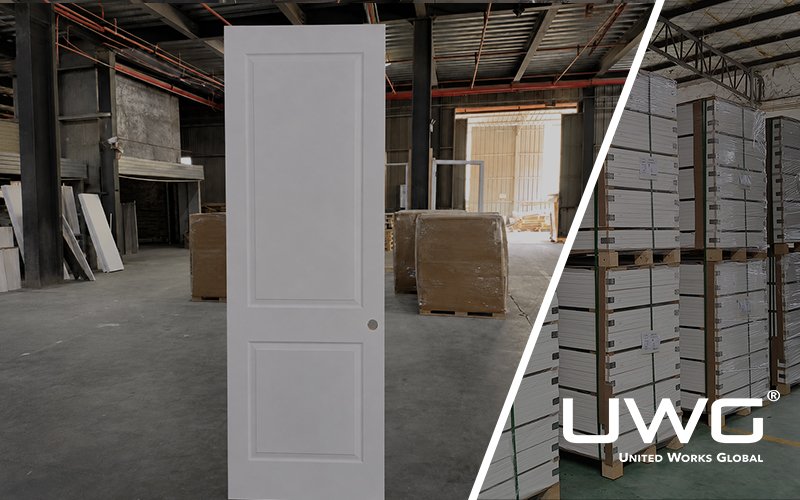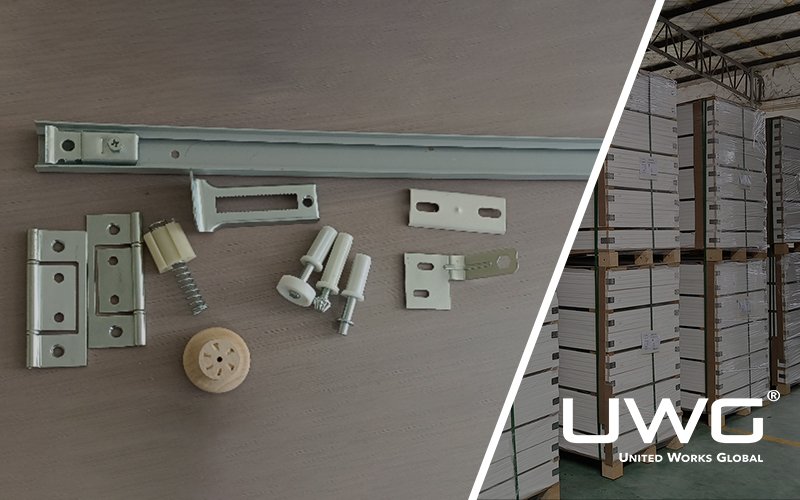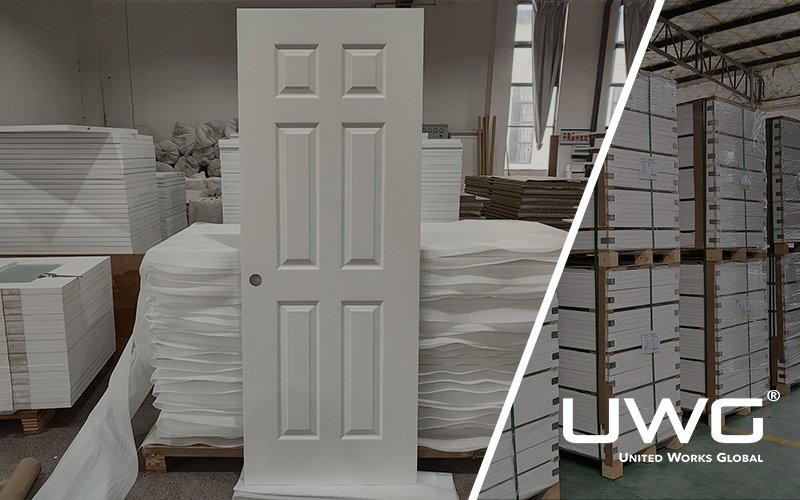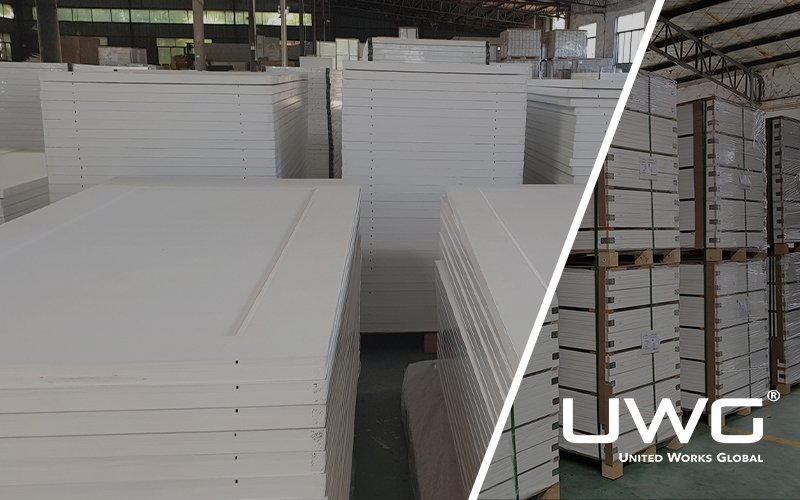

For builders, contractors, and residential project buyers, door procurement often starts with a simple comparison: price per door. At first glance, the supplier with the lowest unit price may seem like the best choice. However, in real construction projects, the lowest door price does not always mean the lowest project cost.
Interior doors, prehung doors, molded doors, shaker doors, jambs, and moldings all affect the installation schedule and final project quality. If the doors arrive with poor surface finish, missing preparation, wrong sizing, unclear labeling, or incomplete components, the project can quickly face extra labor, rework, delays, and customer complaints.
That is why builders should evaluate door procurement beyond the quotation sheet. The real cost of a door package includes not only the product itself, but also installation efficiency, site readiness, packaging, delivery planning, and long-term performance.
What Are Hidden Costs in Door Procurement?
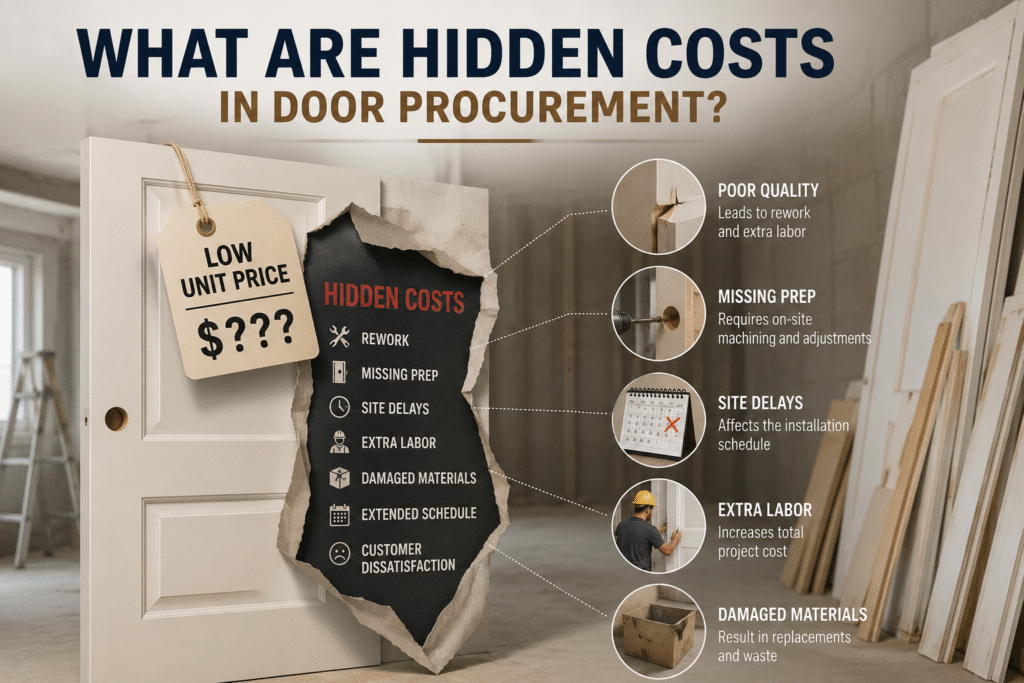
Hidden costs in door procurement are extra costs that do not appear directly on the supplier’s quotation but show up later during delivery, installation, finishing, inspection, or project handover.
For builders and residential project buyers, these costs often come from rework, missing preparation, delayed installation, damaged materials, or incomplete door packages. While the initial door price may look competitive, the final project cost can increase significantly once labor, corrections, and scheduling problems are added.
Rework from Poor Product Quality
Rework is one of the most common hidden costs in door procurement. Even if a door looks acceptable in a quotation or sample photo, inconsistent product quality can create extra labor during installation and finishing.
Common problems include:
- Warped or twisted door slabs
- Inconsistent dimensions
- Weak or damaged edges
- Uneven surfaces or visible joints
- Poor primer coverage
- Rough sanding or surface defects
These issues may require additional adjustment, sanding, repainting, or even replacement on site. In large residential or multi-family projects, repeated corrections across many units can quickly increase labor cost and delay project completion.
Missing Prep Before Delivery
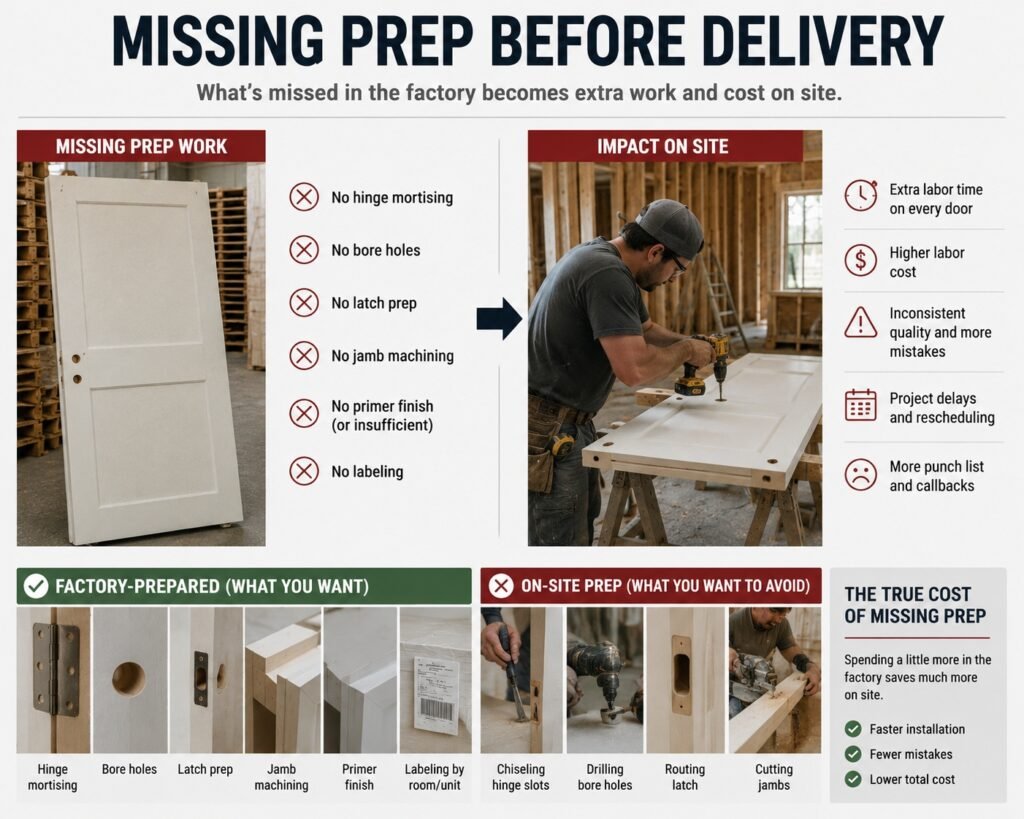
Some door quotations appear lower because they only include the basic product. However, if important preparation work is missing, installers must complete the work on site instead.
Missing prep work may include:
- Hinge mortising
- Bore holes and latch prep
- Jamb machining
- Prehung assembly
- Primer finishing
- Room or unit labeling
When these steps are not completed before delivery, installation becomes slower and less consistent. This also increases the risk of mistakes, especially in large projects with multiple units or floor plans.
Site Delays from Incomplete Packages and Poor Delivery Planning
Doors are rarely installed as standalone products. A complete door package may include slabs, jambs, casings, moldings, hardware prep, labels, and packing instructions. If components are missing, mismatched, or poorly organized, installation crews may lose significant time on site.
Common issues include:
- Missing jambs or moldings
- Incorrect swing direction
- Mixed SKUs without clear labels
- Incomplete packing lists
- Damaged products during shipping
- Delivery timing that does not match the installation schedule
For larger residential projects, these problems can affect entire installation phases, increase storage pressure, and create costly scheduling delays. Proper packaging, labeling, and delivery planning are often just as important as the door product itself.
Low Unit Price vs Real Project Cost
| Procurement Factor | Low Unit Price Supplier | Project-Ready Door Supplier |
|---|---|---|
| Initial Door Price | Lower | Slightly higher |
| Surface Finish | May require extra sanding or touch-up | Better prepared for painting or installation |
| Hardware Prep | Often missing or limited | Can include hinge prep, bore hole, and latch prep |
| Installation Time | Longer due to on-site adjustments | Shorter and more predictable |
| Rework Risk | Higher | Lower |
| Door Package Completeness | May supply only slabs | Can supply slabs, jambs, casings, and related components |
| SKU Labeling | Limited or unclear | Can label by unit, room, floor, or opening schedule |
| Packaging | Basic protection | Project-based packing and better damage control |
| Delivery Planning | Basic shipment only | Can coordinate loading, delivery timing, and DDP options |
| Real Project Cost | May increase later | More predictable and easier to control |
This table shows why the lowest unit price can be misleading. A slightly higher product price may still result in lower total project cost if it reduces labor, rework, delays, damage, and coordination problems.
How to Avoid Hidden Costs in Door Procurement
To avoid hidden costs, builders should evaluate the door package before placing an order, not after the products arrive on site. A project-ready door supplier should be able to support product consistency, factory preparation, complete components, clear labeling, and reliable delivery planning.
Before confirming an order, project buyers should focus on three key areas:
1. Confirm Product and Size Requirements
The first step is to make sure the door specifications match the actual project needs. Door size, material, core structure, primer quality, and surface finish should all be confirmed before production.
For residential and multi-family projects, buyers should also check whether samples are available before bulk orders. This helps reduce the risk of sizing issues, poor finish quality, or unexpected rework after delivery.
2. Check Factory Prep and Package Completeness
Builders should confirm whether the doors will arrive as slabs, prehung units, or KD packages. If hinge mortising, bore holes, latch prep, jamb machining, or primer finishing are required, these details should be included before production.
It is also important to confirm whether jambs, casings, moldings, and other related components can be supplied together. A complete door package is easier to install and reduces the risk of missing parts on site.
3. Review Labeling, Packing, and Delivery Plan
For larger projects, clear labeling and delivery planning can save significant time during installation. Doors can be labeled by unit, room, floor, opening schedule, or installation phase.
Buyers should also confirm how mixed SKUs will be packed, how door edges will be protected, and whether the loading sequence matches the project schedule. Good packing and delivery planning help reduce sorting time, product damage, storage pressure, and site delays.
Instead of comparing suppliers only by unit price, builders should compare how well each supplier supports the full project process. This makes the final door cost more predictable and helps avoid expensive problems after delivery.
Frequently Asked Questions About Hidden Costs in Door Procurement
Q: Why can choosing the supplier with the lowest unit price lead to higher overall project costs?
A: The lowest unit price on a quotation sheet often excludes essential factory preparation. When doors arrive on-site with rough finishes, poor sandings, or completely unmachined frames, your installation crews must spend excessive time on slow manual corrections and fitting. These added job site labor costs, combined with the risk of installation errors, often quickly wipe out any initial material savings.
Q: What specific factory preps should builders check to eliminate hidden procurement costs?
A: A project-ready door should arrive with comprehensive factory pre-machining. This includes precision hinge mortising, pre-drilled bore holes and latch preparations, and fully machined jambs. Ensuring these details are finalized during factory production reduces installation to a predictable assembly sequence, cutting field labor hours per opening by up to half.
Q: How do incomplete door packages and poor packaging lead to construction delays?
A: Doors require a complete ecosystem of components: slabs, jambs, casings, and matching moldings. If these items are sourced loosely or arrive mislabeled without clear SKU categorization, workers lose precious hours searching for matching parts. Furthermore, basic packaging leads to corner dents and surface damage during ocean transit. M4B solves this by using project-based crate packing and custom labeling organized by unit, floor, or installation phase.
Q: What does a “Project-Ready Door Supplier” provide to protect a builder’s bottom line?
A: A project-ready supplier like M4B manages the full process rather than just selling wood slabs. This includes providing dimensionally stable doors, premium multi-coat white primer that eliminates extra sanding, pre-integrated hardware preps, and localized logistical coordination (DDP options). This end-to-end support makes the final landed cost entirely predictable, ensuring the project hits its milestones without change orders.
Summary
Door procurement should not be evaluated only by the unit price on a quotation. For builders and residential project buyers, the real cost of a door package depends on product consistency, preparation level, installation efficiency, packaging quality, and delivery reliability.
A low-cost door may look attractive at first, but if it leads to rework, missing prep, extra sanding, site delays, replacement orders, or customer complaints, the final project cost can become much higher than expected.
The better approach is to choose doors based on total project efficiency. A project-ready door package can help reduce labor, improve installation flow, protect the schedule, and support a more consistent final result.
Articles that you may be interested in:
Why Door Hardware Compatibility Should Be Checked Before Finalizing the PO
How to Evaluate Solid Wood Door Suppliers for Long-Term Projects