Vinyl windows are one of the most common window choices in residential construction and renovation projects. They are widely used in single-family homes, apartments, rental properties, and replacement window projects because they offer a practical balance of cost, durability, energy efficiency, and low maintenance.
For builders, wholesalers, remodeling contractors, and homeowners, understanding vinyl windows is important before making a purchasing decision. While vinyl windows are often considered an affordable option, their performance can vary depending on frame quality, glass configuration, hardware, manufacturing process, and installation.
This article explains what vinyl windows are, how they are made, their main benefits, potential drawbacks, and how they compare with other common window materials.
What Are Vinyl Windows?
Vinyl windows are windows with frames made from PVC, or polyvinyl chloride. PVC is a plastic-based material commonly used in building products because it is lightweight, moisture-resistant, and relatively easy to maintain.
When people talk about vinyl windows, they are usually referring to the window frame material, not the glass itself. A vinyl window can be paired with different types of glass, such as single-pane, double-pane, or triple-pane glass.
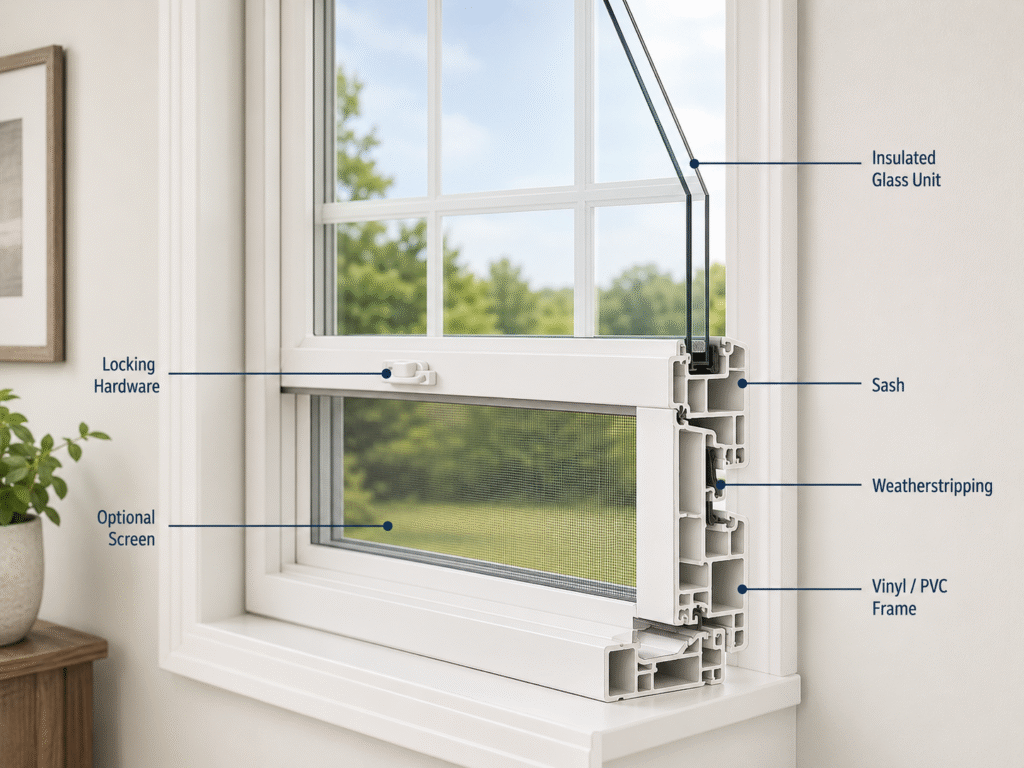
A typical vinyl window includes:
- Vinyl or PVC frame
- Glass unit
- Sash
- Weatherstripping
- Locking hardware
- Optional grids
- Optional insect screen
Unlike wood windows, vinyl windows do not need painting, staining, or regular sealing. Unlike some metal windows, they do not easily corrode in normal residential use. This makes them a popular choice for projects where long-term maintenance and cost control are important.
How Vinyl Windows Are Made
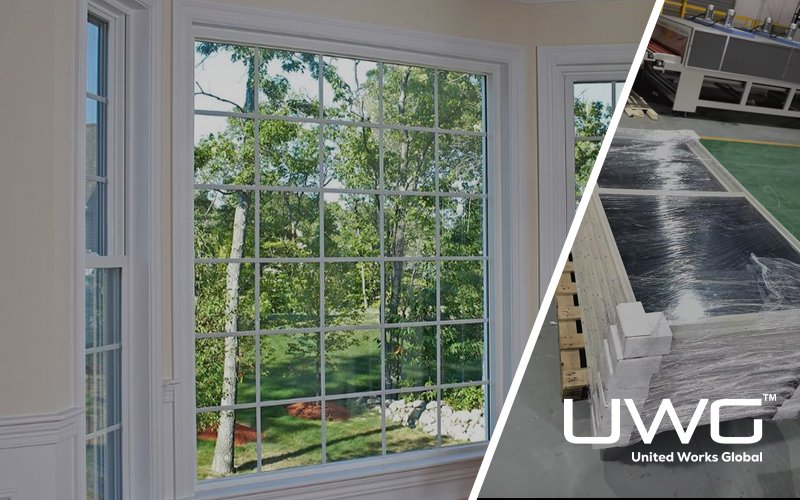
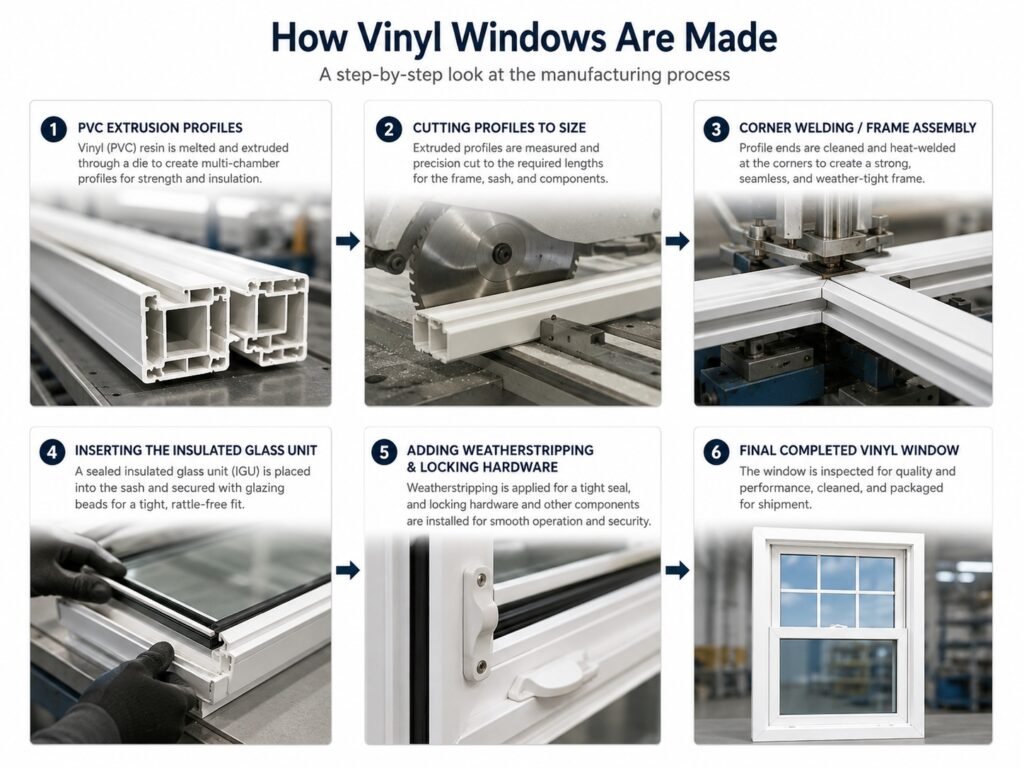
Vinyl windows are typically made from extruded PVC profiles. During production, PVC material is shaped into window frame profiles through an extrusion process. These profiles are then cut to size, welded at the corners, and assembled with glass, hardware, weatherstripping, and other components.
Many vinyl window frames use a multi-chamber structure inside the profile. These internal chambers can help improve insulation, reduce heat transfer, and strengthen the frame without adding too much weight.
Depending on the window design and performance requirements, vinyl windows may include:
- Welded frame corners
- Multi-chamber PVC profiles
- Double-pane or triple-pane insulated glass
- Low-E glass coating
- Argon gas filling between glass panes
- Reinforcement for larger window sizes
- Weatherstripping for improved air sealing
The quality of these components has a direct impact on the final window performance. A well-made vinyl window can provide good insulation, smooth operation, and long service life. A low-quality one may have problems such as weak corners, air leakage, poor locking, or frame deformation over time.
Main Benefits of Vinyl Windows
Cost-Effective for Residential Projects
One of the biggest advantages of vinyl windows is cost efficiency. Compared with wood windows and fiberglass windows, vinyl windows are usually more affordable, making them suitable for many residential projects.
For builders and wholesalers, this is especially important in projects where many windows are needed. Vinyl windows can help control material cost while still meeting common residential performance requirements.
They are often used in:
- Single-family homes
- Townhouses
- Apartments
- Rental properties
- Residential renovations
- Replacement window projects
For homeowners, vinyl windows also provide a practical option when upgrading old windows without choosing a premium-priced material.
Low Maintenance
Vinyl windows are known for being low maintenance. The frame does not need to be painted, stained, or sealed regularly. In most cases, routine cleaning with mild soap and water is enough to keep the frame looking clean.
This is a major advantage for rental properties, multi-family housing, and busy homeowners. Compared with wood windows, which may require repainting or refinishing over time, vinyl windows reduce long-term maintenance work.
Good Energy Efficiency
Vinyl itself has better insulating properties than metal materials such as aluminum. When combined with the right glass package, vinyl windows can support good energy performance in residential buildings.
Common energy-efficient options include:
- Double-pane glass
- Triple-pane glass
- Low-E coating
- Argon gas filling
- Quality weatherstripping
These features can help reduce heat transfer, improve indoor comfort, and support lower heating and cooling costs. For builders and remodeling contractors, energy-efficient vinyl windows can also improve the overall value of a home or renovation project.
Moisture and Rot Resistance
Vinyl windows do not absorb water the same way wood can. They are resistant to moisture, rot, peeling, and insect damage under normal residential conditions.
This makes them useful in areas where humidity, rain, or seasonal weather changes are common. For bathrooms, kitchens, laundry areas, and general residential use, vinyl windows can provide better moisture resistance than traditional wood frames.
Design and Color Options
Traditional vinyl windows are often white, but modern vinyl window products are available in more design options. Depending on the supplier and product line, buyers may find colors such as:
- White
- Beige
- Black
- Brown
- Gray
- Wood-look finishes
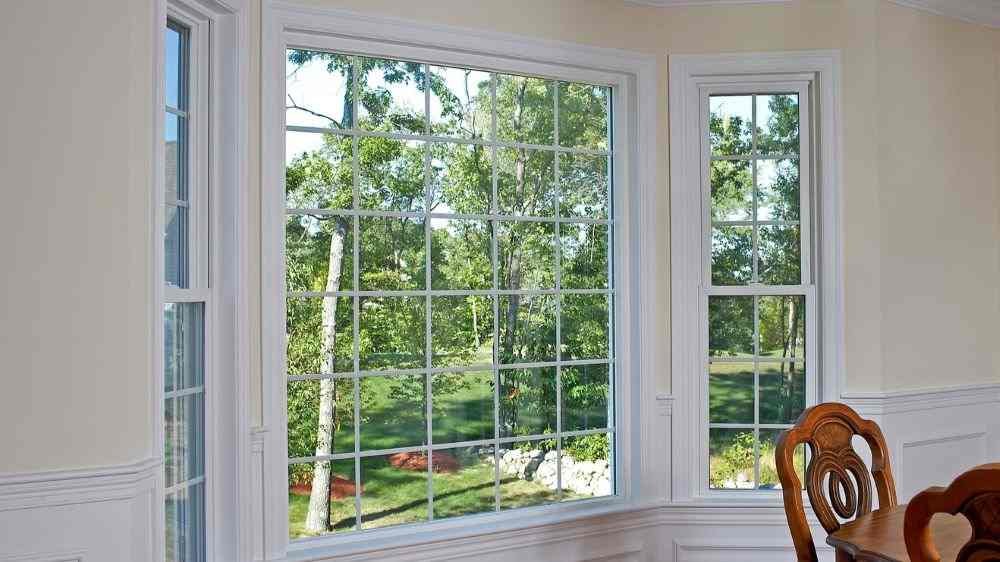
Vinyl windows can also be made in different styles, including single-hung, double-hung, sliding, casement, awning, picture, and fixed windows. This makes them suitable for both new construction and replacement projects.
Easy Installation and Replacement
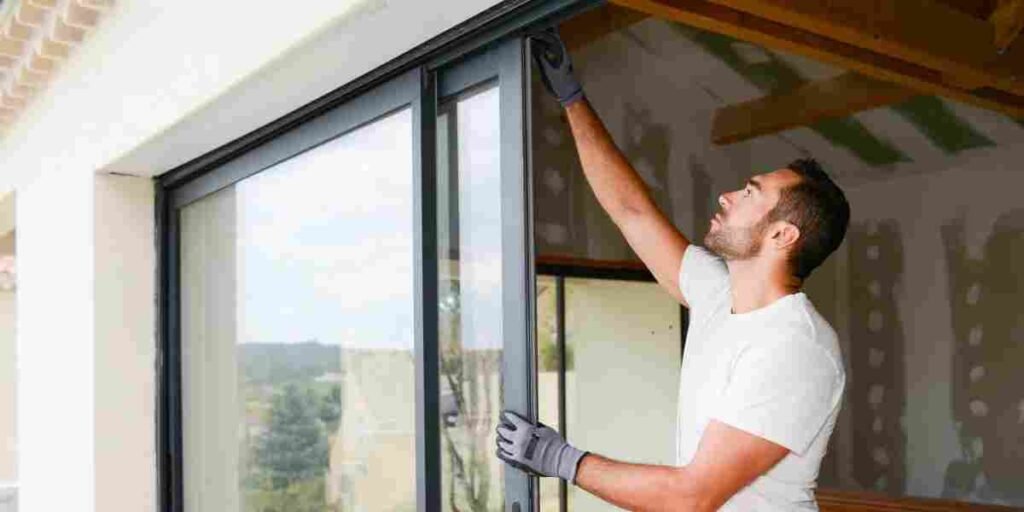
Vinyl windows are generally lighter than many wood or fiberglass windows, which can make them easier to handle during installation. This is helpful for builders, contractors, and remodeling teams working on multiple units or replacement projects.
Because vinyl windows are widely used in residential construction, many installers are familiar with their installation methods. This can help improve jobsite efficiency, especially when window sizes and specifications are properly confirmed before ordering.
Potential Drawbacks of Vinyl Windows
Although vinyl windows have many advantages, they are not perfect for every project. Builders and buyers should also understand their limitations.
Limited Structural Strength Compared with Aluminum or Fiberglass
Vinyl is practical and durable for many residential applications, but it is not as structurally strong as aluminum or fiberglass. For very large windows, high wind-load areas, or certain commercial projects, vinyl may require reinforcement or may not be the best material choice.
This does not mean vinyl windows are weak. It means the right application matters. Standard residential window sizes are usually suitable for vinyl, but oversized units should be reviewed carefully.
Color Fading or Surface Aging Risk
High-quality vinyl can perform well for many years, but low-quality vinyl may fade, yellow, chalk, or become brittle after long-term sun exposure.
This is especially important for darker colors, strong sunlight regions, or low-grade materials. Buyers should pay attention to PVC formulation, UV resistance, and surface finish quality when comparing suppliers.
Expansion and Contraction
Vinyl expands and contracts with temperature changes. If the window is poorly manufactured or improperly installed, this movement may affect sealing, alignment, or operation over time.
Good manufacturing quality and correct installation are important. Proper clearance, reinforcement, and installation methods can help reduce problems caused by thermal movement.
Not Always Suitable for High-End Custom Projects
Vinyl windows are practical, but they may not provide the same premium appearance as wood, aluminum-clad wood, or fiberglass windows. Some luxury homes, historical renovations, or high-end custom projects may require a different material for design or performance reasons.
For example, homeowners who want a natural wood interior appearance may prefer wood or wood-clad windows. Projects that require very slim frames may prefer aluminum.
Quality Differences Between Suppliers
Not all vinyl windows are the same. Two windows may both be called “vinyl windows,” but their quality can be very different.
Important quality factors include:
- PVC profile thickness
- Number of internal chambers
- Corner welding quality
- Glass type
- Hardware quality
- Weatherstripping
- Drainage design
- Reinforcement
- Packaging and shipping protection
For builders and wholesalers, choosing a reliable supplier is important. A low unit price may look attractive, but poor-quality windows can lead to installation issues, air leakage, water problems, or customer complaints later.
Vinyl Windows vs Other Window Materials
| Factor | Vinyl Windows | Wood Windows | Aluminum Windows | Fiberglass Windows |
|---|---|---|---|---|
| Cost | Low to medium | High | Medium | High |
| Maintenance | Low | High | Low | Low |
| Energy Efficiency | Good | Good | Moderate | Very good |
| Moisture Resistance | Good | Poor to moderate | Good | Very good |
| Strength | Moderate | Moderate | High | High |
| Design Appearance | Practical and clean | Warm and premium | Modern and slim | Premium and durable |
| Best For | Residential homes, rentals, replacement projects | High-end homes, traditional designs | Commercial or modern projects | Premium residential projects |
| Main Concern | Quality varies by supplier | Maintenance and cost | Thermal transfer | Higher price |
Vinyl windows are not always the most premium option, but they often provide one of the best balances of cost, performance, and maintenance for residential projects. Wood windows offer a warmer and more traditional appearance, but they require more maintenance. Aluminum windows are strong and modern, but they may transfer heat more easily if not properly designed. Fiberglass windows provide excellent durability and performance, but they usually come at a higher price.
Frequently Asked Questions About Vinyl Windows
Q: What are the primary advantages of choosing vinyl windows for a building project?
A: Vinyl windows are highly favored for their excellent energy efficiency due to multi-chambered frames that reduce thermal transfer. They are extremely low-maintenance, requiring no painting or staining, and are inherently resistant to moisture, rot, and insects. Additionally, vinyl is often more cost-effective than materials like wood or aluminum, providing high value for both new construction and renovation projects.
Q: Are there any drawbacks to consider when using vinyl windows?
A: While vinyl is durable, it cannot be repainted if a color change is desired, and some lower-quality vinyl may be susceptible to thermal expansion or contraction in extreme temperatures. Furthermore, compared to premium materials like wood or fiberglass, vinyl may have fewer aesthetic customization options, and very large units may require additional reinforcement due to the flexibility of the material.
Q: How do vinyl windows compare to wood windows in terms of maintenance?
A: Vinyl windows significantly outperform wood because they do not crack, peel, or require the periodic refinishing that wood windows demand to protect them from the elements. While wood provides a traditional aesthetic, vinyl offers a practical, long-term solution for builders looking to minimize upkeep.
Q: Why are vinyl windows considered a sustainable choice?
A: Vinyl windows are highly durable, which extends their service life and reduces the frequency of replacement. Many modern vinyl frames are recyclable, and their superior insulation properties help reduce heating and cooling energy consumption, leading to lower utility bills and a reduced overall carbon footprint for the building.
Conclusion
Vinyl windows are a practical and cost-effective option for many residential projects. They are affordable, easy to maintain, moisture-resistant, and energy-efficient when paired with the right glass package.
For builders, wholesalers, remodeling contractors, and homeowners, the decision should not be based only on price. Frame quality, glass configuration, hardware, weatherstripping, installation method, and supplier reliability all affect long-term performance.
When selected properly, vinyl windows can help residential projects control costs, improve energy performance, and reduce long-term maintenance needs. For many homes and residential developments, they remain one of the most practical window choices available.