Choosing the right type of vinyl window is essential for builders and contractors. The decision impacts ventilation, natural light, energy efficiency, and maintenance. Selecting the best window ensures project quality, client satisfaction, and long-term performance.
Single-hung windows have a fixed top sash and a movable bottom sash, while double-hung windows allow both sashes to move vertically. Double-hung windows improve airflow, simplify cleaning, and offer greater flexibility, but are generally more expensive and slightly less energy-efficient. Choosing the right type depends on your project priorities, budget, and client preferences.
Understanding the differences helps builders make informed choices for client projects, balancing cost, efficiency, and usability in residential and commercial builds.
What Are Single-Hung Vinyl Windows?
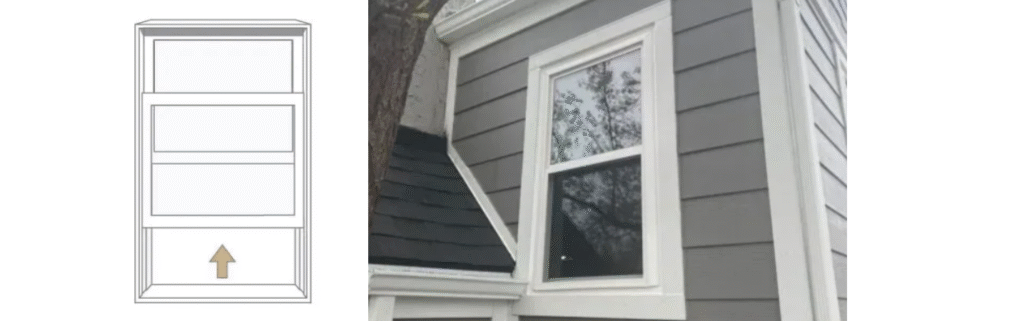
Single-hung vinyl windows are a common type of window where only the bottom sash moves vertically, while the top sash remains fixed. This design allows for controlled ventilation while maintaining a simple, stable structure.
Key characteristics include:
- Simple Operation – The bottom sash slides up and down to open or close the window.
- Energy Efficiency – With only one moving part, single-hung windows often provide a tighter seal than double-hung options, reducing air leakage.
- Lower Cost – Fewer moving components make them more affordable than double-hung windows.
- Maintenance – Cleaning the top sash from inside can be difficult since it does not tilt.
Single-hung vinyl windows are typically used in residential applications, such as bedrooms, living rooms, and low-traffic areas, where cost, stability, and energy efficiency are prioritized over maximum ventilation or easy cleaning.
What Are Double-Hung Vinyl Windows?
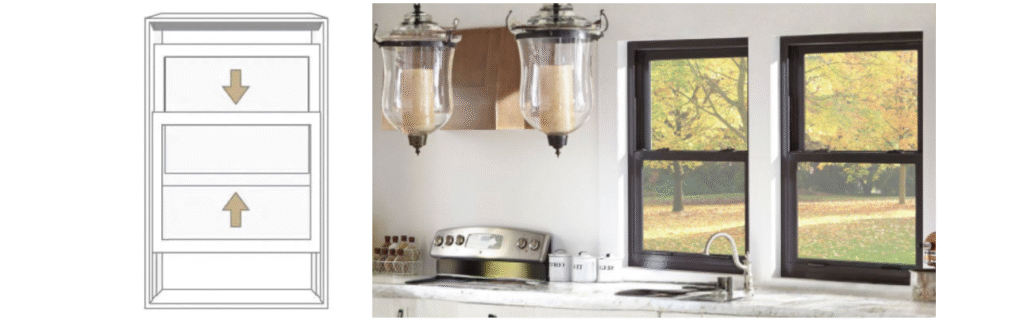
Double-hung vinyl windows are windows where both the upper and lower sashes can move vertically, allowing for more flexible ventilation and easier maintenance compared to single-hung designs.
Key characteristics include:
- Improved Ventilation – Both sashes can open, allowing warm air to exit through the top while cooler air enters from the bottom.
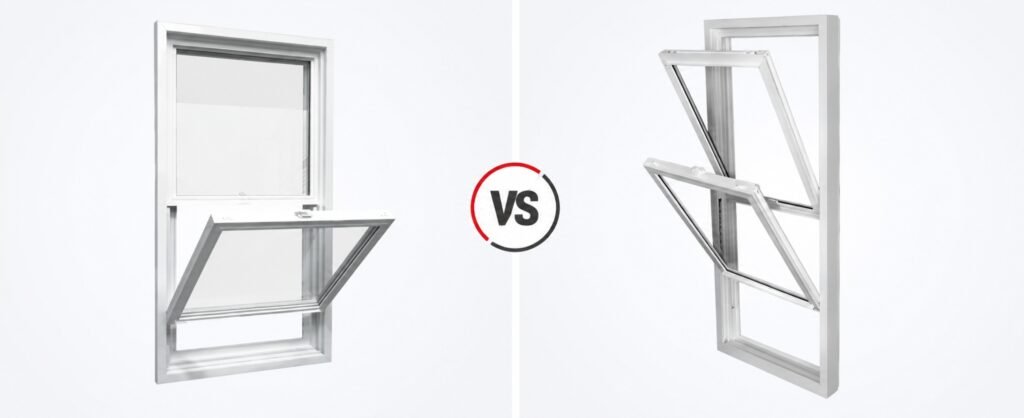
- Easy Cleaning – Many double-hung windows feature tilt-in sashes, making it easier to clean both sides of the glass from inside the building.
- Flexible Operation – The ability to open either sash provides more control over airflow and comfort.
- Higher Cost – Because of the additional moving components, double-hung windows are generally more expensive than single-hung options.
Double-hung vinyl windows are commonly used in residential homes, multi-story buildings, and projects where ventilation and maintenance convenience are important. From our experience working with builders, they are especially popular in upper-floor applications where exterior cleaning access is limited.
Key Differences Between Single-Hung and Double-Hung Vinyl Windows
| Feature | Single-Hung Windows | Double-Hung Windows |
|---|---|---|
| Sash Operation | Bottom sash moves; top sash fixed | Both top and bottom sashes move |
| Ventilation | Limited airflow | Better airflow and ventilation control |
| Cleaning | Harder to clean upper exterior glass | Easier cleaning with tilt-in sashes |
| Energy Efficiency | Slightly better due to fewer moving parts | Good efficiency with quality sealing systems |
| Maintenance | Simpler mechanism, lower maintenance | More moving parts may require additional maintenance |
| Cost | More budget-friendly | Typically higher cost |
| Common Applications | Standard residential projects | Residential homes, upper floors, multifamily projects |
Energy Efficiency Considerations
Energy efficiency is an important factor when comparing single-hung and double-hung vinyl windows, especially for residential projects focused on long-term comfort and energy savings.
In general, single-hung windows are slightly more energy efficient because only the bottom sash moves, resulting in fewer potential air leakage points. Their simpler structure often provides a tighter seal over time.
Double-hung windows, while offering better ventilation and cleaning convenience, include two movable sashes, which can create slightly more opportunities for air infiltration if the window quality or installation is poor. However, modern double-hung vinyl windows can still achieve strong energy performance when built with high-quality sealing systems.
Other features also play a major role in window efficiency, including:
- Double or triple glazing
- Low-E glass coatings
- Argon gas insulation
- Quality weather stripping and frame construction
From our experience working with builders, the overall window quality and installation often have a greater impact on energy performance than the operating style alone. Choosing the right glass package and ensuring proper installation are both critical for achieving long-term efficiency.
Installation and Building Codes
Installation requirements and local building codes can also influence whether single-hung or double-hung vinyl windows are the better choice for a project.
Single-hung windows are commonly used in standard residential applications because of their simple structure and lower cost. However, in multi-story buildings or upper-floor rooms, cleaning access may become a concern since the top sash does not move.
Double-hung windows are often preferred in projects where ventilation flexibility, emergency egress, or easier maintenance are important. Many double-hung models include tilt-in sashes, which simplify cleaning from inside the building—an advantage in upper-floor installations.
Building codes may also specify requirements related to:
- Emergency escape and rescue openings (egress)
- Minimum ventilation areas
- Energy efficiency standards
- Tempered glass requirements near hazardous locations
Buying Tips for Builders
When selecting single-hung or double-hung vinyl windows for a project, builders should consider more than just the initial price.
- Match the window type to the project needs – Single-hung windows are often suitable for budget-focused residential projects, while double-hung windows are preferred where ventilation and easier cleaning are important
- Review local code requirements – Egress, ventilation, and energy efficiency standards may influence window selection
- Consider long-term maintenance – Double-hung windows can simplify cleaning and maintenance, especially in multi-story buildings
- Evaluate energy performance – Features such as Low-E glass, insulated glazing, and quality sealing systems can significantly improve efficiency
- Check product consistency for large projects – Builders and distributors often prioritize stable specifications, lead times, and uniform appearance across units
Frequently Asked Questions About Single-Hung vs. Double-Hung Windows
Q: What is the main structural difference between single-hung and double-hung windows?
A: In a single-hung window, only the bottom sash is operable, while the top sash remains fixed in place. In a double-hung window, both the top and bottom sashes are operable, allowing both to slide vertically for increased airflow and easier cleaning.
Q: What are the benefits of choosing double-hung windows?
A: Double-hung windows offer superior ventilation control because both sashes can be opened, allowing warm air to escape through the top while fresh air enters through the bottom. Additionally, because both sashes can tilt inward, they are much easier to clean from the inside of the building, which is particularly useful for upper-floor installations.
Q: Why might a builder or homeowner prefer single-hung windows?
A: Single-hung windows are often the more cost-effective choice for projects with budget constraints. Because they have fewer moving parts and a simpler mechanical design, they are typically less expensive to manufacture and install than double-hung models. They are an excellent option for areas where maximum ventilation and easy exterior access for cleaning are not high priorities.
Q: Are there differences in energy efficiency between the two window styles?
A: Both styles can achieve high energy efficiency ratings, especially when manufactured with high-quality vinyl frames and insulated glass. However, single-hung windows are sometimes considered slightly more airtight because they have fewer operable seams, though modern double-hung windows are engineered with advanced weatherstripping to ensure excellent performance.
Summary
In practice, the right choice often depends on factors such as building type, airflow needs, energy efficiency goals, and long-term maintenance considerations. Understanding these differences early can help builders and homeowners make more practical and cost-effective decisions.
From our experience working with builders and distributors, window selection is often part of a broader project planning process involving doors, trim, and other building materials. We support projects with a range of window and related product solutions, helping coordinate specifications and sourcing across different applications. If there are questions about configurations, performance, or project suitability, reviewing the requirements early can help simplify the selection process.
Articles that you may be interested in: