
Kitchen cabinet doors are often described as “standard sizes,” but many builders and wholesalers discover that standard doesn’t always mean interchangeable.
A replacement door that matches the cabinet width may still fail to fit because of overlay requirements, hinge boring locations, or differences between framed and frameless cabinet construction.
So, are kitchen cabinet doors actually standard sizes?
In this guide, we’ll explain standard kitchen cabinet door sizes, provide a practical size chart, and show builders and wholesalers how to measure and order cabinet doors correctly.

Why Standard Kitchen Cabinet Door Sizes Matter
Standard kitchen cabinet door sizes improve efficiency across manufacturing, distribution, and installation. They are a key part of keeping construction projects predictable and cost-efficient.
For builders, consistent cabinet door dimensions make layout planning and installation faster, with fewer on-site adjustments or delays. Even small sizing errors can lead to rework and schedule disruptions.
For wholesalers, standard sizing allows for repeatable inventory management. Instead of handling fully custom orders, they can stock common cabinet door sizes and fulfill projects more efficiently.
Standardization also improves communication between suppliers and buyers. Using consistent terms like “36-inch wall cabinet door” reduces ordering mistakes and speeds up coordination.
From a manufacturing and logistics perspective, standard cabinet door sizes help streamline production, reduce waste, and improve shipping efficiency.
However, “standard” does not mean identical in every case. Final cabinet door dimensions may still vary due to:
- Framed vs. frameless construction
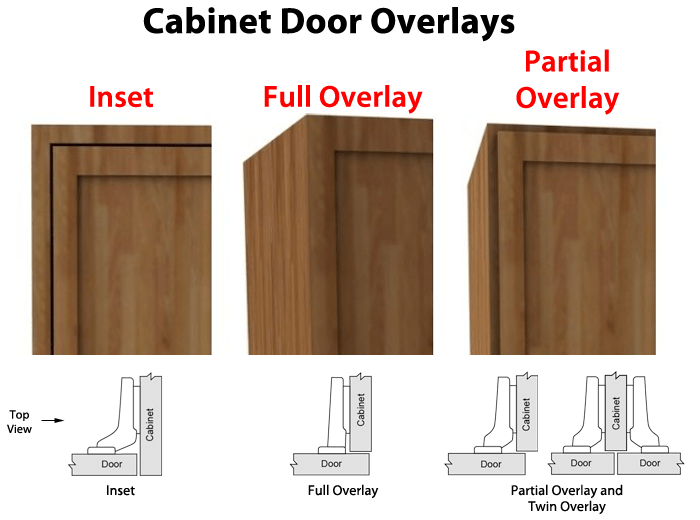
- Overlay type (inset, partial, full)
- Material thickness
- Hardware requirements
Overall, standard kitchen cabinet door sizes provide a practical baseline that supports efficient production, ordering, and installation across the industry.

Consistency in sizing affects every step of a project:
- Builders rely on predictable modules for layout, installation, and workflow.
- Wholesalers need repeatable SKUs for stocking and fast fulfillment.
- Factories improve productivity, minimize waste, and speed lead times.
- Installers avoid costly trimming, reboring, or replacement delays.
A mis-sized door isn’t just an inconvenience—it’s a direct impact on:
- Labor cost
- Schedule certainty
- Project profitability
Standard Kitchen Cabinet Door Dimensions: Complete Size Guide
When people talk about “standard sizes” in kitchen cabinets, they usually mean the industry’s most common modules for base, wall, tall, and drawer fronts. These dimensions are designed to align with cabinet box sizes, appliances, and ergonomic considerations, making installation and replacement more efficient for both builders and wholesalers.
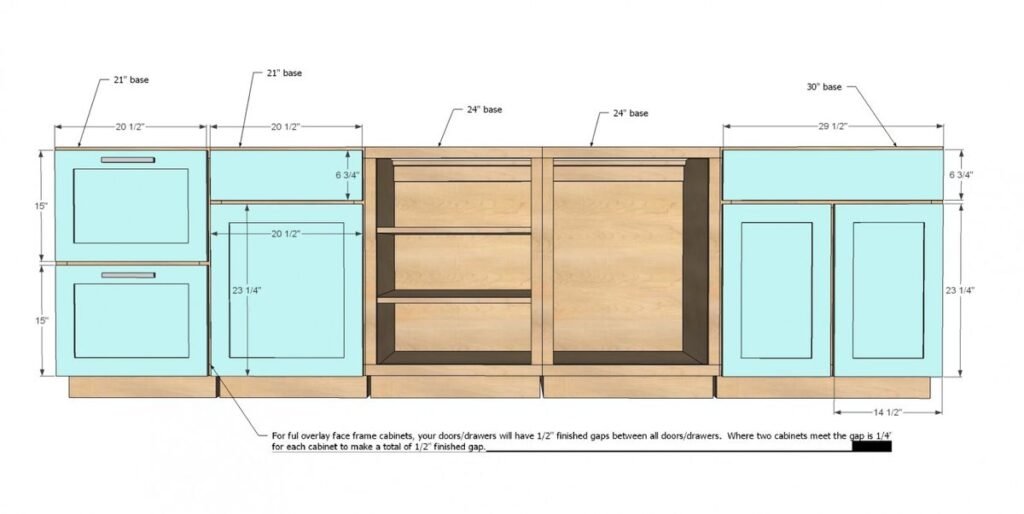
Base Cabinet Doors
- Widths: Typically available in increments of 3 inches, starting from 9″ up to 36″ (9″, 12″, 15″, 18″, 21″, 24″, 30″, 33″, 36″).
- Heights: Commonly between 24″ and 30″, depending on the cabinet height.
- Cabinet Box Reference: Most base cabinets are 24″ deep and 34.5″ tall, so doors are sized to fit these proportions.
- Application: Single-door or double-door setups for under-counter storage.

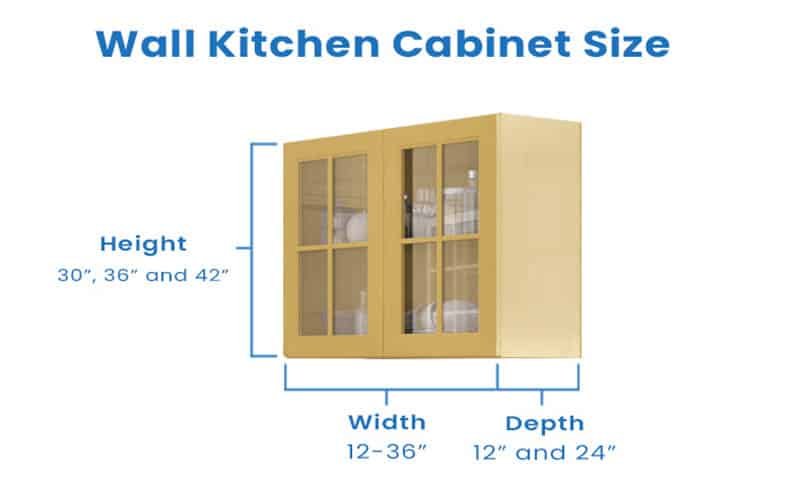
Wall Cabinet Doors
- Widths: Also offered in 3-inch increments, ranging from 9″ up to 36″.
- Heights: Standard options include 12″, 15″, 18″, 24″, 30″, 36″, and 42″.
- Depth: Most wall cabinets are 12″ deep, though over-refrigerator cabinets may reach 15″–24″.
- Application: Upper storage, with taller options (36″–42″) reaching the ceiling.
Tall Cabinet / Pantry Doors
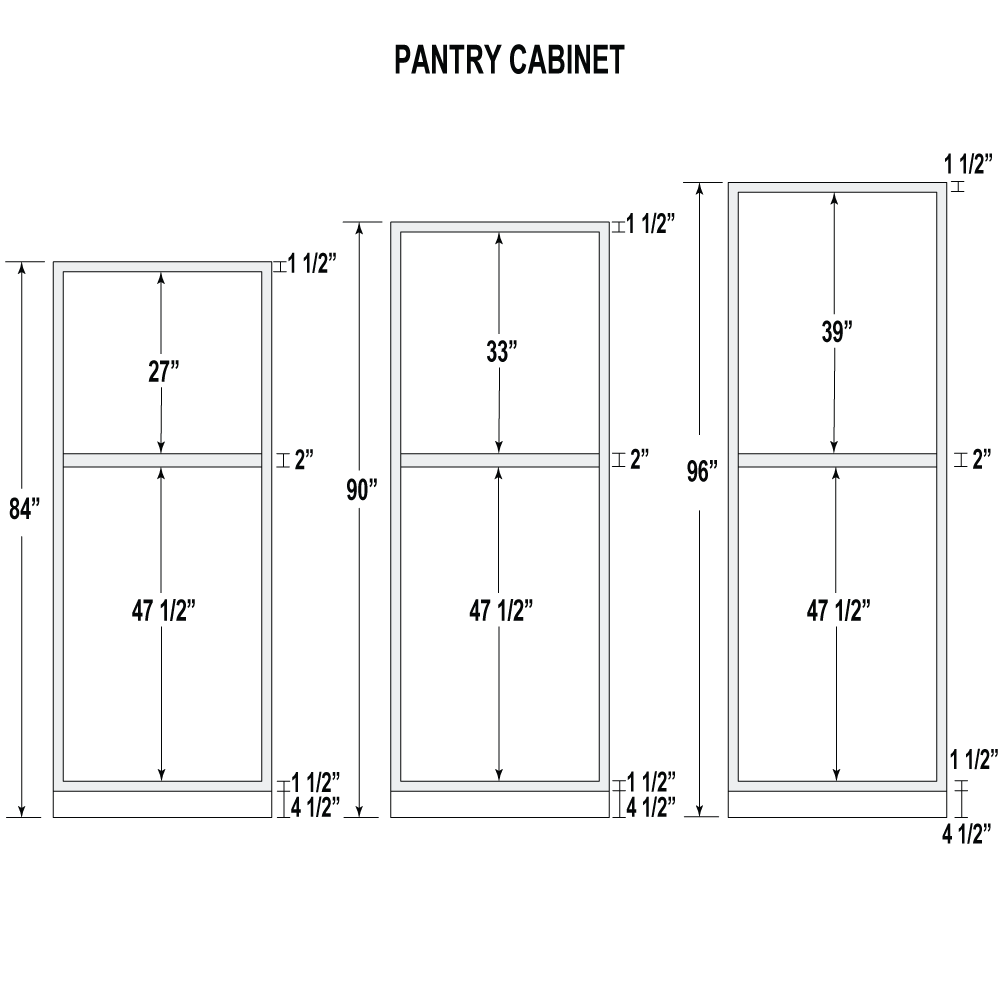
- Heights: 84″, 90″, and 96″ are common choices, aligning with ceiling heights.
- Widths: Usually 18″, 24″, or 30″.
- Design: Tall cabinets often use double-door configurations for stability and ease of use.
- Application: Pantry storage, oven housing, or broom closets.
Drawer Fronts
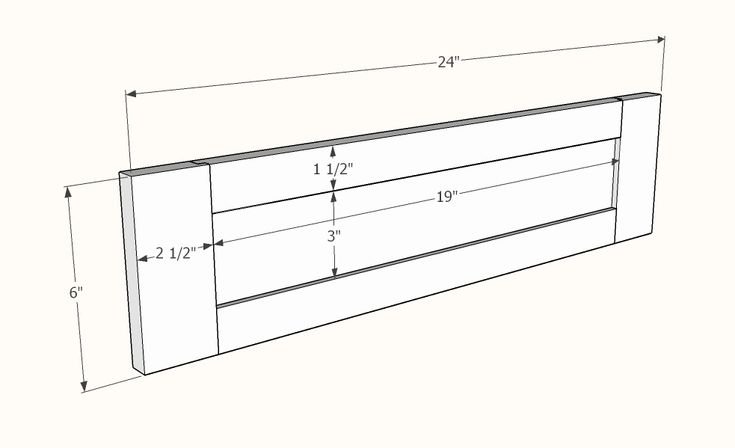
- Widths: Match the cabinet modules (12″, 15″, 18″, 21″, 24″, 30″, 36″).
- Heights: Generally 5″–12″, depending on whether they’re used for top drawers, deep pots and pans, or utility storage.
- Application: Adds flexibility to base cabinets, allowing combinations of shallow and deep storage.
Standard Kitchen Cabinet Door Size Chart (Quick Reference)
| Cabinet Type | Width (inches) | Height (inches) | Typical Application / Notes |
|---|---|---|---|
| Base Cabinet Doors | 9, 12, 15, 18, 21, 24, 30, 33, 36 | 24–30 | Under-counter double/single doors; standard 24″ depth cabinet |
| Wall Cabinet Doors | 9–36 | 12, 15, 18, 24, 30, 36, 42 | Upper storage; 12″ typical depth; taller options reach ceilings |
| Tall / Pantry Doors | 18, 24, 30 | 84, 90, 96 | Pantry, oven cabinet, broom closet; often double-door configuration |
| Drawer Fronts | 12–36 | 5–12 | Varies by drawer depth; top drawers are shallow, base drawers deeper |
How Cabinet Construction Affects Standard Cabinet Door Sizes
Even when cabinet boxes follow standard dimensions, the construction method can significantly impact the final cabinet door size.
For builders, this affects fit and alignment. For wholesalers, it influences inventory specifications and ordering requirements.
Framed vs. Frameless Cabinets
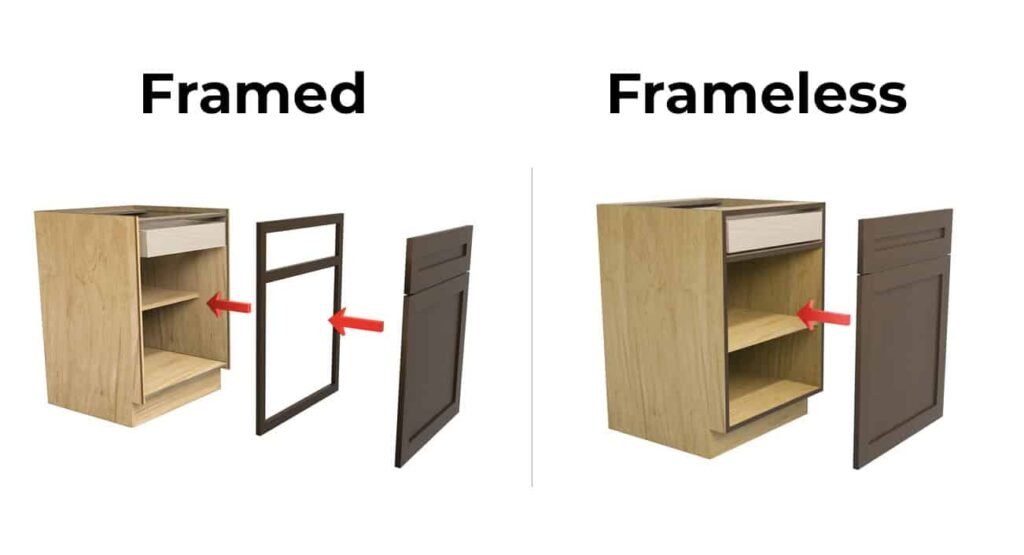
- Framed Cabinets (Traditional American style): The face frame adds structure, and doors attach directly to it. Door dimensions must account for the frame width, with options for inset, partial overlay, or full overlay.
- Frameless Cabinets (European style): Doors cover the box directly without a frame. Sizing is usually larger to provide full coverage, and hinges are mounted to the side panels instead of a frame.
Overlay Types
- Inset Doors: Fit flush within the cabinet frame opening, requiring precision sizing. A slight gap tolerance (about 1/16″) is necessary for smooth operation.
- Partial Overlay Doors: Cover part of the face frame, leaving a visible reveal. This overlay style is forgiving but requires consistent reveal sizes across doors for a uniform look.
- Full Overlay Doors: Cover nearly the entire face frame or side panel, creating a seamless, modern appearance. These require accurate sizing and hinge placement to avoid interference between adjacent doors.
Material Considerations
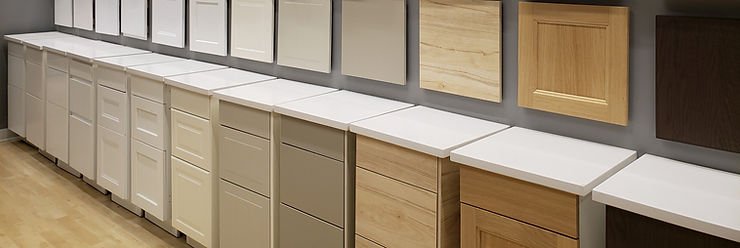
- Solid Wood: Natural expansion and contraction must be considered, so sizing may include allowances for seasonal movement.
- MDF and Thermofoil: More dimensionally stable, making them popular for precise, modern door styles.
- Specialty Materials (Acrylic, Metal, Glass): May require non-standard thicknesses or edge treatments that influence door fit.
Thickness and Hardware
- Standard cabinet doors are typically 3/4″ thick, but variations exist (5/8″ or 7/8″) depending on material and style. Thickness directly impacts hinge selection, bore depth, and clearances.
While cabinet boxes may follow standard heights and widths, the overlay choice, construction style, and material will dictate the final door size. Both wholesalers and builders must align on these factors during ordering to ensure consistent fit, function, and aesthetic results.
How to Measure Kitchen Cabinet Doors Correctly Before Ordering
Even when using standard cabinet door sizes, accurate measurement remains essential.
A successful installation starts long before the doors arrive on site.
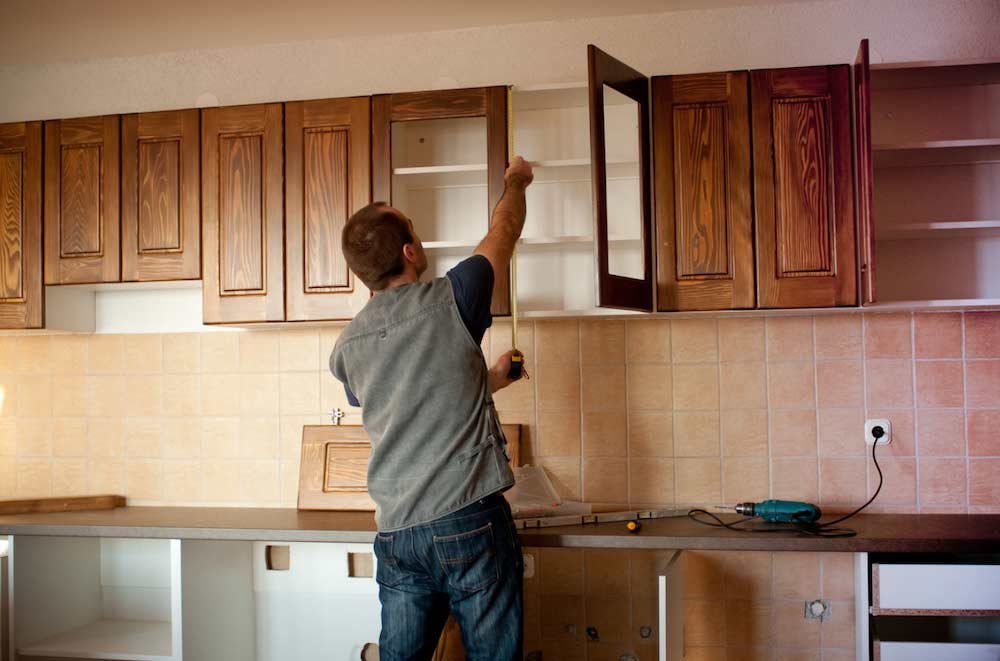
Step 1: Measure the Cabinet Opening
- Always start by measuring the inside opening of the cabinet box.
- Take width and height at multiple points to check for any inconsistencies.
- Record measurements in the correct system (inches vs. millimeters) to avoid costly conversion errors.
Step 2: Decide on Construction and Overlay
- Framed cabinets: Determine whether the door will be inset, partial overlay, or full overlay. This changes the final door dimension by fractions of an inch.
- Frameless cabinets: Doors usually cover the entire opening, but the exact overlay amount must be specified for smooth alignment.
Step 3: Confirm Door Style and Thickness
- Common thickness is 3/4″, but check if the project requires 5/8″ or 7/8″.
- For styles like shaker or raised panel, confirm whether the edge profiles affect the opening clearance.
- Glass insert or louvered doors may need additional reinforcement or hardware adjustments.
Step 4: Account for Hardware and Hinge Boring
- Verify hinge boring location, diameter, and depth—especially when reordering doors for an existing installation.
- Builders should specify the hardware brand (e.g., Blum, Hettich) to ensure compatibility.
- Don’t forget handles or pulls, as their placement can influence usability in tight spaces.
Step 5: Communicate Clearly with Suppliers
- Provide drawings, cut sheets, or CAD files whenever possible.
- Double-check part numbers for repeat orders, especially with wholesalers who stock multiple lines.
- Ask for samples or photo confirmations if ordering from a new supplier.
For builders, accuracy at the ordering stage saves hours of frustration later. By combining precise measurements with clear communication of overlay, thickness, and hardware needs, builders can ensure that the doors delivered to site are truly “ready to hang.” For wholesalers, these detailed specifications prevent returns, rework, and strained relationships with contractors.
Frequently Asked Questions About Cabinet Door Sizes
Q: Are kitchen cabinet doors a universal standard size?
A: Kitchen cabinet doors follow industry-standard ranges, but they are not universal. While cabinet boxes adhere to standard modules, the final door size depends entirely on the cabinet’s construction type (framed vs. frameless), the overlay style (inset, partial, or full), and the material thickness.
Q: What are the standard dimensions for base cabinet doors?
A: Standard base cabinet doors typically range from 9 to 36 inches wide (available in 3-inch increments) and are commonly 24 to 30 inches high, designed to fit standard 34.5-inch tall by 24-inch deep base cabinet boxes.
Q: How do framed and frameless cabinets affect door sizing?
A: Framed cabinets (traditional American style) require doors to account for the face frame width and the specific overlay. Frameless cabinets (European style) lack a face frame, meaning the doors must be sized larger to cover the box directly with tight clearances.
Q: Why is it important to use standard kitchen cabinet door sizes?
A: Standardized sizing is the backbone of construction efficiency. It allows builders to plan predictable layouts, helps wholesalers manage repeatable inventory without excessive custom stock, and ensures installers can finish projects quickly without costly on-site trimming or modifications.
Conclusion: Standard Kitchen Cabinet Door Sizes and Industry Best Practices
So, are kitchen cabinet doors standard size? The answer is both yes and no. Industry norms do exist—base, wall, tall, and drawer fronts follow predictable modules that wholesalers can stock and builders can trust. Yet, as we’ve seen, construction methods** (framed vs. frameless), and style choices (inset, partial, or full overlay) all influence the final measurements.
For wholesalers, understanding these conventions means stocking the right mix of standard SKUs while leaving room for flexibility with custom orders. For builders, precision in measuring openings, choosing overlays, confirming thickness, and specifying hardware is what ensures seamless installations.
Ultimately, standard sizes provide a reliable framework—but the real success comes from aligning those standards with project-specific details. By mastering both the common dimensions and the exceptions, wholesalers and builders can work together to deliver kitchens that are efficient to produce, simple to install, and built to last.