When driving through almost any residential neighborhood in the United States or Canada, one window style appears again and again: the double hung window. From historic colonial homes in New England to newly built suburban communities in Texas, double hung windows remain one of the most commonly specified window types in North America.
For builders and distributors, this popularity is not simply the result of tradition. Double hung windows have maintained their market position because they offer a practical combination of ventilation, aesthetics, ease of maintenance, and architectural versatility. While newer window styles continue to gain attention, double hung windows remain a reliable choice for both new construction and renovation projects.
So why do builders, architects, and homeowners continue to choose double hung windows generation after generation?
What Is a Double Hung Window?
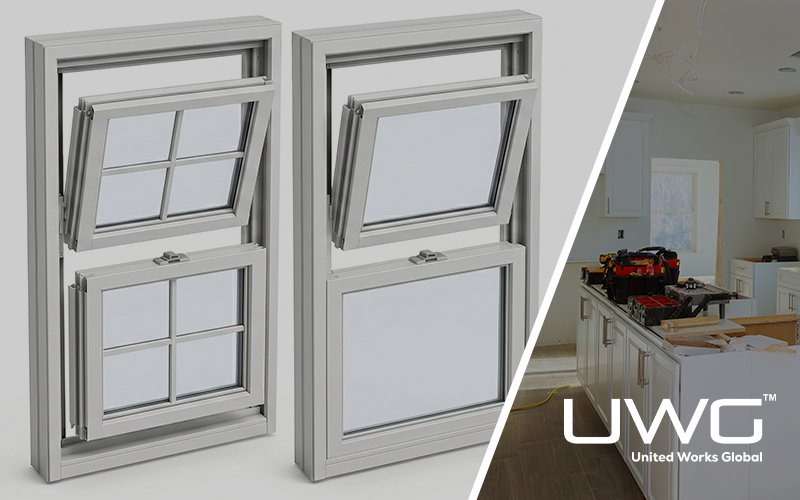
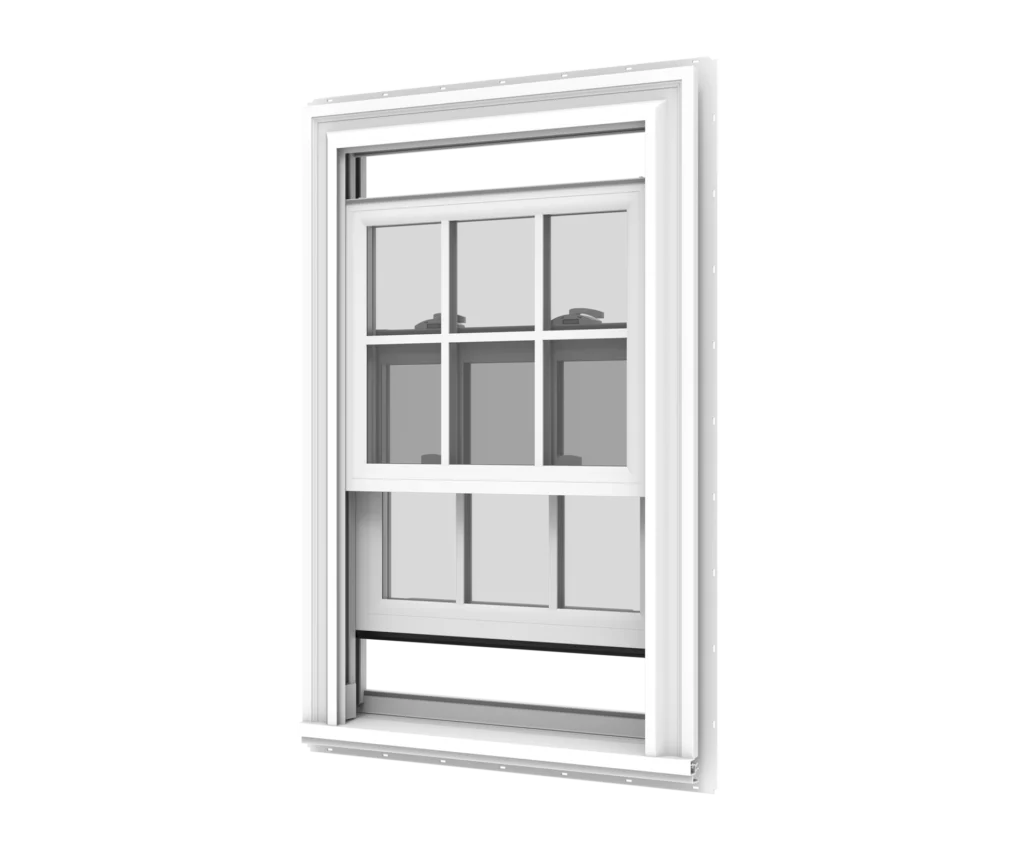
A double hung window is a window system with two operable sashes that slide vertically within the frame.
Unlike a single hung window, where only the bottom sash moves, both the upper and lower sashes of a double hung window can be opened independently. Modern versions often include tilt-in functionality, allowing homeowners to clean both sides of the glass from inside the house.
Typical components include:
- Upper sash
- Lower sash
- Window frame
- Balance system
- Tilt latches
- Locks and weatherstripping
Because both sashes are operable, homeowners have greater flexibility when controlling airflow and ventilation.
Why Double Hung Windows Became the North American Standard
The popularity of double hung windows can be traced back hundreds of years.
During the colonial period, early American builders adopted vertically sliding sash windows because they worked well with timber-framed construction and required little exterior clearance. Over time, the design became deeply integrated into North American residential architecture.
Today, double hung windows are commonly used in:
- Colonial homes
- Victorian homes
- Farmhouses
- Craftsman homes
- Traditional suburban developments
- Multi-family housing projects
Because homeowners have become accustomed to seeing this window style, it continues to be associated with the classic North American home aesthetic.
For builders, familiarity also matters. Contractors, installers, inspectors, and homeowners all understand how double hung windows function, making them a low-risk specification for large residential projects.
Excellent Ventilation Performance
One of the biggest advantages of double hung windows is their natural ventilation capability.
When both sashes are opened:
- Cool air enters through the lower opening
- Warm air escapes through the upper opening
This creates a natural airflow cycle that helps improve indoor comfort.
In many climates, especially during spring and fall, homeowners can reduce their reliance on air conditioning by using this natural ventilation feature.
Real-World Example
Consider a two-story home in North Carolina. During mild weather, opening the lower sash on the first floor and the upper sash on the second floor helps create airflow throughout the house. This improves comfort while reducing energy consumption.
Many homeowners appreciate this feature because it combines comfort with energy savings.
Easy Maintenance and Cleaning
Cleaning second-story windows is often a challenge for homeowners.
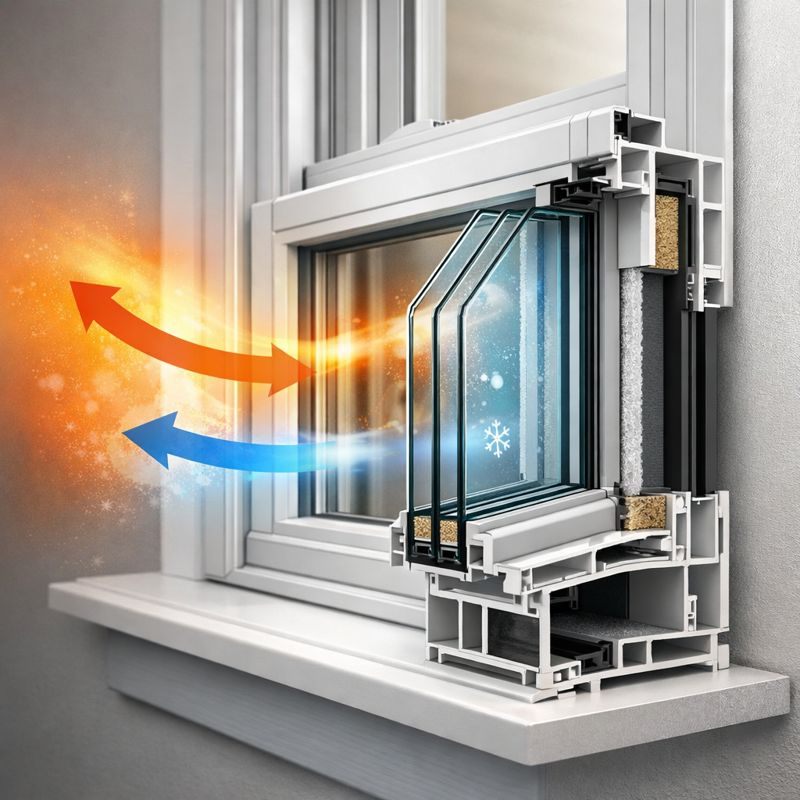
Traditional window styles may require ladders or professional cleaning services. Modern double hung windows solve this problem through tilt-in sash technology.
Both sashes can tilt inward, allowing users to clean the exterior glass safely from inside the home.
For property managers and homeowners, this feature offers significant convenience.
| Feature | Double Hung | Casement |
|---|---|---|
| Interior Cleaning | Easy | Moderate |
| Exterior Cleaning | Easy | More Difficult |
| Access on Upper Floors | Excellent | Moderate |
| Maintenance Convenience | High | Moderate |
For large apartment developments and multi-family housing projects, easier maintenance can become a major selling point.
Space-Saving Design
Unlike casement windows that swing outward, double hung windows operate entirely within their frame.
This design offers several practical benefits:
- No interference with walkways
- No obstruction near patios or decks
- Better compatibility with landscaping
- Reduced risk of wind damage
For townhomes and densely populated residential communities where space is limited, this characteristic becomes especially valuable.
Builders often choose double hung windows because they fit comfortably into a wide variety of site conditions without creating clearance issues.
Consistent Appearance Across Large Projects
Large residential developments often contain dozens or even hundreds of homes with similar floor plans.
Maintaining architectural consistency is important for:
- Community appearance
- Property value
- Builder branding
- Homeowner expectations
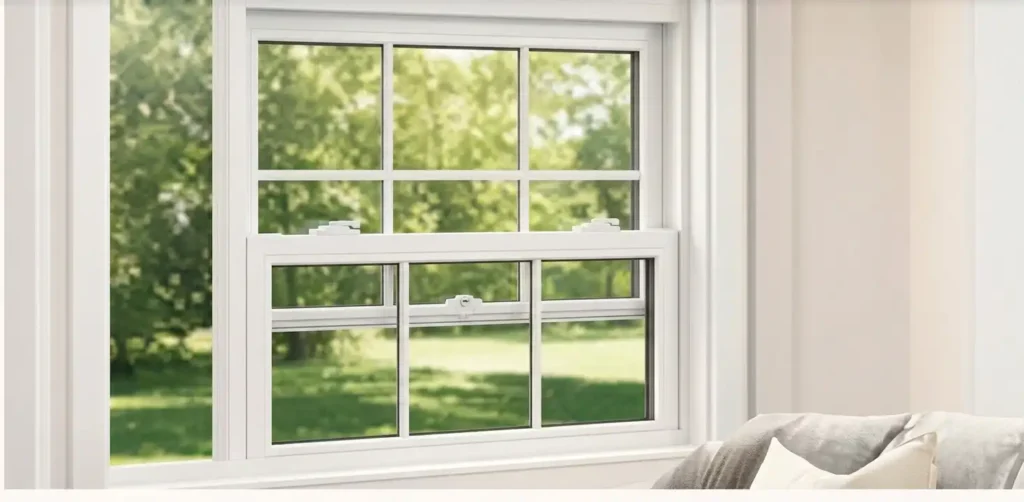
Double hung windows provide balanced sightlines and symmetrical proportions that work well across multiple home designs.
Because the style is widely accepted, builders can use it throughout an entire project while maintaining a clean and uniform appearance.
For production builders, consistency often translates into reduced complexity during procurement and installation.
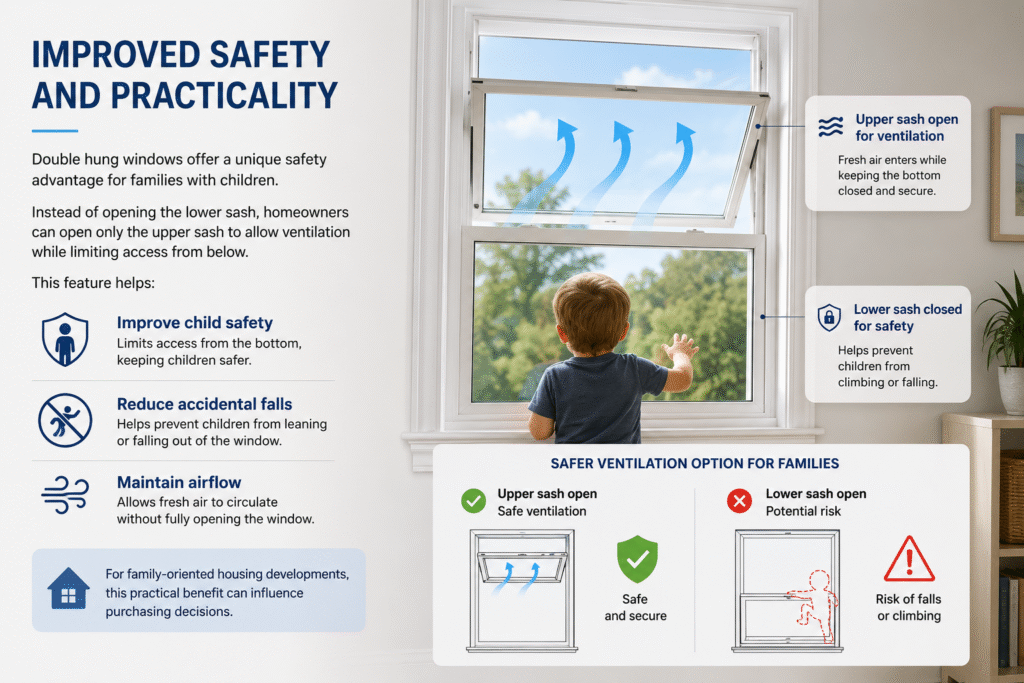
Improved Safety and Practicality
Double hung windows offer a unique safety advantage for families with children.
Instead of opening the lower sash, homeowners can open only the upper sash to allow ventilation while limiting access from below.
This feature helps:
- Improve child safety
- Reduce accidental falls
- Maintain airflow without fully opening the window
For family-oriented housing developments, this practical benefit can influence purchasing decisions.
Double Hung Windows vs Other Popular Window Styles
Builders often compare double hung windows with other common residential window types.
| Feature | Double Hung | Casement | Sliding | Picture |
|---|---|---|---|---|
| Ventilation | Excellent | Excellent | Good | None |
| Cleaning | Easy | Moderate | Moderate | Easy |
| Space Efficiency | Excellent | Moderate | Excellent | Excellent |
| Traditional Appearance | Excellent | Good | Moderate | Limited |
| Renovation Compatibility | Excellent | Good | Good | Limited |
| Residential Popularity | Very High | High | Moderate | Moderate |
While every project has different requirements, double hung windows often provide the best balance between performance, appearance, and practicality.
Industry Trends Supporting Continued Demand
Although double hung windows have been around for centuries, modern manufacturing has significantly improved their performance.
Energy Efficiency Improvements
Today’s double hung windows frequently include:
- Low-E glass coatings
- Double-pane glazing
- Triple-pane glazing
- Warm-edge spacers
- Improved weatherstripping
These features help reduce heat transfer and improve overall energy efficiency.
Growth of Vinyl Window Systems
Vinyl double hung windows continue to gain market share because they offer:
- Lower maintenance requirements
- Moisture resistance
- Cost-effective pricing
- Long service life
For large residential developments, vinyl options provide an attractive balance between performance and affordability.
Growth in the Replacement Window Market
North America’s aging housing stock continues to drive demand for replacement windows.
Because many existing homes were originally built with double hung windows, homeowners often choose the same style when upgrading their properties.
This ongoing replacement market helps sustain demand among distributors and wholesalers.
What Builders Actually Prioritize
At United Works Global (UWG), we regularly work with builders, distributors, and developers serving the North American market.
While architectural trends change over time, many customers continue to favor double hung windows because they provide a practical balance of performance and cost.
In large residential projects, builders often prioritize:
- Reliable installation
- Consistent product quality
- Easy maintenance for homeowners
- Competitive pricing
- Long-term availability
Double hung windows perform well in all of these areas, which explains why they remain one of the most requested window styles across North America.
Rather than chasing short-term design trends, many builders choose products that deliver predictable results throughout the life of the project.
Frequently Asked Questions About Double-Hung Windows
Q: Why are double-hung windows standard in North American homes?
A: They provide historical authenticity for traditional and modern architectural styles, exceptional dual-sash ventilation flexibility, and high ease of maintenance since both sashes tilt inward for safe cleaning from inside the building.
Q: How do double-hung windows improve interior ventilation?
A: By opening both the top and bottom sashes simultaneously, a natural convection currents loop is created: warm indoor air escapes through the top opening while cooler outdoor air is drawn in through the bottom.
Q: Are modern vinyl double-hung windows energy efficient?
A: Yes. Modern vinyl iterations feature advanced multi-chambered frame profiles, low-E insulated glass units, and heavy-duty interlocking weatherstripping that prevent air infiltration and lower overall HVAC energy consumption.
Conclusion
Double hung windows remain popular in North America because they solve real-world challenges for builders and homeowners alike.
Their combination of ventilation, maintenance convenience, space efficiency, safety, and architectural flexibility has allowed them to remain relevant for centuries.
Although other window styles continue to evolve, double hung windows offer a proven solution that works across a wide range of residential applications.
For builders and distributors, their enduring popularity is a reminder that the most successful products are often those that balance performance, practicality, and long-term value.
As residential construction continues to evolve, double hung windows are likely to remain a cornerstone of the North American housing market for many years to come.
Articles that you may be interested in:
Single-Hung vs Double-Hung Vinyl Windows: What’s the Difference?