Choosing between molded doors vs stile-and-rail doors involves more than comparing panel designs and prices. These two interior door constructions differ in their materials, manufacturing methods, customization options, and overall project costs.
For builders and project buyers, understanding these differences helps determine which option best meets the project’s design requirements, performance expectations, and budget. This guide compares their construction, cost factors, advantages, and best applications.
Construction Differences: Molded Doors vs Stile-and-Rail Doors
The main construction difference lies in how the door components are manufactured and assembled. This affects the door’s appearance, design flexibility, and production cost.
Molded Door Construction: Door Skins, Frame and Core
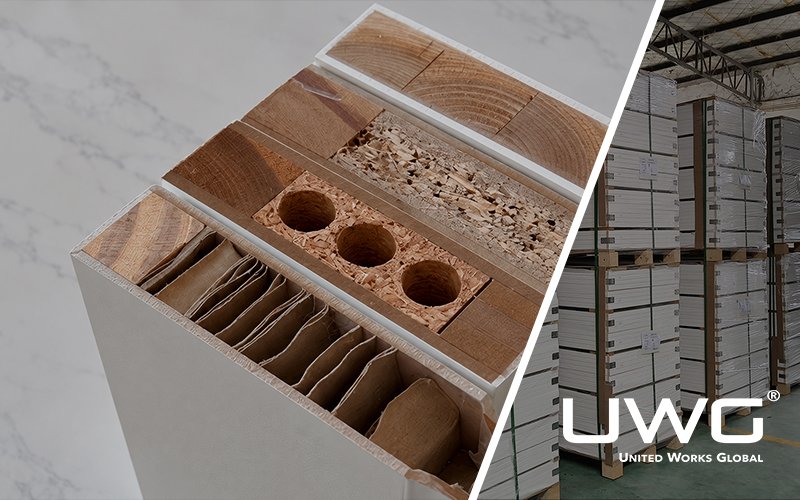
Molded doors typically consist of two molded door skins bonded to a perimeter frame and internal core. The skins are manufactured with preformed panel profiles, while the core may be hollow or solid depending on the required performance.
This construction supports consistent panel designs, efficient production, and cost-effective manufacturing, especially for large residential projects.
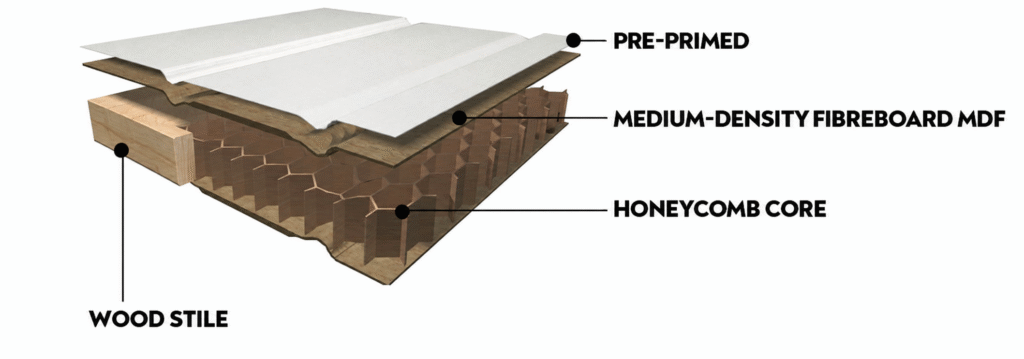
Molded doors typically consist of two molded door skins bonded to a perimeter frame and internal core. The skins are manufactured with preformed panel profiles, while the core may be hollow or solid depending on the required performance.
Stile-and-Rail Construction: Stiles, Rails and Panels
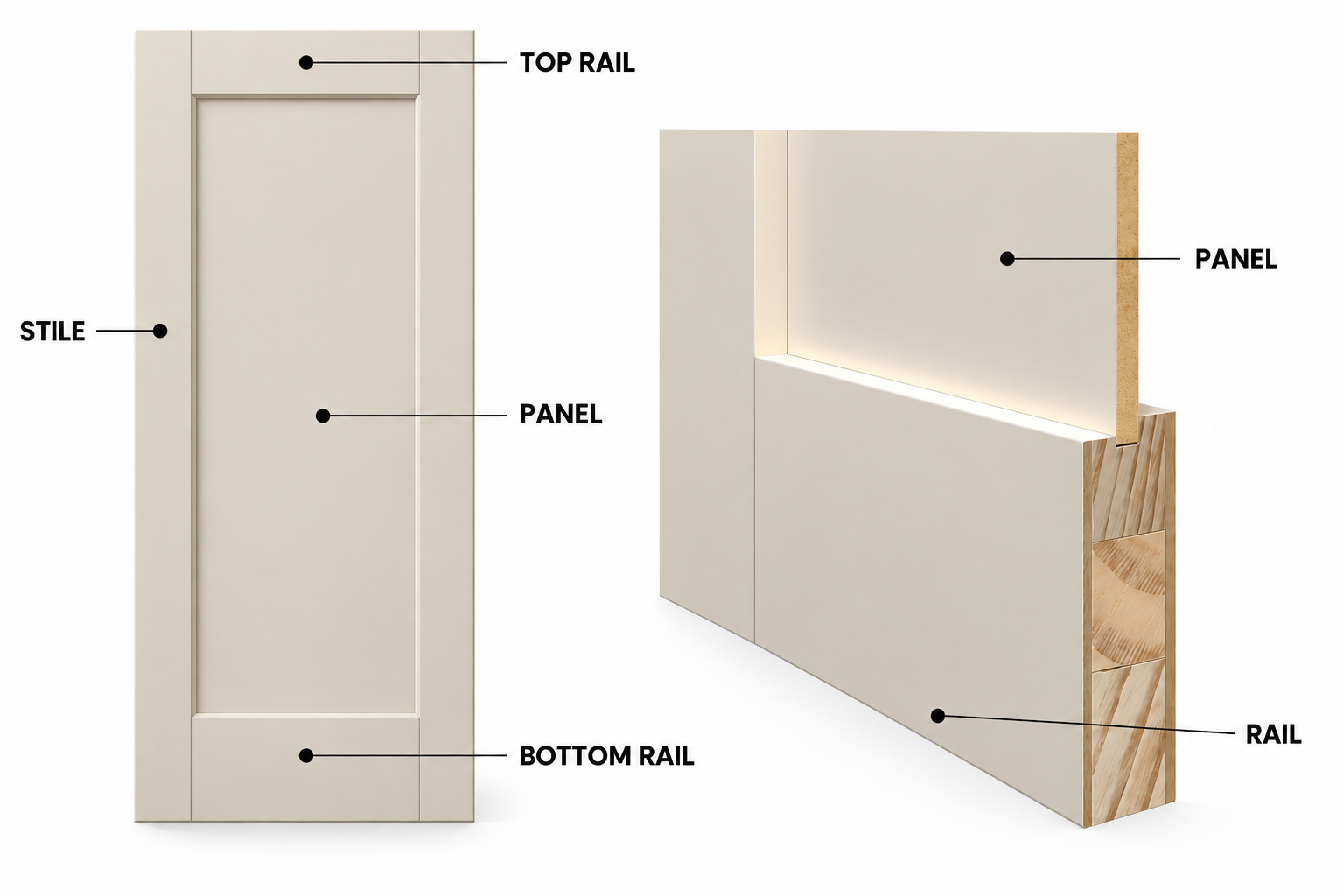
Stile-and-rail doors are assembled from separate vertical stiles, horizontal rails, and individual panels. These components are machined and joined together to create the finished door structure. The profiles and panel edges in this construction are typically designed with straight, square lines and 90-degree angles, creating a clean and defined appearance.
This method allows greater flexibility in panel configurations, profiles, wood species, and architectural detailing, but generally involves more complex manufacturing.
How Construction Affects Appearance and Customization
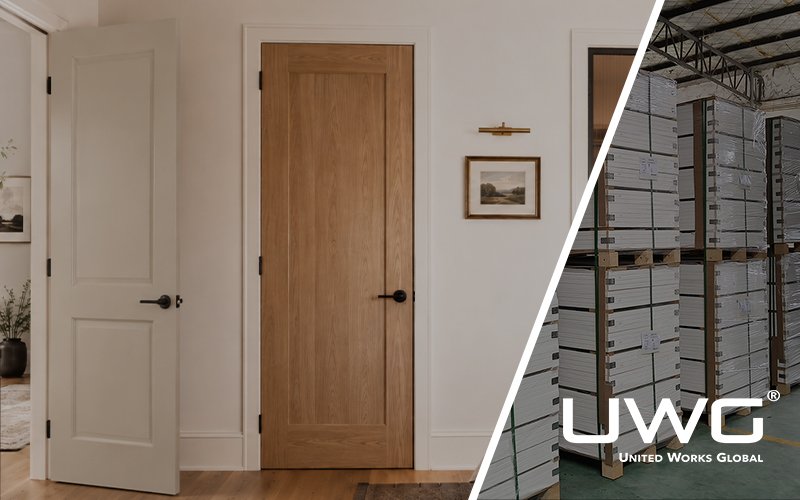
Molded doors achieve their panel appearance through preformed door skins, making them suitable for standardized designs and consistent finishes.
Stile-and-rail doors create their appearance through assembled structural components, allowing deeper panel details, customized layouts, and more wood finish options.
For builders, molded doors are often practical for repeated openings and standardized specifications, while stile-and-rail doors offer greater flexibility for custom or design-focused projects.
Molded Doors vs Stile-and-Rail Doors: Side-by-Side Comparison
The table below compares the key differences between molded doors and stile-and-rail doors to help builders evaluate their construction, appearance, performance, and cost.
| Feature | Molded Doors | Stile-and-Rail Doors |
|---|---|---|
| Construction | Molded skins bonded to a frame and internal core | Individual stiles, rails, and panels assembled together |
| Materials | MDF skins with hollow or solid core | Solid wood or engineered wood components |
| Panel Appearance | Standardized molded panel profiles | More dimensional panel details and profiles |
| Finish Options | Primed or factory-painted finishes | Painted, stained, or natural wood finishes |
| Durability | Depends on core construction and face materials | Depends on materials, joinery, and panel construction |
| Sound Control | Solid-core options generally outperform hollow-core versions | Varies by materials, construction, and door assembly |
| Dimensional Stability | Generally consistent with engineered construction | Depends on wood species, materials, and environmental conditions |
| Customization | Limited to available molded skin designs | Greater flexibility in panel layouts, profiles, and sizes |
| Cost | Generally more economical | Typically higher, especially for custom designs |
| Production Consistency | Well suited to large quantities and repeated specifications | More dependent on component machining and assembly |
| Best Applications | Production housing, multifamily projects, standard interior openings | Custom homes, premium interiors, and design-focused projects |
Note: Actual performance and pricing depend on the specific materials, core construction, door dimensions, finishes, and manufacturer specifications.
How Do Appearance and Finish Options Compare?
Molded and stile-and-rail doors can achieve similar interior styles, but their construction affects panel detailing, finish options, and design flexibility.
Panel Profiles, Sticking and Visible Joints
Molded doors use preformed skins to create consistent panel profiles, including Shaker and traditional raised-panel designs. The panel details are formed directly into the skins, creating a uniform appearance without separate panel joints.
Stile-and-rail doors use individually assembled components, allowing more flexibility in panel depth, sticking profiles, and decorative details. Depending on the construction and finish, joints between stiles and rails may become visible over time due to natural material movement.
Molded doors use preformed skins to create consistent panel profiles, including Shaker and traditional raised-panel designs. The panel details are formed directly into the skins, creating a uniform appearance without separate panel joints.
Paint-Grade Faces, Wood Veneers and Stain-Grade Options
Molded doors are primarily designed for paint-grade finishes, commonly supplied primed or factory-painted. Their smooth, consistent surfaces make them suitable for projects requiring uniform colors across multiple units.
Stile-and-rail doors offer a wider range of finishing options, including painted surfaces, natural wood veneers, and stain-grade solid wood. These options are particularly useful when a project requires visible wood grain or specific wood species.
Available Sizes, Layouts and Customization Options
Molded doors are generally produced in standard sizes and established panel designs. Customization depends on the availability of door skin molds and the manufacturer’s production capabilities.
Stile-and-rail doors offer greater flexibility in nonstandard dimensions, panel arrangements, and profile details, making them suitable for custom architectural requirements.
For projects with repeated door specifications, molded doors provide a practical balance of appearance and cost. When unique dimensions, wood finishes, or specialized panel designs are required, stile-and-rail construction typically offers more options.
For projects with repeated door specifications, molded doors provide a practical balance of appearance and cost. When unique dimensions, wood finishes, or specialized panel designs are required, stile-and-rail construction typically offers more options. The broader interior door collection includes different construction types and configurations for project planning.
How Do Weight, Sound Control and Hardware Requirements Compare?
Weight, sound control, and hardware requirements vary with the door’s core, construction, thickness, and overall specifications. These factors should be considered together when selecting between hollow-core molded, solid-core molded, and stile-and-rail doors.
Door Weight and Feel: Check the Actual Specification
Solid-core molded doors can provide a substantial feel without requiring stile-and-rail construction. However, door weight varies by size, material, and design. Builders should compare actual product specifications rather than assuming one construction type is always heavier.
Sound-Control Requirements
Solid-core molded doors generally provide better sound reduction than hollow-core alternatives. Stile-and-rail door performance varies by construction and materials.
For projects with specific acoustic requirements, builders should verify available STC ratings and complete door assembly specifications, including seals and installation conditions.
Hardware Compatibility and Trimming Limits
Door weight and thickness affect hinge selection, hardware capacity, and installation requirements. Heavier doors may require additional or upgraded hinges.
Trimming allowances also vary by construction. Hollow-core molded doors have limited solid perimeter material, while solid-core molded and stile-and-rail doors have their own machining restrictions. Always confirm manufacturer-approved trimming limits before installation.
Weight, sound control, and hardware requirements vary with the door’s core, construction, thickness, and overall specifications. These factors should be considered together when selecting between hollow-core molded, solid-core molded, and stile-and-rail doors. Related sizing and installation considerations are covered in the interior door guides.
What Drives the Cost Difference?
Molded doors are generally more economical than stile-and-rail doors, but the final cost depends on construction, customization, and order requirements.
Construction, Core Configuration and Design Requirements
Molded doors benefit from standardized production, while solid-core options cost more than hollow-core versions due to additional materials. Stile-and-rail doors typically involve more machining and assembly, with custom panel layouts, wood species, and nonstandard sizes further increasing costs.
Slab vs. Prehung Supply, Hardware and Finishing Scope
A door slab generally costs less than a complete prehung unit. Frames, hinges, lock preparation, factory painting, and other finishing requirements can increase the total price. Builders should compare quotations with the same supply scope to avoid misleading cost differences.
Order Quantity, Packaging and Delivery Terms
Larger orders can reduce per-unit manufacturing and packaging costs. Small quantities, customized packaging, and mixed specifications may increase expenses. Shipping terms, container utilization, and delivery requirements also affect the final landed cost, particularly for imported doors.
When Should Builders Choose Molded or Stile-and-Rail Doors?
The right choice depends on the project’s budget, design requirements, order quantity, and customization needs.
Production Housing and Multifamily Projects
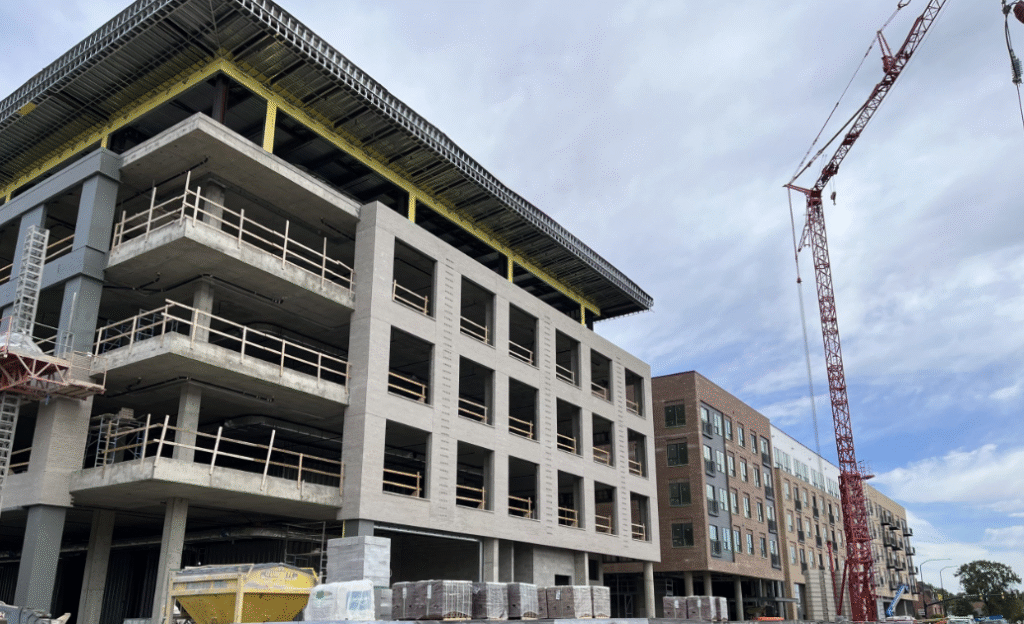
Molded doors are often preferred for production housing and multifamily developments because they offer consistent designs, competitive pricing, and efficient bulk production. Hollow-core options suit budget-focused applications, while solid-core molded doors provide additional weight and sound control for bedrooms and living spaces.
Custom Homes and Design-Focused Interiors
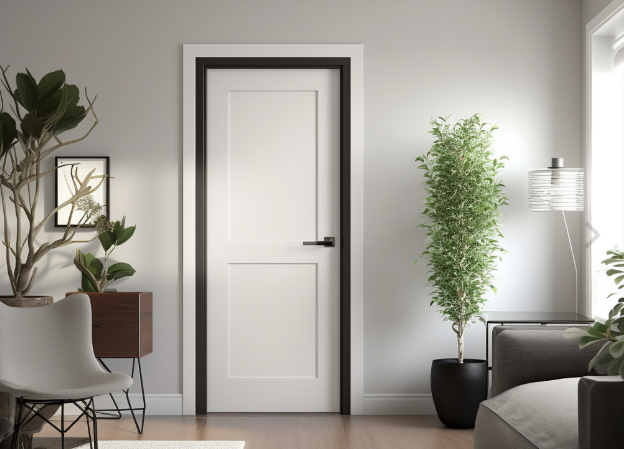
Stile-and-rail doors are better suited for projects requiring custom panel layouts, detailed profiles, or natural wood finishes. Their construction offers greater design flexibility, making them a practical choice for premium residences and architecturally distinctive interiors.
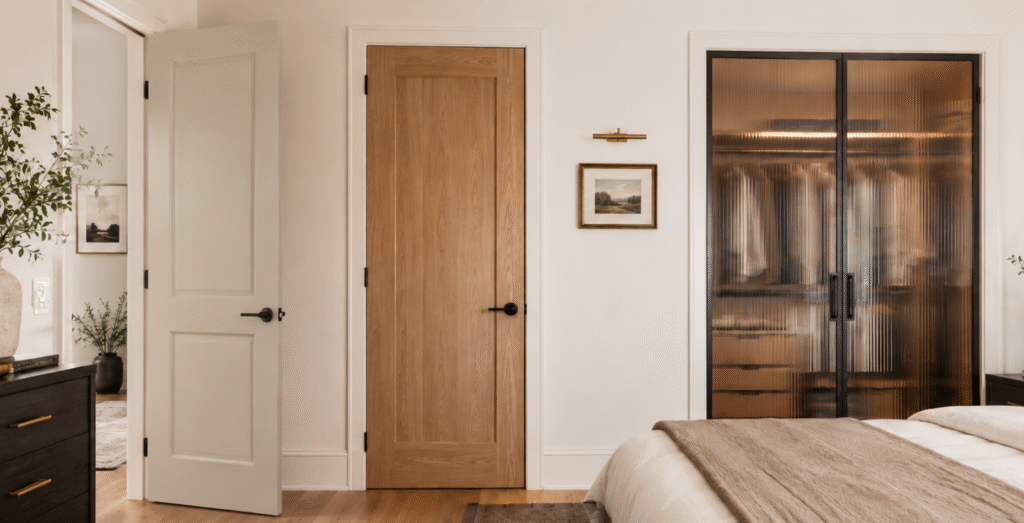
Using Both Door Types in the Same Project
Builders can combine molded and stile-and-rail doors in the same project to balance cost, design, and application requirements. For example, stile-and-rail doors may be used in more visible areas, while molded doors are used for bedrooms, closets, or other standard openings.
Before combining both constructions, compare finished samples side by side. Check panel proportions, sticking profiles, surface texture, and paint sheen—not just the design name and color. Even two doors described as a “two-panel Shaker” may look noticeably different when installed next to each other.
What Builders Should Confirm Before Ordering
Before placing an order, builders should verify product specifications, installation requirements, and quotation details to avoid unexpected costs or project delays.
Product Models, Construction Drawings and Component Materials
Confirm the door model, panel design, core type, and component materials. For stile-and-rail doors, review the stile, rail, and panel specifications. Request construction drawings when custom designs or dimensions are involved.
Door Dimensions, Finishes and Hardware Preparation
Specify door width, height, thickness, finish, and handing where applicable. Confirm whether doors require factory painting, hinge machining, lock preparation, or trimming allowances before production.
Required Performance Documents and Installation Instructions
Check whether the project requires fire ratings, acoustic performance documentation, or other compliance documents. Confirm that the selected door model meets these requirements and obtain applicable installation instructions.
Quote Inclusions and Installation Scope
Verify whether the quotation covers door slabs only or complete prehung units, including frames, hinges, hardware, and finishing. Clarify packaging, delivery terms, and installation responsibilities to compare the total project cost accurately.
FAQ
Are All Molded Doors Hollow Core?
No. Molded doors are available in both hollow-core and solid-core constructions, depending on the required weight, performance, and budget.
Are Stile-and-Rail Doors Always Solid Wood?
No. Stile-and-rail doors can use solid wood, engineered wood, or a combination of materials, depending on the design and manufacturer.
Which Door Type Costs Less?
Molded doors are generally more affordable, especially in standard sizes and designs. Stile-and-rail doors typically cost more due to their materials, assembly, and customization options.
Does Construction Type Alone Determine Strength or Sound Control?
No. Performance also depends on core materials, door thickness, component construction, and installation quality. Sound control should be evaluated using tested door assembly ratings where required.
Can Molded and Stile-and-Rail Doors Be Used in the Same House?
Yes. Builders can use stile-and-rail doors in feature areas and molded doors in bedrooms, closets, or secondary spaces while coordinating panel styles and finishes for a consistent appearance.
Summary
Choosing between molded doors vs stile-and-rail doors depends on the project’s budget, design expectations, and performance requirements. Molded doors offer cost-effective, consistent designs for production housing and multifamily projects, while stile-and-rail doors provide greater flexibility in panel details, materials, and finishes.
For builders, the best approach is to compare construction, core options, customization needs, and total project costs rather than door price alone. Confirming specifications and installation requirements before ordering helps ensure the selected doors meet both functional and design expectations.