Most people confuse door frames with door casings. But knowing the difference isn’t just technical—it impacts installation accuracy, long-term durability, and interior design consistency. Whether you’re a contractor, builder, or building material supplier, understanding this distinction helps prevent installation errors and costly rework.
So, what’s the real difference between a door frame and door casing?
Let’s break down these components and see how each contributes to both the structural performance and finished appearance of a complete door system.
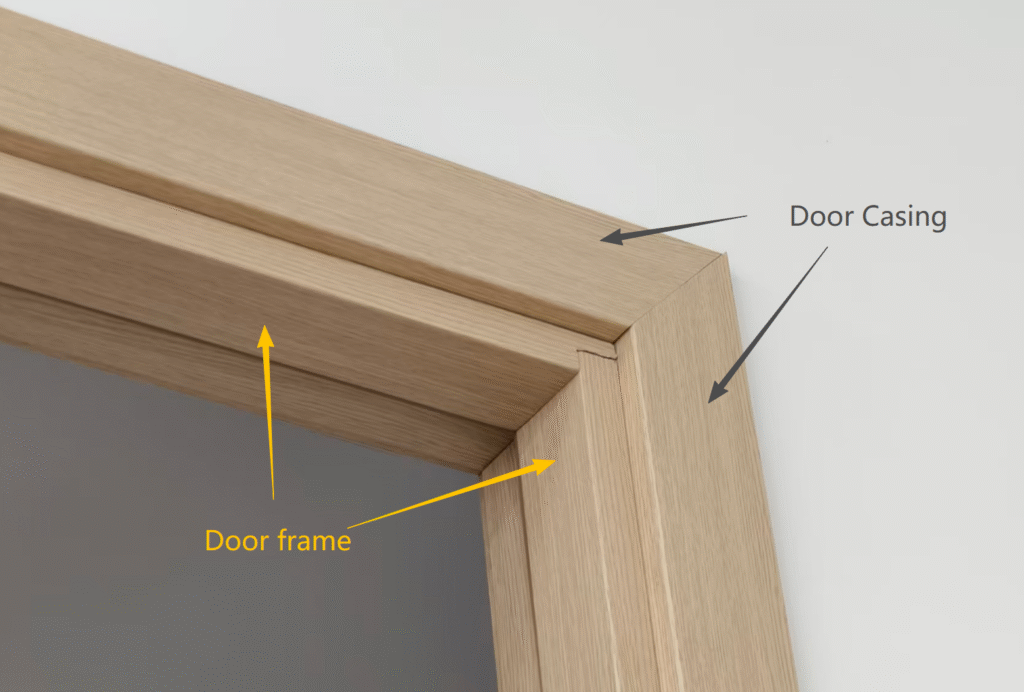
What Is a Door Frame?
A door frame is the structural support system that surrounds and holds the door panel in place. It forms the rough opening for the door and ensures proper alignment, stability, and operation.
A standard door frame includes:
- Two vertical side jambs
- One horizontal head jamb
- A sill or threshold (commonly used for exterior doors)
Together, these components create a rigid opening that allows the door to hang, swing, and lock correctly.
Door frames are typically made from solid wood, engineered wood, metal, or composite materials, depending on the application. For example, steel frames are commonly used in commercial and fire-rated systems, while wood frames are widely used in residential interior construction.
The door frame plays a critical structural role in door performance. It ensures:
- Proper door alignment and plumb installation
- Secure hinge anchoring
- Stable latch and lock function
- Smooth opening and closing operation
Without a properly installed and leveled frame, even a high-quality door slab will not function correctly.
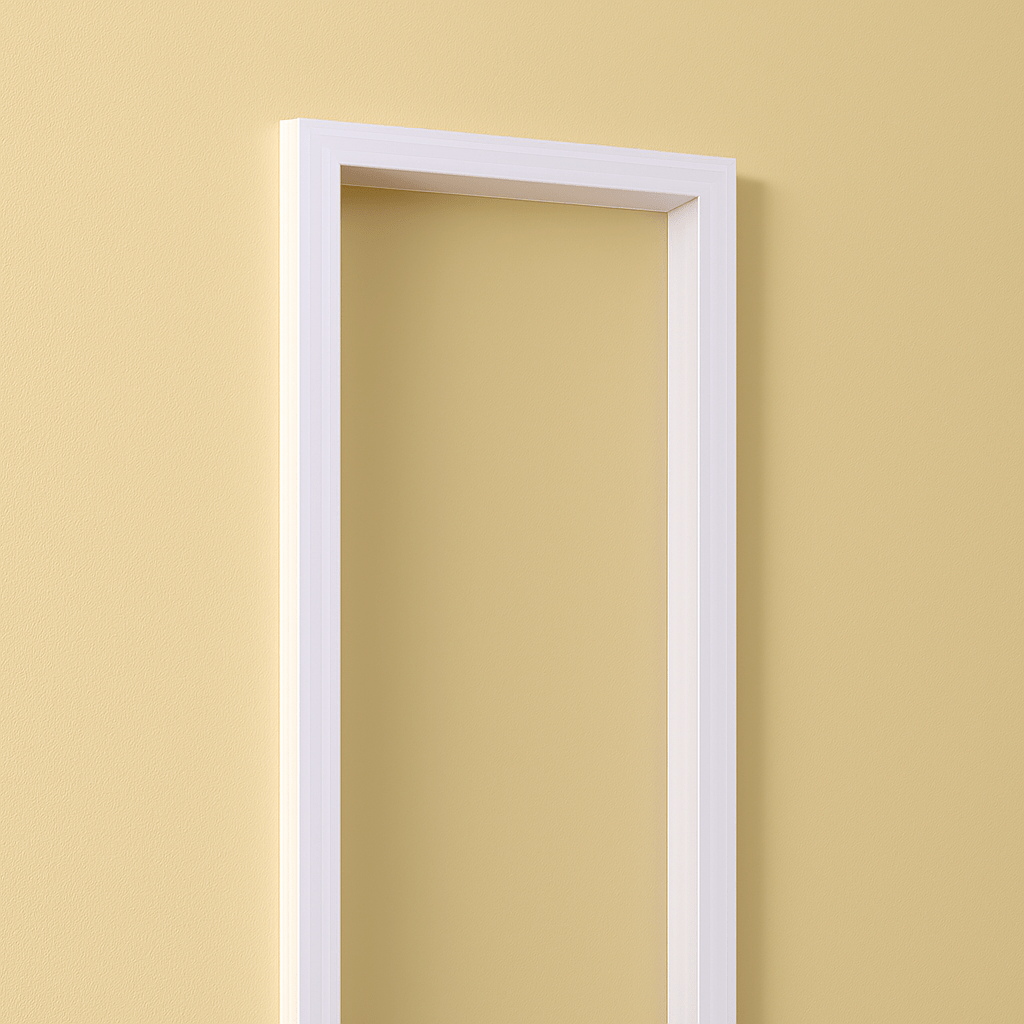
What Is Door Casing?
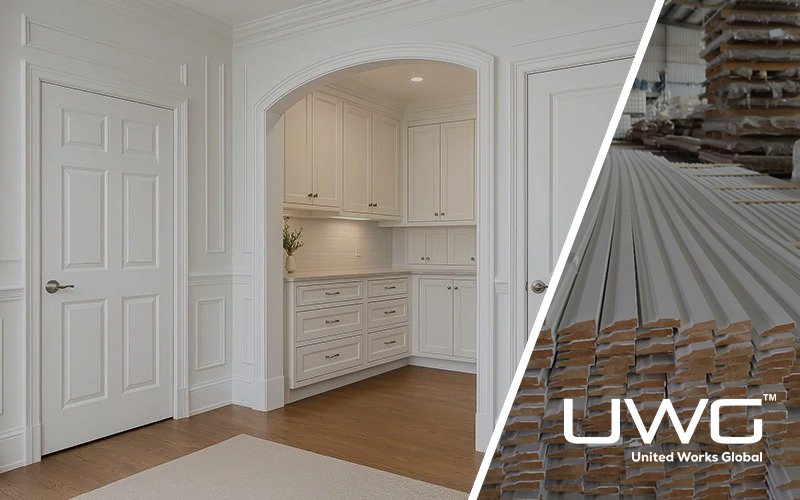
Door casing, also called door trim, is the decorative moulding installed around the door frame on the finished wall surface.
Its primary function is not structural. Instead, it:
- Covers the gap between the wall and the door frame
- Hides rough construction edges
- Protects drywall or plaster edges from damage
- Enhances the visual transition between wall and door
Door casing is installed over drywall or plaster after the frame is set and finished, making it part of the interior finishing system rather than the structural framing system.
Common casing materials include:
- MDF (cost-effective interior solution)
- Solid wood (premium residential finish)
- PVC or composite materials (moisture-resistant applications)
Casing profiles vary widely, including modern square-edge, colonial, and traditional decor.
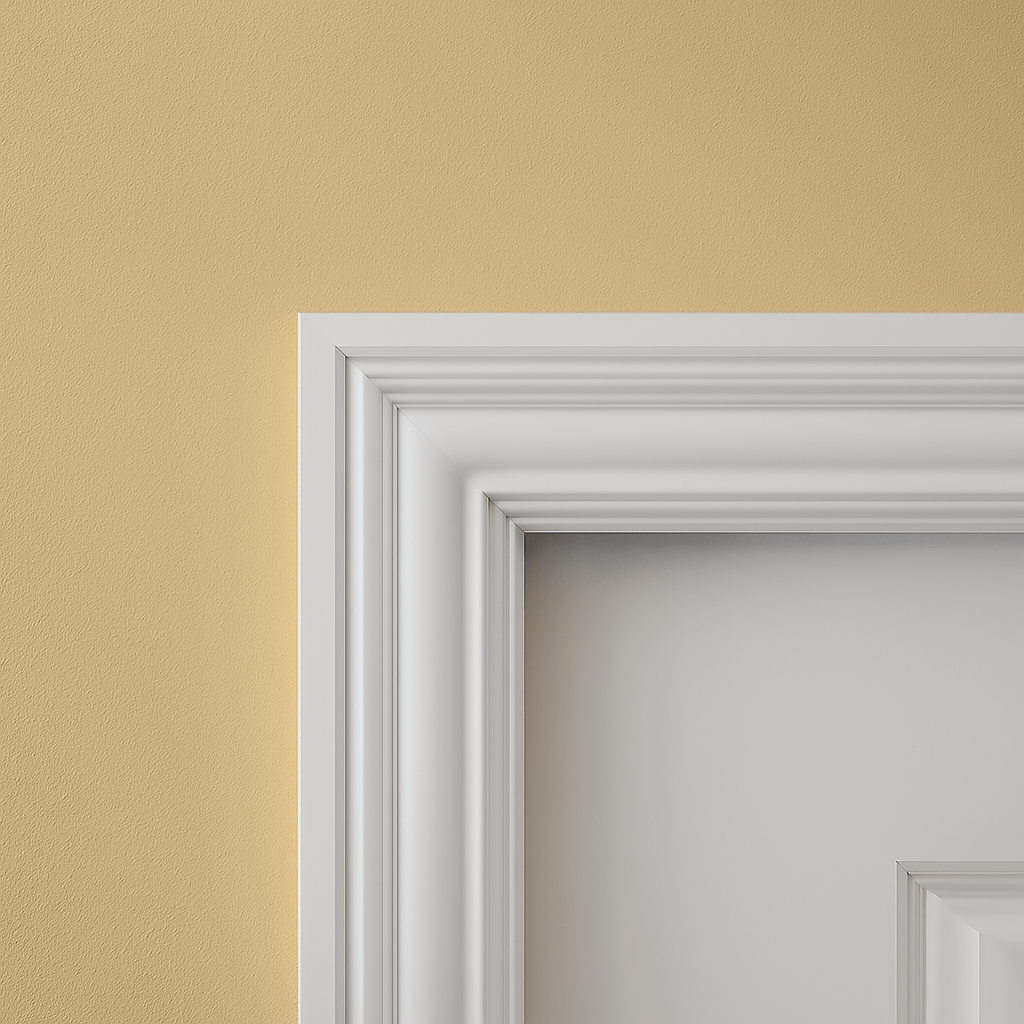
Key Differences Between Door Frame and Casing
Despite being part of the same door system, door frames and casings have fundamentally different purposes and behaviors:
| Feature | Door Frame | Door Casing |
|---|---|---|
| Function | Structural support | Decorative finish |
| Components | Jambs, head jamb, sill | Moulding/trim |
| Installed When? | Framing stage | Finishing stage |
| Load-bearing? | Yes | No |
| Exposed? | Partially | Fully |
| Customization | Based on door mechanics | Based on style |
How Do the Door and Frame Work Together?
A door can’t function without a properly installed frame. The door panel is hung directly on the frame, typically with three to four hinges.
A properly installed frame ensures:
- Smooth opening and closing
- Consistent alignment
- Lock security
- Weatherproofing (for exterior doors)
Frames are shimmed and secured before the casing is installed. Casing then covers the gaps and integrates the unit visually into the wall. For exterior doors, weather seals and thresholds are often part of the frame assembly.

How to Choose the Right Door Frame and Casing
Choosing a Door Frame:
- Interior vs Exterior
- Wall thickness and framing
- Swing direction
- Pre-hung or knockdown kits
Choosing a Door Casing:
- Style matching with baseboards and crown moulding
- Material suited to environment (e.g., PVC in moist areas)
- Profile width and height for desired visual impact
Use solid hardwood for a premium look, or MDF for cost-efficiency. Larger profiles create a grander impression, while slim lines work best in minimalistic interiors.
Pro Tips from Industry Experts
- Measure accurately: Rough openings should be ~2” larger than the slab
- Shim correctly to keep the frame square and plumb
- Pre-finish casing before installing to avoid mess
- Use caulk sparingly, especially where casing meets wall
- Don’t confuse jamb with casing: jambs are structural, casings are decorative
Frequently Asked Questions About Door Frames and Casings
Q: What is the main difference between a door frame and a door casing?
A: A door frame is the rigid, load-bearing structure that supports and holds the door panel in place. Door casing, on the other hand, is the non-load-bearing decorative trim installed over the drywall to hide construction gaps and provide a finished look.
Q: When should the door frame and door casing be installed?
A: The door frame must be installed first during the rough framing stage, as it secures the door. The door casing is installed later during the finishing stage, after the drywall is up, to cover the joint between the wall and the structural frame.
Q: Does the door casing affect how the door operates?
A: No, door casing is purely decorative. A door relies entirely on the structural door frame and hinges for smooth opening, closing, alignment, and locking. The casing does not support the door’s weight or affect its mechanical function.
Q: What materials are typically used for door casing?
A: Door casing is commonly made from MDF for budget-friendly interior projects, solid hardwood for premium decorative finishes, or PVC and composite materials for areas exposed to moisture, such as bathrooms or exterior doors.
Final Thoughts
Understanding the difference between door frames and casings is essential for builders, wholesalers, and suppliers. The frame ensures functionality and durability, while the casing ensures a polished, professional finish. Both are critical for a high-quality door installation.