When selecting interior doors for residential or commercial projects, developers and procurement managers often face a key question: Should you choose molded doors or veneered doors (also commonly referred to as paint-free doors)? Both options are widely used in modern construction, but they differ significantly in structure, cost, durability, and application scenarios. Understanding these differences is essential for optimizing budget, performance, and long-term value—especially in large-scale developments where cost control and consistency are critical.
Molded interior doors are cost-effective, lightweight, and highly consistent, making them ideal for large-scale residential or multi-family projects. In contrast, veneered interior doors (also known as paint-free doors) typically use either natural wood veneer or wood-look decorative surfaces such as PVC and melamine paper, making them more suitable for higher-end residential or commercial applications. Molded doors excel in affordability and uniformity, while veneered doors offer superior aesthetics and customization. The best choice depends on project positioning, budget, design requirements, and long-term performance expectations.

What Are Molded Interior Doors?
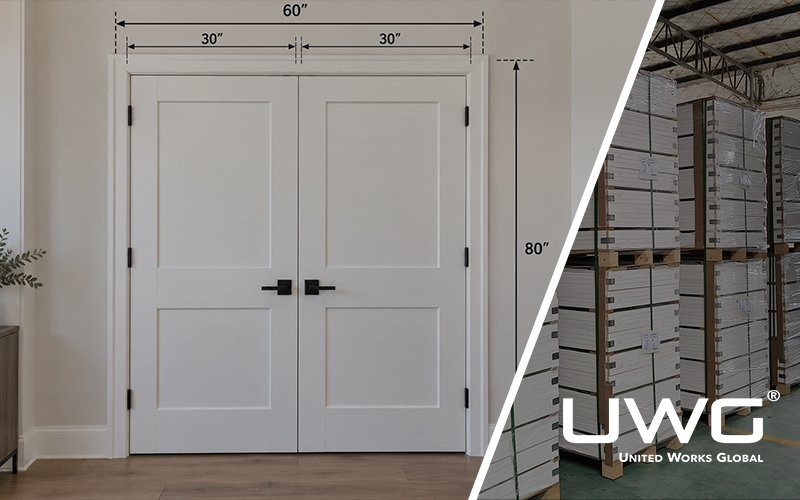
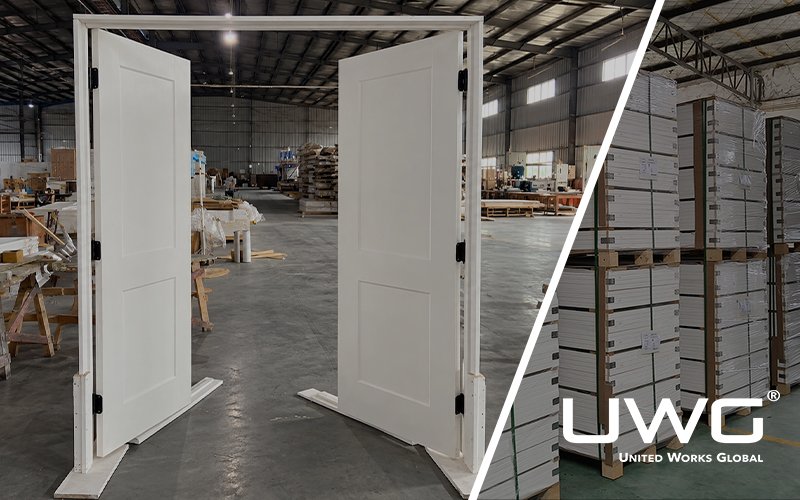
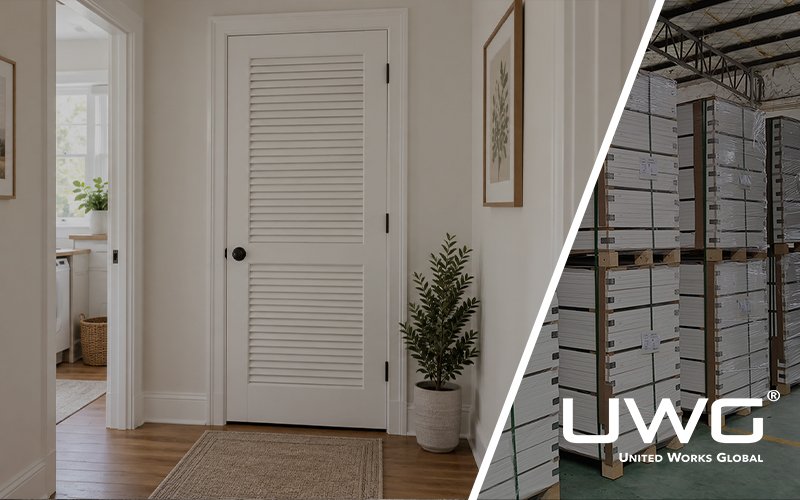
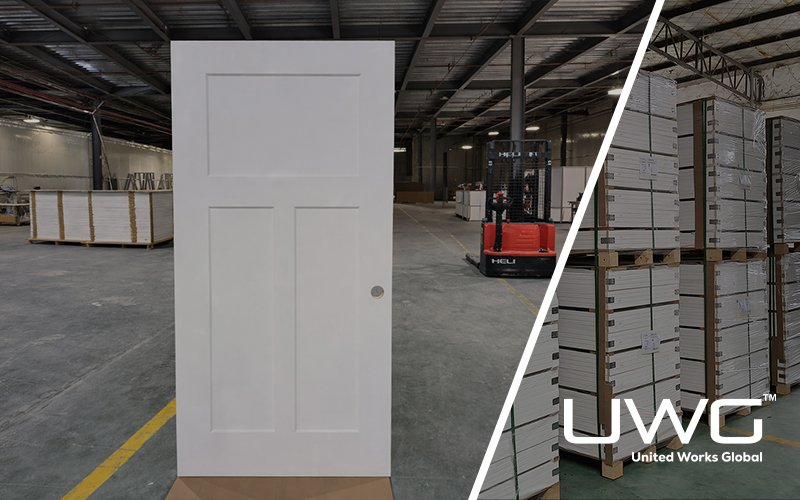
Molded doors are manufactured by pressing wood fibers (typically MDF or HDF) under high temperature and pressure into shaped panels. These doors are usually hollow-core or solid-core and finished with paint-grade surfaces.
Key Characteristics:
- Made from engineered wood fibers (MDF/HDF)
- Factory-molded panel designs
- Typically painted (not suitable for staining)
- High consistency in mass production

Learn more about molded interior doors, including their construction, styles, and specifications.
What Are Veneered Doors (Paint-Free Doors)?
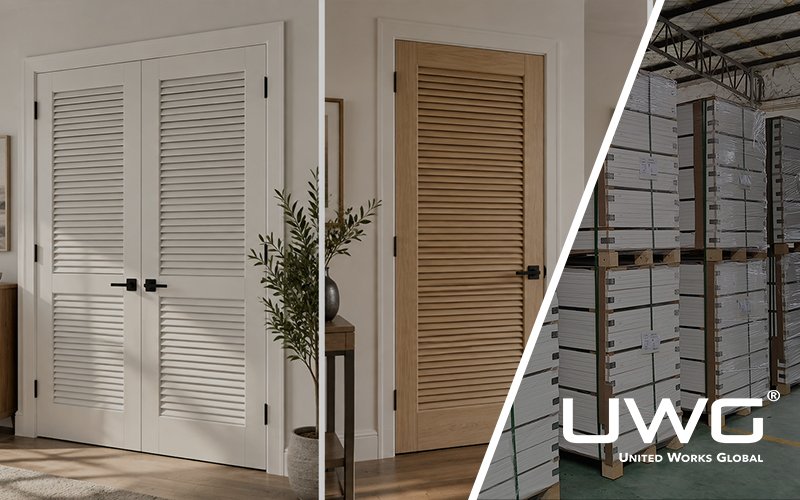
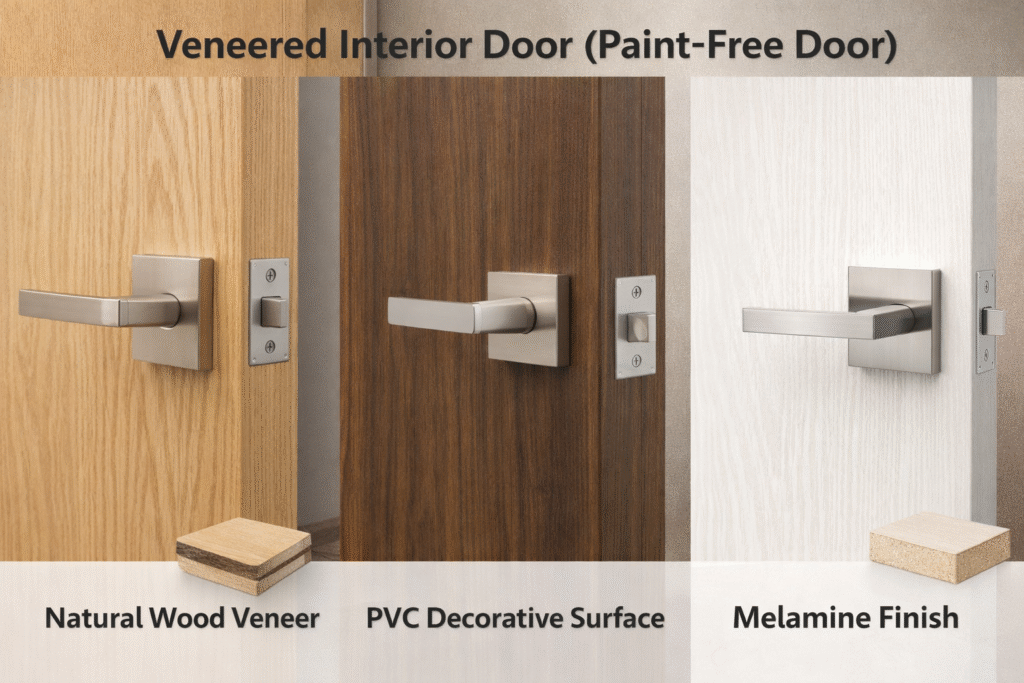
Veneered doors—commonly referred to as paint-free doors in the industry—are constructed by applying a decorative surface layer onto a core (solid wood, MDF, or particleboard). These surfaces include not only natural wood veneer but also PVC films and melamine paper with wood-grain finishes.
Key Characteristics:
- Surface options include:
- Natural wood veneer (oak, walnut, maple, etc.)
- PVC decorative film
- Melamine-impregnated paper
- Typically require no on-site painting (hence “paint-free”)
- Can replicate real wood or modern finishes
- High flexibility in design and customization
Explore our veneer interior doors to see available surface finishes, construction options, and customization choices.
Molded vs Veneered Doors: Key Differences
| Feature | Molded Doors | Veneered Doors (Paint-Free Doors) |
|---|---|---|
| Surface Material | MDF/HDF (painted) | Wood veneer / PVC / Melamine |
| Appearance | Uniform, simple | Wood grain, customizable |
| Cost | Lower | Medium to higher |
| Durability | Moderate | Depends on surface material |
| Customization | Limited | High |
| Maintenance | Easy | Moderate |
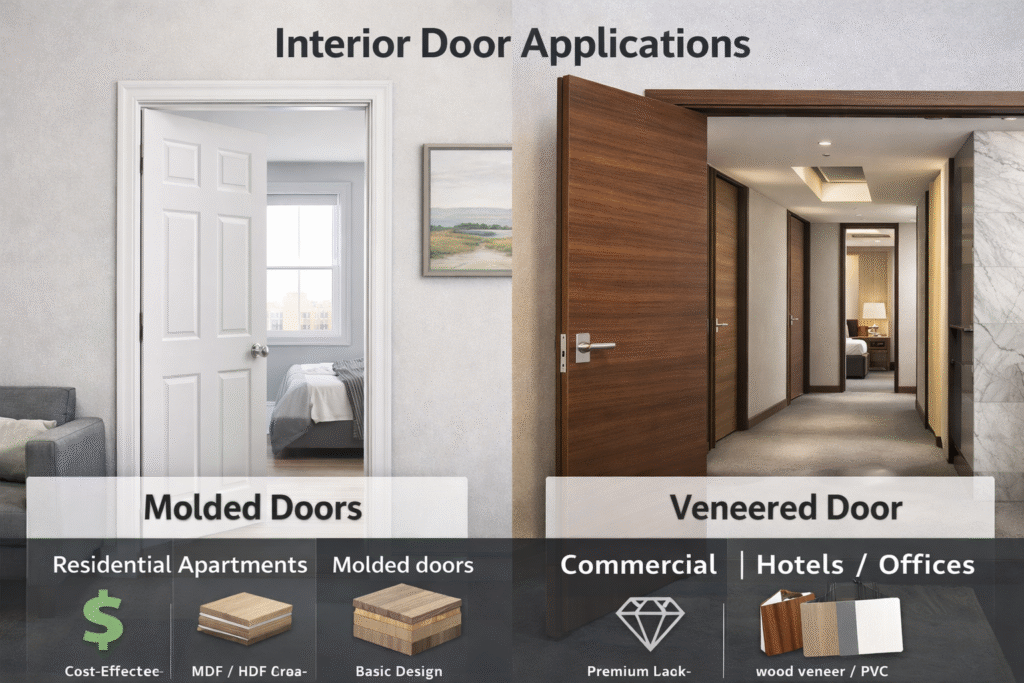
| Application | Apartments, affordable housing | Hotels, offices, residential |
What Are the Pros and Cons of Molded Doors?
Molded Doors – Advantages
- Cost Efficiency In our experience supplying multi-family housing projects in North America, molded doors can reduce total door package costs by approximately 15–25% compared to veneered options, making them ideal for budget-sensitive developments.
- Production Consistency Molded doors are manufactured using standardized molds, ensuring uniformity across large volumes—critical for developers prioritizing consistency.
- Low Maintenance Painted surfaces are easy to clean and maintain, especially suitable for rental or high-turnover properties.
Molded Doors – Disadvantages
- Limited design flexibility
- Lack of natural wood texture
- Lower perceived value in high-end projects
What Are the Pros and Cons of Veneer Doors?
Veneered Doors (Paint-Free Doors) – Advantages
- Design Versatility With options like natural veneer, PVC, and melamine, veneered doors offer a wide range of finishes and styles.
- Faster Installation The paint-free nature eliminates on-site finishing, reducing labor costs and construction timelines.
- Balanced Cost vs Aesthetics Compared to solid wood doors, veneered doors provide a strong balance between cost and visual appeal.
Veneered Doors (Paint-Free Doors) – Disadvantages
- PVC or paper surfaces may age over time
- Natural veneer is sensitive to humidity if not properly sealed
- Edge banding quality directly affects durability
How Do Molded and Veneer Doors Compare in Performance?
From a technical perspective, the key difference lies in surface construction:
- Molded doors rely on compressed fiberboard panels with painted finishes, offering structural stability but limited surface variation.
- Veneered doors (paint-free doors) depend on the surface layer:
- PVC: moisture-resistant, suitable for apartments and kitchens
- Melamine: scratch-resistant, ideal for high-traffic areas
- Natural veneer: premium appearance but requires higher-quality finishing
Selecting the right surface material is crucial for long-term performance.
Where Are Molded and Veneer Doors Commonly Used?
In a recent multi-family project in California (over 800 units), molded doors were selected due to:
- Strict budget constraints
- Tight construction timelines
- Need for consistent product quality
The result was improved installation efficiency and significant cost savings.
In contrast, for a commercial showroom and office project, the client selected PVC veneered (paint-free) doors to achieve:
- Modern design aesthetics
- Faster installation
- Controlled budget
This approach delivered a strong balance between design impact and cost efficiency.
Which Door Type Should You Choose for Your Project?
Choose Molded Doors If:
- You are working on large-scale or budget-sensitive housing projects
- Standardization and consistency are priorities
- Design requirements are relatively simple
Choose Veneered Doors (Paint-Free Doors) If:
- Your project targets mid- to high-end markets
- Interior design plays a key role
- Faster installation and reduced labor are important
From a developer and procurement perspective:
Use molded doors for cost control and scalability, and veneered (paint-free) doors for design impact and efficiency.
A hybrid strategy is often the most effective:
- Molded doors for secondary spaces
- Veneered doors for high-visibility or premium areas
Conclusion: Choosing Between Molded and Veneer Doors
Both molded and veneered (paint-free) interior doors serve important roles in modern construction. The optimal choice depends on project goals, budget, and design priorities. By strategically selecting and combining door types, developers can achieve both cost efficiency and enhanced project value—ultimately improving competitiveness in today’s market.