For North American residential builders, general contractors, and building material wholesalers, choosing the right window style is far more than an aesthetic decision. It is a strategic balance between managing initial project budgets, meeting regional energy codes, and delivering long-term value to homeowners.
Among vertical sliding window systems, the debate typically comes down to two industry standards: Double Hung vs. Single Hung windows. While they may look nearly identical from a distance, their structural mechanics, operational capabilities, and pricing structures vary significantly.
This comprehensive guide breaks down the core differences, performance metrics, and strategic procurement factors to help you determine which window type best fits your upcoming residential development.
What’s the Difference Between Double Hung and Single Hung Windows?
To establish a clear baseline for procurement and technical specifications, it is essential to understand how these two systems operate mechanically.
What is a Double Hung Window?
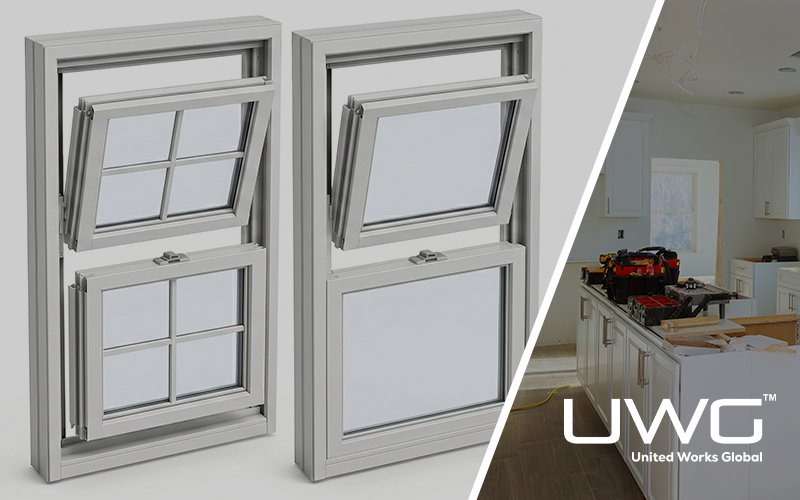
A double hung window features a vertically sliding system where both the upper and lower sashes operate independently within the frame. Modern double hung systems are engineered with dual balance mechanisms and tilt-in hardware, allowing both sashes to slide up and down, as well as pivot inward for maintenance.
What is a Single Hung Window?
In contrast, a single hung window features a fixed upper sash and an operable lower sash. The top portion of the window remains permanently sealed to the frame, while only the bottom sash moves vertically to provide ventilation.
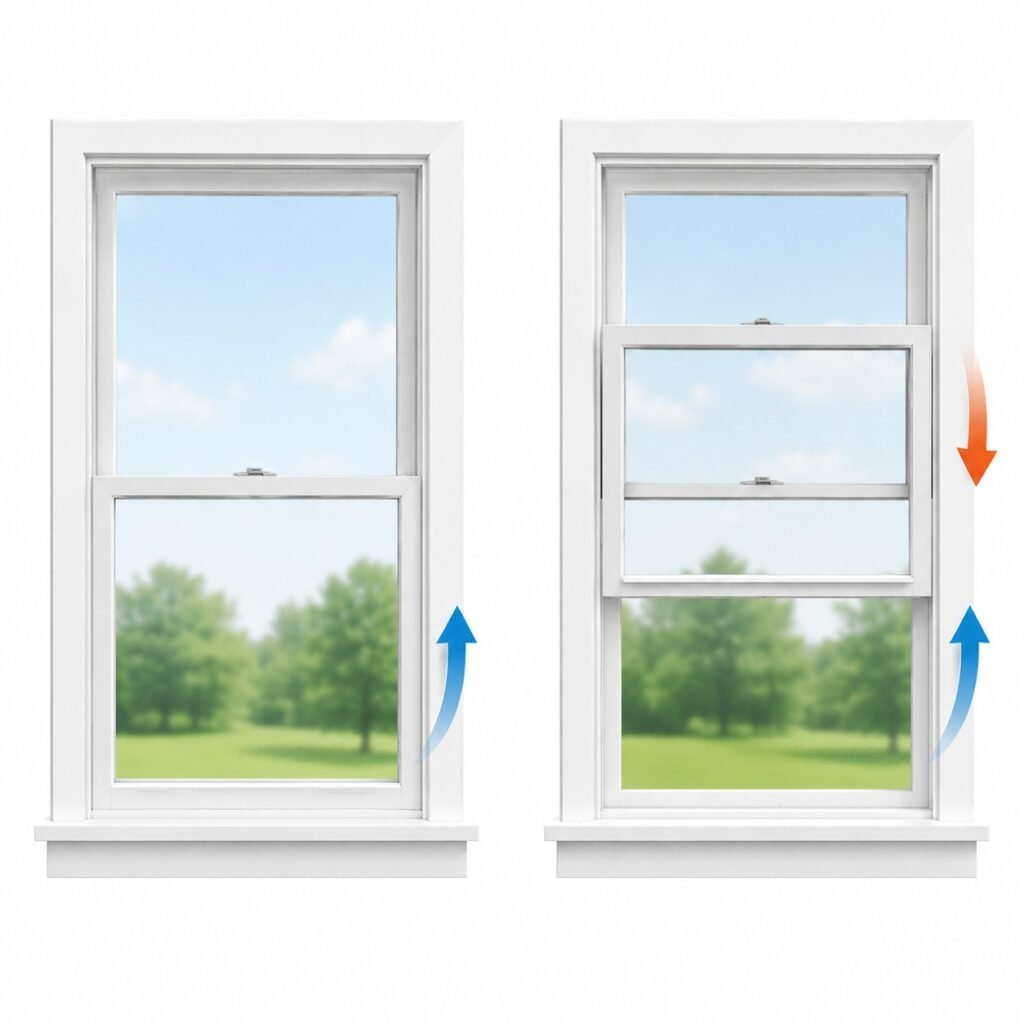
Double Hung Window vs. Single Hung Window
When evaluating factory-direct window options for large-scale construction takeoffs, having a side-by-side data comparison streamlines the decision-making process.
| Evaluation Factor | Double Hung Windows | Single Hung Windows |
|---|---|---|
| Sash Functionality | Dual-operating (Top & Bottom) | Single-operating (Bottom Only) |
| Natural Ventilation | Excellent (Enables convection airflow) | Moderate (Standard bottom-only airflow) |
| Cleaning & Maintenance | Excellent (Exterior glass cleaned from inside) | Moderate (Exterior requires outdoor access) |
| Initial Material Cost | Higher (Due to complex dual-balance hardware) | Lower (Simpler structural design) |
| Long-Term Hardware Wear | Moderate (More moving components to maintain) | Minimal (Fewer mechanical points of failure) |
| Market & Resale Demand | Strong consumer preference in North America | Standard (Common in budget-conscious projects) |
Key Advantages of Double Hung Windows
Double hung windows have remained a dominant force in North American home design—from historic Colonial and Victorian homes to modern suburban developments—for several distinct reasons.
Engineered Convection Ventilation
One of the greatest thermodynamic advantages of a double hung window is its ability to maximize natural airflow. When a homeowner opens both the top and bottom sashes simultaneously, it creates a highly efficient natural convection cycle:
- Warm indoor air, which naturally rises to the ceiling, escapes efficiently through the open top sash.
- Cooler outdoor air is drawn inward through the lower sash opening.
This passive cooling capability improves indoor comfort management and reduces reliance on HVAC systems during transitional seasons.
Advanced Cleaning Convenience and Safety
For multi-story residential buildings or second-story single-family homes, maintenance accessibility is a major selling point. Modern double hung windows feature tilt-in sashes. This allows the exterior glass surface to be cleaned entirely from inside the room, eliminating the safety hazards and labor costs associated with exterior ladders or professional window washing services.
Furthermore, for families with young children or pets, opening only the upper sash provides necessary room ventilation while keeping the lower barrier safely closed and locked.
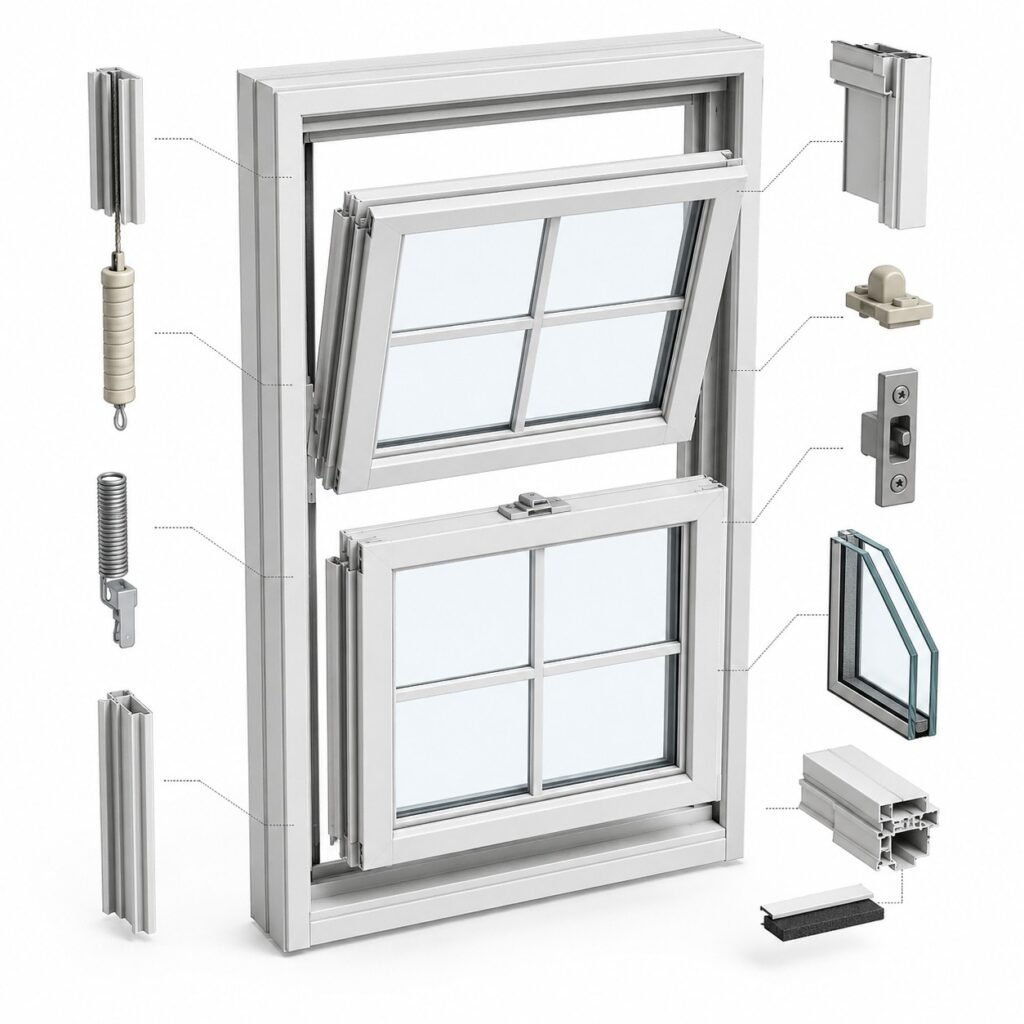
The Economic Value of Single Hung Windows
While double hung systems offer premium functionality, single hung windows remain a staple in high-volume residential developments and multi-family housing projects due to clear financial and mechanical advantages.
Budget Optimization and Material Costs
In large-scale developments where a single project requires hundreds of window units, the cost difference between single and double hung windows accumulates quickly. Single hung windows are inherently more cost-effective to manufacture because they require half the balance mechanisms, fewer weatherstripping seals, and simplified locking hardware. This lower initial purchase price allows developers to allocate budget to other high-impact interior finishes.
Long-Term Hardware Reliability
Because the upper sash of a single hung window is integrated directly into the perimeter frame, the unit features fewer moving parts. Fewer mechanical components translate to reduced long-term wear and tear, lowering the likelihood of tenant or homeowner maintenance callbacks regarding balance failures or sash misalignment.
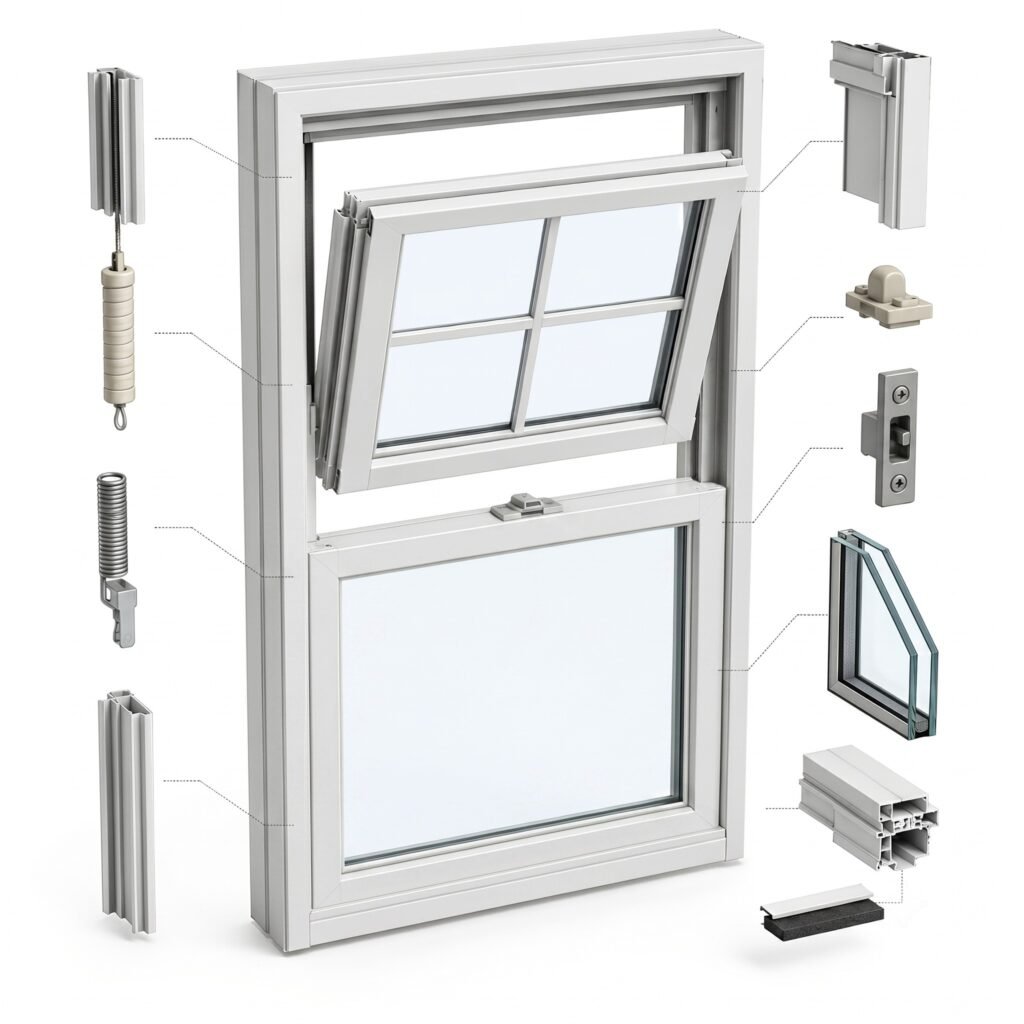
Energy Efficiency Differences Between Double Hung and Single Hung Windows
A common misconception among some buyers is that a window with two moving sashes cannot match the thermal performance of a single-operable design. However, modern manufacturing tolerances and advanced material engineering have largely eliminated this performance gap.
According to data from the U.S. Department of Energy, residential heat gain and loss through windows account for roughly 25%–30% of building heating and cooling energy use. To combat this, high-quality window units must leverage advanced components regardless of their operating style.
When evaluating suppliers, look for structural engineering that incorporates:
- Multi-Chambered Profiles: Thick vinyl or composite frames that trap air pockets to reduce thermal conductivity.
- Low-E Glass Coatings: Microscopic metallic layers that reflect infrared heat while letting visible light pass through.
- Argon Gas Insulation: Multi-pane insulated glass units (IGUs) filled with dense argon gas to minimize convective heat transfer.
- Interlocking Weatherstripping: High-performance seals at the meeting rails to prevent air infiltration and water penetration.
A properly manufactured double hung window with heavy-duty weatherstripping can easily achieve strict energy efficiency certifications, delivering lower utility bills alongside classic architectural appeal.
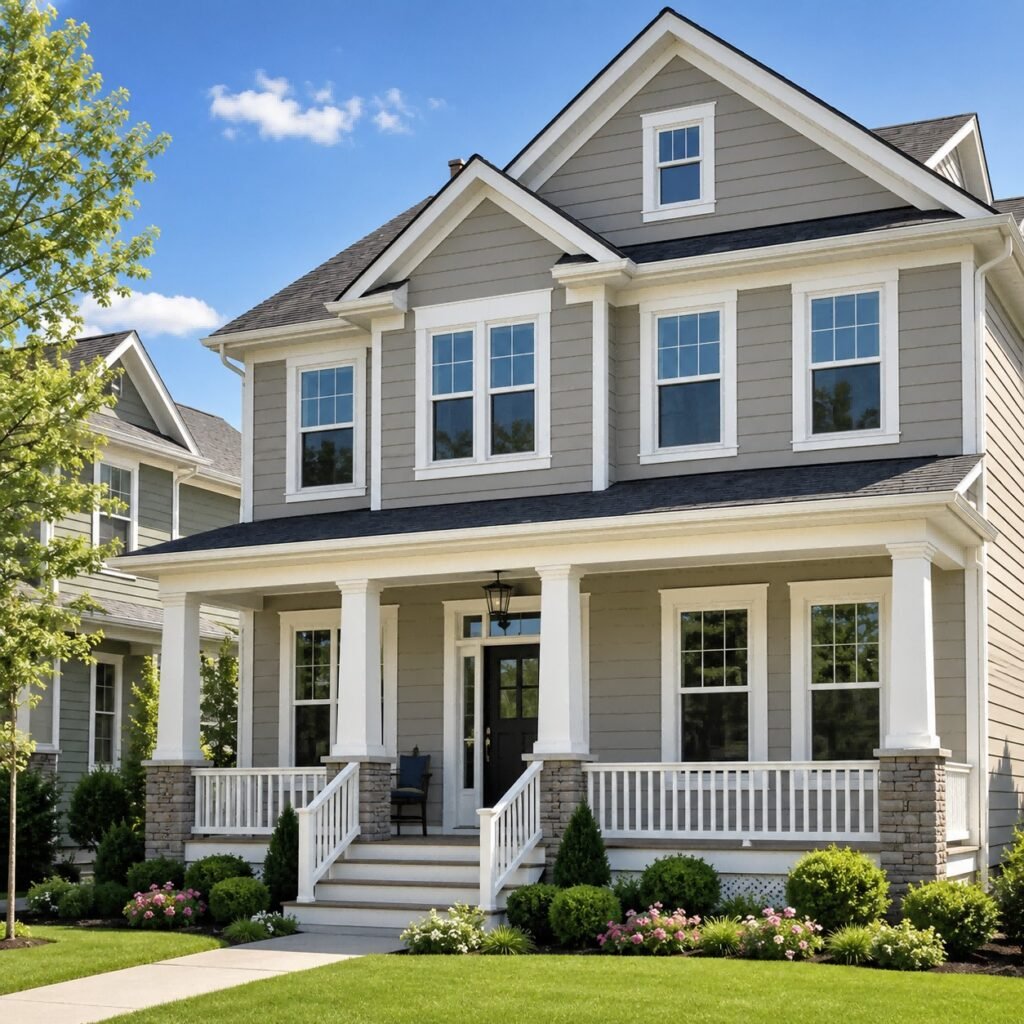
Choosing the Right Hung Window for Residential Projects
For savvy developers and wholesalers, window selection does not have to be an all-or-nothing choice. A targeted hybrid procurement strategy often yields the highest return on investment (ROI) and optimal budget management.
- The First-Floor vs. Second-Floor Strategy: Specify Single Hung windows for ground-floor spaces where exterior cleaning is easily accessible from the outside. Transition to Double Hung windows for second and third stories to provide homeowners with easy tilt-in cleaning access.
- High-Traffic vs. Utility Spaces: Install premium Double Hung windows in primary living areas, kitchens, and master bedrooms where ventilation control and premium aesthetics drive buyer perception. Utilize cost-saving Single Hung windows in guest walk-in closets, laundry rooms, or secondary bedrooms.
- Verify Technical Certifications: Regardless of the style ratio you choose, always verify that your supplier provides verified ratings for structural performance, air infiltration resistance, and thermal efficiency.
Frequently Asked Questions (FAQ)
Q: What is the primary difference in cost-performance between single-hung and double-hung windows?
A: Single-hung windows offer a lower upfront material cost due to fewer moving parts, making them highly cost-effective for tight project budgets. Double-hung windows require a higher initial investment but deliver a stronger long-term return on investment (ROI) through enhanced property marketability and multi-level ventilation control.
Q: Why do multi-family developers often prefer single-hung vinyl windows?
A: Multi-family developers prioritize single-hung windows for large-scale projects because the cumulative savings on unit costs are substantial. Since upper sashes remain fixed, single-hung units also minimize long-term maintenance overhead and potential field failure points across hundreds of units.
Q: How do double-hung windows improve long-term property ROI?
A: Double-hung windows increase resale and rental value by offering premium features that modern buyers expect, such as inward-tilting sashes for easy cleaning and optimized convection airflow, which significantly elevates owner satisfaction and structural appeal.
Q: Are single-hung windows as energy efficient as double-hung windows?
A: Generally, single-hung windows can achieve an exceptionally tight air seal because the top sash is permanently sealed and fixed into the frame. However, high-quality modern vinyl double-hung windows utilize advanced interlocking weatherstripping to achieve virtually identical thermal and energy performance ratings.
Conclusion
Ultimately, choosing between double hung and single hung windows depends on your project’s target demographic, regional climate, and structural budget. Double hung windows excel in premium aesthetics, ventilation flexibility, and ease of maintenance, making them highly attractive to retail homebuyers. Single hung windows offer unmatched cost efficiency and mechanical simplicity, making them the go-to choice for budget-conscious, high-volume builds.
The key to long-term profitability is selecting a manufacturing partner that understands the rigorous demands of the North American construction industry.
Articles that you may be interested in:
What Are Casement Windows? Pros, Cons, and Benefits Explained
Types of Vinyl Windows: Which Style Is Best for Your Project?