
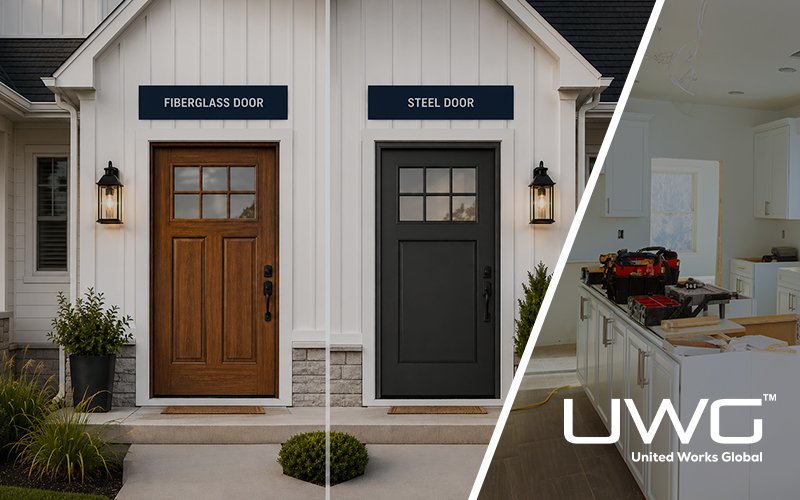
Exterior doors are one of the most important components of a building envelope. They contribute to security, energy efficiency, weather resistance, and long-term building performance. While builders often focus on selecting the right door material, the performance of an exterior door system is frequently determined by components that receive far less attention—hinges, reinforcements, and frame connections.
In our experience working with residential developments, multifamily housing projects, and light commercial buildings, many door-related service issues are not caused by the door slab itself. Instead, they often result from undersized hinges, inadequate reinforcement, or hardware that does not match the door’s weight and intended use.
For fiberglass and steel exterior doors, selecting the correct hinges and reinforcement systems is essential for maintaining door alignment, improving security, reducing maintenance requirements, and extending service life. Because fiberglass and steel doors have different structural characteristics, they require different hardware specifications to achieve optimal performance and durability.
Understanding these differences helps builders, contractors, and wholesalers make informed decisions that improve both installation quality and long-term customer satisfaction.
Why Hinges and Reinforcements Matter in Exterior Door Installation
Hinges are more than simple moving components. They support the full weight of the door, maintain proper alignment, and ensure smooth operation throughout years of use.
Reinforcements strengthen critical areas of the door system, including:
- Hinge attachment points
- Lock and latch locations
- Strike plate areas
- Door frames and jambs
Without proper reinforcement, even a high-quality exterior door can experience sagging, hardware failure, air leakage, or reduced resistance to forced entry.
For this reason, professional installers evaluate the entire door system rather than focusing solely on the door material.
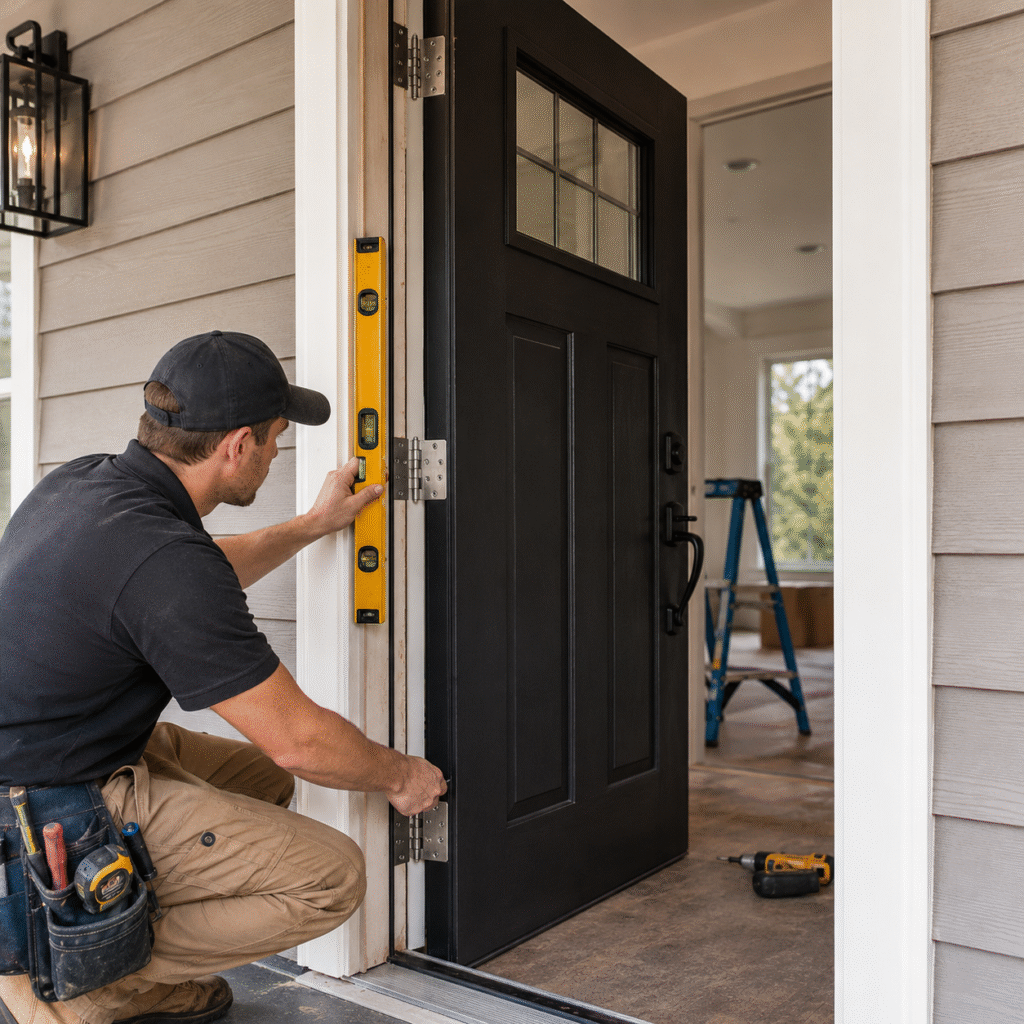
Why Fiberglass and Steel Exterior Doors Require Different Hardware
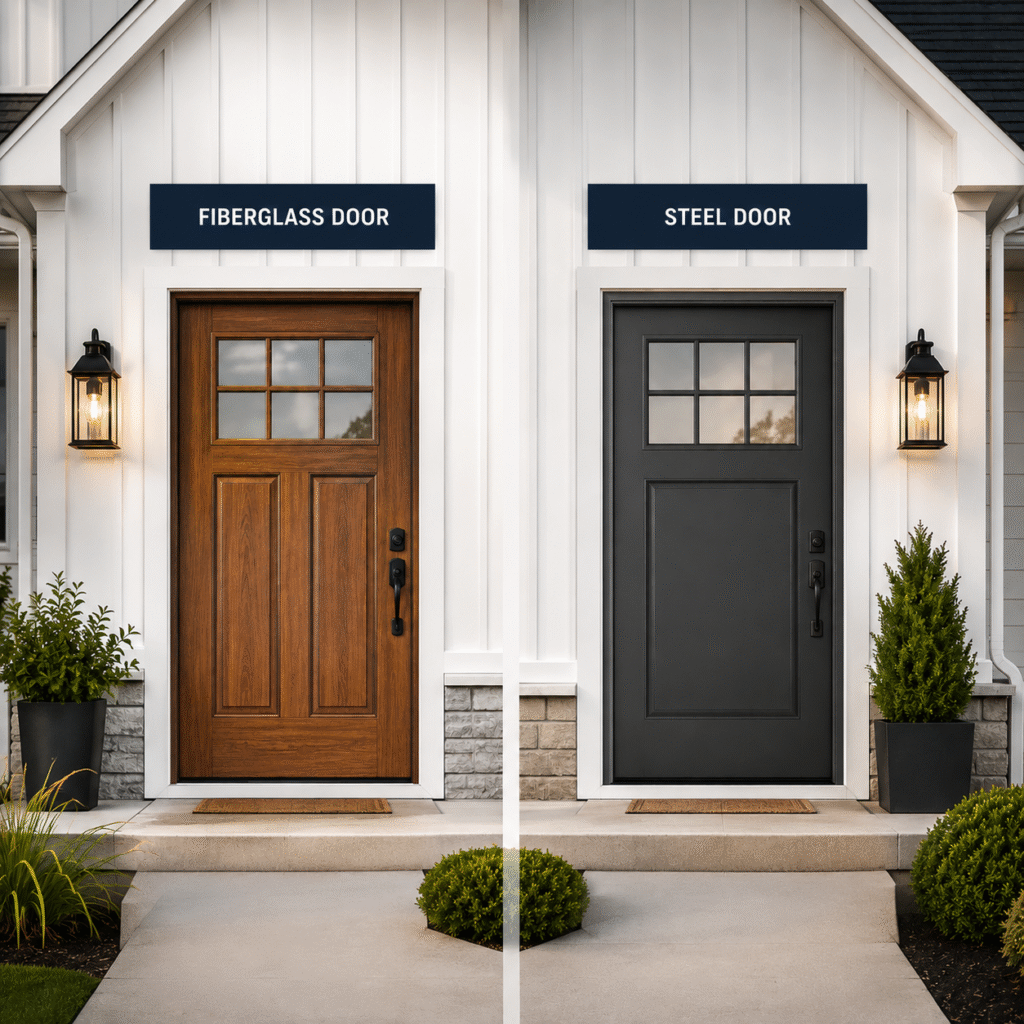
Fiberglass and steel are among the most popular materials for exterior doors, but their construction and performance characteristics differ significantly.
Fiberglass doors typically consist of composite skins surrounding an insulated core. They offer excellent weather resistance, energy efficiency, and low maintenance requirements.
Steel doors use steel skins wrapped around an insulated core, providing exceptional strength, impact resistance, and security.
Because these materials vary in weight and structural behavior, their hinge and reinforcement requirements are not the same.
Fiberglass vs. Steel Exterior Doors: Hinge and Reinforcement Comparison
| Feature | Fiberglass Door | Steel Door |
|---|---|---|
| Average Weight | Moderate | Heavy |
| Corrosion Resistance | Excellent | Depends on finish and coating |
| Security Performance | High | Very High |
| Recommended Hinges | Stainless steel ball-bearing hinges | Heavy-duty ball-bearing hinges |
| Reinforcement Priority | Hinge blocks and lock areas | Frames, strike plates, and hinge points |
| Maintenance Requirements | Low | Moderate |
| Coastal Environment Suitability | Excellent | Requires corrosion-resistant hardware |
This comparison provides a useful reference when selecting hardware based on door material and project requirements.
Fiberglass vs. Steel Exterior Doors: Advantages and Limitations
Choosing between fiberglass and steel doors involves balancing performance, security, maintenance, and environmental considerations.
| Door Type | Advantages | Limitations |
|---|---|---|
| Fiberglass Doors | Excellent corrosion resistance, energy efficiency, low maintenance, stable performance in humid climates | Higher initial material cost in some markets |
| Steel Doors | Superior impact resistance, enhanced security, cost-effective for many applications | May require additional corrosion protection in coastal or high-humidity environments |
Neither material is universally better. The ideal choice depends on project requirements, climate conditions, and security expectations.
Common Hinge Problems Found in Exterior Door Projects
Across residential and multifamily developments, one of the most common hardware issues we encounter is hinge under-specification.
In several projects completed over recent years, oversized fiberglass and steel entry doors were initially installed using standard residential hinges. Although the doors operated properly after installation, performance issues began to appear after extended use.
Common problems included:
- Uneven reveal gaps
- Door sagging
- Difficult latch engagement
- Increased closing force
- Premature hinge wear
Based on project observations, upgrading to properly rated ball-bearing hinges during installation typically adds only a small percentage to overall hardware costs. However, it can significantly reduce maintenance requirements and warranty-related service calls over the life of the door system.
For wholesalers supplying builders and contractors, recommending hardware based on actual door weight rather than standard package configurations can help improve customer satisfaction and reduce future callbacks.
What Hinges Are Best for Fiberglass Exterior Doors?
Fiberglass exterior doors benefit from corrosion-resistant hardware capable of supporting moderate loads while maintaining smooth operation under varying weather conditions.
Based on installation experience across multiple climate zones, stainless steel ball-bearing hinges consistently provide reliable long-term performance.
Key selection criteria include:
- Stainless steel construction
- Ball-bearing mechanisms
- Exterior-grade corrosion resistance
- Non-removable pins for additional security
- Appropriate weight ratings
For standard residential entry doors, three hinges are typically sufficient. However, oversized doors, decorative glass doors, or taller entry systems may require four hinges to distribute loads more effectively.
Builders operating in coastal regions should strongly consider marine-grade stainless steel hinges to maximize resistance to salt exposure and corrosion.
What Hinges Are Best for Steel Exterior Doors?
Steel doors generally require more robust hardware because of their increased weight and higher security demands.
Heavy-duty ball-bearing hinges are commonly used for steel entry doors in residential, commercial, and institutional applications.
When selecting hinges for steel doors, installers should evaluate:
- Door weight
- Door dimensions
- Frequency of operation
- Security requirements
- Environmental exposure
Larger steel doors often require four or more hinges to ensure proper support and long-term alignment.
Many security-focused projects also incorporate tamper-resistant hinge designs to improve protection against unauthorized removal.
According to the Steel Door Institute (SDI), hinge selection should always align with door size, weight, and anticipated usage conditions to ensure reliable performance throughout the life of the opening.
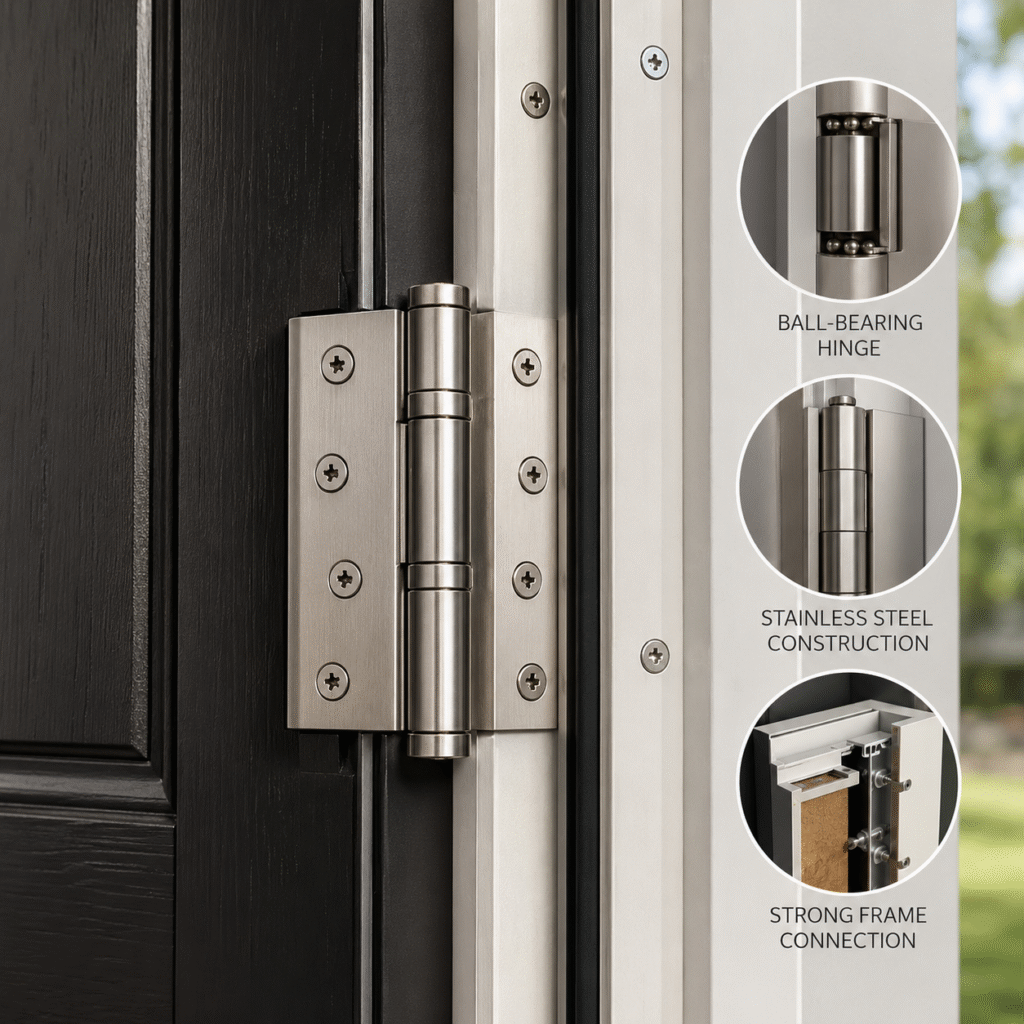
Understanding Load Distribution in Exterior Door Hinges
One factor that is often overlooked during hardware selection is load distribution.
The performance of a hinge depends not only on the total weight of the door but also on how that weight is transferred and supported over time.
Fiberglass doors generally produce consistent loads because of their dimensional stability and relatively lighter construction. Steel doors generate greater stress on hinge assemblies due to their increased mass.
When hinge capacity is insufficient, several problems may develop:
- Accelerated wear
- Door sagging
- Frame misalignment
- Poor latch engagement
- Increased maintenance costs
Ball-bearing hinges help address these challenges by reducing friction and distributing loads more evenly than traditional hinge designs.
For this reason, they are widely specified for premium fiberglass doors and heavy-duty steel doors alike.
Common Exterior Door Installation Mistakes That Affect Performance
Even premium hardware can underperform when installation practices are inadequate.
Several installation mistakes appear repeatedly across residential and commercial projects.
Incorrect Hinge Placement
Improper hinge spacing creates uneven load distribution and increases stress on individual hinges.
Using Undersized Hardware
Installing standard residential hinges on oversized steel or fiberglass doors often results in premature wear and alignment issues.
Ignoring Existing Frame Conditions
When installing an exterior door within an existing frame, installers should inspect:
- Frame alignment
- Structural condition
- Moisture damage
- Existing fastener integrity
Neglecting these factors can compromise the performance of the entire door system.
Insufficient Reinforcement
Many installations prioritize appearance while overlooking structural reinforcement.
As a result, security and durability may fall short of expectations despite using high-quality door materials.
Hardware Issues Often Appear Before Door Failures
Based on manufacturer service records and industry observations, hardware-related problems account for a significant portion of exterior door maintenance requests.
Many performance issues can be traced to inadequate hinge capacity, poor reinforcement, or installation errors rather than defects in the door panel itself.
| Common Issue | Typical Cause |
|---|---|
| Door sagging | Undersized hinges |
| Poor latch engagement | Hinge wear or frame movement |
| Air leakage | Door misalignment |
| Security concerns | Weak reinforcement around lock areas |
| Frequent maintenance | Low-grade exterior hardware |
This highlights the importance of evaluating the complete door system rather than focusing solely on door materials.
How Hardware Selection Impacts Long-Term Security and Durability
Hardware quality has a direct impact on the long-term performance of an exterior door system.
Properly specified hinges and reinforcement components offer several advantages:
Improved Security
Reinforced strike plates, security hinges, and strengthened frames increase resistance to forced-entry attempts.
Better Door Alignment
Correctly rated hinges help maintain consistent alignment throughout years of operation.
Extended Service Life
Reducing stress on critical hardware components minimizes wear and lowers maintenance costs.
Enhanced User Experience
Smooth operation improves convenience while reducing strain on both hardware and door assemblies.
According to guidance from the Door and Hardware Institute (DHI), hardware selection should consider door weight, opening frequency, environmental exposure, and security requirements rather than relying solely on door dimensions.
Conclusion
Choosing the right hinges and reinforcements is a critical part of installing exterior doors. While fiberglass and steel doors each offer unique advantages, both depend on properly matched hardware to achieve their full performance potential. By selecting hinges based on door weight, reinforcing key structural areas, and considering long-term operating conditions, builders and wholesalers can improve security, reduce maintenance costs, and deliver durable exterior door systems that perform reliably for years to come.
Articles that you may be interested in:
Molded vs Shaker vs Shaker-Style Molded Doors: How Builders Choose in 2026
What Are the Best Budget-Friendly Molded Doors for Contractors?