
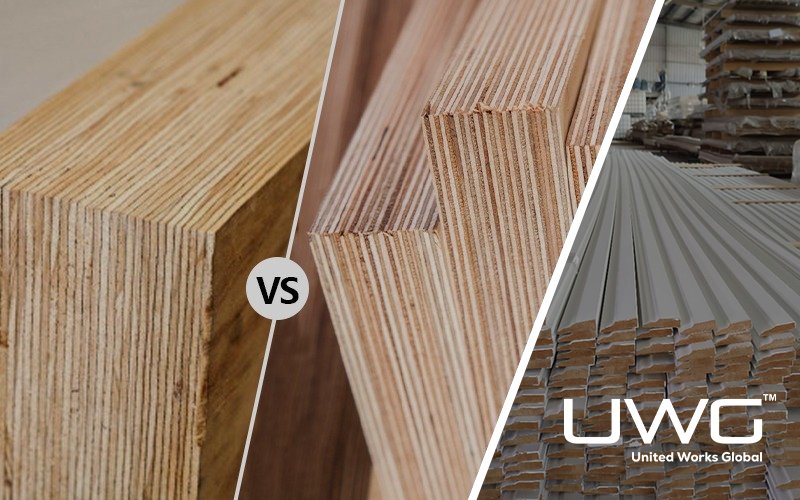
While LVL (Laminated Veneer Lumber) and plywood are engineered wood products made from wood veneers, they are designed for very different purposes.
Using the wrong material can lead to unnecessary costs, reduced structural performance, or project delays. Understanding the differences between LVL vs plywood will help you select the right material based on strength requirements, application, budget, and long-term performance.
In this guide, we’ll compare LVL and plywood in terms of manufacturing, strength, cost, applications, and performance so you can make an informed decision for your next construction project.
What Is LVL (Laminated Veneer Lumber)?
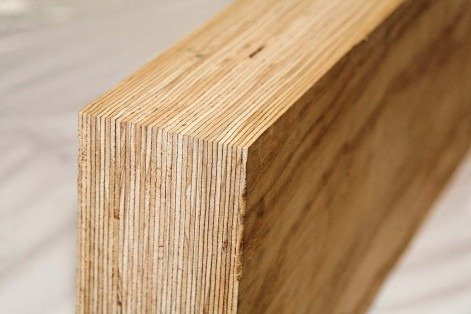
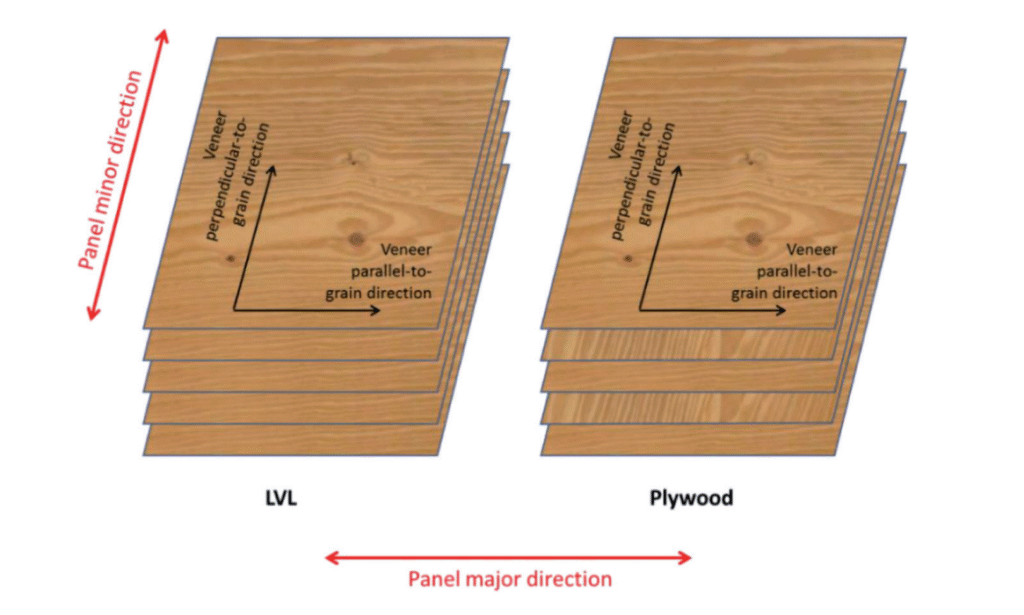
Laminated Veneer Lumber (LVL) is a high-strength engineered wood product manufactured by bonding thin wood veneers together using structural adhesives. Unlike plywood, all veneer layers are oriented in the same grain direction.
This manufacturing method creates a product with exceptional strength, stiffness, and consistency, making LVL one of the most reliable engineered wood products for structural applications.
Common Uses of LVL
- LVL beams
- Headers
- Rim boards
- Truss chords
- Stair stringers
- Window and door headers
- Floor framing systems
Benefits of LVL
- High load-bearing capacity
- Excellent strength-to-weight ratio
- Minimal warping, twisting, or shrinking
- Available in long lengths for large spans
- Consistent performance without natural wood defects
Because of these advantages, LVL is widely used in residential, multifamily, and commercial construction projects.
What Is Plywood?
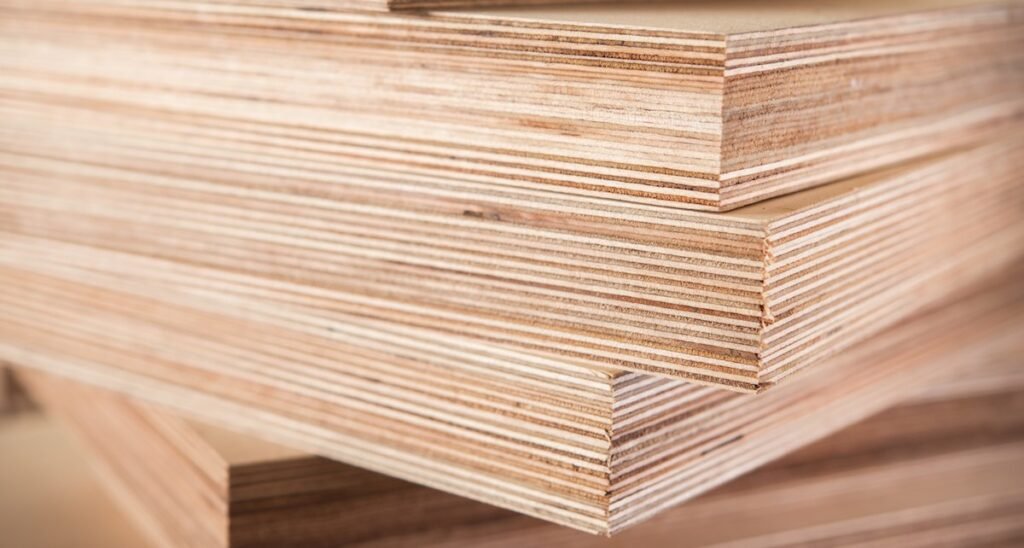
Plywood is an engineered wood panel made by bonding multiple layers of wood veneers together. Each veneer layer is rotated—typically 90 degrees from the adjacent layer—to create a cross-grain structure.
This cross-laminated construction improves dimensional stability and helps reduce expansion, contraction, and warping caused by changes in humidity.
Common Uses of Plywood
- Wall sheathing
- Floor sheathing
- Roof decking
- Subfloors
- Furniture
- Cabinetry
- Decorative paneling
- Packaging and industrial applications
Benefits of Plywood
- Lightweight and easy to handle
- Cost-effective
- Widely available
- Good dimensional stability
- Suitable for both structural and non-structural applications
Plywood remains one of the most versatile and commonly used building materials in modern construction.
How LVL and Plywood Are Manufactured
Although both products use wood veneers, their manufacturing processes differ significantly.
| Manufacturing Step | LVL (Laminated Veneer Lumber) | Plywood |
|---|---|---|
| Log Preparation | Logs are debarked and conditioned | Logs are debarked and conditioned |
| Veneer Production | Rotary-peeled veneers | Rotary-peeled veneers |
| Drying | Veneers dried to precise moisture content | Veneers dried before assembly |
| Adhesive Application | Structural-grade adhesives applied | Adhesives applied between veneer layers |
| Veneer Orientation | All veneers aligned in the same direction | Veneers arranged in alternating directions |
| Pressing | Hot-pressed into long billets | Hot-pressed into panels |
| Final Processing | Cut into beams, headers, rim boards | Cut into sheets and panels |
LVL vs Plywood: Strength and Performance Comparison
When comparing lvl wood to plywood, the first thing to note is structural performance.
- Strength: LVL is stronger due to unidirectional grain alignment.
- Stability: LVL has minimal warping or shrinking.
- Weight: Plywood is usually lighter and easier to handle manually.
- Moisture resistance: Both are vulnerable without treatment, but marine-grade plywood resists moisture better in exposed applications.
Engineered for strength, laminated veneer lumber performs best in structural framing, while lvl plywood serves well in general construction.
LVL vs Plywood at a Glance
| Factor | LVL | Plywood |
| Strength | Excellent | Moderate |
| Load-Bearing Capacity | Very High | Limited |
| Dimensional Stability | Excellent | Good |
| Span Capability | Long Spans | Short Spans |
| Weight | Heavier | Lighter |
| Cost | Higher | Lower |
| Structural Framing | Yes | Limited |
| Sheathing | No | Yes |
| Cabinetry | Rarely | Yes |
| Furniture | Rarely | Yes |
Common Applications of LVL and Plywood
Applications for LVL
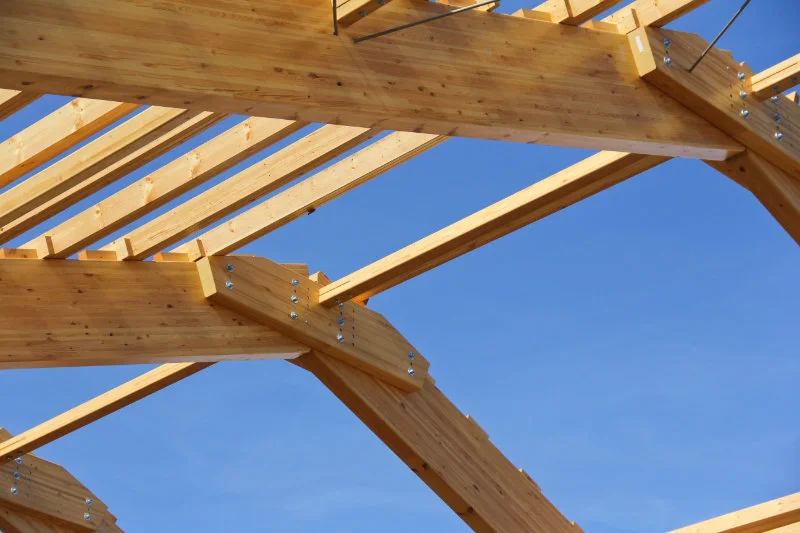
LVL is commonly selected when structural performance is critical.
Typical applications include:
Load-bearing wall components
- Structural beams
- Door and window headers
- Floor joists
- Rim boards
- Stair stringers
- Roof framing systems
Applications for Plywood
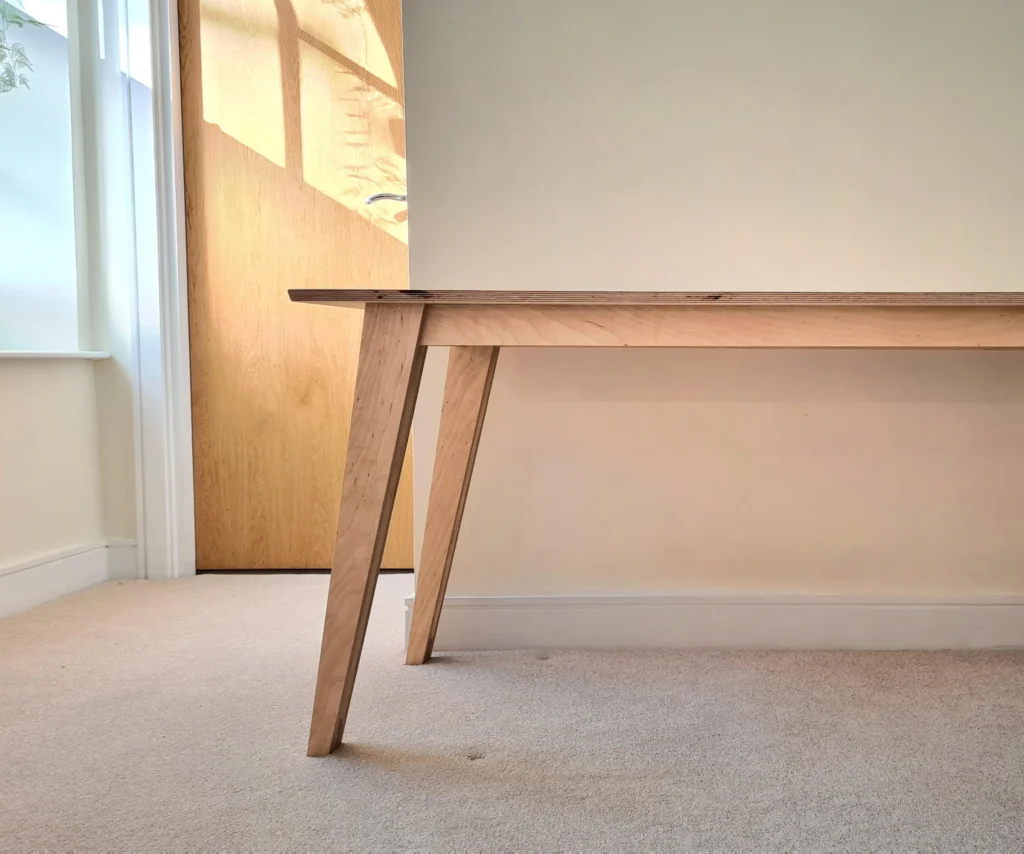
Plywood is preferred when versatility and cost efficiency are priorities.
Typical applications include:
- Exterior wall sheathing
- Roof decking
- Floor underlayment
- Subfloors
- Cabinets
- Furniture
- Decorative wall panels
In most construction projects, LVL and plywood are not competing materials—they are complementary materials used in different parts of the structure.
LVL vs Plywood Cost Comparison
Cost is often a deciding factor.
LVL Costs
LVL generally costs more than plywood because:
- It uses higher-grade veneers
- Manufacturing is more specialized
- Structural performance is significantly higher
However, LVL may reduce the need for additional supports, potentially lowering overall project costs.
Plywood Costs
Plywood is usually less expensive per square foot and is available in a wide range of grades and thicknesses.
For large-area applications such as walls, floors, and roofs, plywood remains one of the most economical options available.
Pros and Cons of LVL vs Plywood
| Feature | LVL (Laminated Veneer Lumber) | Plywood |
|---|---|---|
| Strength | High – excellent for load-bearing | Moderate – depends on grade |
| Weight | Heavier | Lighter |
| Stability | Highly stable, low shrinkage | Stable with cross-grain construction |
| Cost | More expensive | More affordable |
| Applications | Beams, headers, structural framing | Sheathing, furniture, cabinetry |
| Custom Sizes | Available in longer lengths and depths | Standard sheet sizes |
Which One Should You Choose? (Buying Guide)
Choose LVL if:
- You’re building load-bearing components like lvl beams or rim boards.
- You need consistency and strength in longer spans.
- Budget is less of a concern than performance.
Choose Plywood if:
- You’re working on wall sheathing, subfloors, or cabinetry.
- You need affordable, easy-to-handle panels.
- You’re not dealing with high structural loads.
Also, if you’re wondering about the difference between veneer and laminate, veneer refers to thin slices of real wood, while laminate is typically a synthetic layer used for surface finishing—something entirely different from structural materials.
Frequently Asked Questions About LVL and Plywood
Q: What is the main difference between LVL and plywood?
A: The main difference lies in the grain orientation. Laminated Veneer Lumber (LVL) features veneers aligned in the same direction, maximizing strength along one axis for load-bearing use. Plywood uses alternating grain directions (cross-graining), providing balanced strength and dimensional stability for general construction.
Q: Is LVL stronger than plywood?
A: Yes, LVL is significantly stronger and stiffer along its length compared to plywood. Because of its unidirectional grain alignment and high-pressure bonding, LVL is engineered specifically to support heavy structural loads, whereas plywood is designed for paneling and sheathing.
Q: Can I use plywood instead of LVL for structural beams?
A: No, plywood cannot replace LVL for structural beams or headers. Plywood lacks the concentrated load-bearing capacity required for heavy structural spans and may warp or fail under such weight. LVL must be used for beams, headers, and truss chords.
Q: When should I choose plywood over LVL?
A: You should choose plywood for applications that require affordable, easy-to-handle, and versatile panels with balanced strength. It is the ideal choice for wall and floor sheathing, roof decking, subfloors, and cabinetry where extreme load-bearing capacity is not required.
Q: What is stronger: LVL, plywood, or OSB?
A: For structural beams and headers, LVL is typically the strongest option. Plywood and OSB are generally used as panel products rather than primary load-bearing members.
Summary
Both LVL and plywood serve important but distinct roles in construction. LVL is your go-to choice when heavy-duty structural strength, dimensional stability, and long-span performance are non-negotiable—perfect for beams, headers, and other load-bearing applications. Plywood, on the other hand, shines as a versatile, budget-friendly option that works well for sheathing, subfloors, furniture, and countless general-purpose tasks.
The key is aligning your material choice with your project’s unique demands—whether that means maximizing strength, optimizing cost, or balancing both. The right decision at the start can save you time, reduce waste, and prevent costly rework down the line.
If you’re unsure which to choose, don’t leave it to guesswork—let’s talk about your project specs and get it right from day one.