
A ball catch is a type of door hardware used to hold an interior door in the closed position without a conventional latch. It consists of a spring-loaded metal ball, usually installed at the top of the door, and a strike plate mounted on the door frame.
When the door closes, the ball is pushed into the catch and then springs into a recessed strike plate. The resulting spring tension holds the door closed while still allowing it to be opened with a simple pull.
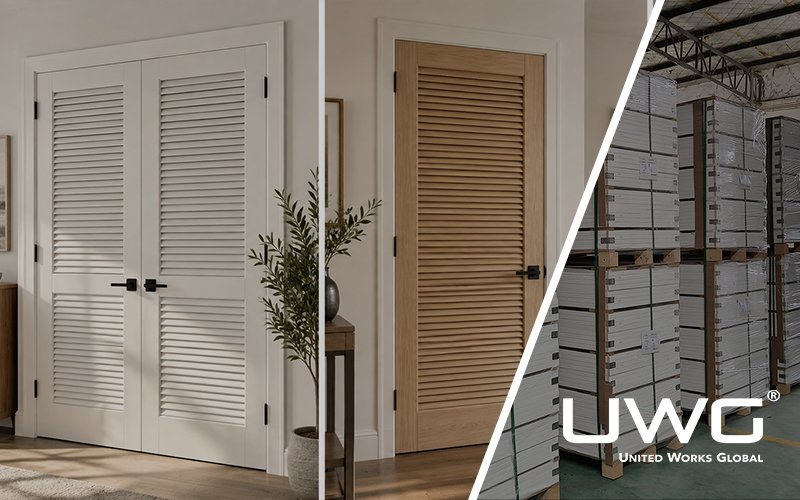
Ball catches are commonly used on walk-in closet doors, closet doors, French doors, double interior doors, and other non-locking interior doors where a traditional latch is unnecessary.
What Is a Ball Catch?
A ball catch is a small mechanical door catch that uses spring tension to keep an interior door closed. Unlike a standard latch, it does not have a latch bolt operated by a knob or lever.
A typical ball catch has two main components:
- Spring-loaded ball catch: A metal ball sits inside a cylindrical housing with a spring behind it. The catch is typically installed in the top edge or top rail of the door.
- Strike plate: A recessed metal plate is installed on the door jamb or frame. The ball enters the recess when the door closes.
When the door is pulled shut, the ball compresses against the strike and then snaps into its recessed center. The spring pressure creates enough resistance to keep the door closed.
Because the mechanism can be installed at the top of the door, most of the hardware remains out of sight during normal use.
How Does a Ball Catch Mechanism Work?
A ball catch works through a simple combination of spring tension and mechanical engagement.
- The door moves toward the closed position.
- The spring-loaded ball contacts the strike plate.
- The ball is pushed back into its housing.
- The ball reaches the recessed portion of the strike.
- The spring pushes the ball into the recess.
- The door remains closed until enough pulling force is applied to release the ball.
The ball catch does not lock the door. Instead, it provides non-locking closure for interior doors.
Proper alignment between the ball catch and strike plate is important. If the two components are not aligned correctly, the door may be difficult to close, difficult to open, or unable to stay closed.
Where Are Ball Catches Commonly Used?
Ball catches are most commonly used on interior doors that need to stay closed but do not require a conventional latch or lock.
Walk-In Closet Doors
A walk-in closet door ball catch is a common application. For closet doors with dummy knobs or pulls, the ball catch provides the actual closing function while keeping the door hardware simple and discreet.
Closet Doors
Ball catches are frequently used on single or double closet doors, particularly when a clean door face and easy operation are preferred.
French Doors
Interior French doors can use ball catches instead of traditional latch hardware, especially when the doors are non-locking and use dummy knobs.
Double Interior Doors
Ball catches can hold double doors closed without requiring a conventional latch on each door panel, depending on the door configuration.
Pantry and Utility Doors
A ball catch can also be used on interior pantry or utility doors where simple closure is needed but locking is not.
Ball catches are designed for door retention, not security. They are generally intended for interior applications rather than exterior or security doors.
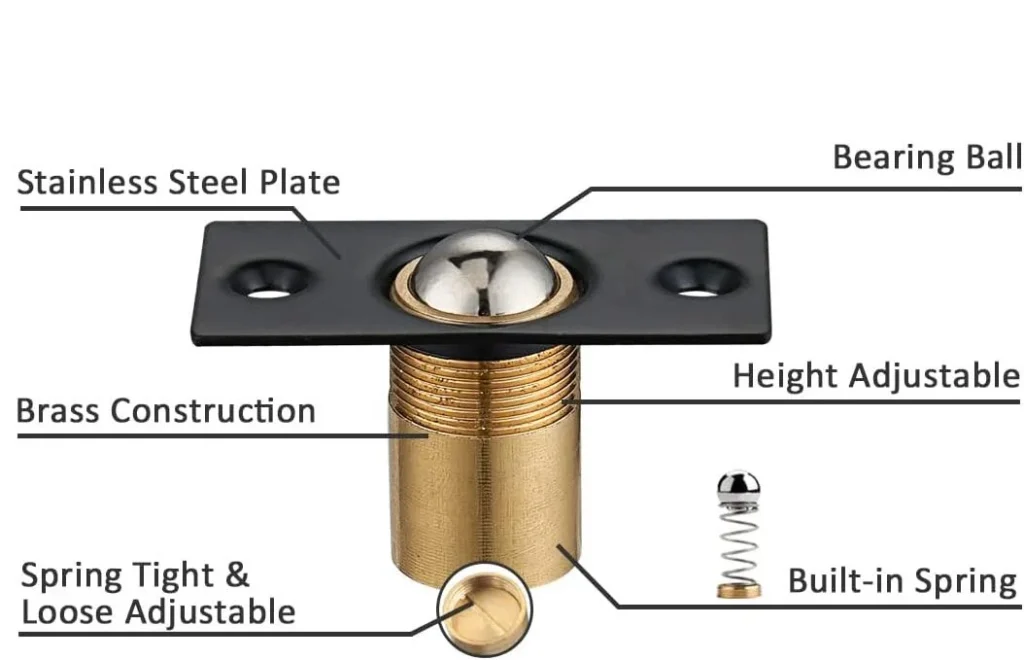
What Is a Ball Catch for the Top of a Door?
A ball catch for the top of a door is a ball catch installed in the top edge or top rail of an interior door.
This installation keeps the hardware discreet while allowing the spring-loaded ball to engage with a strike plate in the upper door frame.
Top-mounted ball catches are especially useful when:
- the door does not need to lock;
- a conventional latch is unnecessary;
- the door uses a dummy knob or pull;
- a clean, unobstructed door face is preferred;
- the door is used for a closet, pantry, French door, or other interior opening.
The exact installation method depends on the ball catch design. Some models are recessed into the door, while others use surface-mounted components.
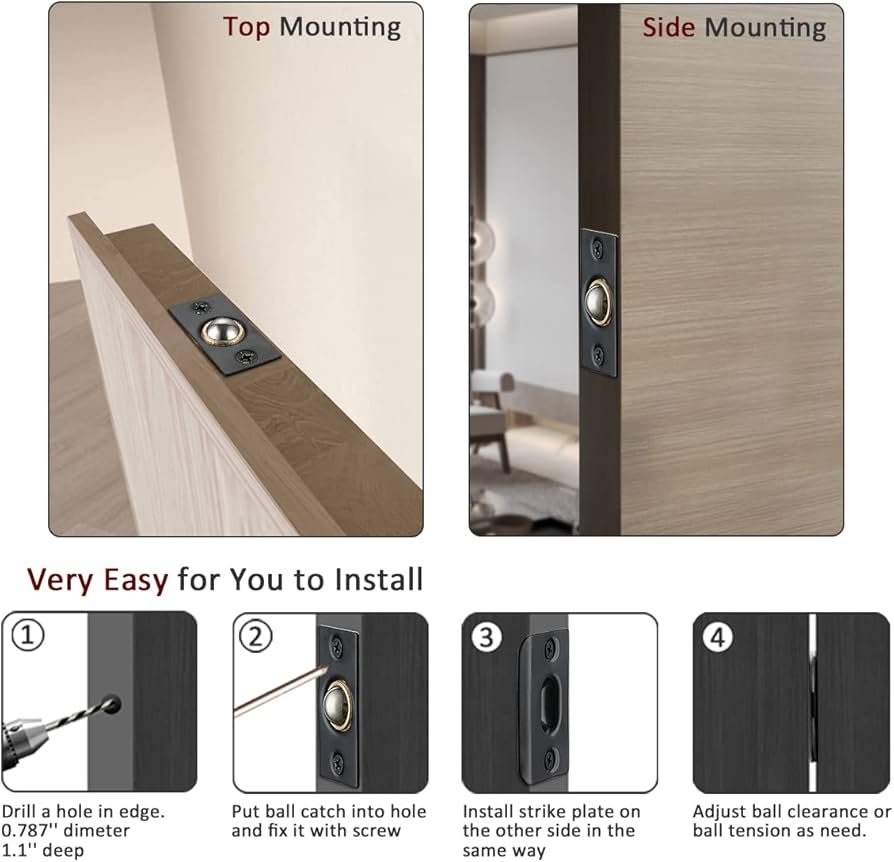
How to Adjust a Ball Catch
An adjustable ball catch allows the ball position or spring tension to be fine-tuned after installation.
If the door is difficult to close, difficult to open, or does not stay closed, check the following:
1. Check the Alignment
Make sure the ball lines up with the center of the strike plate when the door is closed.
2. Adjust the Ball Position
On adjustable models, turn the adjustment mechanism gradually to change how far the ball extends.
Because adjustment directions vary between hardware designs, follow the manufacturer’s instructions rather than assuming that clockwise or counterclockwise always produces the same result.
3. Test the Door
After each small adjustment, open and close the door several times. The ball should enter the strike smoothly without excessive resistance.
What If the Ball Catch Pops Out or Won’t Stay Closed?
If a closet or interior door keeps popping open, several issues may be responsible:
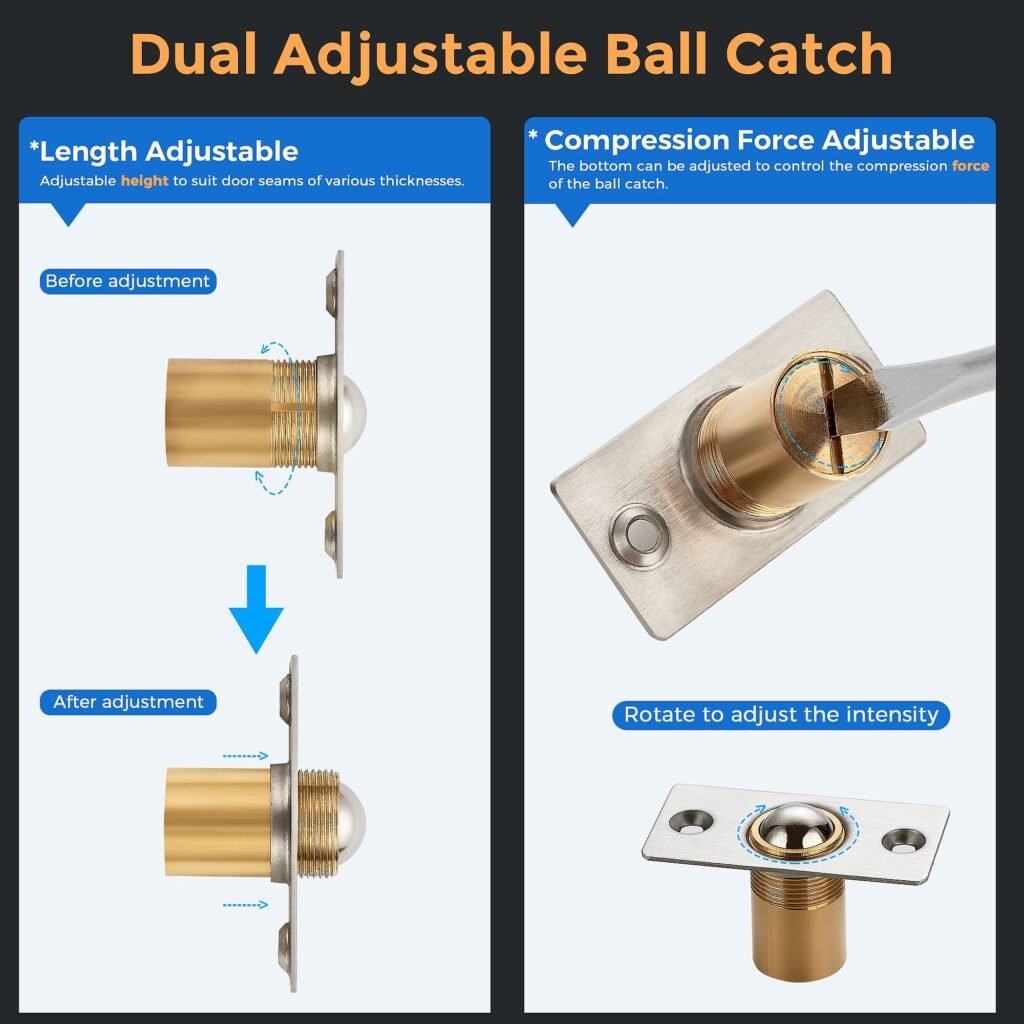
- Misaligned strike plate: The ball is not entering the center of the strike recess.
- Insufficient spring tension: The ball does not engage deeply enough with the strike.
- Loose hardware: The catch or strike plate has shifted from its original position.
- Worn spring or ball: The internal mechanism no longer provides sufficient pressure.
- Door movement: The frame or door may have shifted, changing the alignment.
Start by checking the alignment before replacing the hardware. In many cases, a small adjustment to the strike plate or ball position can restore proper operation.
Ball Catch vs. Other Door Catches: Which Should You Choose?
Not every door requires a ball catch. Depending on the door type and usage, alternative latching mechanisms may offer better performance or convenience.
| Type | Description | Best For |
|---|---|---|
| Ball Catch | Spring-loaded ball and strike plate | Closet doors, double interior doors |
| Magnetic Catch | Uses magnetic force to hold door closed | Lightweight cabinet or utility doors |
| Roller Latch | Spring-loaded roller with cam mechanism | Heavier doors with frequent operation |
If you’re prioritizing silence and ease of release, magnetic catches are a good choice. For strength and durability, especially in full-size doors, ball catches provide a more reliable hold under daily use.
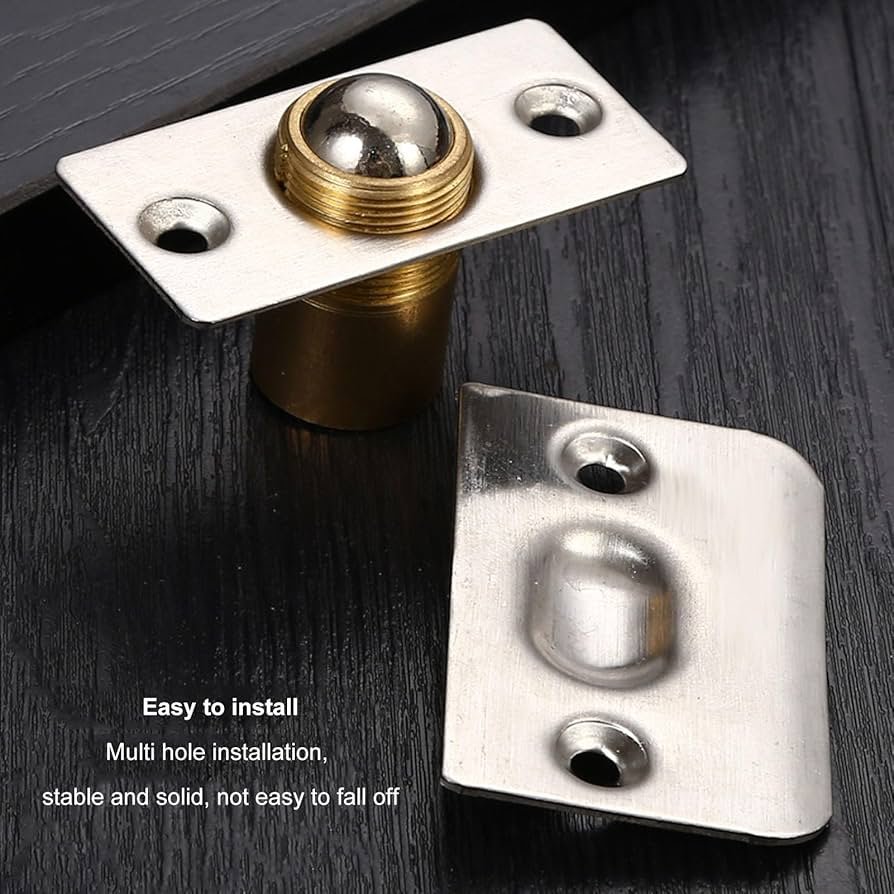
How to Choose a Ball Catch
Choosing the right ball catch involves more than just selecting the correct size. Here are the key factors to evaluate:
- Door construction: Solid-core or heavy doors may require stronger spring tension for secure engagement.
- Mounting location: Most ball catches are installed at the top of the door. Accurate placement is crucial to ensure alignment with the strike plate.
- Spring adjustability: Look for models that allow fine-tuning of the ball height or tension to customize holding force.
- Finish compatibility: Select a finish that complements your hinges, levers, or other visible hardware (e.g., satin chrome, matte black).
- Depth and fit: Ensure the housing can be mortised cleanly into the top rail without compromising door integrity.
📏 Always measure door thickness before installation. A catch that’s too deep can split the top edge of thinner doors or misalign with the strike plate.
Ball Catch FAQ: Quick Answers to Common Issues
What is a ball catch?
A ball catch is a spring-loaded door catch that holds an interior door closed without a conventional latch. It typically consists of a metal ball, spring mechanism, and recessed strike plate.
Where is a ball catch used?
Ball catches are commonly used on walk-in closet doors, closet doors, French doors, double interior doors, pantry doors, and other non-locking interior doors.
What is a ball catch for the top of a door?
It is a ball catch installed in the top edge or top rail of a door. The spring-loaded ball engages with a strike plate in the door frame to hold the door closed.
How does a ball catch work?
A spring pushes a metal ball outward. When the door closes, the ball enters a recessed strike plate and creates enough resistance to keep the door closed.
Can a ball catch be used on a closet door?
Yes. Ball catches are commonly used on closet doors, including walk-in closet and double closet doors. They are especially useful when the door does not need a conventional latch or lock.
Can a ball catch be used on a French door?
Yes. Ball catches can be used on non-locking interior French doors, particularly when dummy knobs or pulls are used.
Does a ball catch lock a door?
No. A ball catch provides closure and retention, not security. It does not replace a lock when security or controlled access is required.
Is a ball catch a type of door?
No. A ball catch is door hardware, not a type of door. It is a mechanism used to hold certain interior doors closed.
Conclusion
A ball catch is a simple piece of door hardware that provides discreet, non-locking closure for interior doors. Its spring-loaded ball engages with a recessed strike plate, allowing the door to stay closed without a conventional latch.
Because ball catches can be installed at the top of the door, they are particularly useful for walk-in closet doors, closet doors, French doors, double interior doors, and other applications where simple closure and minimal visible hardware are preferred.
Understanding the ball catch mechanism, installation position, adjustment, and common problems can help builders, contractors, and door buyers select the appropriate hardware for an interior door application.