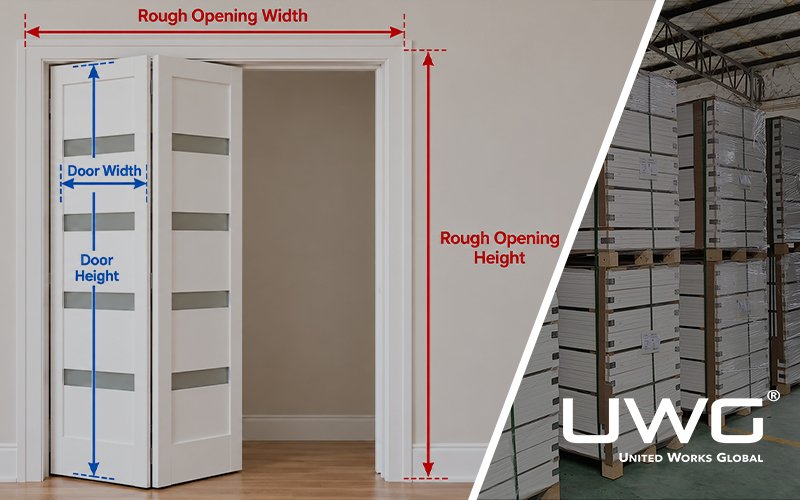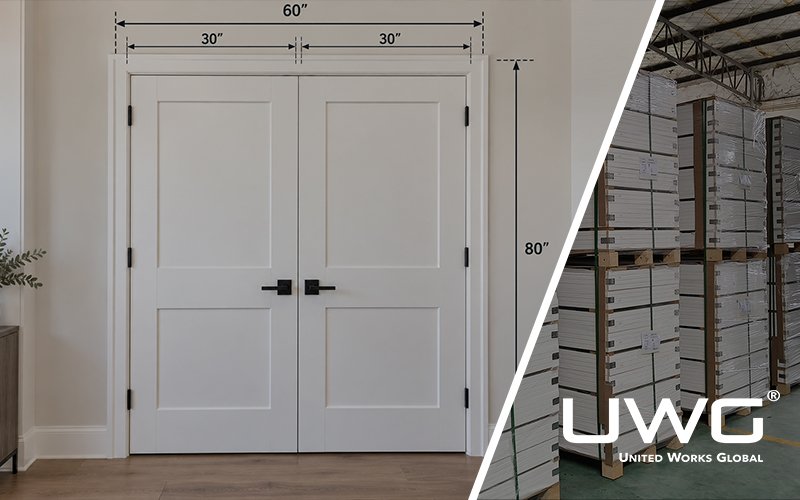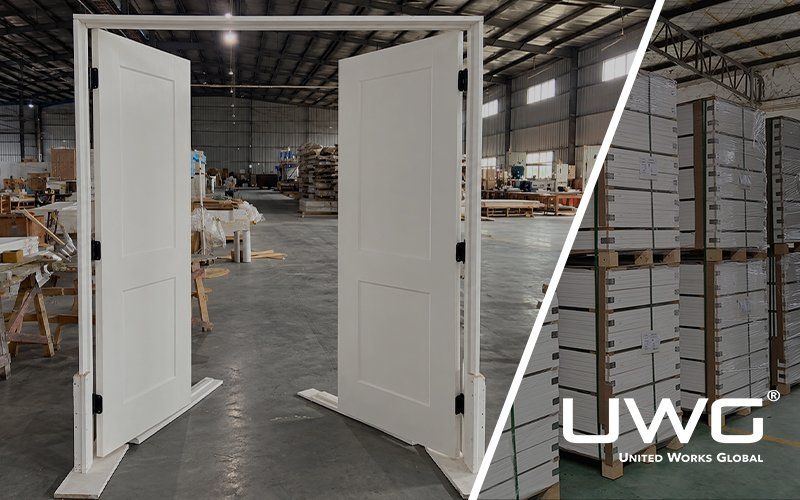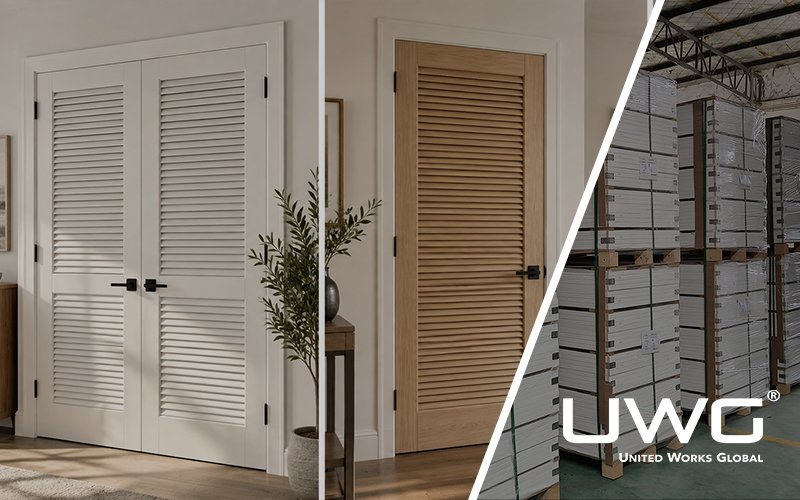
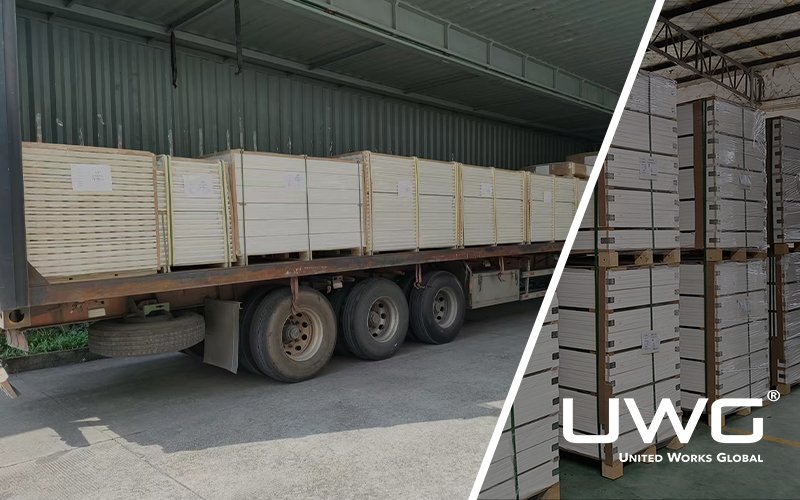
Choosing the right interior door manufacturer is a critical decision for builders, contractors, and developers involved in bulk construction projects.
Unlike individual door replacement, large-scale projects require hundreds or thousands of door units with consistent specifications, reliable production schedules, and coordinated delivery. A supplier that can provide one high-quality sample may not always be able to maintain the same quality, lead time, and communication throughout a large project.
For this reason, selecting an interior door manufacturer should involve more than comparing product prices. Builders need to evaluate manufacturing capability, quality control, customization support, and the supplier’s ability to work within the project schedule.
So, what should builders consider when selecting an interior door manufacturer for a bulk construction project?
Define Project Requirements Before Comparing Manufacturers
Before contacting different interior door manufacturers, builders should first define the project requirements.
A common mistake in bulk procurement is comparing suppliers before the product specifications, delivery expectations, and project priorities are clearly established. Without a defined scope, it becomes difficult to determine whether a manufacturer can actually support the project.
For large residential, multifamily, hospitality, or commercial projects, interior doors should be evaluated as part of the overall construction workflow rather than as individual products.
The right manufacturer needs to understand not only what doors are required, but also when they are needed, how they will be installed, and what level of consistency the project requires.
Confirm Door Types, Quantities, and Supply Scope
The first step is confirming the complete door supply scope.
Builders should identify:
- Door types and configurations
- Required quantities
- Door sizes and variations
- Material requirements
- Surface finishes
- Hardware preparation requirements
- Packaging and delivery expectations
Different projects may require different solutions.
For example, multifamily projects often prioritize consistent specifications, cost control, and reliable delivery across many units. Higher-end residential or hospitality projects may place more emphasis on appearance, customization, and specific material requirements.
A manufacturer that understands the complete scope can better prepare materials, organize production, and maintain consistency throughout the project.
Identify Non-Negotiable Project Requirements
Before requesting quotations, project teams should separate essential requirements from optional preferences.
Non-negotiable requirements may include:
- Required completion dates
- Approved door designs
- Specific materials or constructions
- Finish standards
- Hardware compatibility
- Required documentation
- Project-specific specifications
This step helps prevent a common procurement issue: selecting a supplier based on price before confirming whether the product can actually meet project requirements.
A lower quotation may not provide value if it creates additional coordination work, specification changes, or installation problems later.
Verify Who Will Actually Manufacture the Doors
When selecting interior door manufacturers, builders should confirm whether the company directly controls production or mainly operates as a distributor or trading company.
This distinction matters because bulk construction projects require consistency over time. Direct manufacturers typically have more control over:
- Material selection
- Production scheduling
- Manufacturing adjustments
- Quality inspection
- Product consistency
For projects involving repeated door orders, working with a company that understands its own production process can make communication more efficient.
However, being a manufacturer alone does not automatically guarantee a successful project. Production capability, quality systems, communication processes, and delivery performance should all be evaluated together.
A supplier’s role is not only to produce doors but also to support the project from specification confirmation through final delivery.
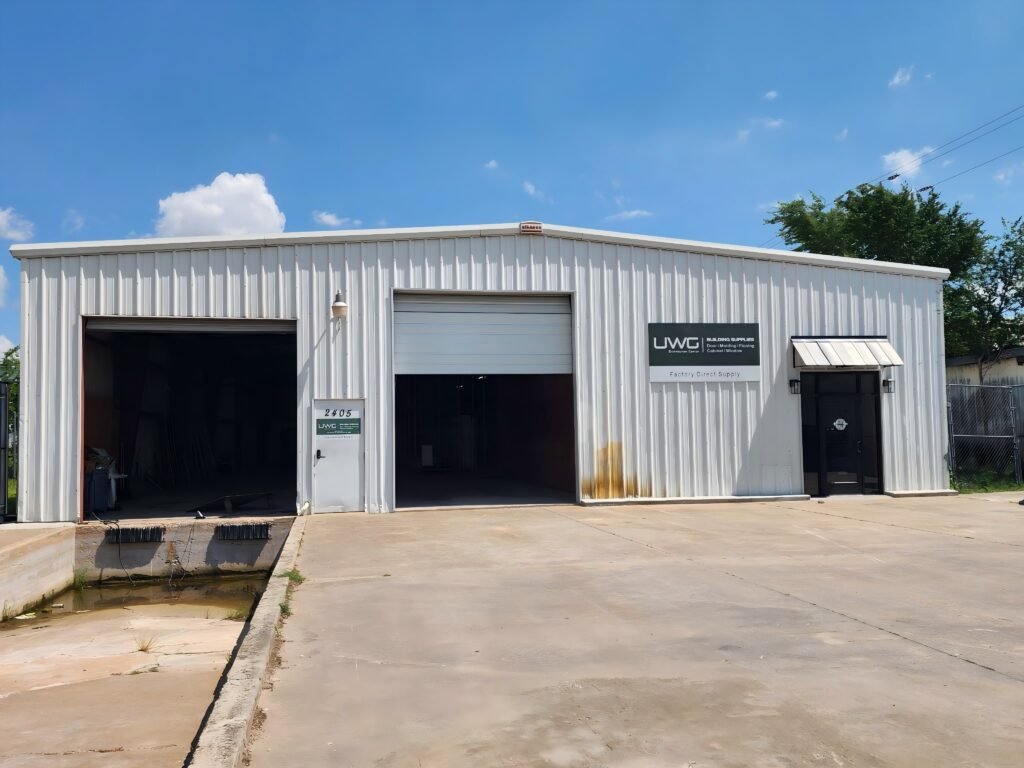
If you are looking for a supplier with proven large-scale manufacturing capacity, UWG combines direct production, coordinated material sourcing, quality control, and supply management to support consistent project delivery. Learn more about our Factory & Supply Chain.
Test Capacity Against Your Release and Delivery Plan
For bulk construction projects, production capacity should be evaluated based on the actual project schedule, not only a factory’s general output capability.
A manufacturer may have sufficient equipment but still face challenges when a project involves:
- Multiple door specifications
- Different SKUs
- Special finishes
- Multiple delivery phases
- Tight approval timelines
Before production begins, builders should understand how the manufacturer manages:
- Project SKU mix
- Material preparation
- Sample approval timing
- Production cycle
- Quality inspection
- Production buffer
- Batch release planning
- Shipping and transit time
A reliable manufacturer should be able to explain how production will align with the project timeline.
| Evaluation Area | What Builders Should Confirm | Why It Matters |
|---|---|---|
| Production Capacity | Factory capability, current schedule, ability to handle project volume | Helps prevent production delays |
| Product Consistency | Batch control, inspection process, repeat production capability | Maintains the same specifications across multiple units |
| Material Preparation | Availability of required materials and finishes | Reduces interruptions during production |
| Delivery Planning | Packaging, shipping schedule, and release sequence | Supports installation workflow |
Manufacturing Capacity and Production Consistency
Manufacturing capacity is not only about producing a large quantity of doors. It is also about maintaining consistent quality across every batch.
For bulk projects, small differences between production runs can create problems during installation. When hundreds of doors are installed throughout multiple buildings or floors, consistent dimensions, finishes, and hardware preparation become especially important.
Builders should evaluate whether a manufacturer can maintain:
- Stable door dimensions
- Consistent surface quality
- Repeatable finishing results
- Reliable production standards
- Consistent packaging methods
A manufacturer with strong production control can help reduce adjustments and coordination issues during installation.
Product Materials and Door Construction Options
A capable interior door manufacturer should be able to provide different product solutions based on the requirements of each project.
Bulk construction projects rarely need the same door configuration for every application. The right choice depends on factors such as project type, durability expectations, appearance requirements, sound control needs, and budget considerations.
Common interior door options include:
- Wood interior doors
- Solid wood interior doors
- Solid core doors
- Interior slab doors
- Different veneer, finish, and surface options
For example, multifamily projects often need a balance between cost efficiency, durability, and consistent appearance across many units. Hospitality or higher-end residential projects may require more emphasis on design details, finish quality, and performance.
The value of an interior door manufacturer is not only in producing doors, but also in helping builders select the right construction method for the project.
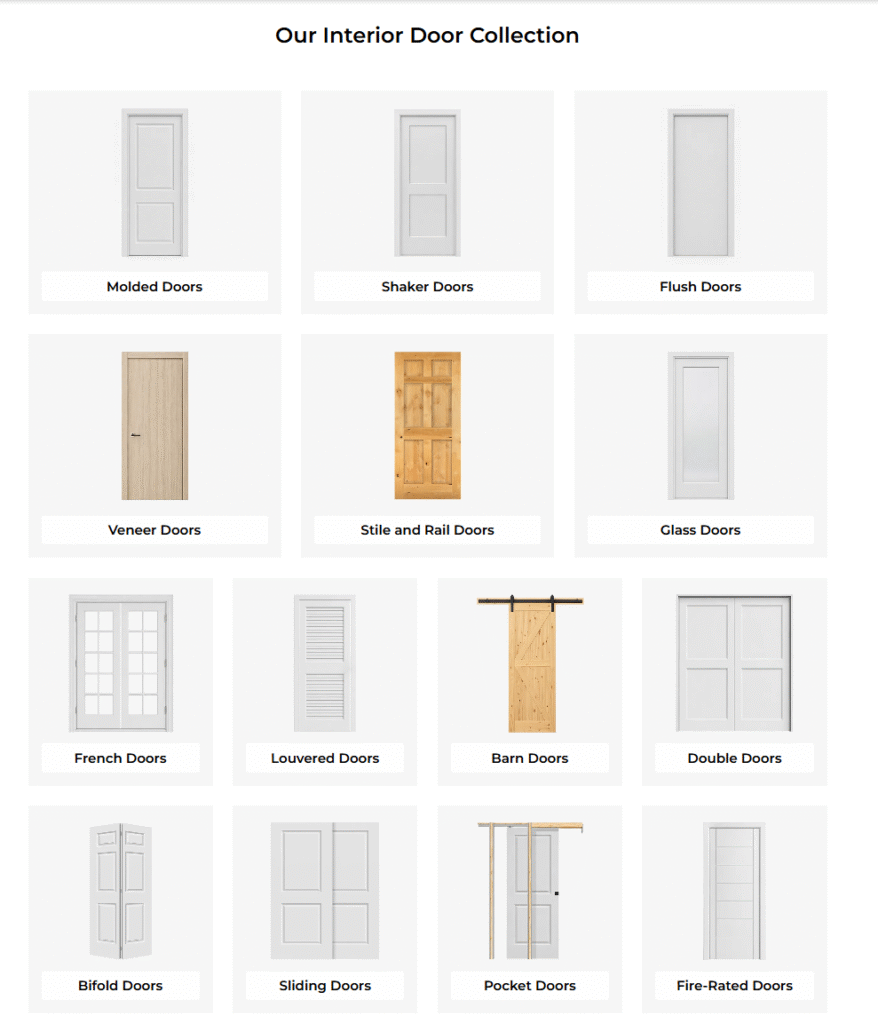
Different projects may require different door constructions, styles, and opening systems. Our full range of interior doors provides a broader view of the configurations that can be considered before finalizing the project specification.
Customization and Project Specification Support
Bulk construction projects often require more than standard catalog products.
Builders may need a manufacturer that can support project-specific requirements, including:
- Custom door sizes
- Specific finishes
- Special designs
- Hardware preparation
- Project-based specifications
- Packaging requirements
For example, a project may require the same door style across hundreds of units but with different handing, hardware preparation, or labeling requirements depending on the building layout.
Early communication between the builder and manufacturer is important because changes made after production begins can affect material preparation, manufacturing schedules, and delivery timing.
A reliable manufacturer should be able to review project specifications before production and clearly confirm what can be supported.
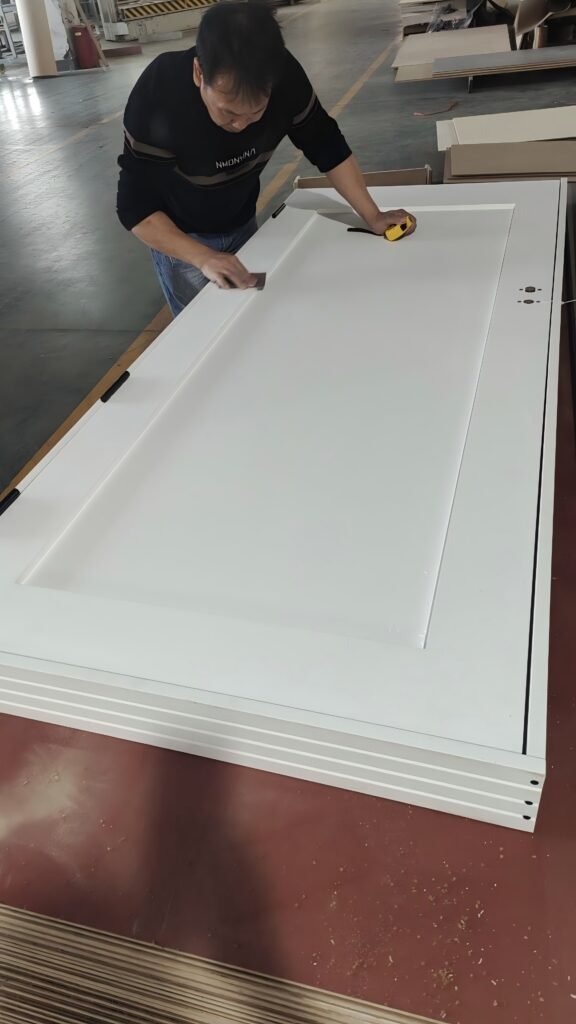
Examine Quality Control and Traceability
Before mass production begins, samples and approvals should be treated as project controls rather than simple product demonstrations.
For bulk construction projects, builders should confirm:
- Sample type and construction
- Door dimensions
- Material specifications
- Finish, color, gloss, and texture
- Hardware machining details
- Product identification method
- Approval person and approval date
- Revision records
A control sample or approved reference should be maintained throughout production so that future batches can be compared against the approved standard.
This becomes especially important when projects require multiple production releases. Without clear approval records, differences between batches can become difficult to evaluate.
A structured traceability process helps both manufacturers and builders maintain consistency from the first production run to the final delivery.
Use Samples and Submittals as Release Controls
Samples and submittals play an important role in reducing misunderstandings before production begins.
They should confirm more than appearance. Builders should use the approval process to verify:
- Product construction
- Dimensions
- Finish expectations
- Hardware preparation
- Packaging requirements
- Required documentation
Once approved, these details should become the reference standard for production.
This process is especially valuable for projects with repeated door openings because it creates a clear agreement between the builder and manufacturer before large quantities are produced.
A well-managed submittal process can help reduce changes, delays, and disputes later in the project.
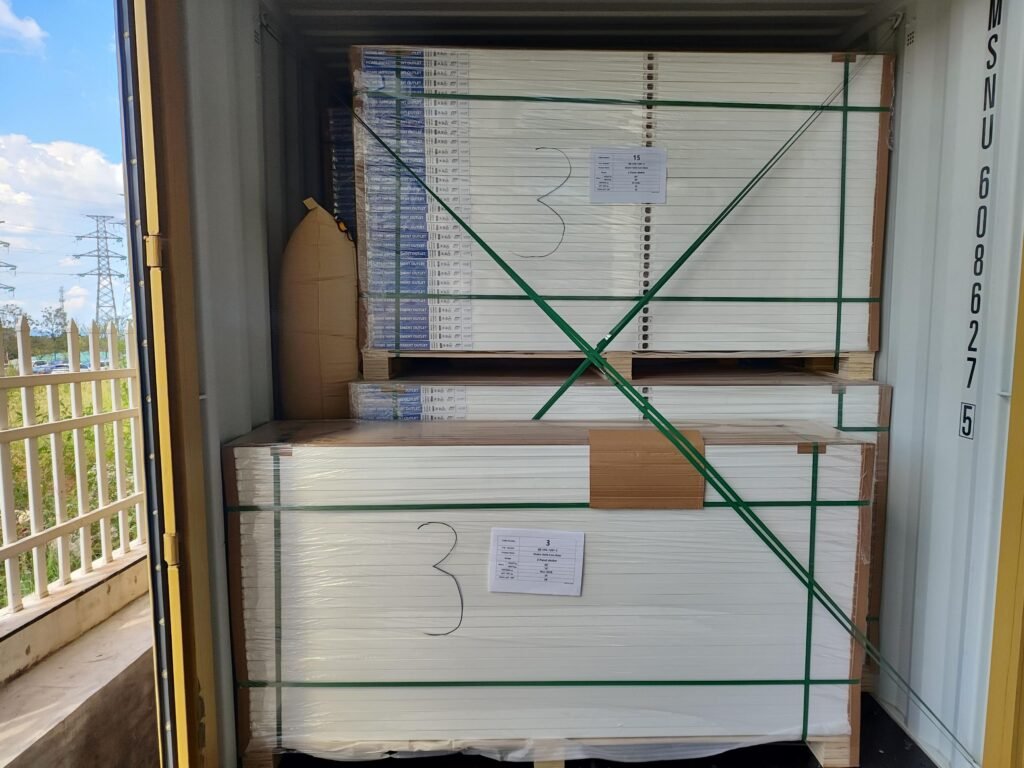
Plan Packaging, Labels, and Delivery by Installation Sequence
For bulk construction projects, delivery planning is an important part of supplier selection.
Producing the doors correctly is only one step. The products also need to arrive in a way that supports installation efficiency.
Builders should consider:
- Packaging protection
- Product labeling
- Building or unit identification
- Delivery sequence
- Storage requirements
- Site handling conditions
For multifamily projects, doors may need to be organized according to buildings, floors, or unit numbers. Clear labeling can help installers quickly identify the correct products and reduce unnecessary handling.
A manufacturer that understands the installation sequence can provide better coordination between production, shipping, and jobsite requirements.
The goal is not simply delivering products on time, but delivering the correct products to the correct location in a condition ready for installation.
Score Manufacturers Only After the Mandatory Gates
Before comparing manufacturers based on price or commercial terms, builders should first confirm whether each supplier meets the essential project requirements.
A practical evaluation process can include the following gates:
Gate 1: Project and Specification Fit
Confirm whether the manufacturer can produce the required door types, materials, finishes, dimensions, and configurations.
Gate 2: Required Compliance
Verify whether products meet project specifications, documentation requirements, and any applicable standards required for the project.
Gate 3: Sample and Submittal Acceptance
Confirm that samples, drawings, finishes, and technical details have been reviewed and approved before production.
Gate 4: Capacity and Delivery Feasibility
Evaluate whether production schedules, shipping plans, and delivery timing match the construction schedule.
Only after these gates are passed should builders compare additional factors such as:
- Engineering support
- Quality systems
- Logistics capability
- Commercial terms
- Problem-solving ability
- Recovery plans when unexpected issues occur
The final evaluation result can then be classified as:
| Evaluation Result | Meaning |
|---|---|
| Go | Manufacturer meets project requirements and can proceed |
| Conditional Approval | Additional clarification or improvements are required |
| No-Go | Manufacturer cannot reliably support the project requirements |
This approach helps builders avoid selecting suppliers based only on initial pricing while overlooking risks that may affect the overall project.
FAQ
What should I look for in an interior door manufacturer?
Builders should evaluate manufacturing capability, production consistency, quality control processes, customization support, sample approval procedures, packaging methods, and delivery reliability. The right manufacturer should be able to support both product requirements and the overall construction schedule.
What questions should builders ask an interior door manufacturer?
Builders should ask about production capacity, lead times, available door constructions, customization options, quality control procedures, sample approval processes, packaging methods, and how the manufacturer manages large-volume projects.
Should builders buy doors directly from manufacturers?
For bulk construction projects, purchasing directly from manufacturers can provide better communication, specification control, and customization support. However, the best approach depends on project requirements, supplier capability, and the level of support needed.
How early should builders contact an interior door manufacturer?
Builders should involve manufacturers early enough to confirm product specifications, samples, production schedules, and delivery planning before construction deadlines become fixed. Early coordination can help prevent specification changes and schedule issues later.
What is the difference between a door manufacturer and distributor?
A manufacturer directly controls production processes such as material selection, manufacturing, and quality inspection. A distributor typically sources products from manufacturers and manages sales or logistics. For large projects requiring customization or consistent production, direct manufacturer communication may provide additional advantages.
Conclusion
Choosing an interior door manufacturer for a bulk construction project is not only about selecting a product supplier. It is about selecting a manufacturing partner that can support consistent production, accurate specifications, quality control, and reliable delivery throughout the project.
For large-scale projects, builders should evaluate manufacturing capability, customization support, approval procedures, production planning, and logistics coordination before making a decision.
A reliable interior door manufacturer should help reduce project risks from production through installation by providing consistent products and dependable support when the project requires it.