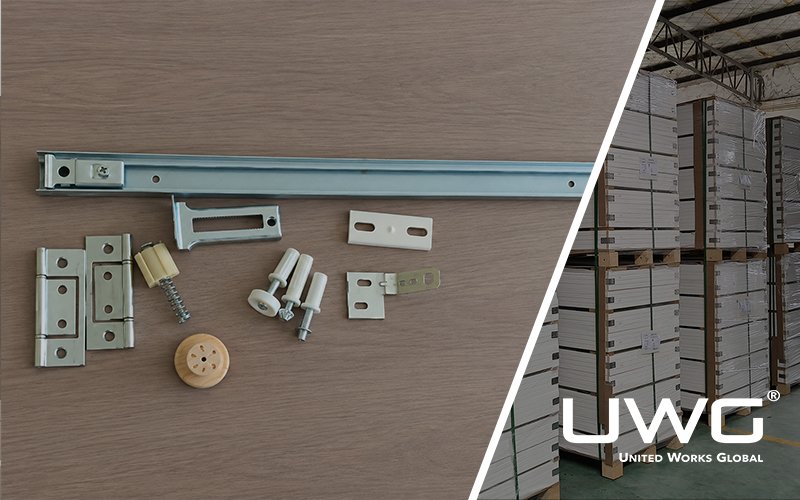
Understand bifold door pivots, guides, rollers, hinges, and tracks. Learn how to check load ratings, panel compatibility, kit contents, and component quantities, and identify issues before installation or replacement.
Bifold door hardware controls how panels fold, travel, and carry weight. Pivots, hinges, guides, tracks, and load-bearing carriers perform different jobs, so choosing the right combination starts with understanding the system.
This guide explains those components, how to check a hardware kit, and what to verify before ordering or replacing parts for interior bifold doors.
What Are the Main Components of Bifold Door Hardware?
For a typical interior bifold closet door, the hardware is a coordinated assembly. This guide covers common component roles; the selected series’ installation drawing and rated configuration govern the actual load path, machining, and component selection.
Pivots: Positioning and Supporting Door Panels
A pivot pin and matching bracket establish a turning point, often near the jamb. In some bottom-supported closet systems, the bottom pivot carries much of the weight while an upper pivot keeps the panel aligned.
Guide Rollers and Load-Bearing Hangers
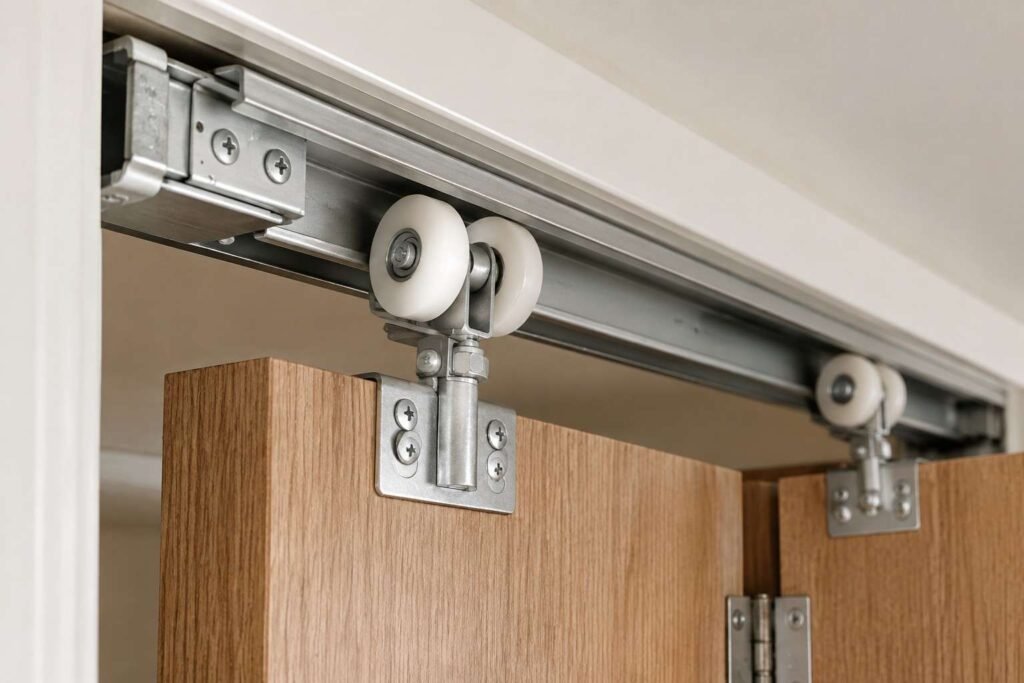
A guide roller or sliding guide keeps a moving panel in its intended path. A hanger or carrier is different: in a top-hung design, it transfers door weight into a rated track and its supports. Some guides have wheels, so the word “roller” alone does not establish whether a component carries weight.
Hinges: Connecting the Folding Door Panels
Bifold door hinges connect neighboring leaves so they fold together. Their quantity, spacing, screw type, and attachment material matter. Confirm hinge positions and fixing details on the machining drawing.
Tracks and Matching Hardware
A bifold door track controls a guide or carrier’s route; whether it supports weight depends on the system. Track profile, matching guide or hanger geometry, end stops, brackets, and fixings must suit the approved arrangement.
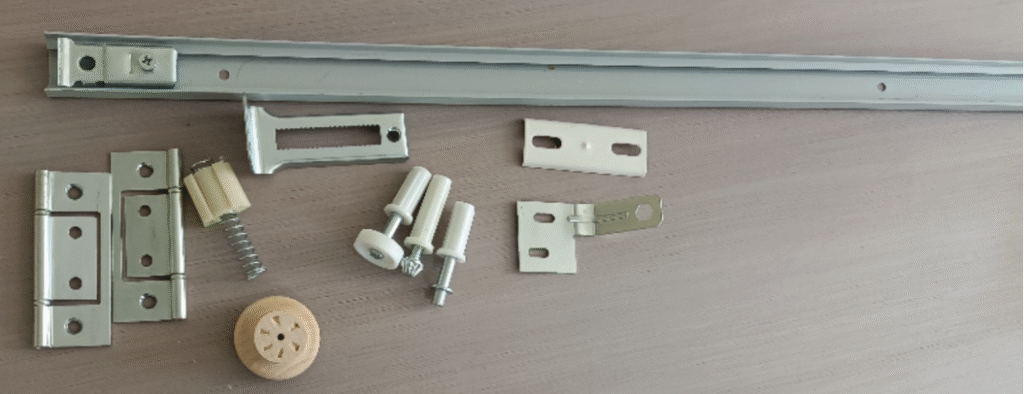
What Is a Lightweight Bifold Door Hardware System?
A lightweight bifold door hardware system is designed for interior residential applications such as closets, wardrobes, laundry rooms, and compact storage spaces. These systems prioritize smooth operation, simple installation, and a clean modern appearance.
Our lightweight bifold door hardware system supports door panels weighing up to 40 lbs. (18 kg) and accommodates door thicknesses from 19 mm to 45 mm.
The system uses a top-hung track design that helps save floor space while maintaining stable door movement. Compared with traditional bifold systems, this modern configuration provides a cleaner look and easier adjustment during installation.
Common applications include:
- Closet doors
- Wardrobe systems
- Residential interiors
- Apartment projects
- Lightweight MDF or wooden panels
Builders often prefer lightweight bifold systems because they are faster to install and easier to maintain in residential projects.
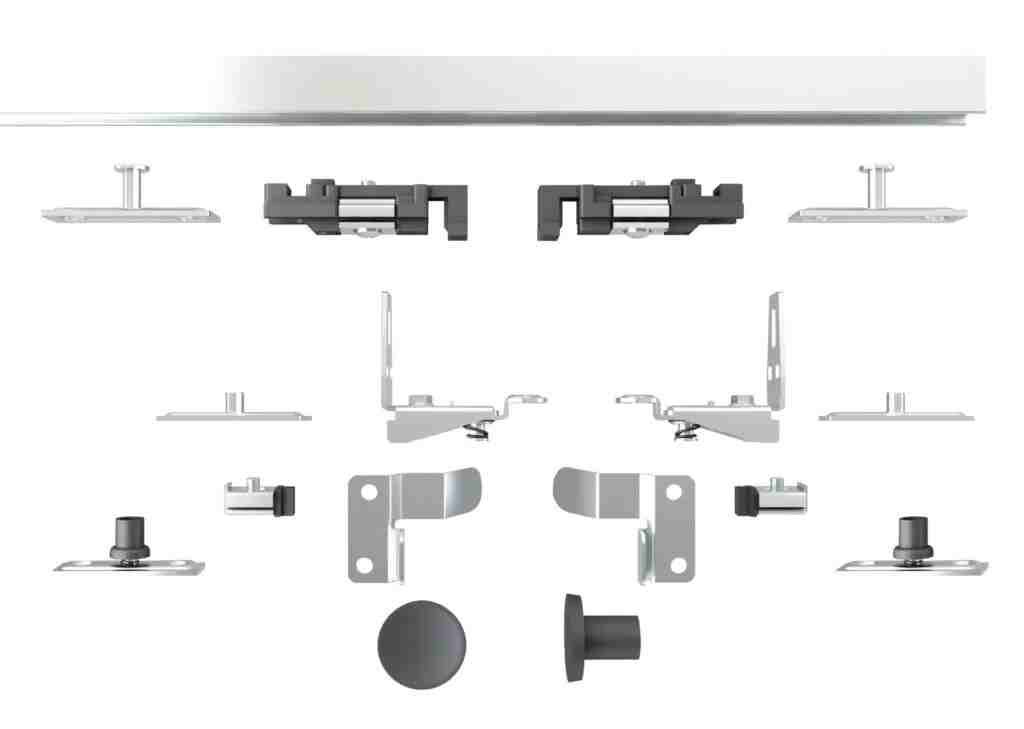
How Do Bifold Door Hardware Components Work Together?
How Do Bifold Door Panels Fold and Move?
In a common two-panel closet configuration, one edge rotates around pivots near the jamb while the two leaves hinge together. As the door folds, the far end travels along its guided path. Four-leaf arrangements can use two folding pairs and additional pivot and guide components.
How Does the System Support and Guide the Panels?
Trace the load path: which fitting takes vertical weight, what controls lateral movement, and where do those forces enter the building structure? A bottom-supported system may use an upper track mainly for guidance; a top-hung system relies on rated carriers, track, and header support. A pivot may locate, support, or do both. The installation drawing—not the track’s location—defines each role.
How to Match Bifold Hardware to the Panels and Opening
Whether selecting hardware for the first time or upgrading the door panels later, begin with actual panel and opening specifications.
Door Weight, Panel Thickness and Hardware Load Ratings
Record each leaf’s height, width, thickness, material, and finished weight, including glazing or added facing where applicable. Verify whether the published load rating applies per leaf, per folding pair, per opening, or per complete system. If a lightweight panel is replaced with heavier timber, the previous rating cannot simply be assumed to remain suitable. Check any stated width and height limits as well.
Pivot Positions, Hinge Fixings and Edge Support
Confirm pivot setbacks, drilling dimensions, hinge positions, and reinforcement at fixing points. A screw seated in a solid edge member behaves differently from one driven into a thin skin or unsuitable core. Handing, fold direction, and jamb clearance may also affect positions.
Guide Roller, Hanger and Track Compatibility
Guide wheels must match the track’s channel and running surfaces. Load-bearing hangers additionally require the correct attachment plates, rated tracks, and structural fixings. Check the component numbers as a coordinated bifold door track system.
Track Length, Opening Dimensions and Mounting Requirements
Confirm the clear opening width and height, leaf layout, folding direction, required clearances, and header or floor fixing conditions. Specify track lengths and any joints from the approved system drawing, not just the total panel width. Check the positions of stops, brackets, and any floor sockets or guides. Changing panel thickness or height may also change the required offsets.
What to Confirm in a Bifold Hardware Kit
Build the order around the opening layout, then identify what each package actually covers. A purchase schedule should connect the hardware series, package number, coverage, and required opening quantity.
Complete Hardware Kits vs. Individual Component Packs
Separate three purchasing formats:
- Opening set: Intended to equip a stated panel arrangement. Check whether the track, hinges, stops, pulls, and fixing accessories are included.
- Panel-pair pack: May contain pivots, guides, brackets, or hinges for a folding pair, while the track and other accessories are separate.
- Replacement component: A specific pivot, guide, hinge, or bracket supplied individually or in a small pack.
Read the included/excluded list alongside the installation drawing. For example, stops or pivot locks may be packaged with a track rather than with the panel-pair pack. Record those relationships so that combining packs does not leave missing parts or duplicate items.
Illustrative Quantities for Two- and Four-Panel Openings
The table assumes two-panel folding pairs, one upper guide and one upper/lower pivot assembly per pair, three inter-panel hinges per pair, and one continuous track assembly per opening.
| Component | Two panels: one folding pair | Four panels: two folding pairs |
|---|---|---|
| Track assembly | 1 | 1 |
| Upper/lower pivot assembly with matching brackets | 1 set | 2 sets |
| Upper guide | 1 | 2 |
| Inter-panel hinges | 3 assumed | 6 assumed |
| Pulls | 1 assumed | 2 assumed |
| Stops | 1 assumed | 2 assumed |
| Aligners, screws, anchors, and reinforcement | Check the configuration and substrate | Check the configuration and substrate |
For ten identical openings, multiply the confirmed per-opening quantities by ten, then convert the result into the supplier’s pack sizes. Keep project spares separate from the installed quantity. Track lengths, handed parts, aligners, and fixing requirements still need their own schedule entries.
Included Accessories and Supply Responsibilities
Identify who supplies the track supports, pivot sockets, mounting plates, end stops, pulls, fasteners, and any reinforcement. Separate factory-installed items from loose accessories for site installation.
The final order should state the component number, description, pieces per pack, required packs, opening coverage, and supply responsibility. This turns a general kit description into a checkable purchasing list.
What Problems Can Incompatible Bifold Door Hardware Cause?
Binding After a Panel Change
After a closet-door replacement, the folding pair moved smoothly through most of its travel but began rubbing near the jamb as it closed. The roller initially appeared to be the problem. Checks of the panel dimensions, squareness, finished weight, and opening found no discrepancy, so attention shifted to the pivots, track alignment, and fitted part numbers. The replacement guide had a different running profile from the specified track, causing it to bind near the closing position. The mismatched guide was replaced with the approved component, and the pivot and track positions were checked against the installation drawing. Repeated opening and closing then showed consistent gaps, continuous guide engagement, and no rubbing at the jamb. The purchasing lesson is to record the guide, pivot, and track series together and verify the combination with the intended panels during a trial installation before ordering the batch.
Turn Symptoms into a Check List
Sagging, scraping, uneven gaps, or stiff operation are starting observations, not diagnoses. Record each symptom beside checks for the panel, opening, fixing points, alignment, and hardware interface. If the documented load rating is unsuitable, select an approved system rather than trying to compensate through adjustment.
What Should Be Verified Before Ordering Bifold Door Hardware?
What to Verify During a Trial Installation
A trial installation should use the intended panel construction and exact hardware series. Open and close the door through its full travel. Check consistent gaps, floor clearance, guide engagement, hinge movement, fastener seating, and end stops.
For example, a door might move freely when open but rub near the jamb as it closes. This observation calls for checks of pivot setback, track alignment, leaf squareness, and clearances before blaming the roller. Record the finding and confirm any proposed correction against the supplier’s instructions.
Final Order Confirmation Checklist
- Confirm the latest approved drawing revision and exact hardware model or series.
- Match panel dimensions, finished weights, opening details, and manufacturer ratings.
- Confirm the supply scope for every opening, including tracks and installation accessories.
- Resolve outstanding technical questions and document the approved sample configuration.
Frequently Asked Questions About Bifold Door Hardware
How Many Hinges Does a Bifold Door Need?
There is no universal number. Hinge quantity depends on the number and size of leaves, hinge type, panel construction, and the manufacturer’s approved arrangement. Follow the specified hinge schedule rather than a generic count.
Can You Replace a Bifold Door Track Without Changing the Other Hardware?
Only when the replacement is approved for the existing guides or hangers, mounting hardware, and rated configuration. Matching length alone is not enough. Verify the track profile and hardware series before ordering.
Conclusion
Bifold door performance depends on a matched system, not parts that merely appear to fit. Confirm load paths, panel specifications, track interfaces, kit coverage, and installation clearances before releasing an order. Clear documentation and a representative trial installation help reduce avoidable site delays.