Shaker interior doors are known for clean lines, square profiles, and recessed panels, making them a common choice for residential and multifamily projects.
However, “Shaker” describes a door style rather than a specific material or construction method. For builders and wholesalers, understanding the differences in panel design, construction, and door systems is important when comparing products and preparing project specifications.
What Is a Shaker Door?
An interior Shaker door is recognized by its simple geometric panel design. It typically features vertical stiles, horizontal rails, and one or more flat recessed panels with little decorative detailing.
Unlike raised-panel interior doors with more elaborate profiles, Shaker doors rely on straight lines and balanced proportions. Their restrained appearance allows them to work across modern, transitional, and traditional residential interiors.
The term Shaker primarily describes the door style. It does not by itself define the material or manufacturing method, which should be specified separately when comparing products.
Interior Shaker Door Construction Is Not Always the Same
Interior doors with a similar Shaker appearance are not necessarily manufactured in the same way. This distinction matters when builders and wholesalers compare products that may look similar in elevations, samples, or catalogs.
Stile-and-Rail Construction
A stile-and-rail door is assembled using vertical stiles and horizontal rails with panels positioned within the framework. Depending on the specification, these components may use timber, MDF, or engineered wood.
This construction naturally creates the straight lines and square panel geometry associated with the Shaker style. Stile, rail, and panel dimensions can also be adjusted to create different panel proportions.
Shaker-Style Molded Doors
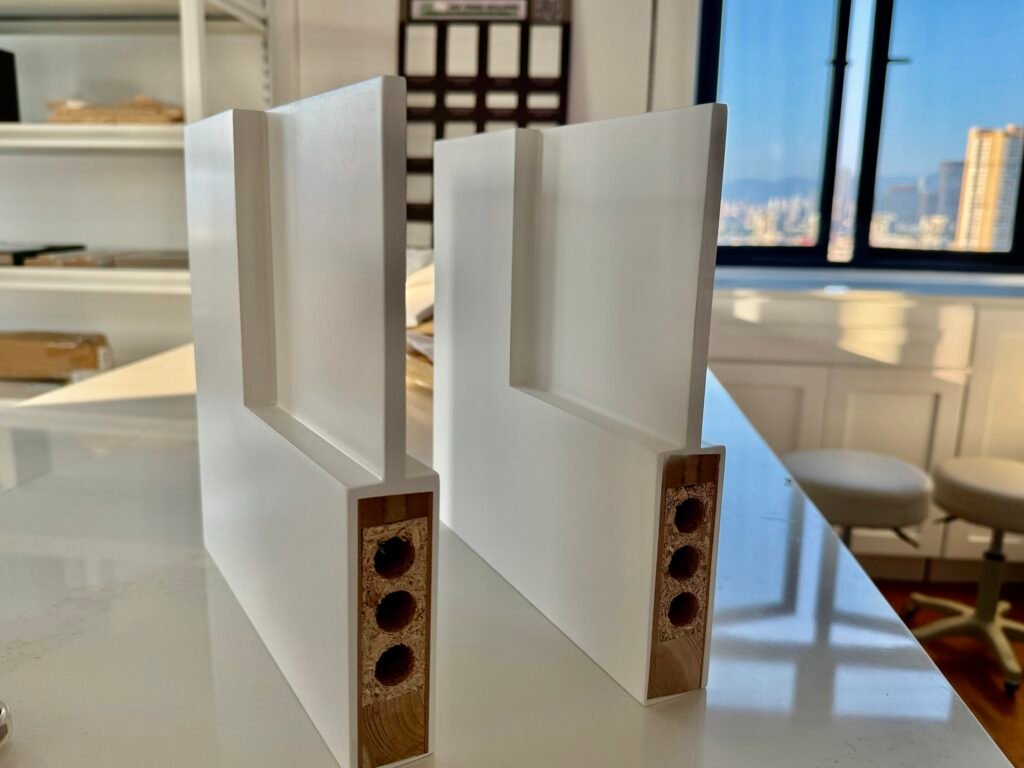
A Shaker-inspired appearance can also be produced with molded door skins. Instead of assembling the visible face from individual stile, rail, and panel components, the panel pattern is formed directly into the molded skin.
What is a molded door? A molded door generally uses molded door skins attached to an internal frame and supporting construction. Different molds can create a range of panel patterns, including designs that resemble Shaker doors.
However, the profile may not be identical to an assembled Shaker door. Traditional Shaker styling is commonly associated with crisp, square transitions around the recessed panel, while molded skins may have softer or slightly radiused transitions depending on the mold design.
For projects requiring a specific square Shaker profile or a close match to an existing door, builders should compare the actual profile through drawings or samples rather than relying on the panel count alone.
Common Shaker Panel Door Styles
The number, size, and arrangement of recessed panels create the main visual differences between Shaker panel door designs.
1 Panel Shaker Door
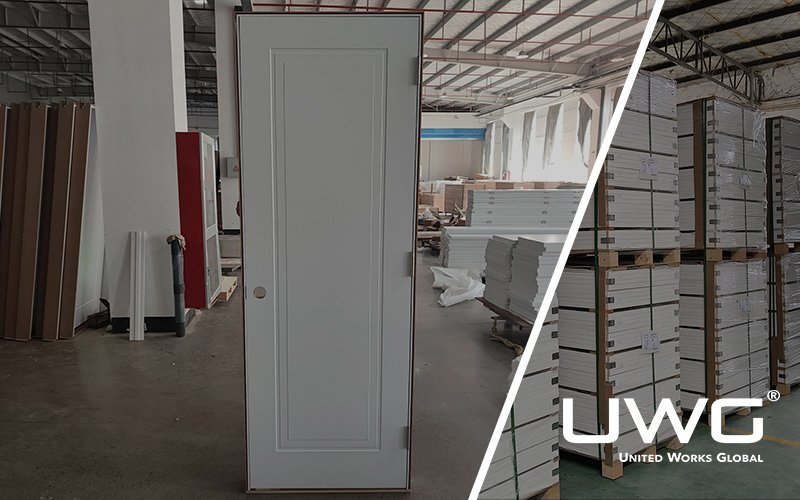
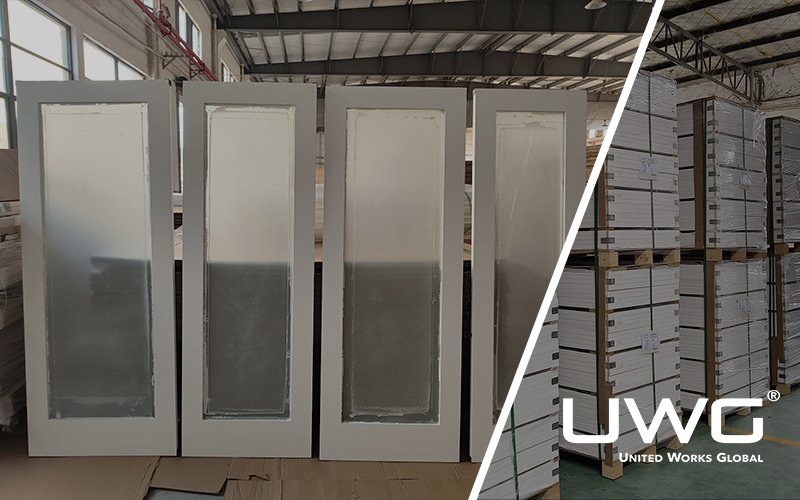
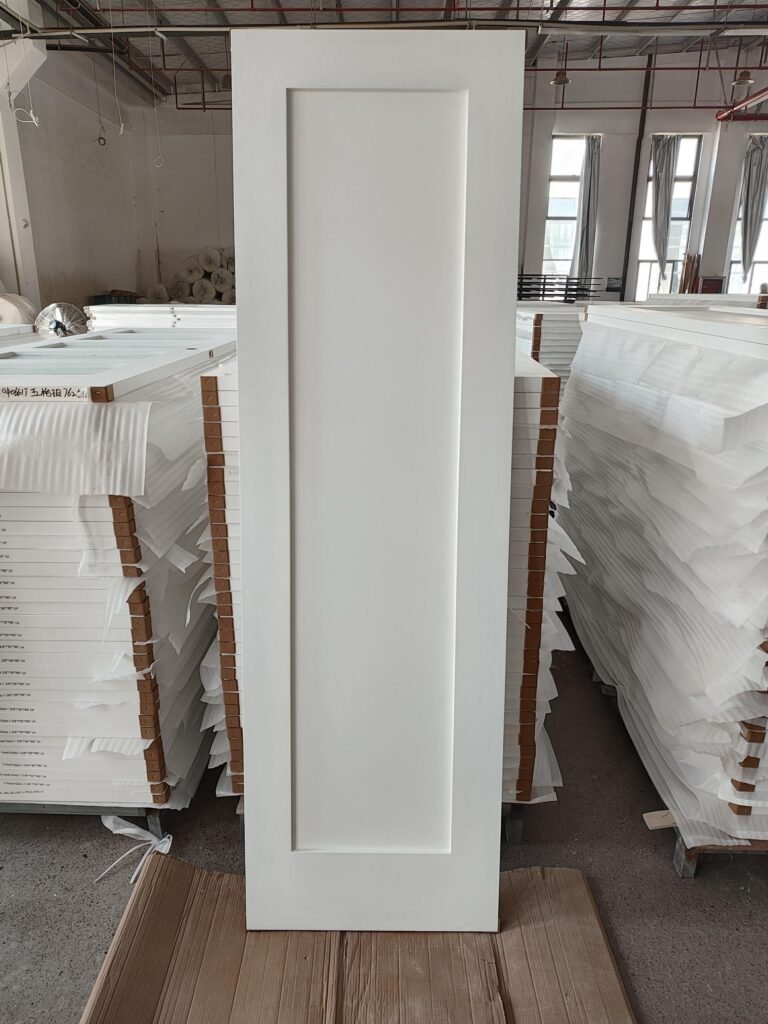
A 1 panel Shaker door has one large recessed panel surrounded by a simple rectangular frame. Its minimal appearance works particularly well in contemporary and transitional interiors.
Because the design has few visual divisions, panel proportion has a strong influence on the overall appearance.
2 Panel Shaker Door
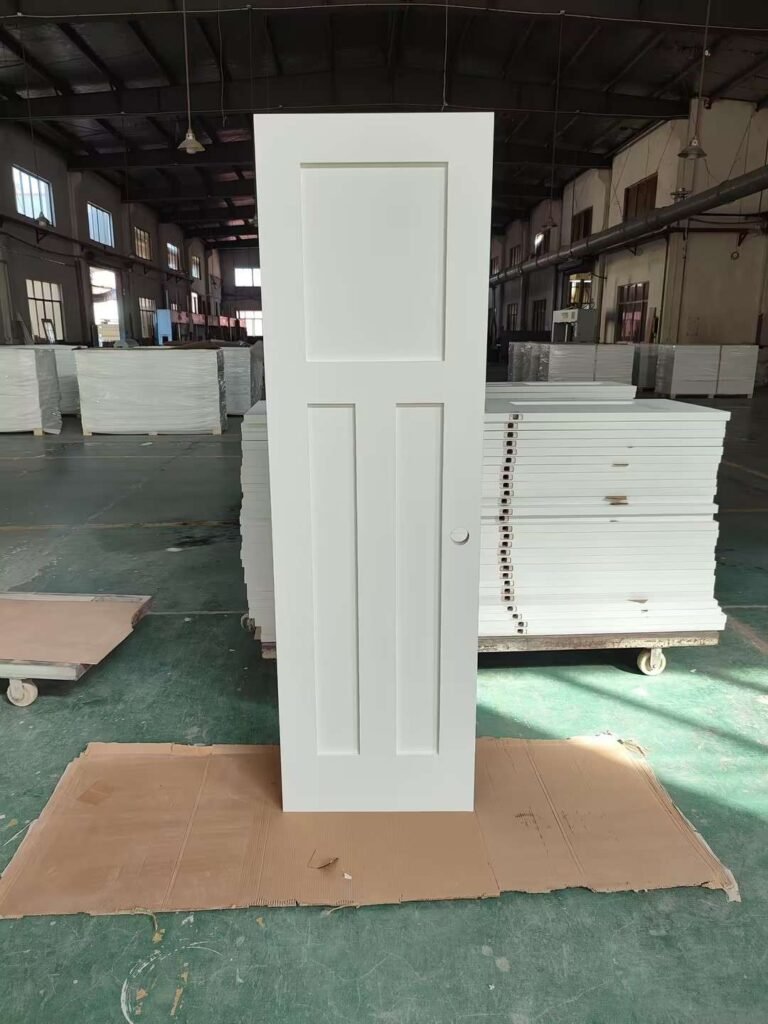
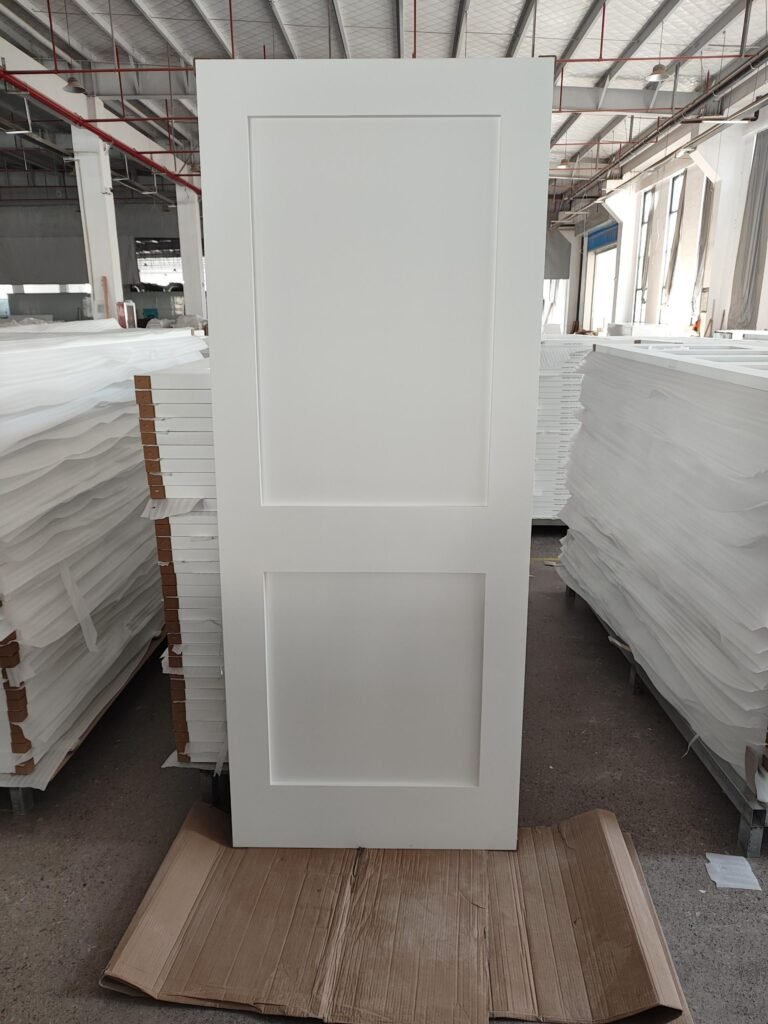
A 2 panel Shaker door divides the door face into two recessed panels with an intermediate horizontal rail. It adds visual structure while maintaining the clean Shaker appearance.
Panel proportions can vary between designs, so two 2 panel Shaker doors may look noticeably different even when their overall slab dimensions are identical.
3 Panel, 5 Panel and Multi-Panel Shaker Doors
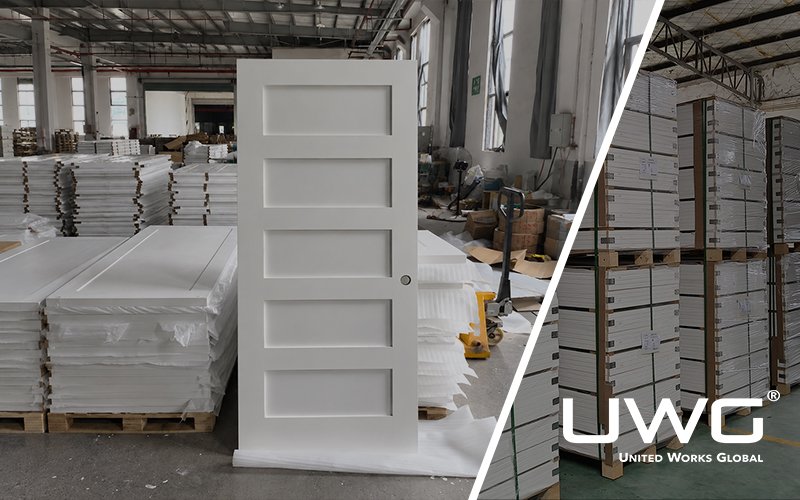
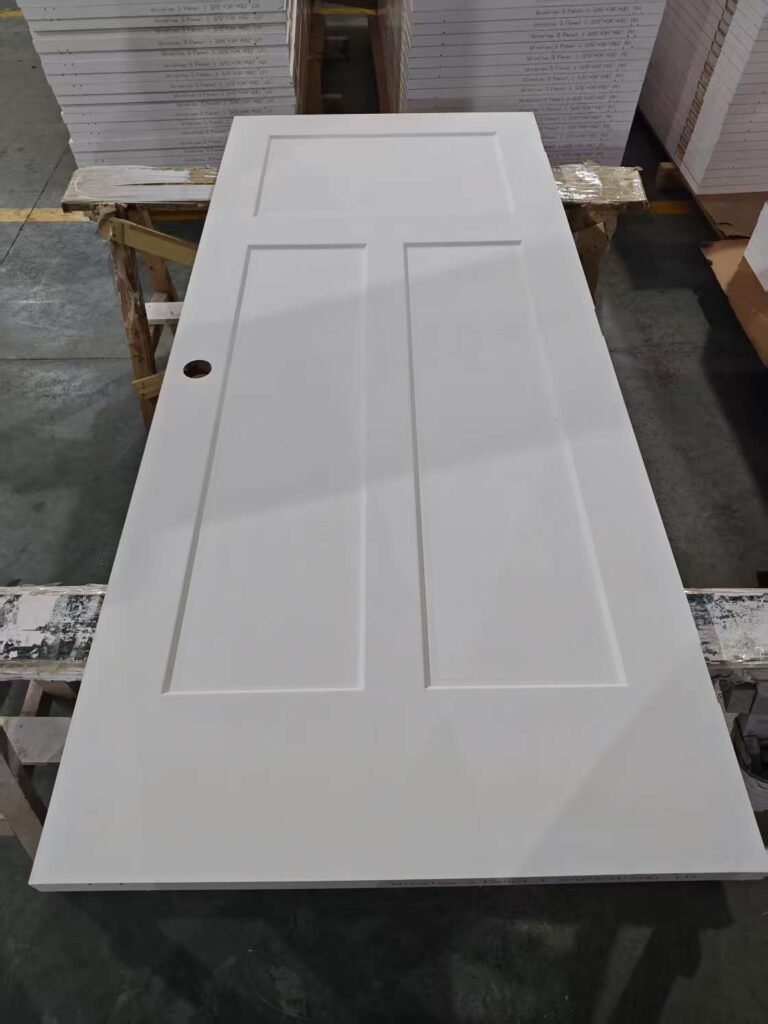
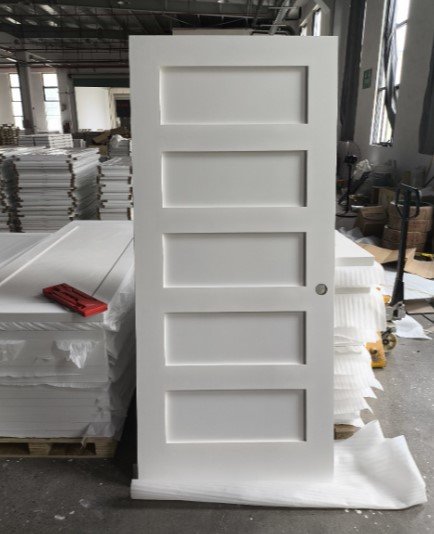
Three-panel, 5 panel Shaker doors, and other multi-panel designs introduce additional horizontal divisions while retaining the simple square geometry of the Shaker style.
A 5 panel design creates a more pronounced repeating pattern across the door face while remaining visually clean. It can be used when a project wants more detail than a 1 or 2 panel design without moving to decorative raised profiles.
When multiple slab sizes are used within the same project, panel spacing and rail positions should be reviewed through drawings or approved samples so the design remains visually consistent.
Interior Shaker Doors Can Be Used in Different Door Systems
Shaker styling can be adapted to different interior door systems rather than being limited to a standard swing door.
Depending on slab design and hardware compatibility, Shaker interior doors can be configured as hinged doors, pocket doors, sliding doors, barn doors, bifold doors, or double doors.
Supply format is a separate consideration. For example, a hinged Shaker door may be supplied as a door slab, a knock-down set, or a fully pre-hung unit depending on the project and installation requirements.
Keeping these two decisions separate helps builders specify both how the door operates and how it should be supplied to the jobsite.
Where Are Shaker Interior Doors Commonly Used?
Bedrooms and Bathrooms
Shaker interior doors are commonly used for bedrooms and bathrooms because their simple panel design coordinates easily with cabinetry, casing, baseboards, and other interior finishes.
Construction, finish, and hardware can then be specified according to the requirements of each opening.
Closets, Hallways and Utility Areas
The same Shaker panel family can continue across closets, hallways, and utility areas. This helps maintain a consistent interior door package while allowing the door system and specification to vary by opening.
Production Housing, Multifamily and Repeated Openings
Interior Shaker doors are particularly practical for residential and multifamily projects with repeated openings.
From our experience with repeated door schedules, standardizing a limited number of panel styles, slab sizes, jamb specifications, and machining requirements can simplify purchasing and reduce unnecessary variation during production and installation.
For larger projects, approved drawings and a clearly defined door schedule also help ensure that the selected Shaker design remains consistent across different sizes and production batches.
Feature Openings and Coordinated Interiors
Double doors, wider openings, and other feature locations can use the same Shaker design language as standard bedroom or hallway doors.
This allows builders to use different door systems throughout a project while maintaining a coordinated interior appearance.
Shaker Door vs. Molded Door: What Is the Difference?
Shaker and molded describe different characteristics of an interior door. Shaker primarily describes the visual style, while molded describes a manufacturing method.
| Comparison | Shaker Door | Molded Door |
|---|---|---|
| Primarily Describes | Door style and appearance | Manufacturing method |
| Typical Appearance | Clean, square recessed panels | Depends on the molded skin design |
| Panel Options | 1, 2, 3, 5 or other multi-panel designs | Depends on available molds |
| Panel Profile | Typically crisp and square in assembled Shaker designs | May have softer or radiused transitions depending on the mold |
| Construction | Varies by product | Uses molded door skins |
| Key Buying Check | Panel design, profile and construction | Skin design and complete door specification |
A molded interior door can therefore have a Shaker-inspired appearance, but the panel profile and construction may differ.
For builders and wholesalers comparing quotations, the product name alone is not enough. Check the actual profile, materials, construction, dimensions, finish, and preparation before treating two products as equivalent.
How to Select Shaker Interior Doors for a Project
Match the Panel Style to the Project Design
A 1 panel Shaker door creates the simplest appearance, while 2 panel, 3 panel, 5 panel, and other multi-panel options introduce progressively more visual divisions.
Consider how the panel layout coordinates with cabinetry, casing, baseboards, wall details, and other interior finishes.
Match the Construction to the Opening Requirements
After selecting the desired appearance, compare available constructions according to the opening, expected use, project requirements, and budget.
This is particularly important when products appear similar in elevations or catalog images but use different materials, profiles, or manufacturing methods.
Check Door Size and Panel Proportions
Door dimensions affect how a Shaker panel layout appears. A panel arrangement that looks balanced on one slab size may look different when applied to a taller or wider door.
For projects using multiple sizes, reviewing elevations or shop drawings before production helps confirm panel spacing and rail positions.
Coordinate Door Operation, Supply Format and Hardware
First confirm how the door needs to operate—hinged, pocket, sliding, barn, bifold, or another system. Then determine whether it should be supplied as a slab, KD set, pre-hung unit, or another appropriate package.
Frame, jamb, machining, and hardware preparation should then be coordinated with those decisions before production.
What Builders Should Confirm Before Ordering
Door Size and Thickness
Confirm slab width, height, thickness, quantities, and any non-standard dimensions.
Material and Construction
Identify the required materials and construction so quotations from different suppliers can be compared on the same basis.
Panel Configuration and Profile
Confirm panel count, proportions, rail locations, and the required panel-edge profile. If a specific 90-degree Shaker appearance is required, drawings or approved samples provide a clearer reference than the term “Shaker door” alone.
Jamb and Hardware Preparation
For prepared or pre-hung interior doors, verify jamb specifications, handing, hinge preparation, lock bore, backset, and other required hardware details.
Finish and Approved Samples
Confirm whether the doors will be unfinished, primed, or factory finished. For volume orders, approved drawings and samples can establish a clear production reference before mass production begins.
FAQ
Are Shaker Doors Solid Wood?
Not necessarily. Shaker describes the panel style rather than a specific material. Depending on the construction, an interior Shaker door may use wood, MDF, engineered wood, molded skins, or combinations of materials.
Is a Shaker Door the Same as a Stile-and-Rail Door?
No. Stile-and-rail describes a construction method, while Shaker describes a design style. Stile-and-rail construction can produce a Shaker door, but other manufacturing methods can also create a Shaker-inspired appearance.
What Is the Difference Between a 1 Panel and 2 Panel Shaker Door?
A 1 panel Shaker door has one large recessed panel. A 2 panel Shaker door divides the face into two recessed sections with an intermediate horizontal rail, creating more visual division.
Are Shaker Doors Modern or Traditional?
They can suit both. Shaker design has traditional roots, but its straight lines, square profiles, and limited ornamentation also fit modern and transitional interiors.
Can Shaker Interior Doors Be Used for Bedrooms and Bathrooms?
Yes. Shaker interior doors are commonly used for bedrooms and bathrooms as well as closets, hallways, and other residential openings. Construction, finish, frame, and hardware should be selected according to the requirements of each opening.
What Is the Difference Between a Shaker Door and a Molded Door?
Shaker describes a visual style, while molded describes a manufacturing method using molded door skins. Molded skins can reproduce Shaker-inspired panel layouts, although the panel-edge profile may differ from an assembled Shaker door.
Summary
An interior Shaker door is characterized by clean lines, square profiles, and flat recessed panels. Common designs include 1 panel, 2 panel, 3 panel, 5 panel, and other multi-panel configurations. Shaker styling can also be adapted to hinged, pocket, sliding, barn, bifold, and double-door systems, while supply formats such as slab, KD, and pre-hung should be specified separately.
For builders and wholesalers, selecting Shaker interior doors involves more than choosing a panel count. Construction method, panel profile, dimensions, proportions, door operation, supply format, jamb details, hardware preparation, and finish should all be confirmed. For repeated residential and multifamily projects, approved drawings, samples, and consistent door schedules help maintain the intended Shaker appearance from quotation through production and installation.