
Projects
Resources
Explore our products, understand their features, and discover the services we offer to support your project.
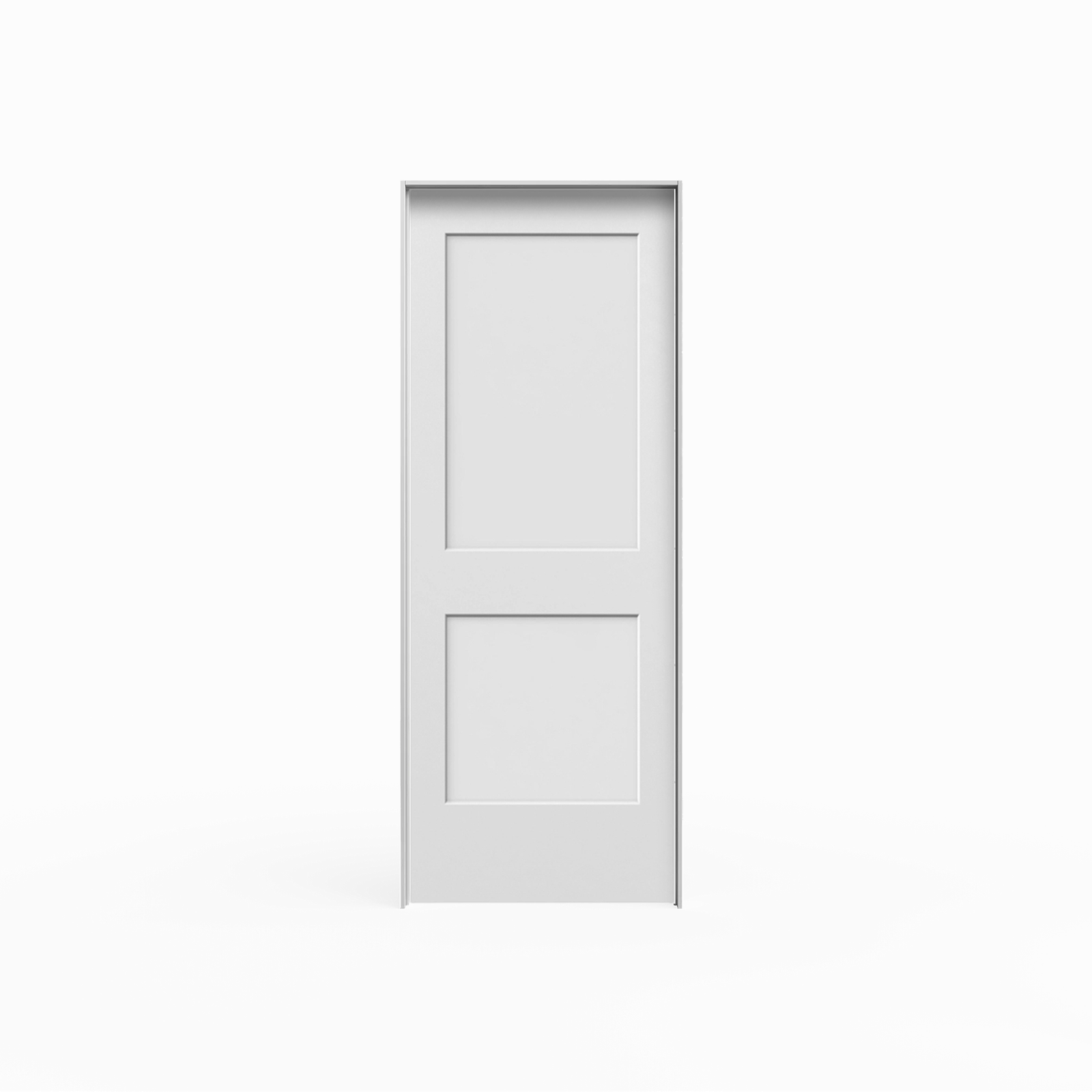
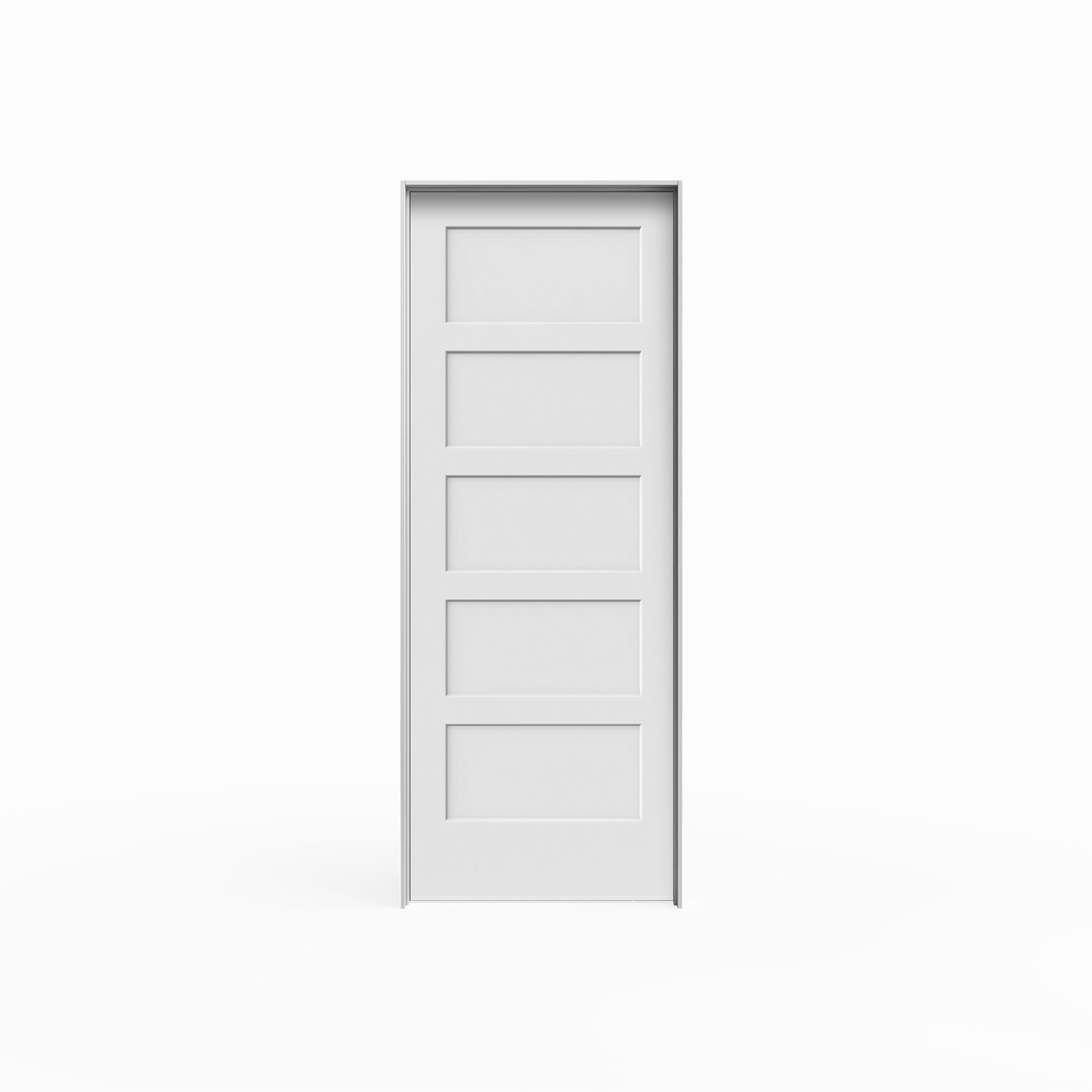
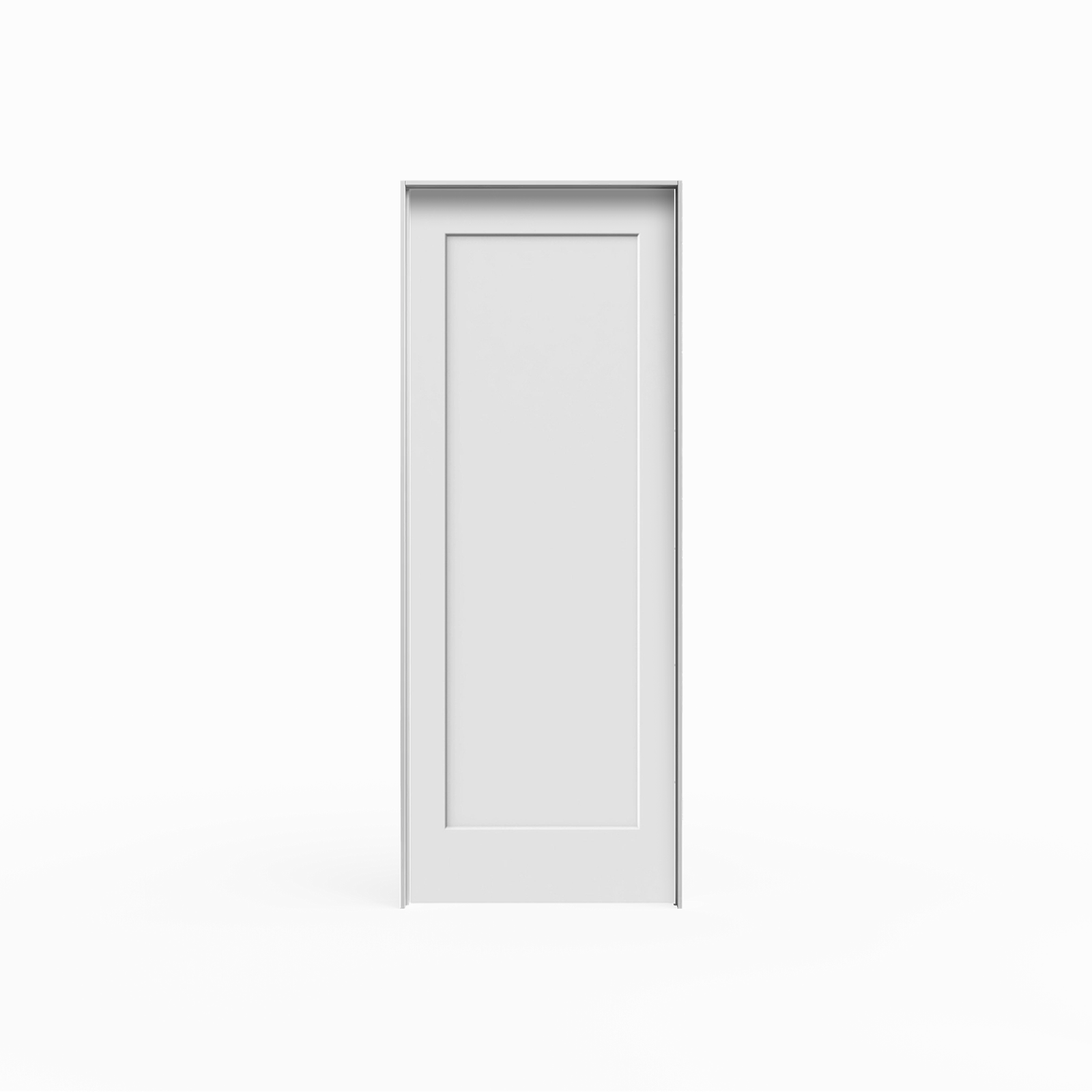
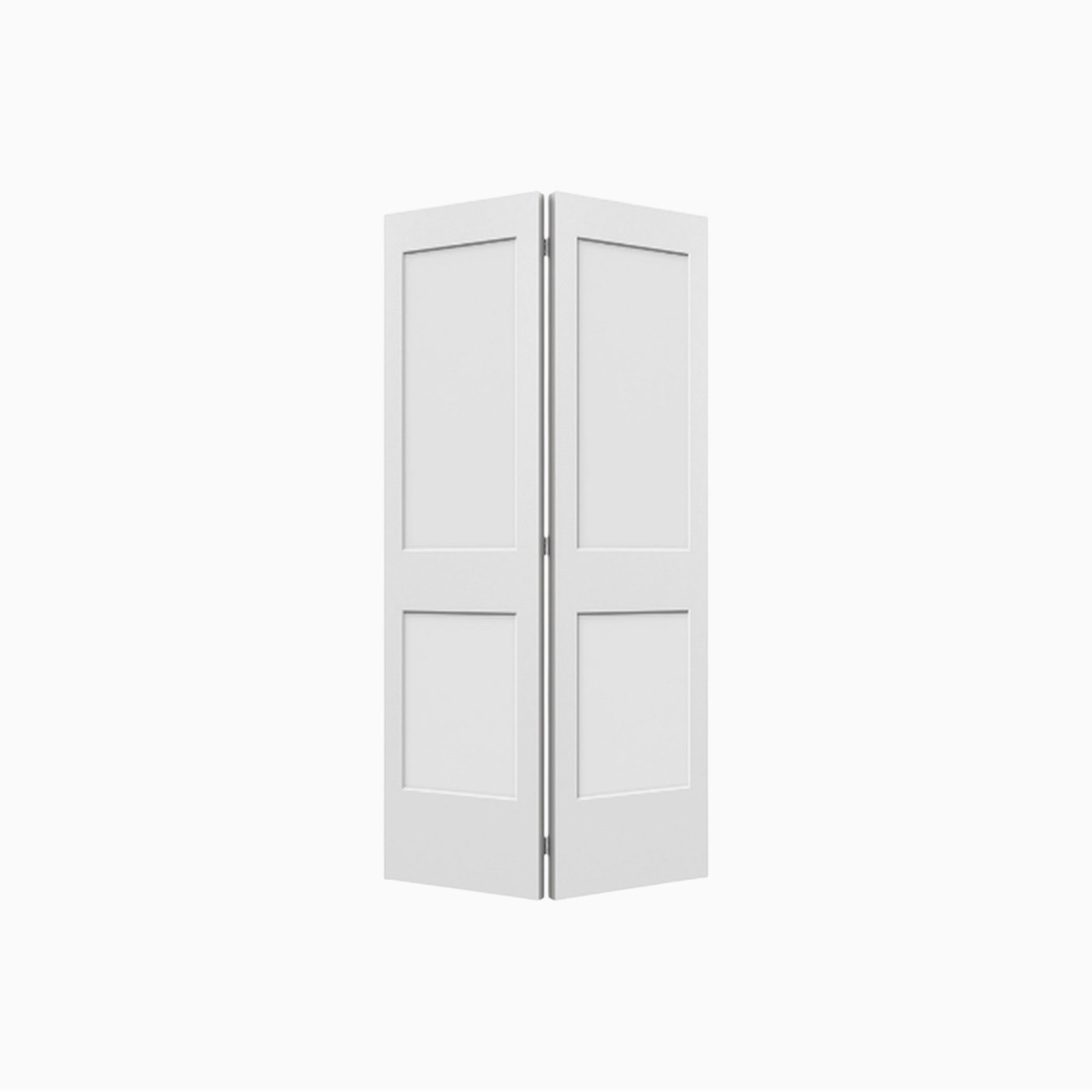
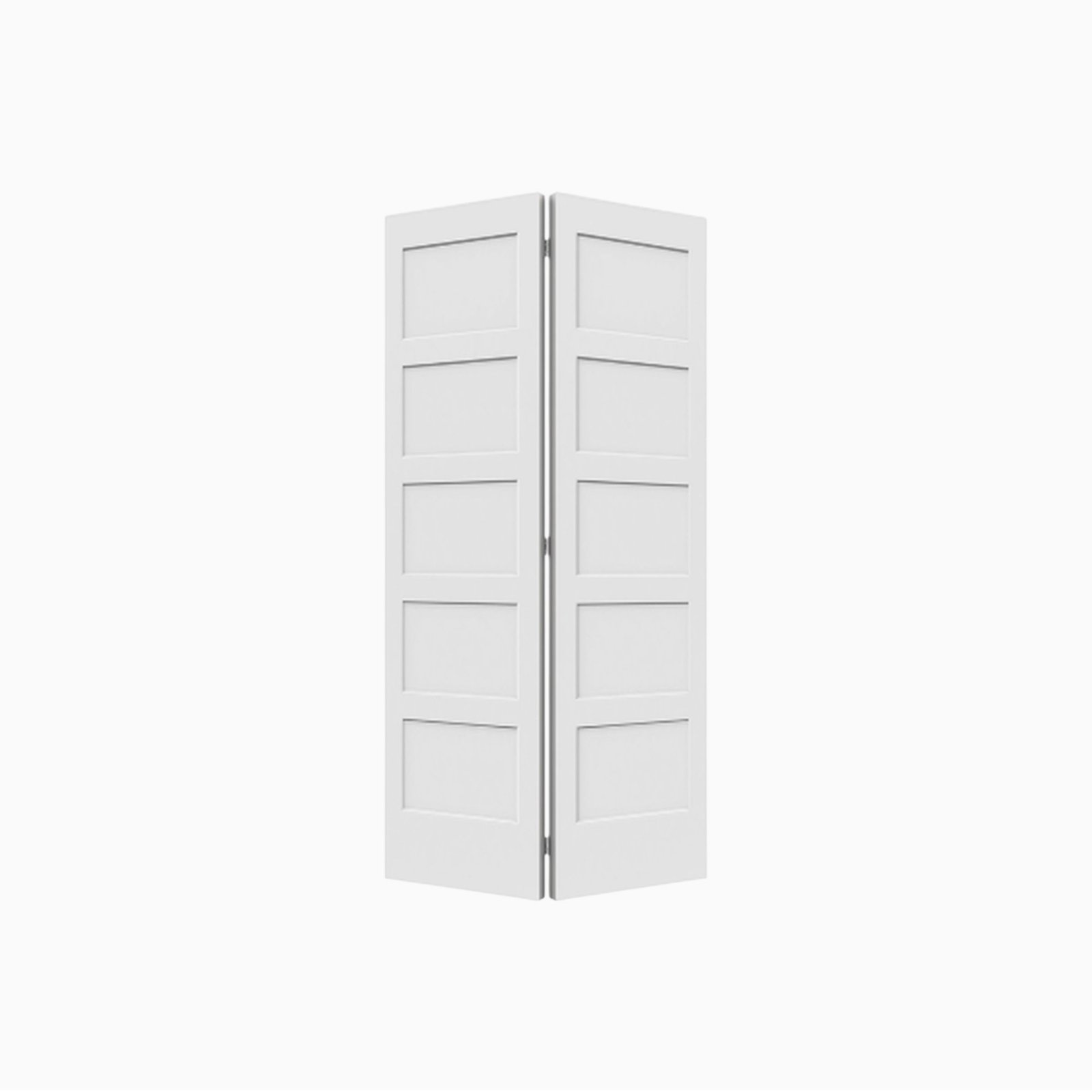
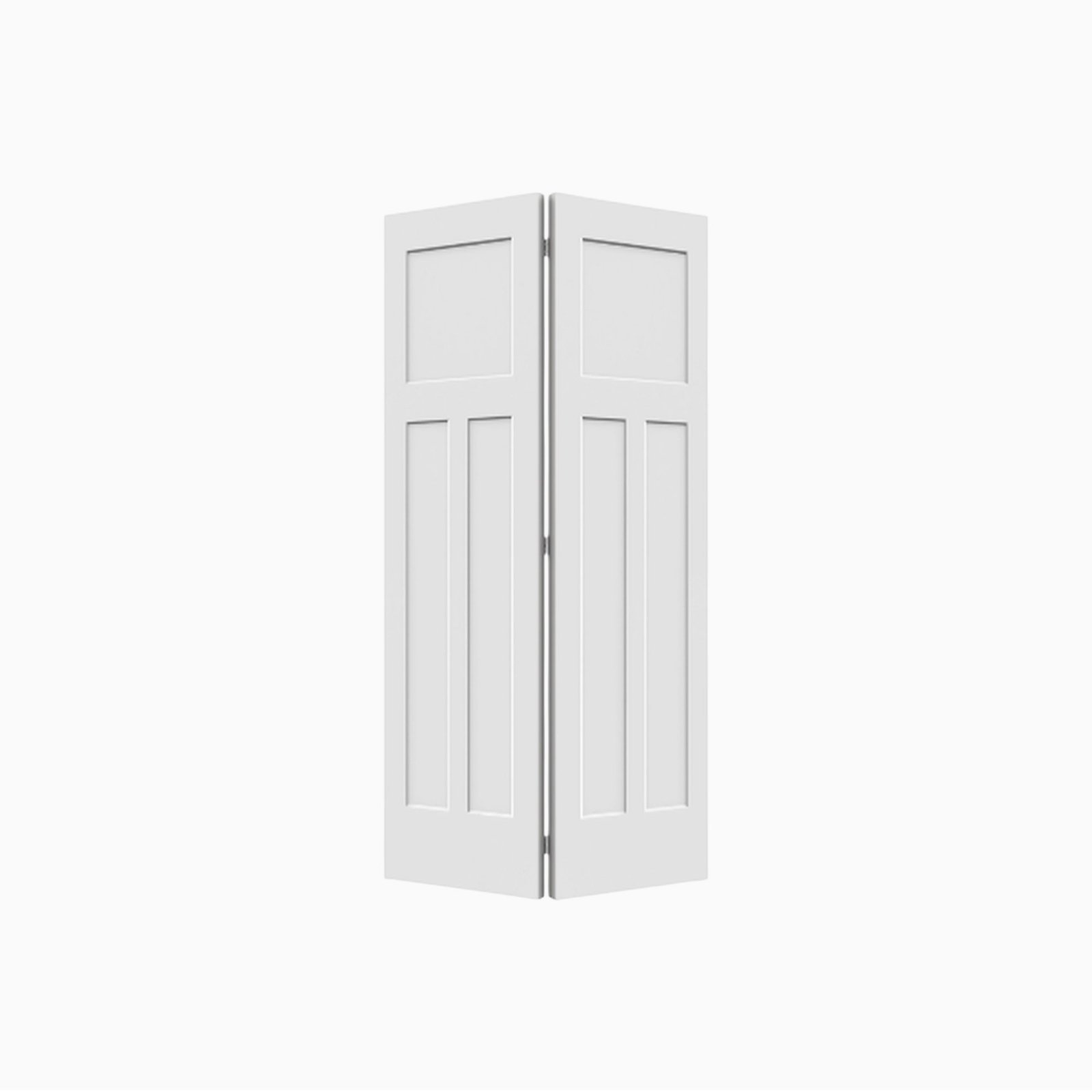
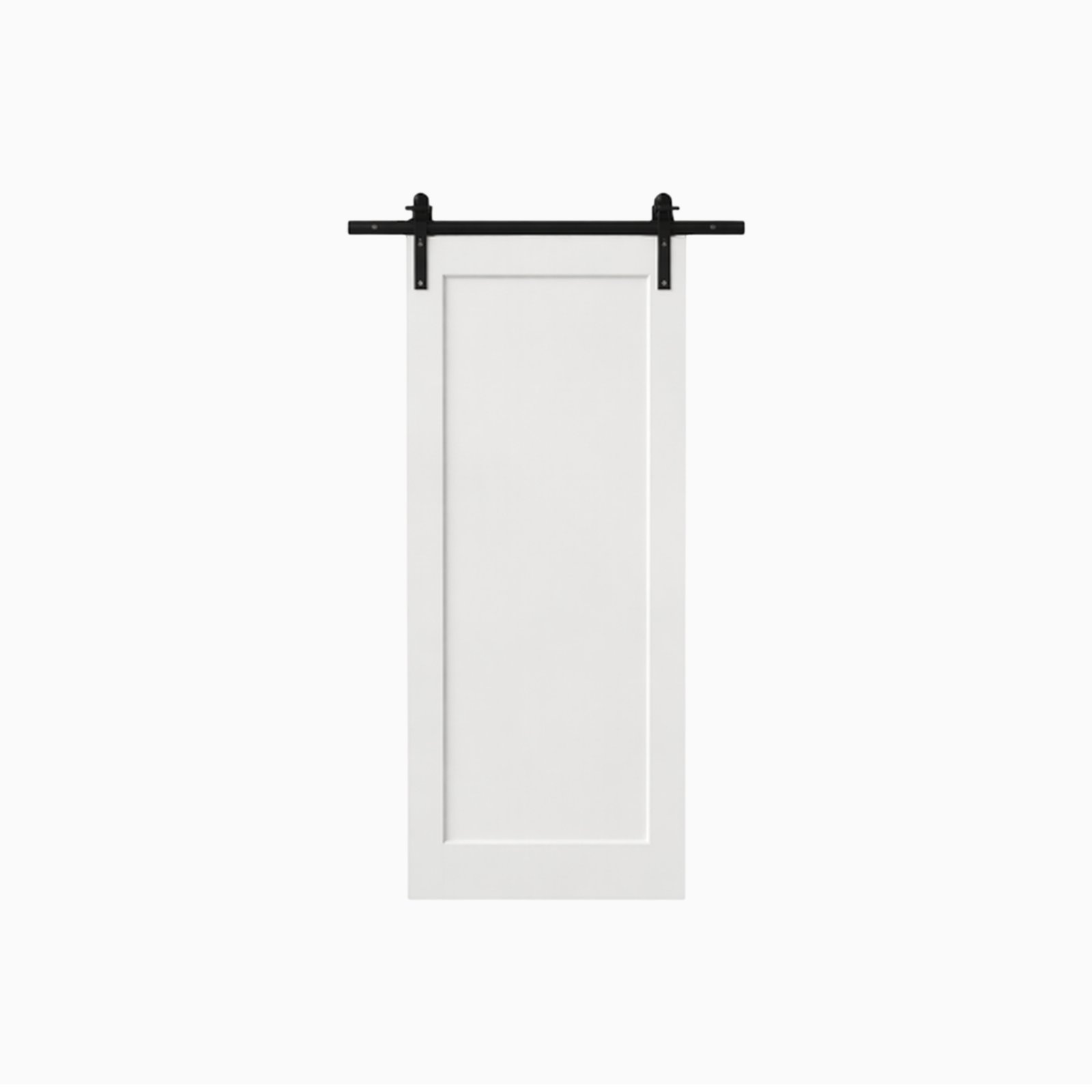
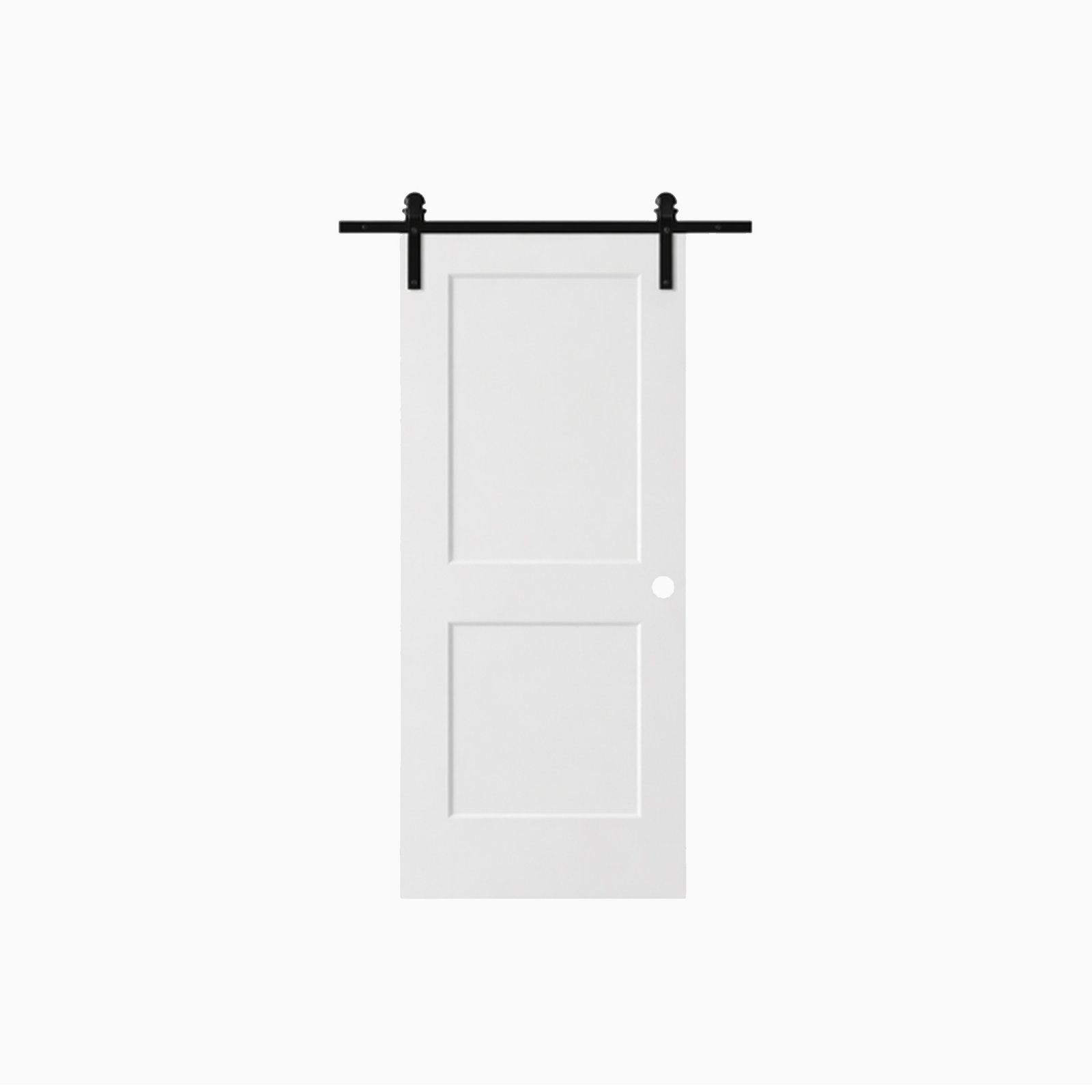
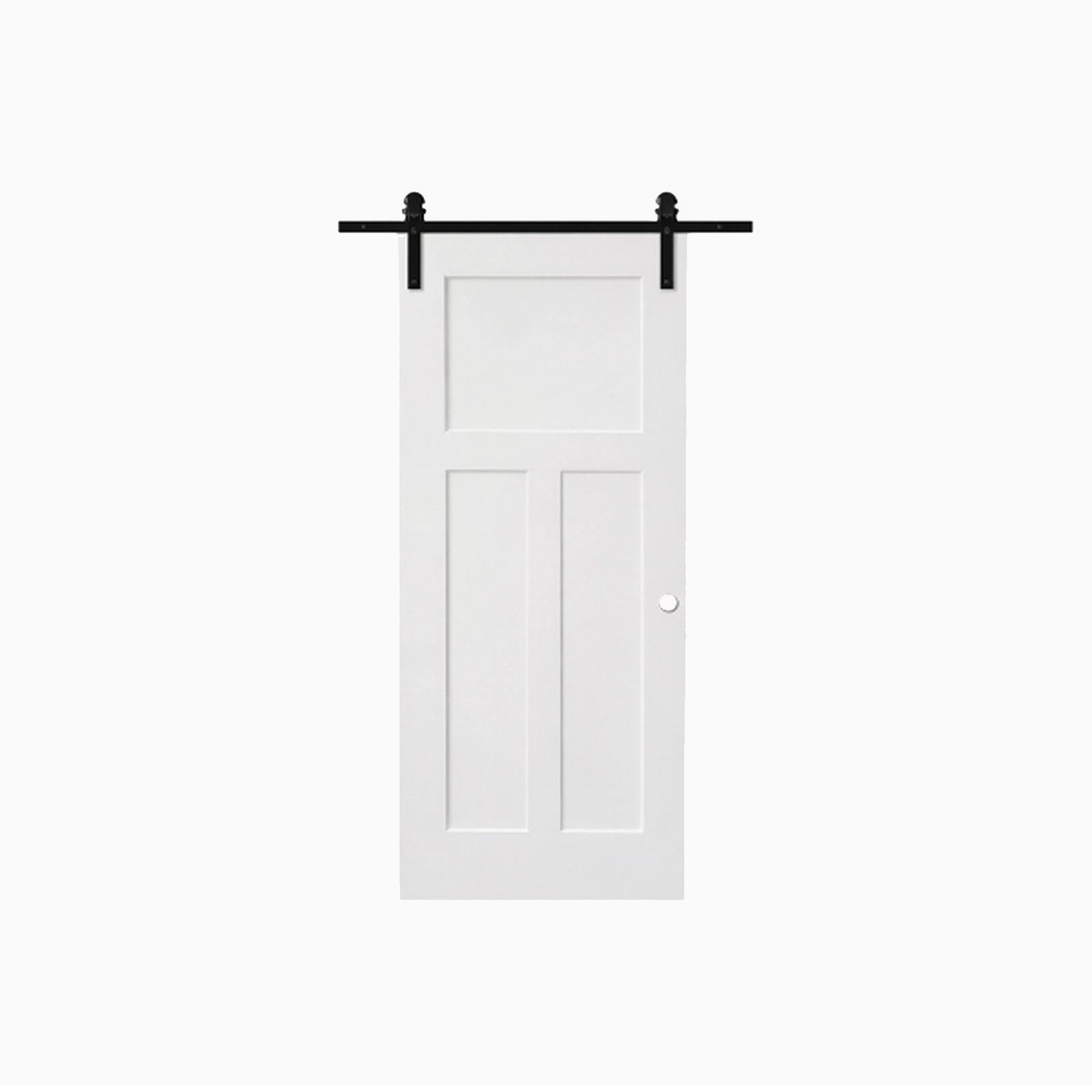
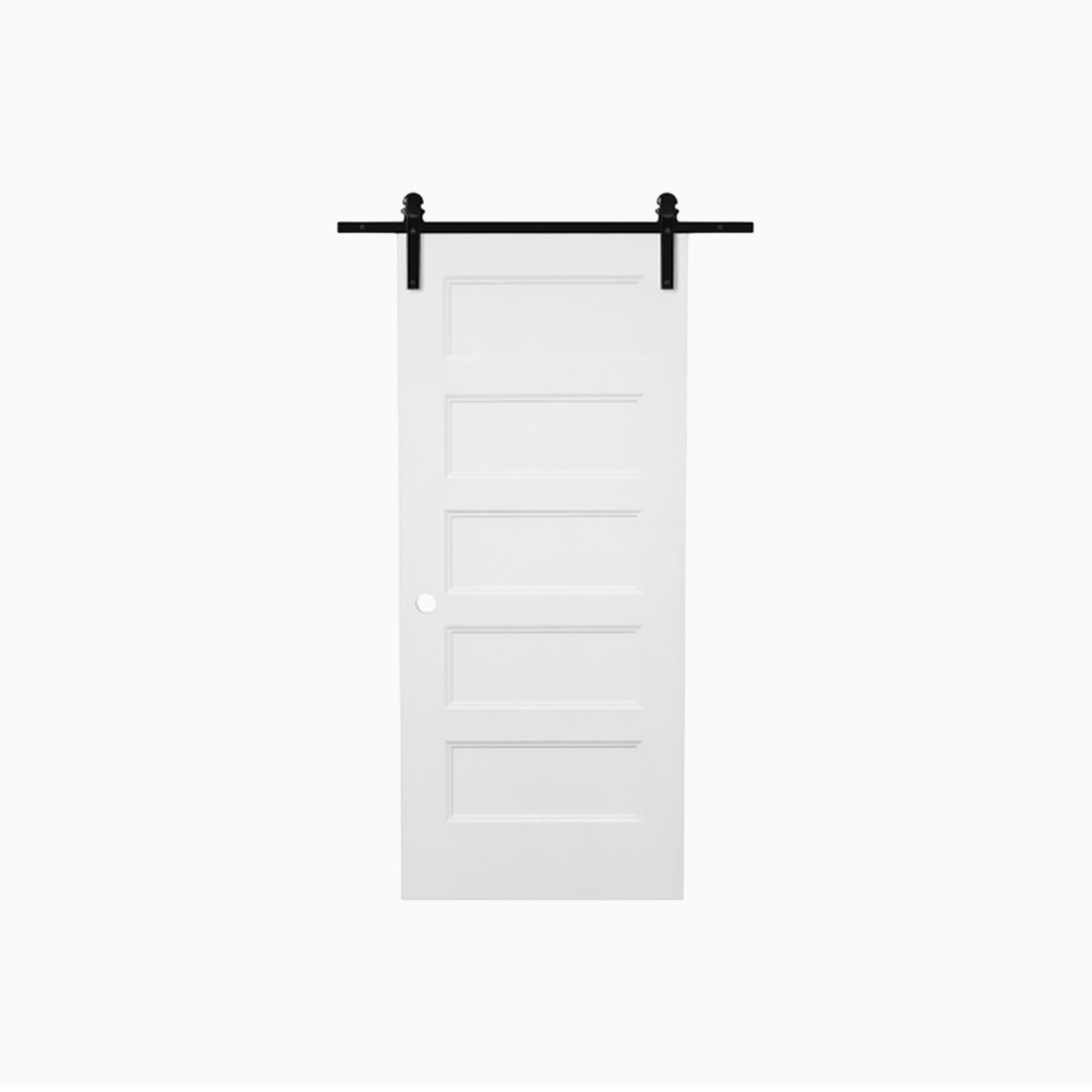
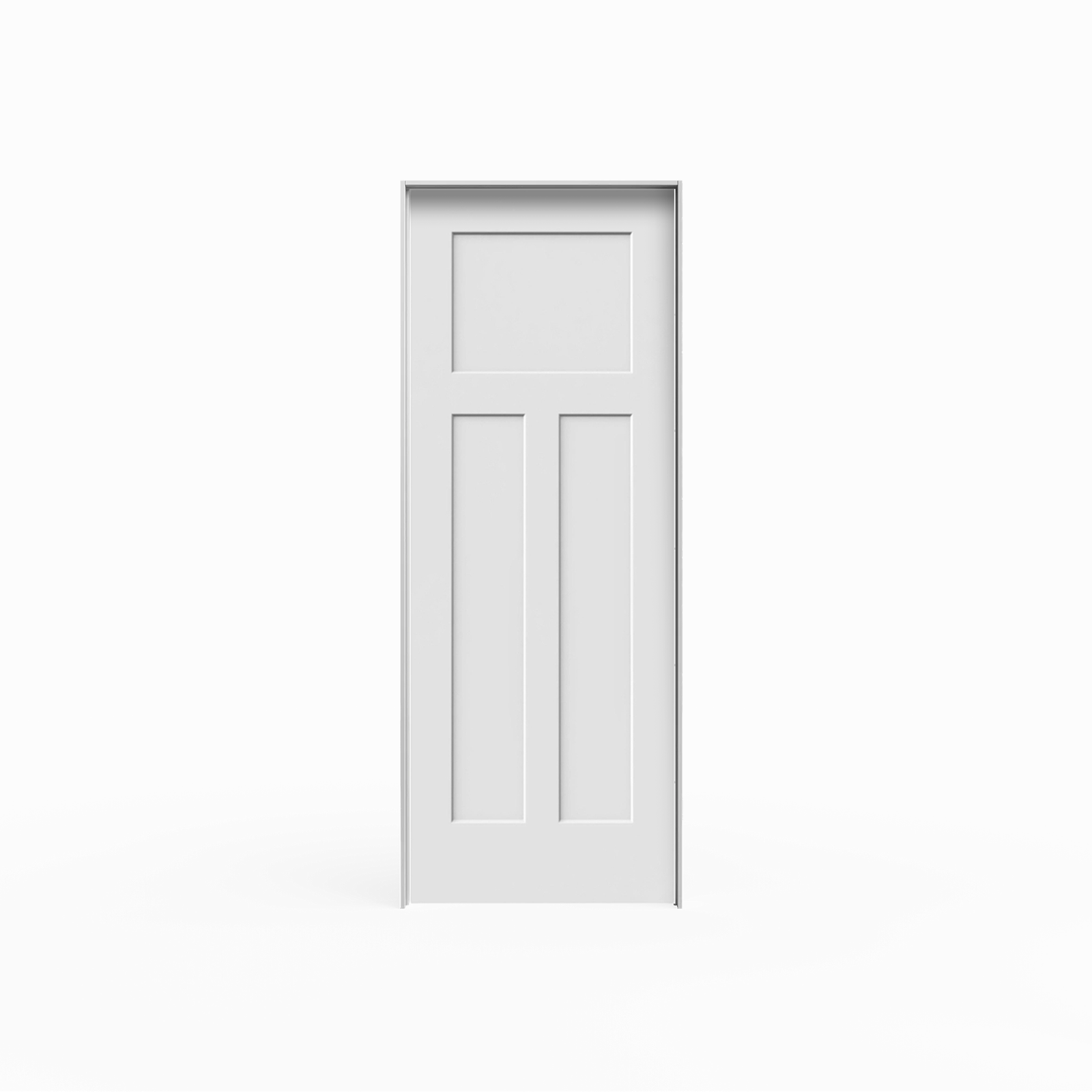
Shaker doors use stile-and-rail construction: a perimeter frame of stiles and rails surrounds a flat center panel. The center panel is MDF, with a customizable thickness, and the frame is built from finger-jointed pine (FJP) with a choice of solid wood, tubular, or particleboard core fill.
Shaker doors are defined by a simple, square-edged look: a flat center panel set inside a plain frame, with no raised molding, no carved detail, and no decorative profile on the frame edges. The style traces back to 18th-century Shaker furniture-making, valued for the same reason builders spec it today — clean lines that read as both classic and current.
Structurally, shaker doors use true stile-and-rail construction — a different build method from molded doors. A perimeter frame of stiles (the vertical edge pieces) and rails (the horizontal top, bottom, and mid pieces) is built from finger-jointed pine (FJP), and a flat center panel sits inside that frame. The center panel is MDF, and its thickness can be customized to your project spec. The stile-and-rail skeleton itself is available with a choice of internal fill — solid wood, tubular board, or particleboard — so you can choose a weight and cost tier without changing the door's joinery or shaker profile.
Shaker doors typically feature a simple square stile-and-rail construction with a flat center panel and minimal or no decorative edge detailing.
The stiles and rails that frame every shaker door are built on an FJP skeleton, available in three core fills. All three use the same skeleton construction and the same MDF center panel — the fill only changes the skeleton's weight, cost, and feel.
| Spec | Solid Wood Skeleton | Tubular Skeleton | Particleboard Skeleton |
|---|---|---|---|
| Structure | Solid wood block, full fill | Engineered wood with hollow internal channels | Compressed wood chip fill |
| Weight | Heaviest | Lightest | Medium |
| Relative Cost | Higher | Lower — the most cost-effective option | Between solid wood and tubular |
| Best For | Premium specs, maximum rigidity and a genuine solid-wood skeleton | High-volume, cost-conscious programs where weight and shipping cost matter | Standard mid-tier programs |
A note on "solid wood": the stile-and-rail frame is always FJP (finger-jointed pine) regardless of which skeleton you choose. When the solid wood skeleton is selected, that FJP frame is filled with a solid wood block, making the full stile-and-rail structure solid wood throughout. The center panel is always MDF no matter which skeleton is chosen, so even a solid-wood-skeleton shaker door isn't a fully solid-wood door in the traditional furniture sense. We describe this option as a solid wood skeleton, not a solid wood door, to keep that distinction clear.
Our team can recommend an option based on your budget, project scale, and performance needs.

A single flat panel for the most minimal, contemporary look.

The most searched and most widely specified shaker configuration, with two stacked flat panels.
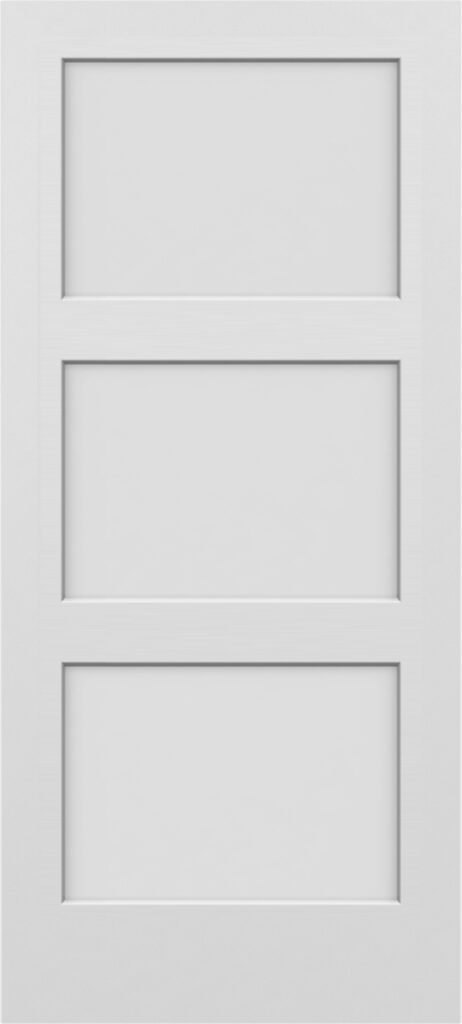
An evenly divided three-panel layout for a slightly more detailed vertical rhythm.
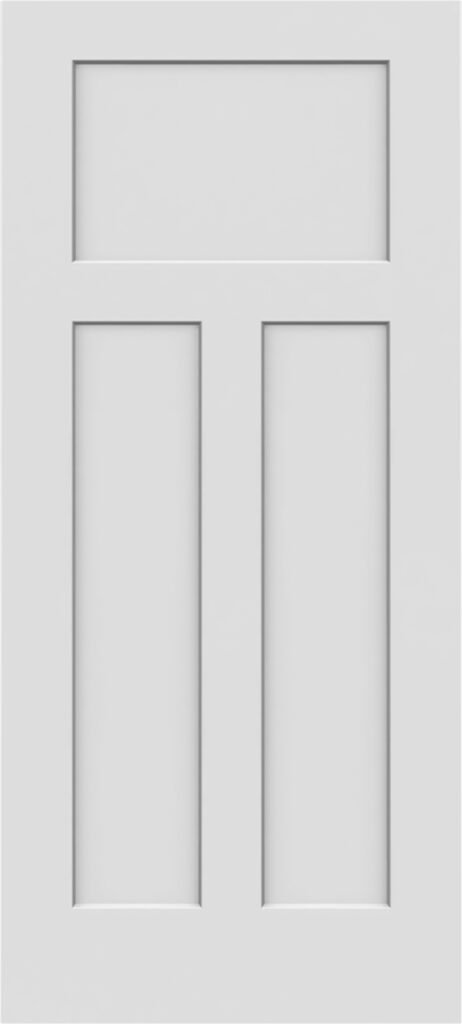
A distinct 3-panel variant with one wide panel on top and two narrower panels stacked below.
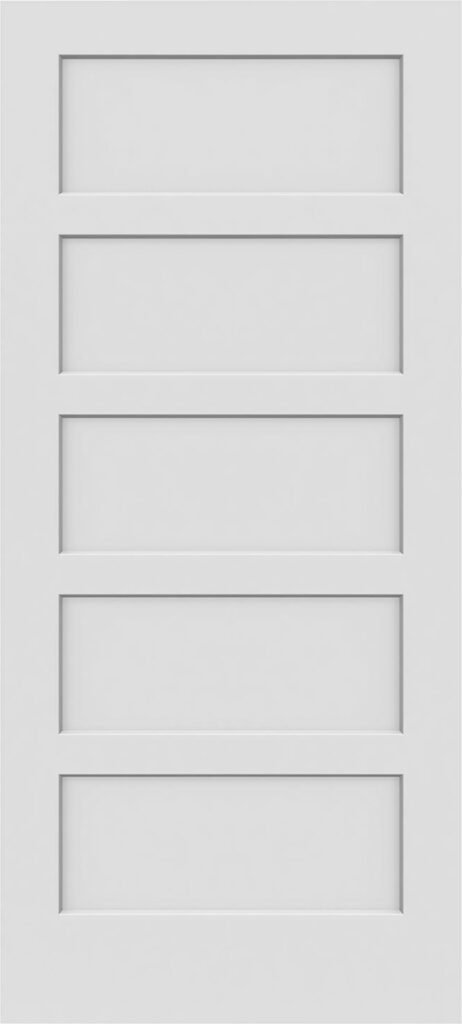
A less common configuration, typically specified for wider openings or a specific design call-out.
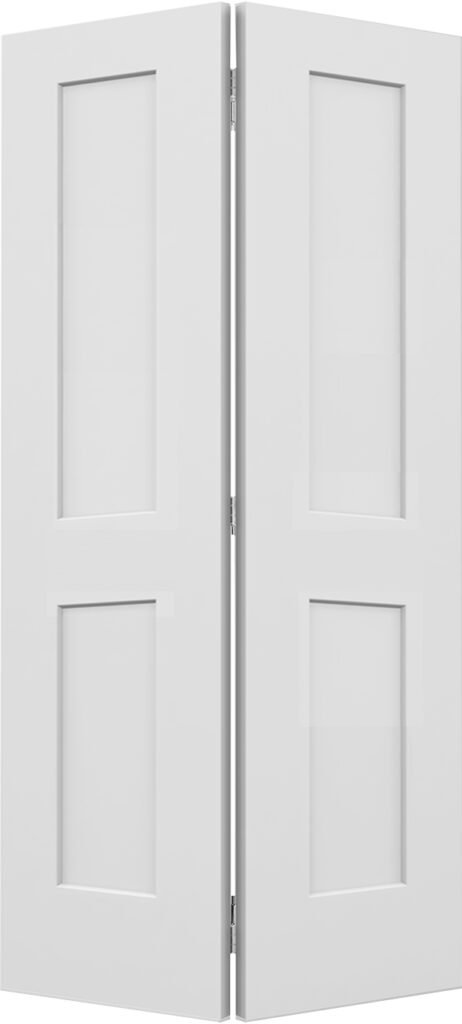
2-panel and 3-panel shaker bifold configurations sized to standard closet openings.

Shaker frames with a glazed lite instead of (or alongside) a solid panel, for French doors, office doors, and interior openings where light transfer matters.
Shaker doors follow the same standard door sizing as the rest of our interior door range — the most common size is 30" × 80", with taller options available for higher-end or taller-ceiling projects.
See Standard Interior Door Sizes, Widths & Specifications for the full width and height chart.
Using our 1-panel shaker door configuration as an example:
Stile and top rail width: 4.5" for door widths 16"–34", stepping up to 5.1" for door widths 36"–38". Bottom rail is a fixed 8" regardless of door width. Dimensions vary by panel configuration — download our Shaker Door Drawing Manual or the full spec sheet across all panel styles.
The standard center panel thickness is 8mm or 12mm, selected based on the door’s overall thickness. For a 1-3/8" (35mm) thick door, an 8mm center panel is used, while a 1-3/4" (45mm) thick door uses a 12mm center panel. Custom panel thicknesses are available upon request.
Every shaker door in our line ships in all four standard assembly formats — Slab, Knock-Down (KD), Semi-Prehung, and Prehung — across every panel configuration, skeleton option, and finish. Which format makes sense depends on your shipping method and how much assembly work you want done at the factory versus on site.
For the full comparison — container loading counts, cost trade-offs, and which format fits which project type — see Slab vs. Knock-Down vs. Prehung — Which Do You Need? , or How to Install a Prehung Door for install-day specifics.
Looking for an upgrade from standard molded panels? Our Shaker Doors use the same manufacturing scale and lead times as molded doors, with a flatter, more contemporary profile — see [Molded vs. Shaker vs. Shaker-Style Molded Doors: Pros, Cons, Design & Cost Comparison] to see which fits your project's price point and finish goals.
We manufacture shaker doors for builders, contractors, and door retailers across the US, supplying both stocked profiles and fully custom programs built to your project specs.

Looking for a more budget-focused option? Our Molded Doors use the same manufacturing scale with a pressed-panel construction instead of stile-and-rail joinery — a more economical choice for high-volume programs. See Molded vs. Shaker vs. Shaker-Style Molded Doors for a full cost and design comparison, or visit our Molded Doors page.
A shaker door is a stile-and-rail door with a flat, unadorned center panel and square-edged frame — no raised molding or carved detail. Ours use an FJP frame with a choice of solid wood, tubular, or particleboard skeleton, and an MDF center panel with customizable thickness.
Generally, yes — shaker doors run higher than molded doors. As a reference point: a 30" × 80", 1-3/8" thick, 1-panel shaker door, prehung, runs around $130, compared to about $90 for a hollow-core molded door and about $110 for a solid-core molded door at the same size. If you want the shaker look at a lower price point, consider a Shaker-Style Molded Door — it looks very similar to a true shaker door but is priced in line with our molded doors.
Molded doors are an economical, high-volume option for standard residential and multi-family projects. They offer consistent quality and efficient production, making them a practical choice for large-scale builds.
Shaker doors feature a clean, modern panel profile and are often selected for projects that want to add more design appeal or offer upgraded finishes.
Need the modern Shaker look with the cost efficiency of a molded door?
UWG’s Shaker-style molded doors combine the contemporary appearance of Shaker designs with the production efficiency and cost advantages of molded door construction — helping builders achieve a premium look while staying within project budgets.
Yes — shaker remains one of the most consistently specified interior door styles in current US residential and multi-family construction, largely because its plain profile pairs easily with both traditional and modern trim and cabinetry.
Yes — we support custom panel configurations, skeleton selection, and center panel thickness for qualifying order volumes. Contact our team.
Order slab or KD when your crew has capacity for on-site framing and you want maximum container-loading efficiency; order Semi-Prehung or Prehung when you want more of the work done at the factory to speed up install day. See [Slab vs. Knock-Down vs. Prehung — Which Do You Need?] for the full comparison, including container loading counts.
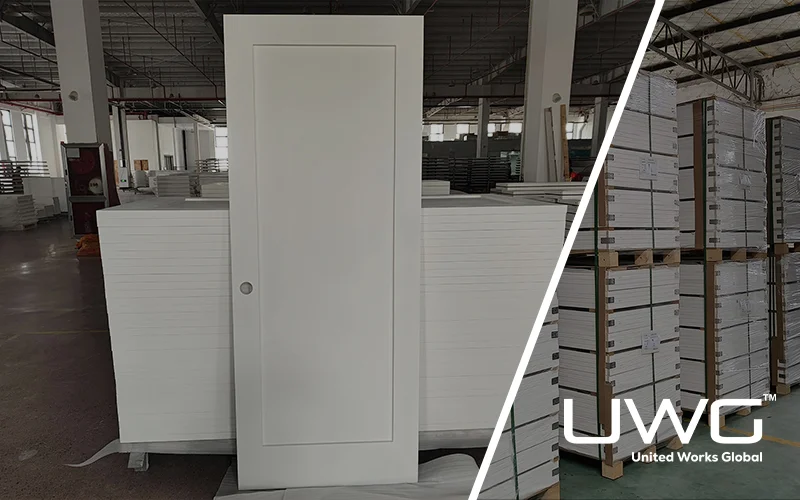
Shaker doors and Shaker-style doors are closely related but not identical. A true Shaker door follows traditional frame-and-panel construction with mortise-and-tenon joinery, offering strong structure and authentic craftsmanship.
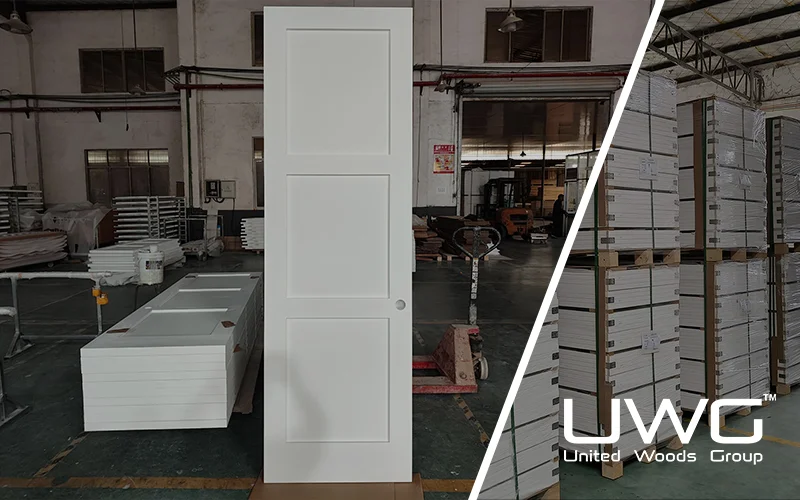
Shaker door panel thickness can usually be customized depending on the door construction, panel material, and project requirements.
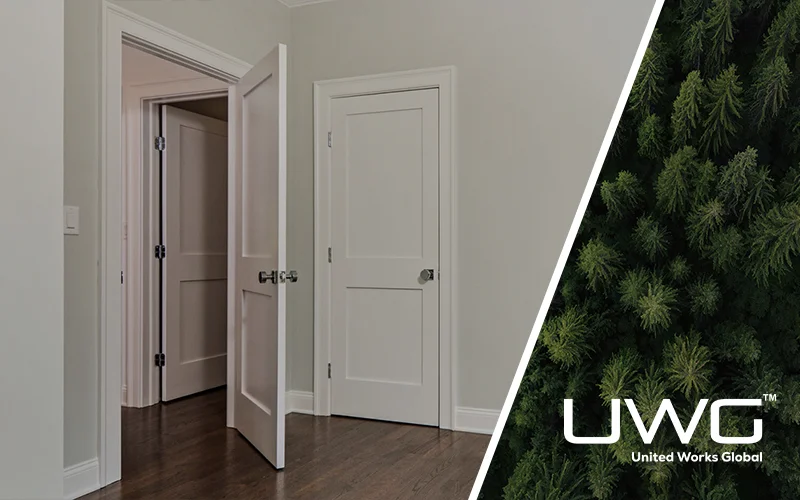
A Shaker door skeleton refers to the internal structural framework that supports the door’s classic rail-and-stile construction. Typically, a Shaker door consists of two vertical stiles, two horizontal rails, and a recessed center panel.
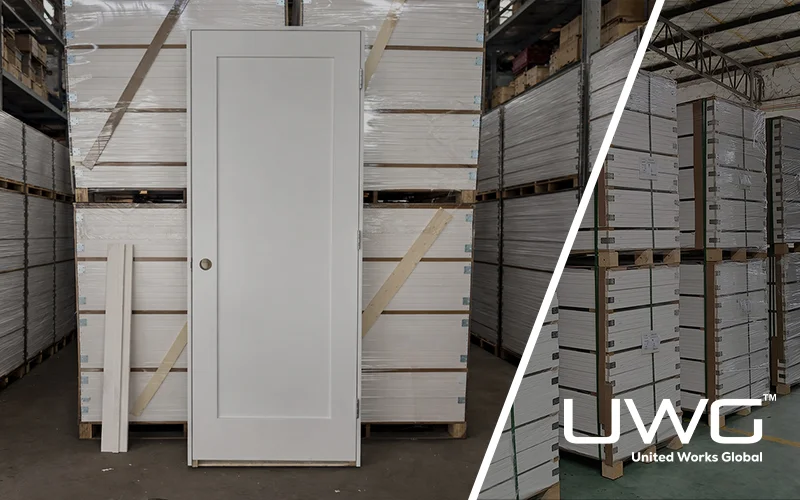
Standard primed white shaker doors in the US typically come in widths of 24", 28", 30", 32", and 36 inches, with standard heights of 80 inches (6'8") and 96 inches (8'0").
This website uses technologies such as cookies to enable basic website functions, as well as for analytics, personalization, and targeted advertising. To learn more, please view the following link: Privacy Policy.