
Projects
Resources
Explore our products, understand their features, and discover the services we offer to support your project.
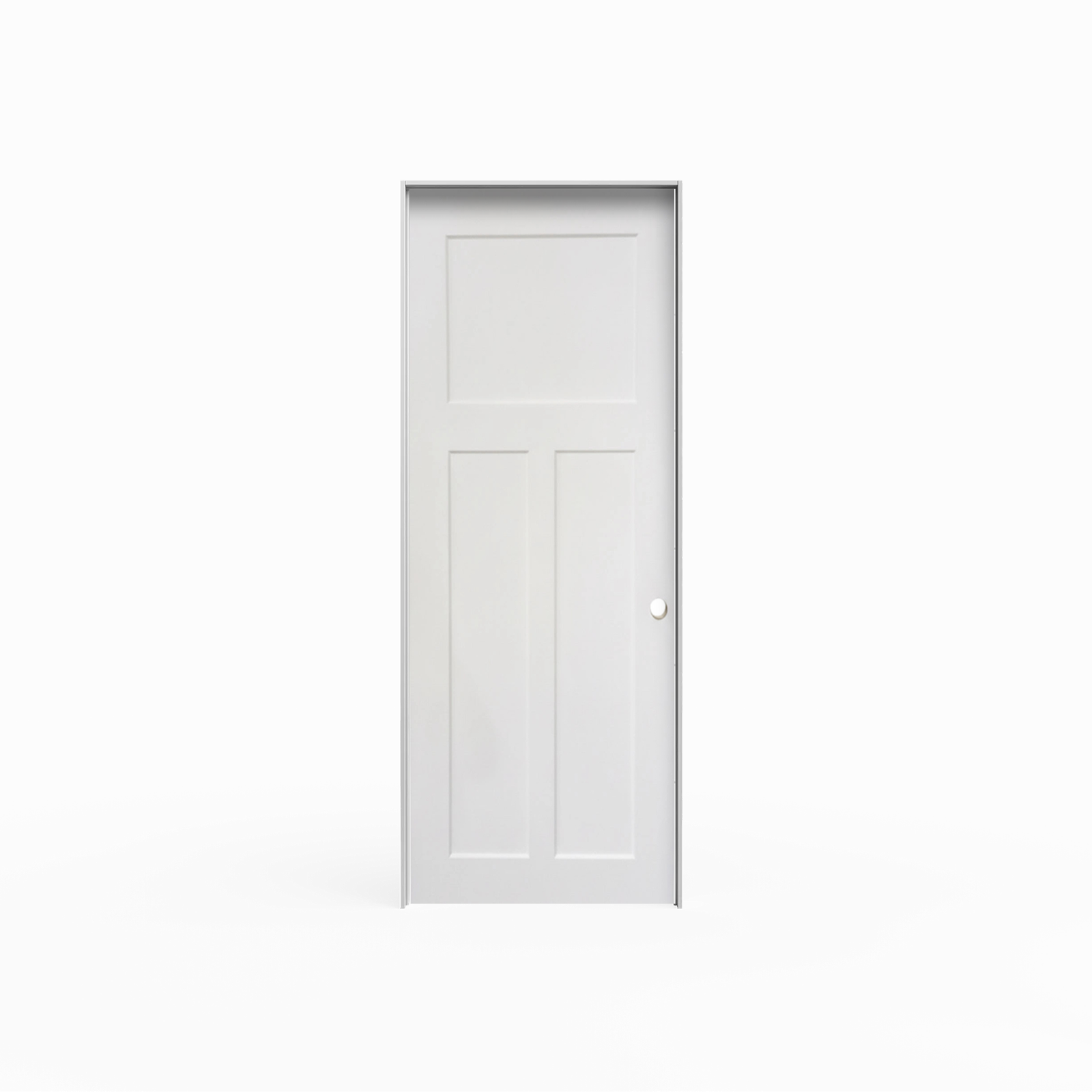
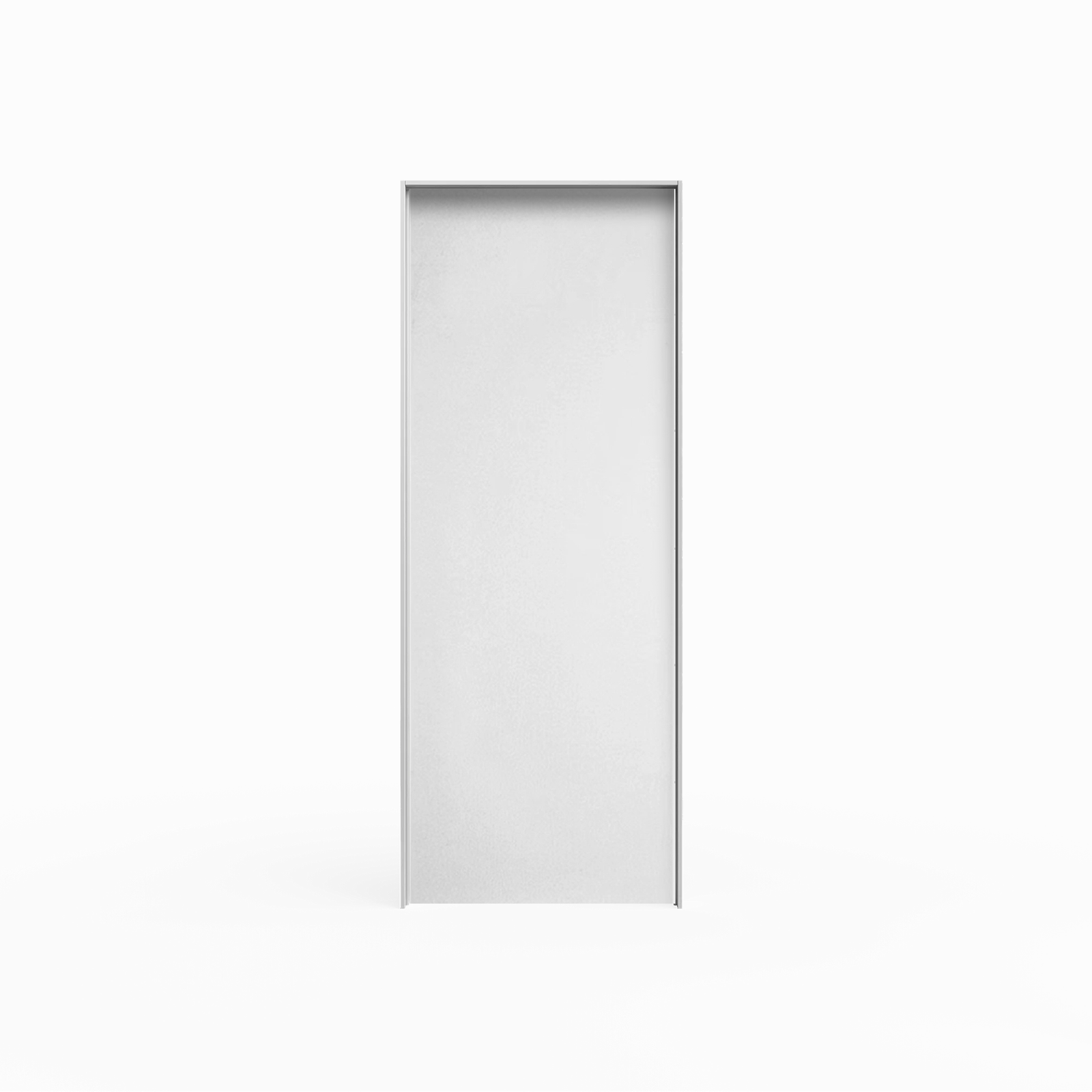
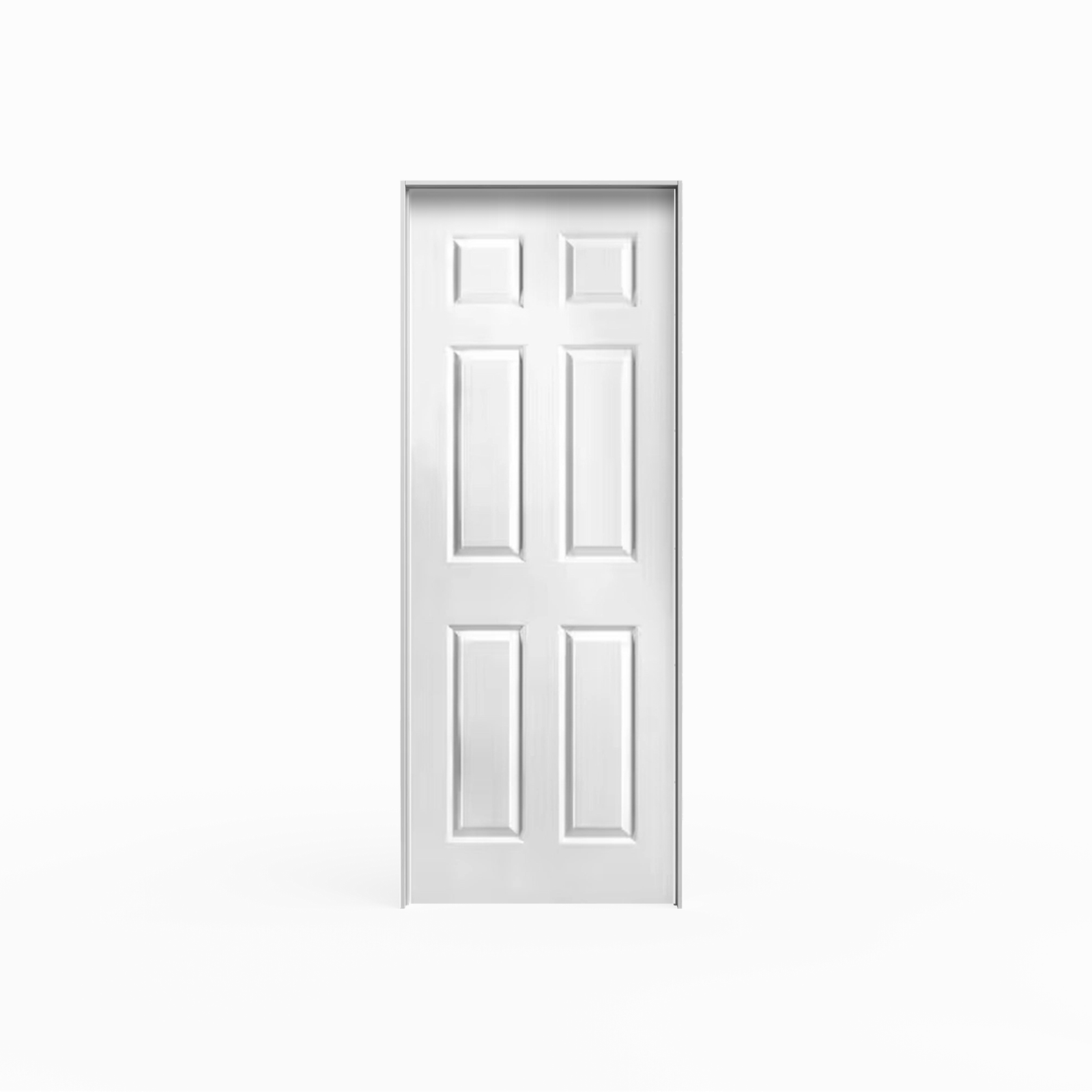
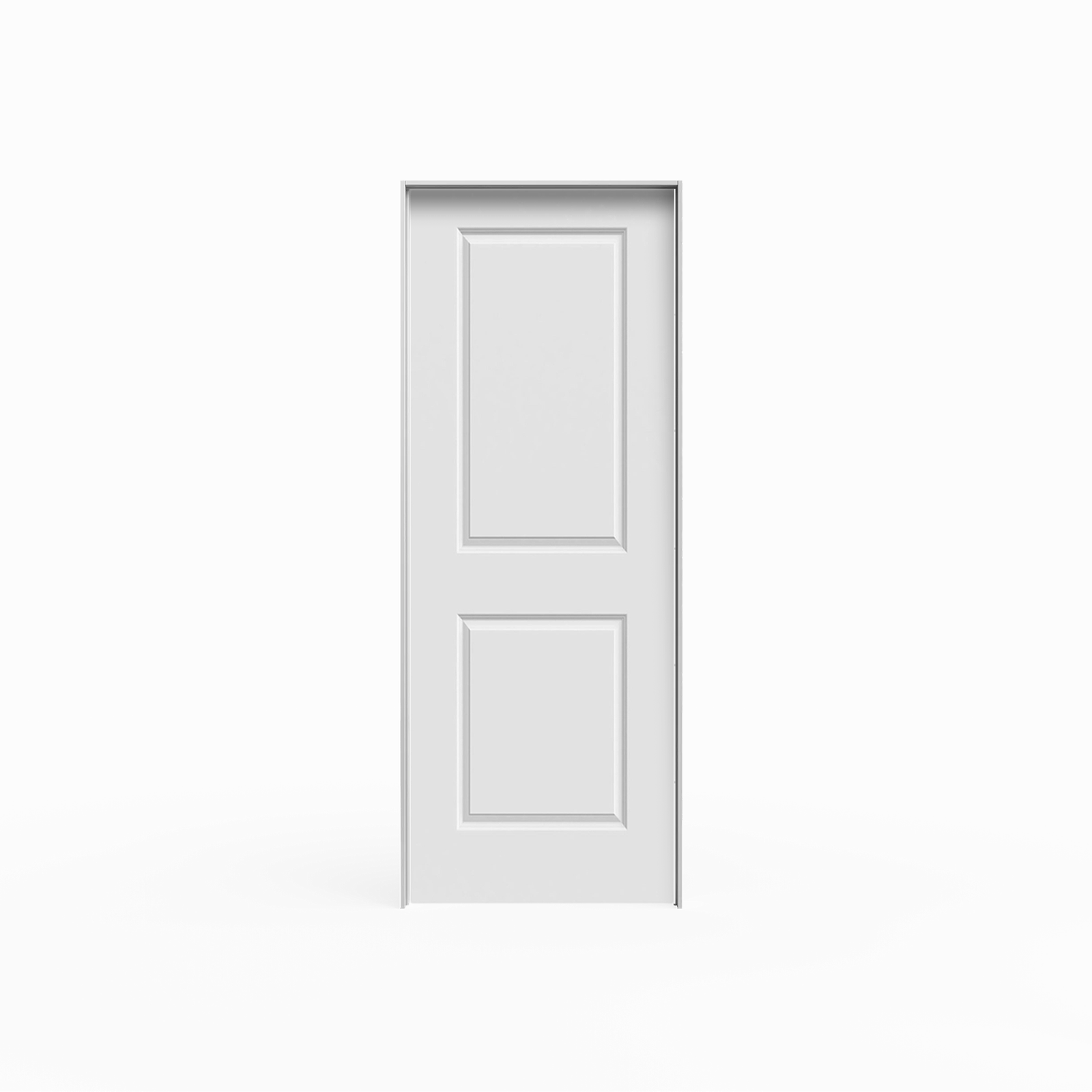
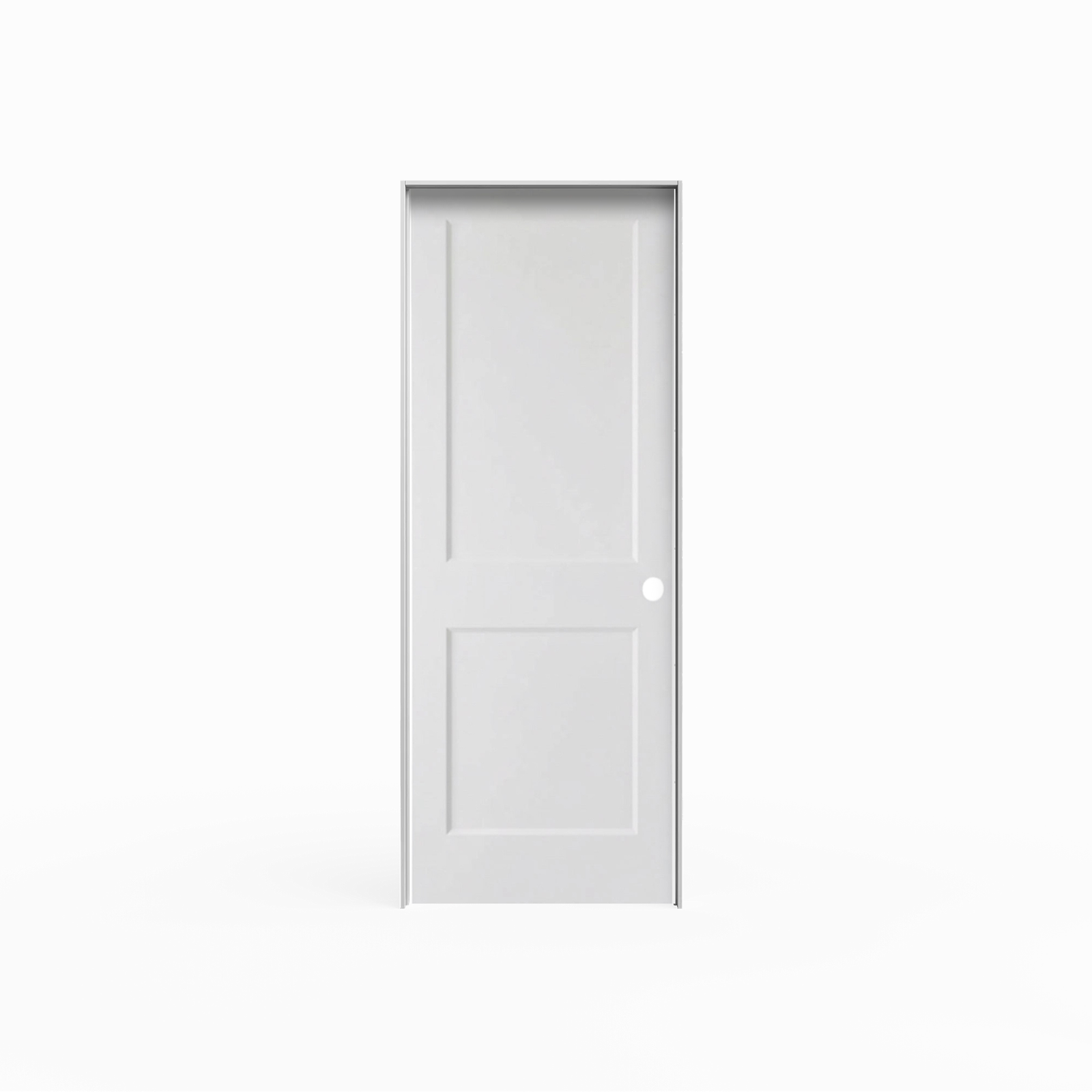
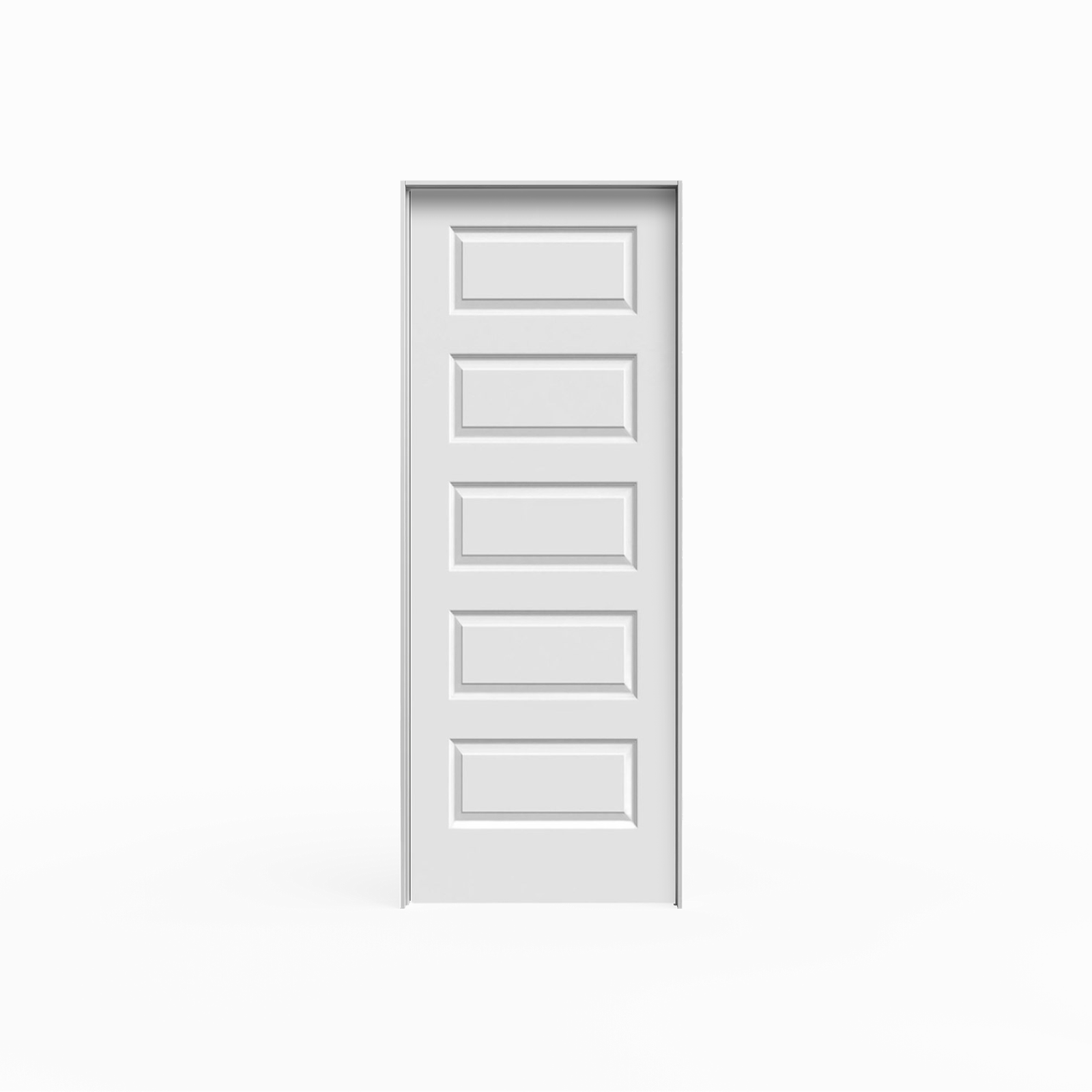
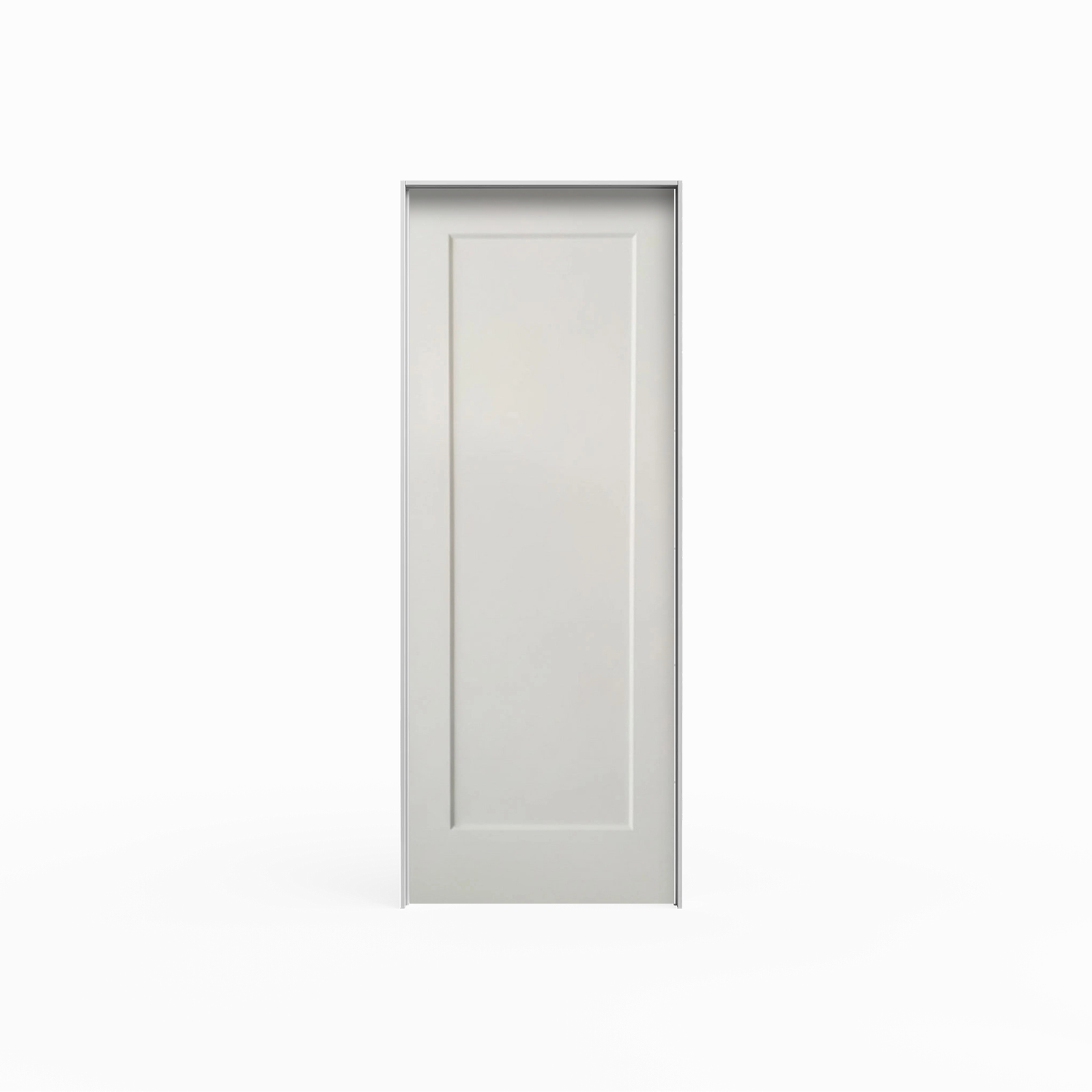
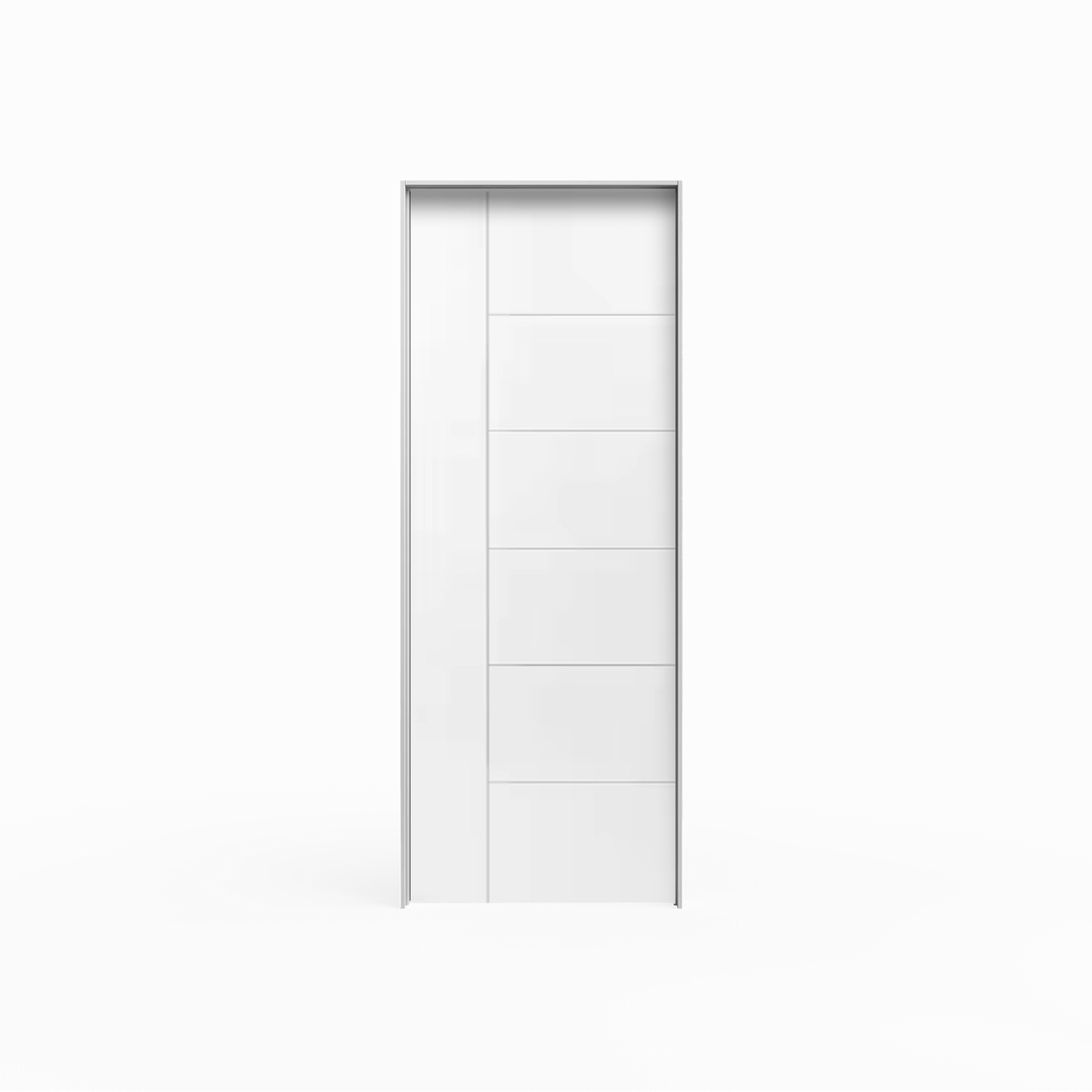
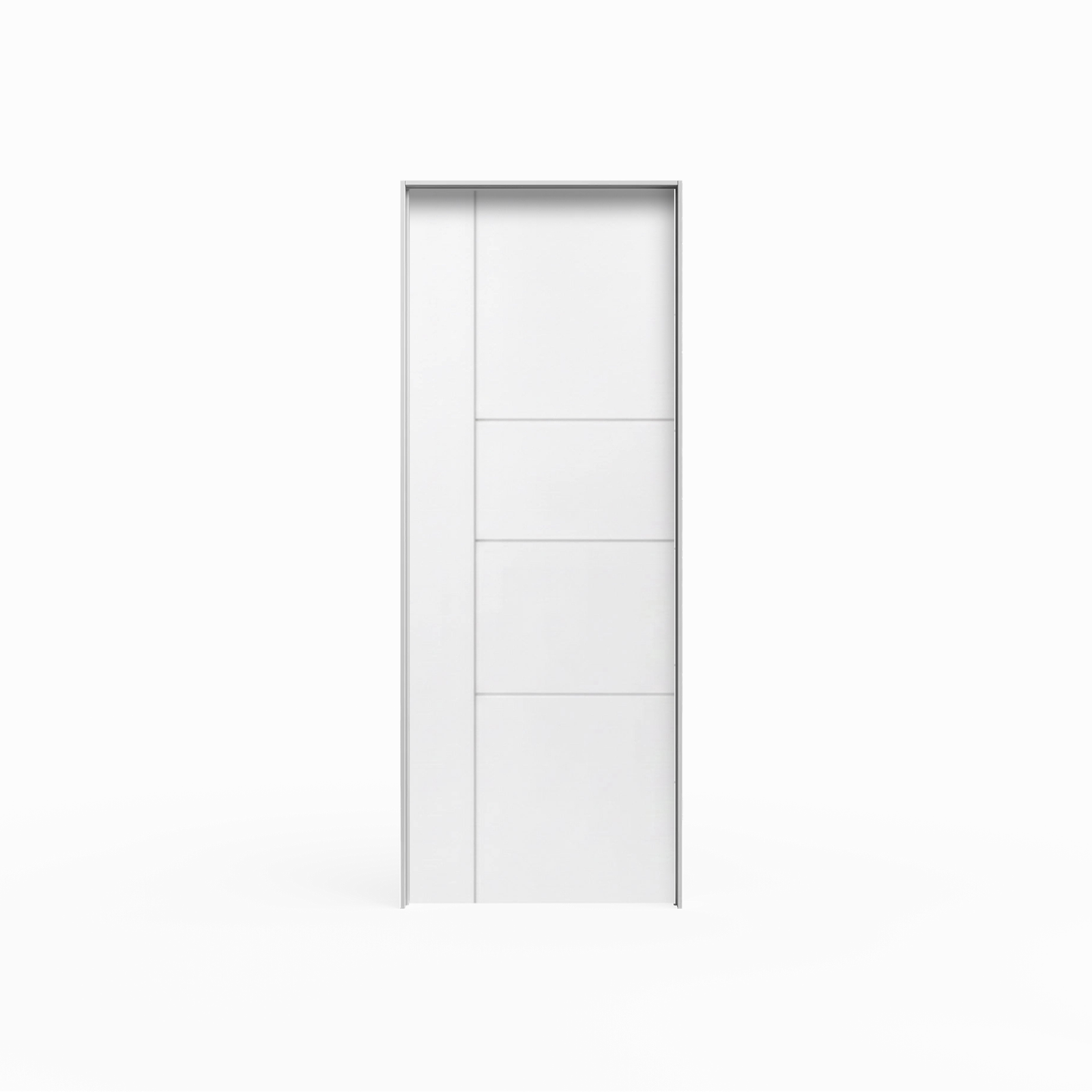
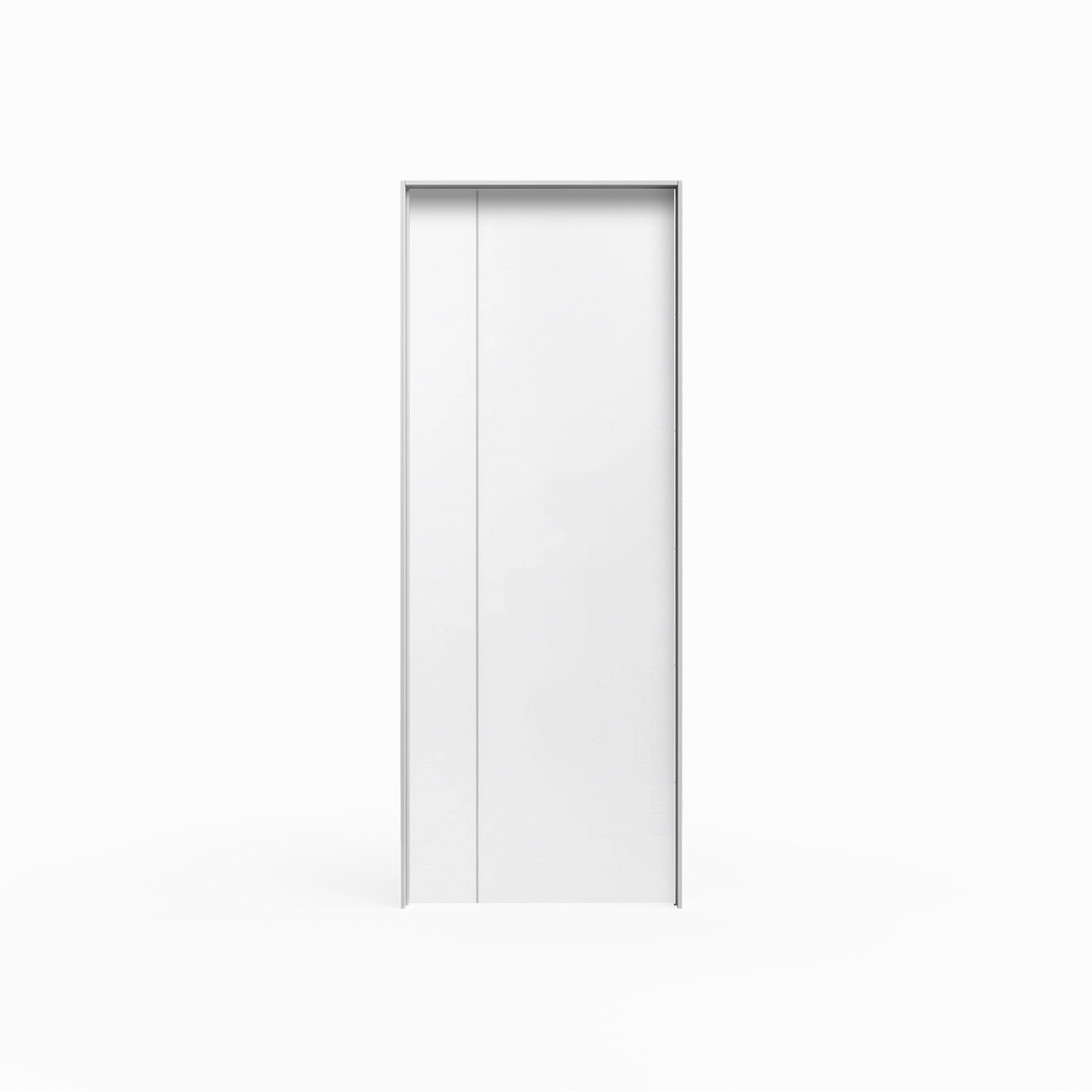
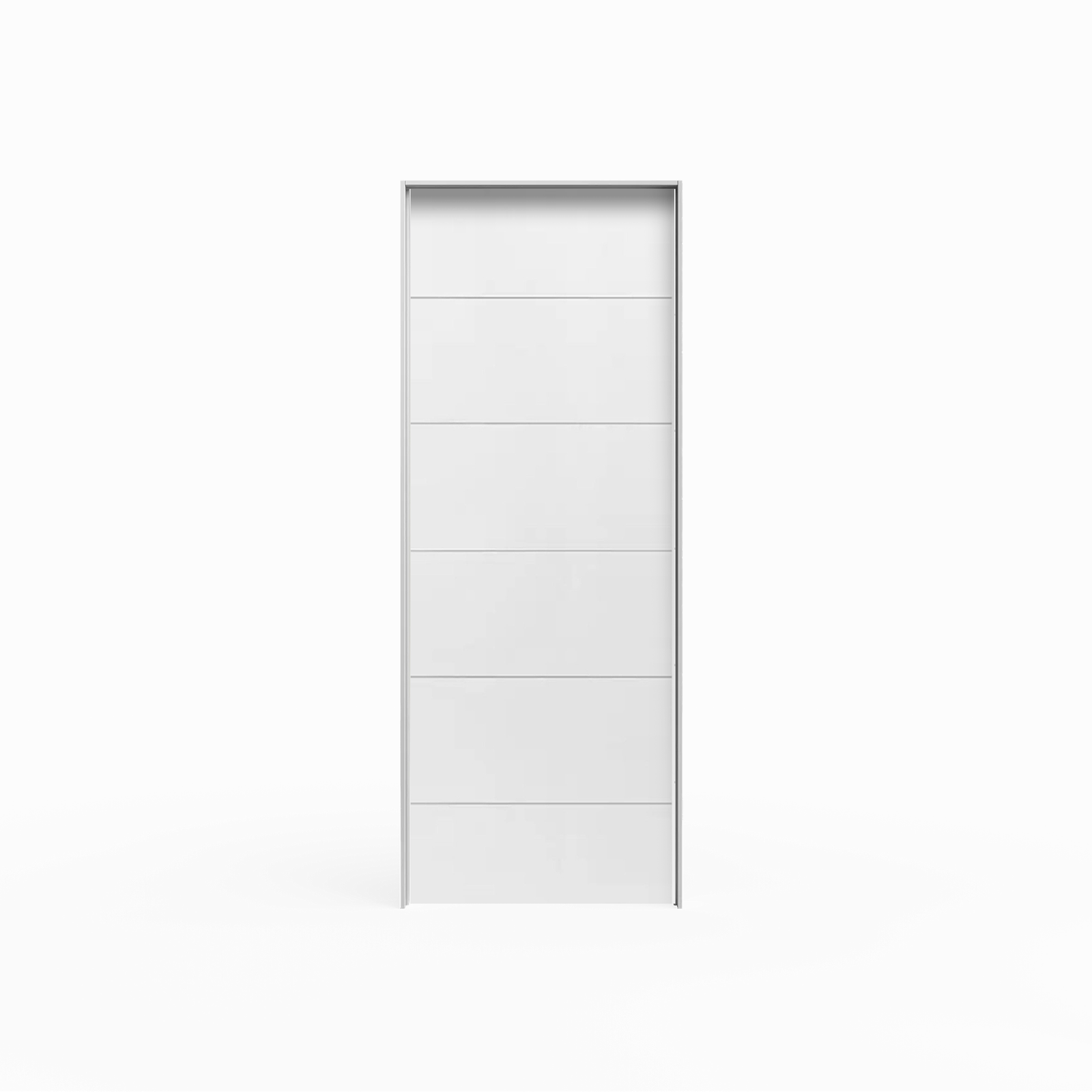
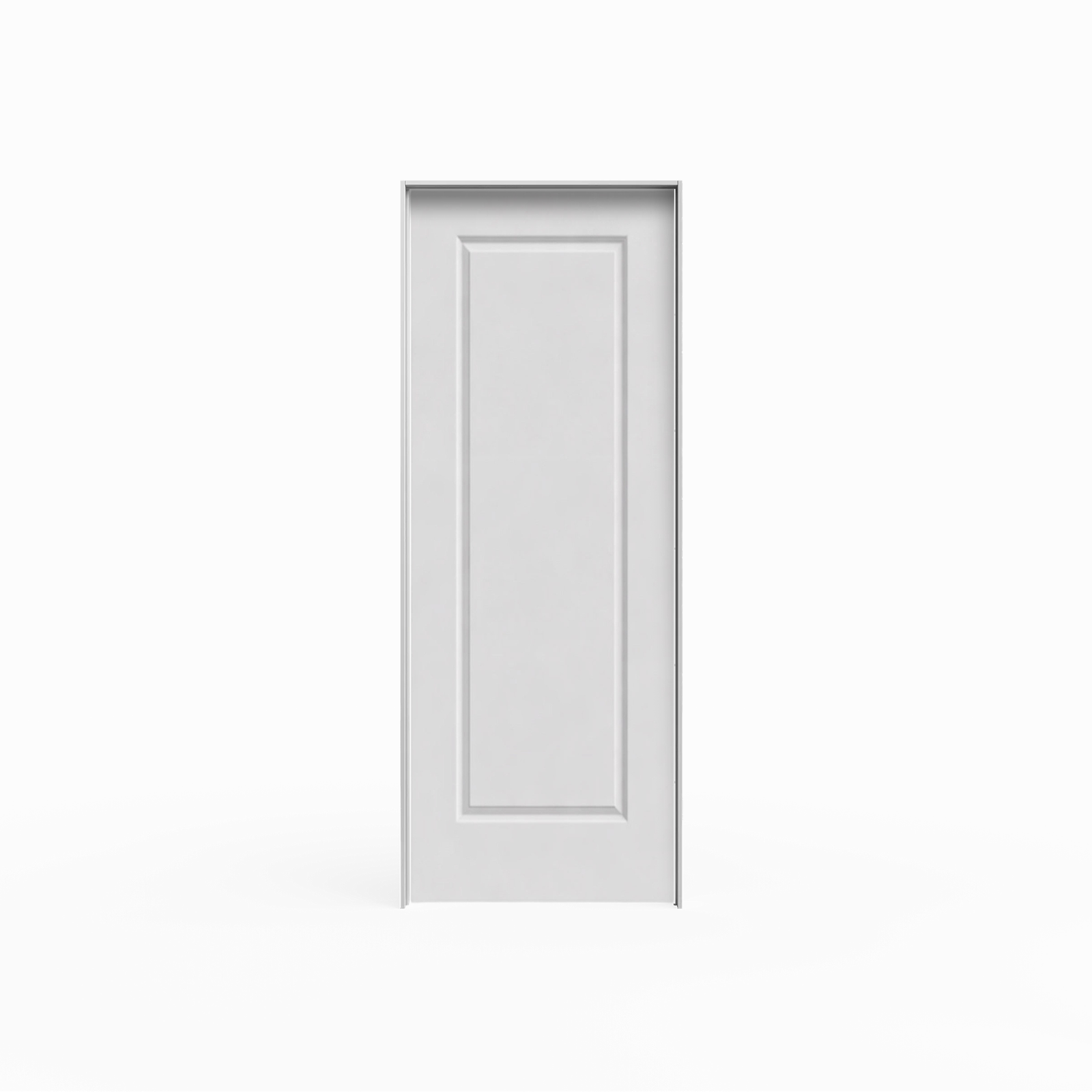
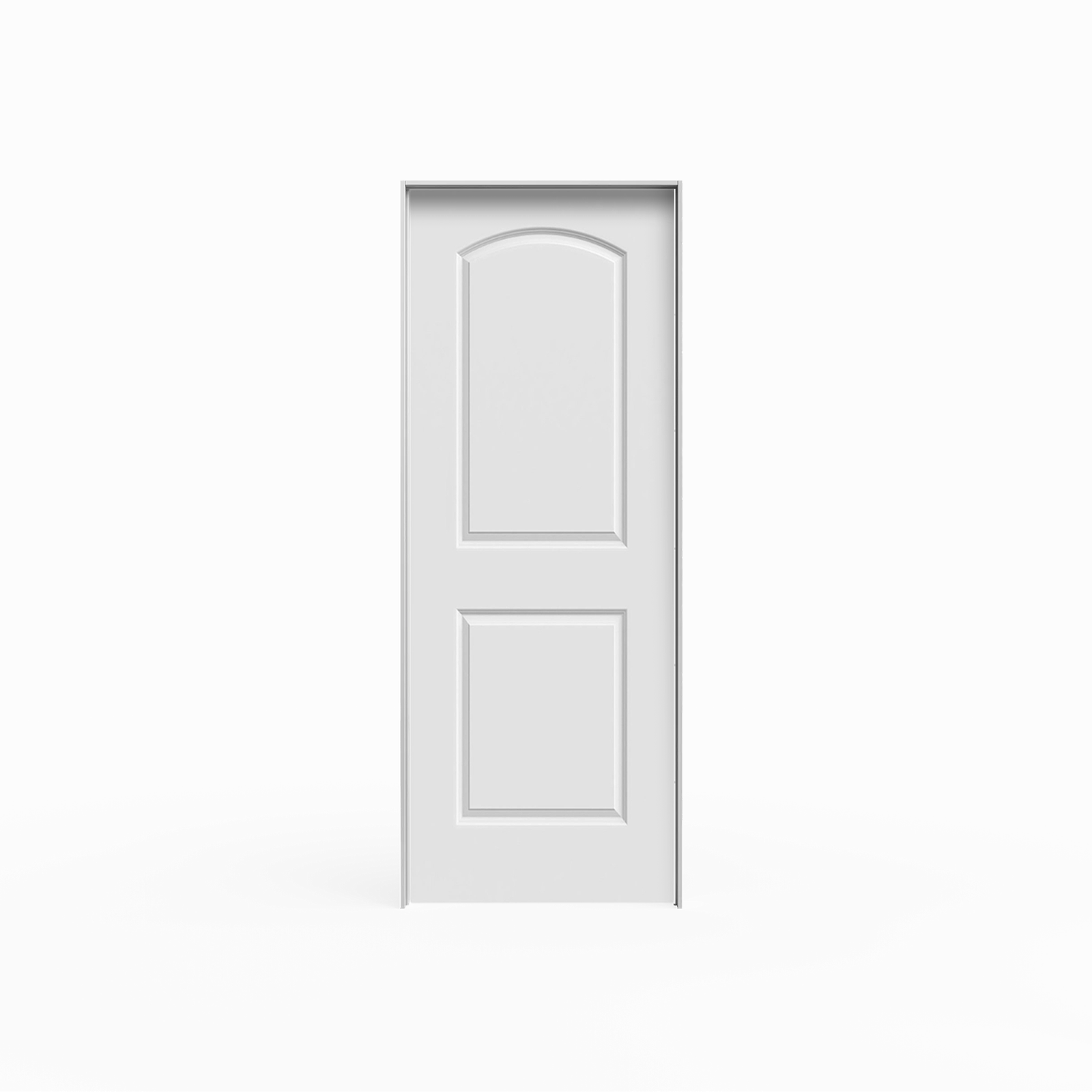
UWG Molded doors are manufactured by pressing a 3mm MDF (medium-density fiberboard) skin over an engineered wood door frame under heat and pressure, creating a seamless, panel-style surface. They are available with either a hollow-core or solid-core fill, depending on weight, insulation, and application requirements.
Molded doors are one of the most widely used door types in both residential and commercial construction, valued for their consistent panel design, smooth paintable surface, and lower cost compared to solid-wood stile-and-rail doors.
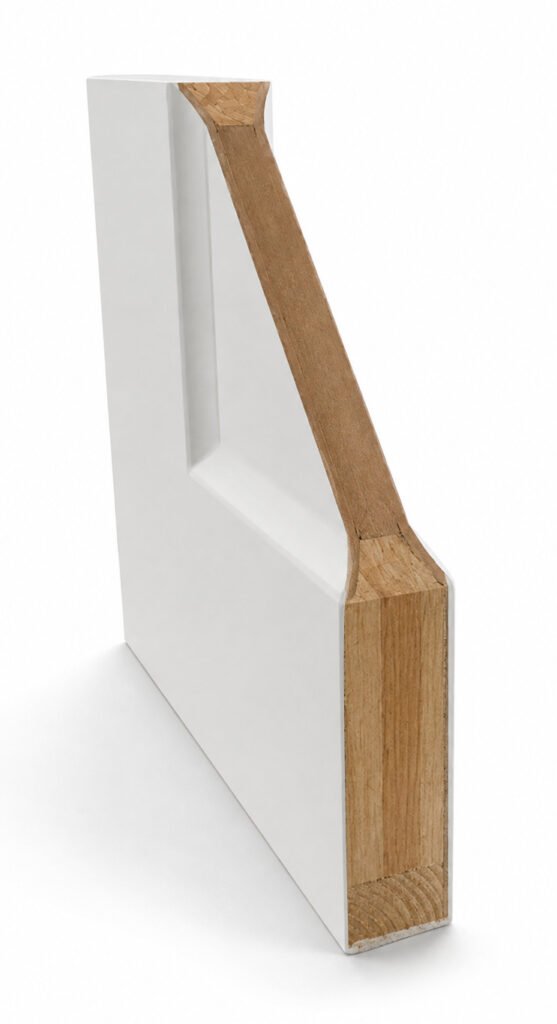
Molded doors are constructed from two matching MDF skins with a core in between. Each skin is a 3mm MDF panel, pressed in a mold to form the raised- or flat-panel design on its face — this pressing step is where "molded door" gets its name. Around the perimeter, FJP (finger-jointed pine) stiles and rails form a frame, and the two molded skins are bonded to the front and back of that frame. The cavity inside the frame is filled with either a hollow-core or solid-core material (see below), giving the finished door a single, seamless panel look with no applied moldings and no visible seams.
Common misconception: "Molded door" and "MDF door" are not two different products — a molded door's face is made of MDF. The term "molded" refers to the manufacturing process (pressing the panel design into the MDF skin), while "MDF" refers to the skin material itself. Understanding this distinction helps buyers evaluate quality: skin thickness (commonly 3mm), FJP frame quality, core fill choice, and pressing consistency are the key factors that determine a molded door's durability and paint finish.
Every molded door in our line can be built with either a hollow-core or solid-core interior. The core doesn't affect the panel design or the 3mm MDF skin — it changes weight, sound insulation, fire resistance, and cost.
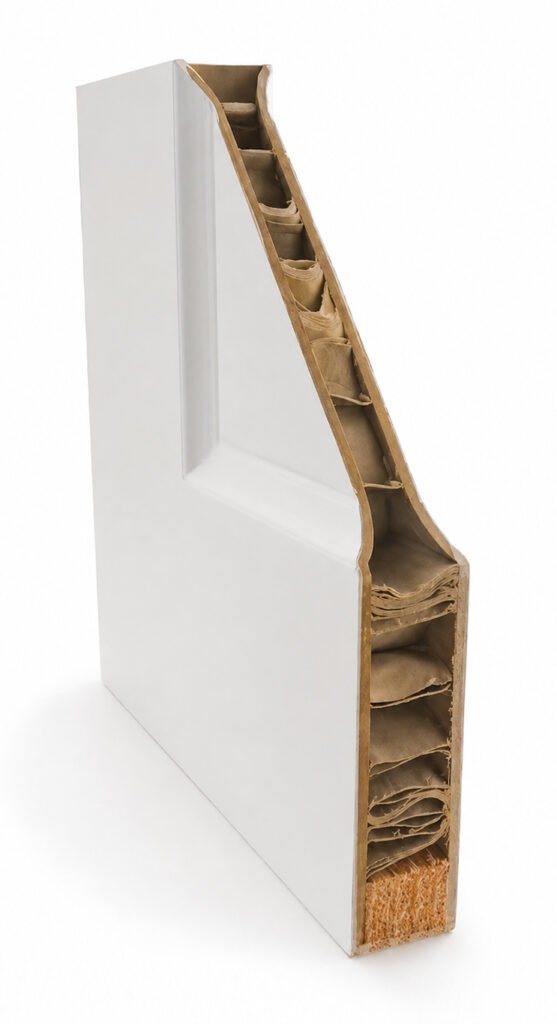
Honeycomb paper
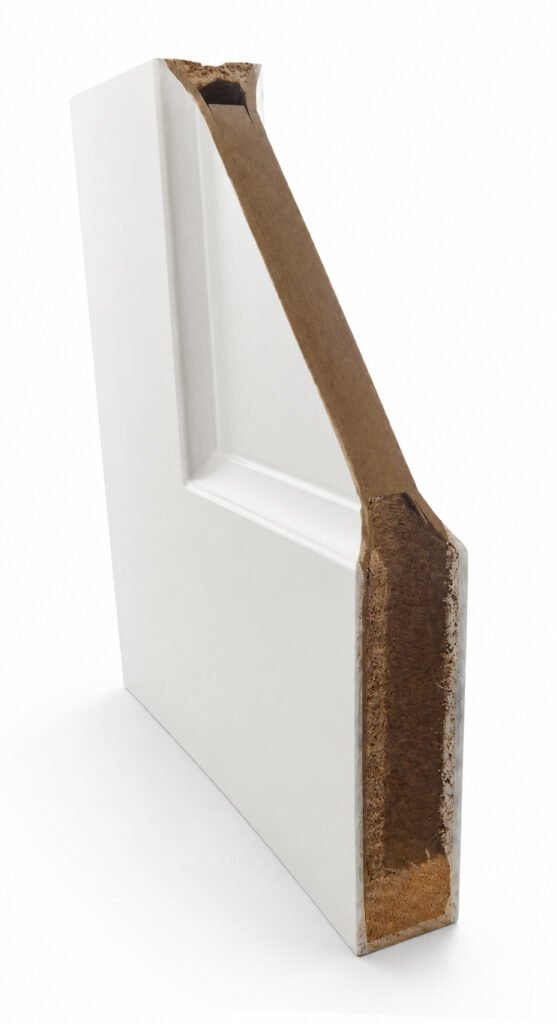
Tubular chipboard
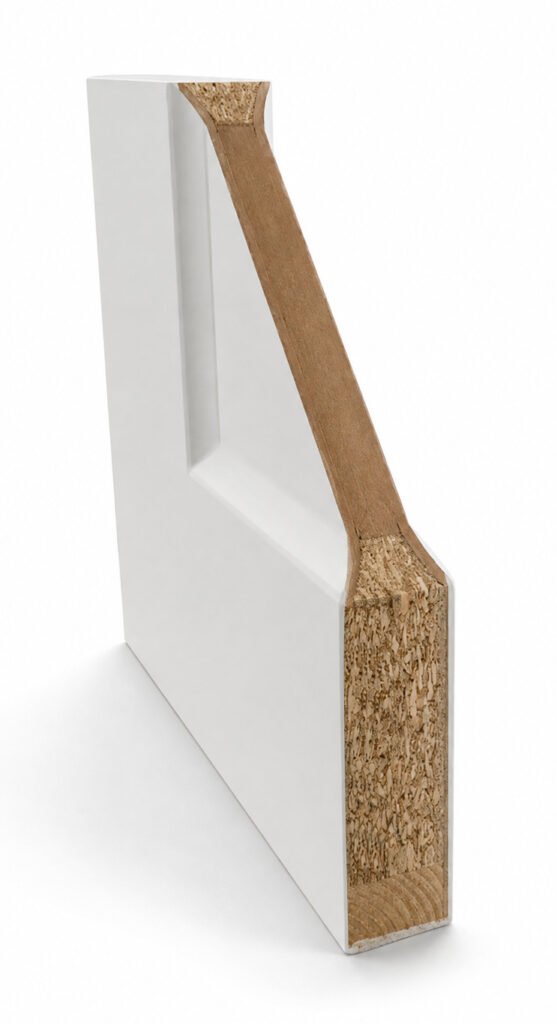
Particleboard
Solid wood strips
| Spec | Hollow Core | Solid Core |
|---|---|---|
| Fill material |
Honeycomb paper EPS foam |
Tubular chipboard Particleboard MDF strips Solid wood strips |
| Weight | Light — easier to install, lower shipping cost | Heavy — sturdier feel, higher shipping cost |
| Sound insulation | Standard | Significantly better — suited to bedrooms, offices, hotel rooms |
| Fire/impact resistance | Standard | Higher — suitable for fire-rated door programs (available on request) |
| Best for | Interior doors, closets, low-traffic residential rooms | Exterior-facing interior doors, commercial projects, sound-sensitive spaces |
| Relative cost | Lower | Higher |
In practice, most builders mix both within a single project: hollow-core for standard bedroom and closet doors where weight and cost matter most, and solid-core reserved for the openings where performance is worth the extra weight and price — a door between the garage and living space, a home office, or any unit spec that calls out sound or fire performance. Because both core types share the same 3mm MDF skin and panel tooling, mixing them doesn't create a visual mismatch between units.
Our team can recommend a core type based on your project's climate, building code, and budget.
The 3mm MDF skin is molded into a range of standard panel profiles, and custom profiles can be tooled for larger orders.

Two long, flat or raised panels for clean, contemporary lines that suit modern builds and remodels.

The classic raised-panel look, still the most widely requested profile for the US residential market.

A flat, seamless face with no panel lines, popular for paint-grade finishes in modern and minimalist interiors.

Flat center panels with square, straight-line profile edges, matching current trim and cabinetry trends.
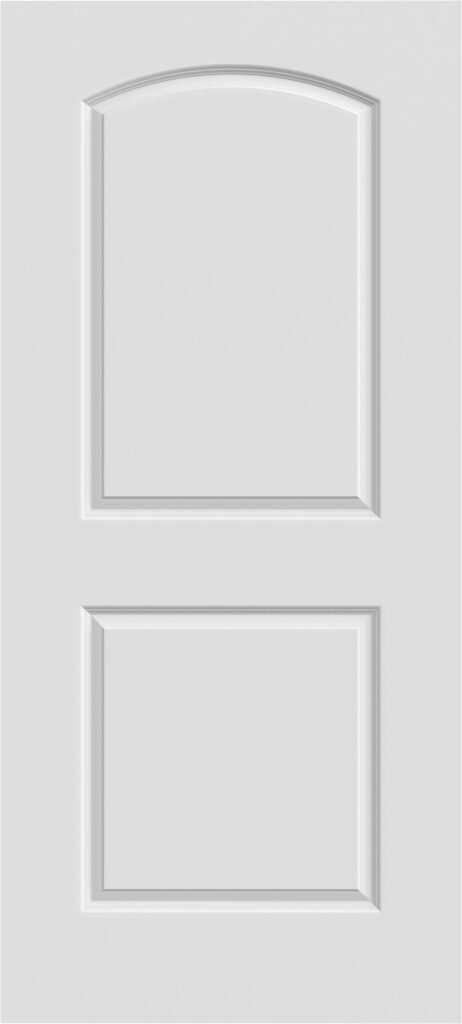
A decorative curved top rail, typically specified for entry doors or a feature door within a project.
All surfaces are primed and paint-ready out of the box, in either a smooth or wood-grain textured finish; pre-finished, laminated, and veneer-wrapped options are available for custom builder programs.
Looking for an upgrade from standard molded panels? Our Shaker Doors use the same manufacturing scale and lead times as molded doors, with a flatter, more contemporary profile — see Molded vs. Shaker vs. Shaker-Style Molded Doors: Pros, Cons, Design & Cost Comparison> to see which fits your project's price point and finish goals.
Our molded doors are specified across single-family, multi-family, and light commercial projects. Every application below can be ordered hollow-core or solid-core, and pre-hung or slab-only, depending on your build schedule.
Interior Doors — bedrooms, offices, and hallway doors for residential and multi-family builds. Available slab-only or pre-hung, and pre-finished to speed up install day.
Closet & Bifold Doors — 2-panel and 6-panel bifold, bypass, and double-swinging configurations sized to standard and custom closet openings.
The most common molded door size is 30" × 80", at a standard thickness of 1-3/8". Taller options (84" and 96") are available for higher-end or taller-ceiling projects, and thickness typically steps up to 1-3/4" for fire-rated or heavy-duty commercial configurations.
Rough opening rule of thumb: Rough opening width = door slab width + 2"; rough opening height = door slab height + 2-1/2". For a standard 30" × 80" door, that's a 32" × 82.5" rough opening.
For the full sizing and width chart across all door formats, see Standard Interior Door Sizes, Widths & Specifications>
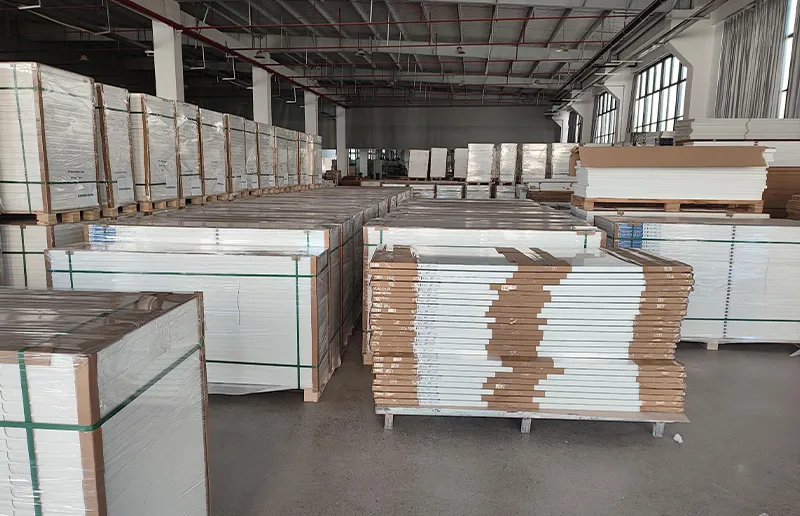
We manufacture molded doors for builders, contractors, and door retailers across the US, supplying both stocked profiles and fully custom programs built to your project specs.
A molded door is built from two 3mm MDF (medium-density fiberboard) skins, each pressed in a mold to form the panel design, bonded to the front and back of an FJP (finger-jointed pine) frame. The cavity inside that frame is filled with either a hollow-core or solid-core material.
Yes and no — a molded door's skin is MDF, but "molded" specifically describes doors where the panel profile is pressed directly into that MDF skin, rather than built up from separate applied moldings.
A molded door has a raised- or flat-panel design pressed into its MDF skin, giving it a traditional paneled look. A flush door has a completely flat, smooth face with no panel lines at all — it's essentially the same core construction with a plain skin instead of a molded one.
A stile-and-rail door is built from separate solid-wood (or engineered-wood) frame pieces joined around individual panels — the panel lines are formed by the assembled door components. A molded door achieves a similar visual appearance with a single pressed MDF skin over an internal frame, creating a consistent panel profile and a uniform surface finish.
Molded doors are an economical, high-volume option for standard residential and multi-family projects. They offer consistent quality and efficient production, making them a practical choice for large-scale builds.
Shaker doors feature a clean, modern panel profile and are often selected for projects that want to add more design appeal or offer upgraded finishes.
Need the modern Shaker look with the cost efficiency of a molded door?
UWG’s Shaker-style molded doors combine the contemporary appearance of Shaker designs with the production efficiency and cost advantages of molded door construction — helping builders achieve a premium look while staying within project budgets.
Hollow-core doors are lighter and more economical, suited to standard interior applications. Solid-core doors offer better sound insulation and a sturdier feel, and are recommended for bedrooms, offices, or any application where noise reduction matters.
Molded doors use 3mm MDF skins that are pressed under heat and pressure to create the panel profile, delivering consistent appearance and defined surface details. Because the panel design is formed through a single molding process rather than assembled from separate pieces, molded doors provide a uniform surface finish and consistent panel definition. Solid-core models offer added weight, durability, and improved sound control for high-traffic or commercial applications.
Molded doors are typically primed and paint-ready. Because the face is MDF rather than natural wood grain, they are generally not suitable for stain finishes — paint or laminate wrap is recommended.
Order slab or KD when your crew has capacity for on-site framing and you want maximum container-loading efficiency; order Semi-Prehung or Prehung when you want more of the work done at the factory to speed up install day. See [Slab vs. Knock-Down vs. Prehung — Which Do You Need? →] for the full comparison, including container loading counts.
Yes — molded doors can be built in a fire-rated configuration (UL 20–90 minute ratings) using a solid-core fill engineered for fire performance.
From our experience working with builders and distributors, understanding these structural differences is important because the door construction directly affects cost, durability, sound performance, and project positioning.
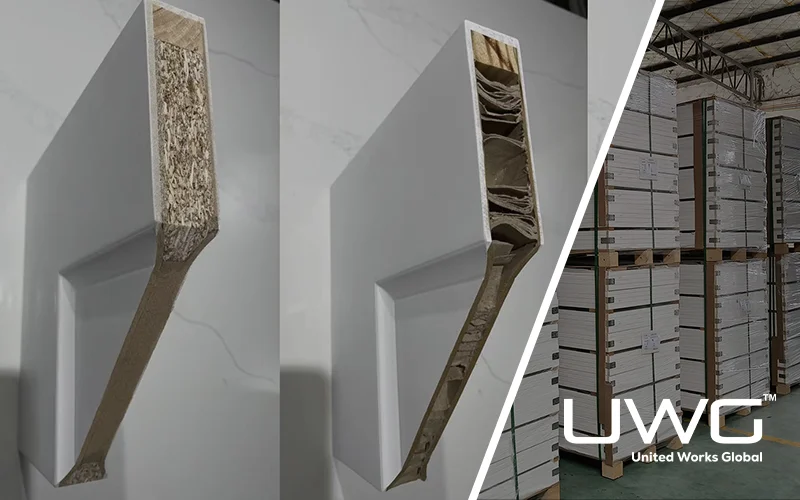
The most common filling materials for molded doors include honeycomb paper core, solid wood strips (also called finger joint wood), MDF strips, particleboard, and tubular chipboard. Honeycomb paper is the most economical and lightweight option, widely used in residential projects.
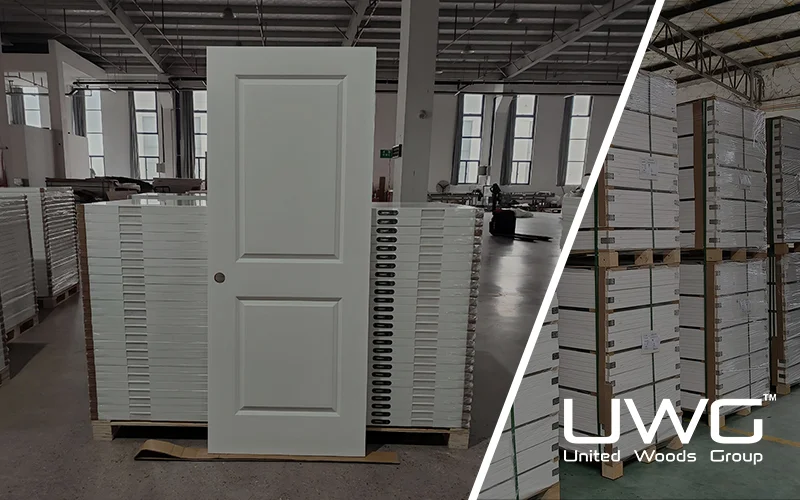
Molded interior doors are produced through a structured manufacturing process that combines molded door skins, engineered core materials, and a wooden frame system.
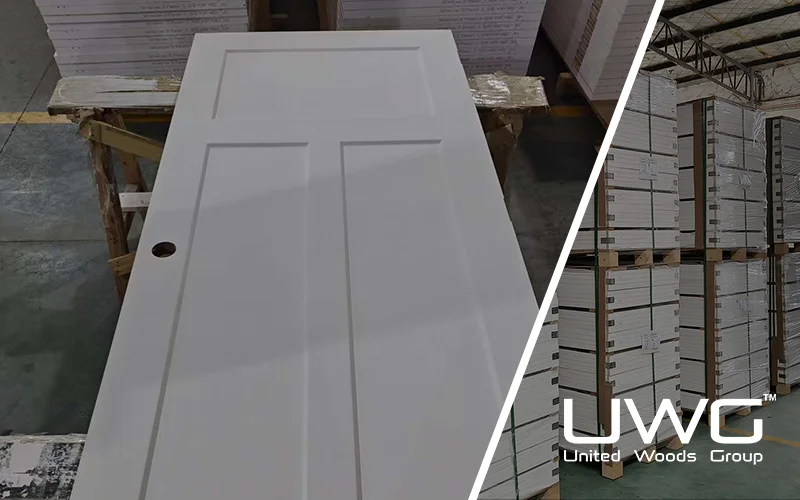
A Shaker style molded door is a factory-pressed interior door made from medium density fiberboard (MDF), molded to imitate the clean lines of a traditional Shaker door.
This website uses technologies such as cookies to enable basic website functions, as well as for analytics, personalization, and targeted advertising. To learn more, please view the following link: Privacy Policy.