
Projects
Resources
Explore our products, understand their features, and discover the services we offer to support your project.

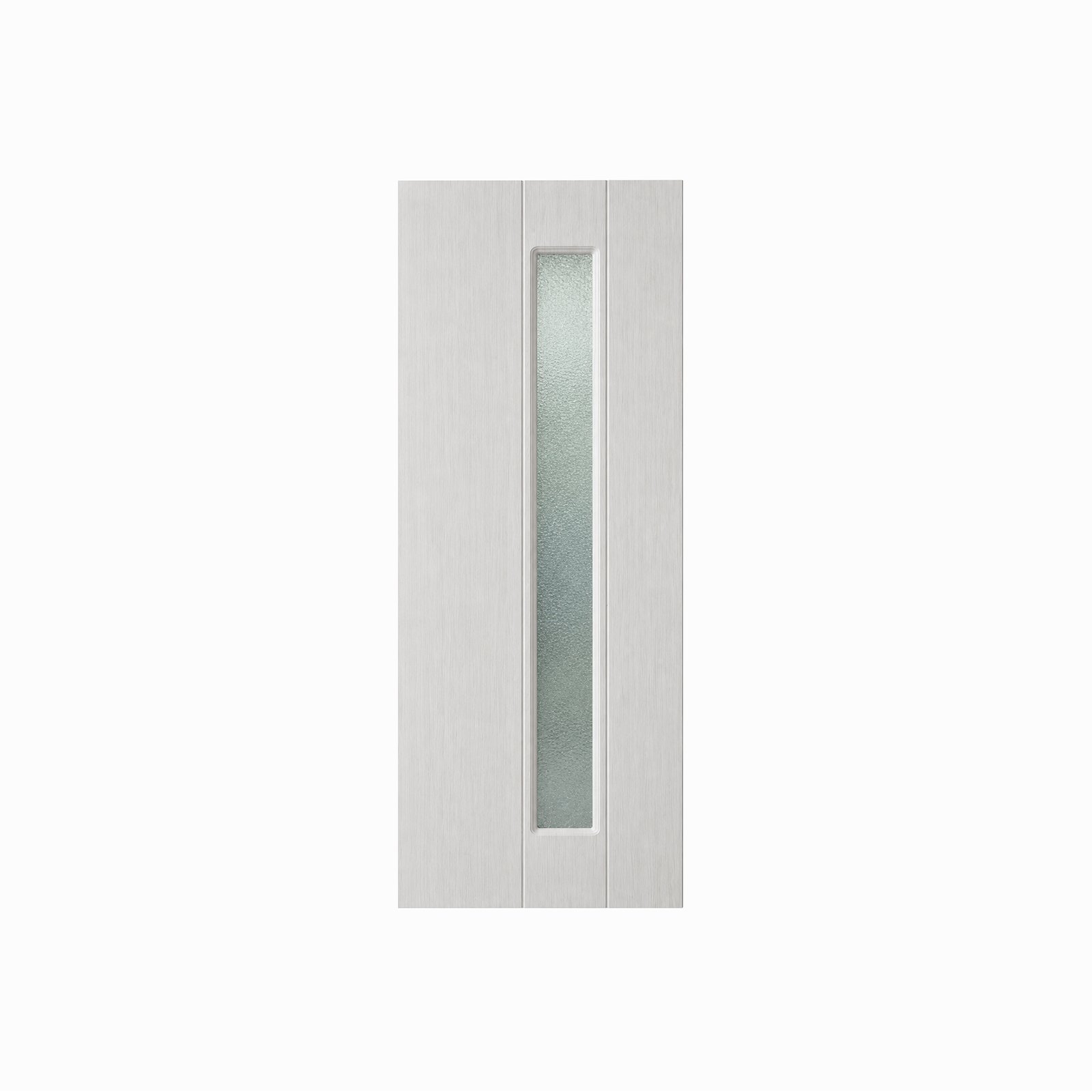
A full range of glass configurations compliant with North American safety standards, factory-fitted to the door frame and hardware for optimal daylighting and a modern visual effect.
"Glass door" covers more ground than most people expect — it's not one product, it's a feature that can be added to more than one of our door lines. Here's what it does and doesn't mean:
Unlike "molded" or "shaker," glass door doesn't describe how the door is built — it describes what's set into the panel opening.
French is a specific glass style — a traditional divided-lite grid. A glass door can have that grid, a single full-view pane, or another configuration entirely. Every French door is a glass door; not every glass door is a French door.
A glass panel can replace the center panel on a Shaker door, sit inside a Stile and Rail frame in place of a wood panel, or be cut into select Veneer finish tiers.
A glass door, in our line, isn't a separate construction — it's any of our interior doors built with a glass panel or insert instead of a solid one. Shaker, Veneer, and Stile and Rail doors can all be built with glass, in configurations ranging from a single full-view lite to a traditional divided grid (see our French Doors page for that specific style).
Share your door requirements and quantities. We’ll help you select the right glass options and provide pricing for your project.

The flat center panel can be swapped for a glass insert, keeping the same stile-and-rail construction and skeleton options.

A glass insert can take the place of one or more solid wood panels within the frame.

Select finish tiers can be built with a glass cutout in place of a solid panel.
Whichever base line you start from, the glass type, safety glazing, and configuration options below are the same set of choices.

One large pane, the most open, modern option, maximizing daylighting between spaces.

A traditional multi-pane grid; see our [French Doors →] page for lite patterns and grid options.

Beyond full-view and standard French grids, available for a specific look or to match an existing pattern elsewhere in a project.

Glass panels are also available on bifold configurations, for closets or room dividers that want light transfer without a fixed swing door.

Maximum light transfer, no privacy, the most open option.

Privacy with light transfer, a softer look than clear.

Beyond full-view and standard French grids, available for a specific look or to match an existing pattern elsewhere in a project.
A glass door, in our line, isn't a separate construction — it's any of our interior doors built with a glass panel or insert instead of a solid one. Shaker, Veneer, and Stile and Rail doors can all be built with glass, in configurations ranging from a single full-view lite to a traditional divided grid (see our French Doors page for that specific style).
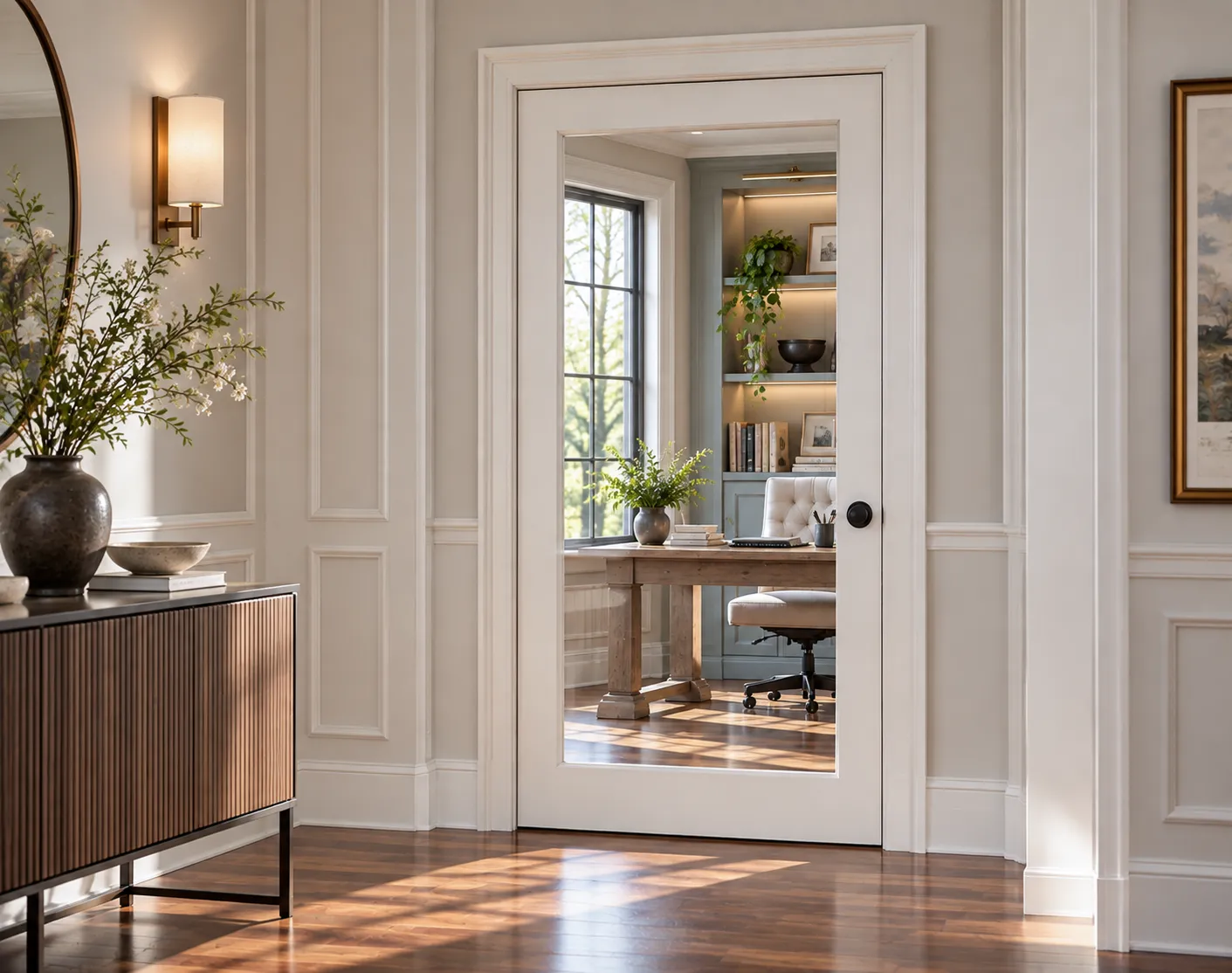
Light and sightlines between a workspace and the rest of the home, while keeping a closable door.
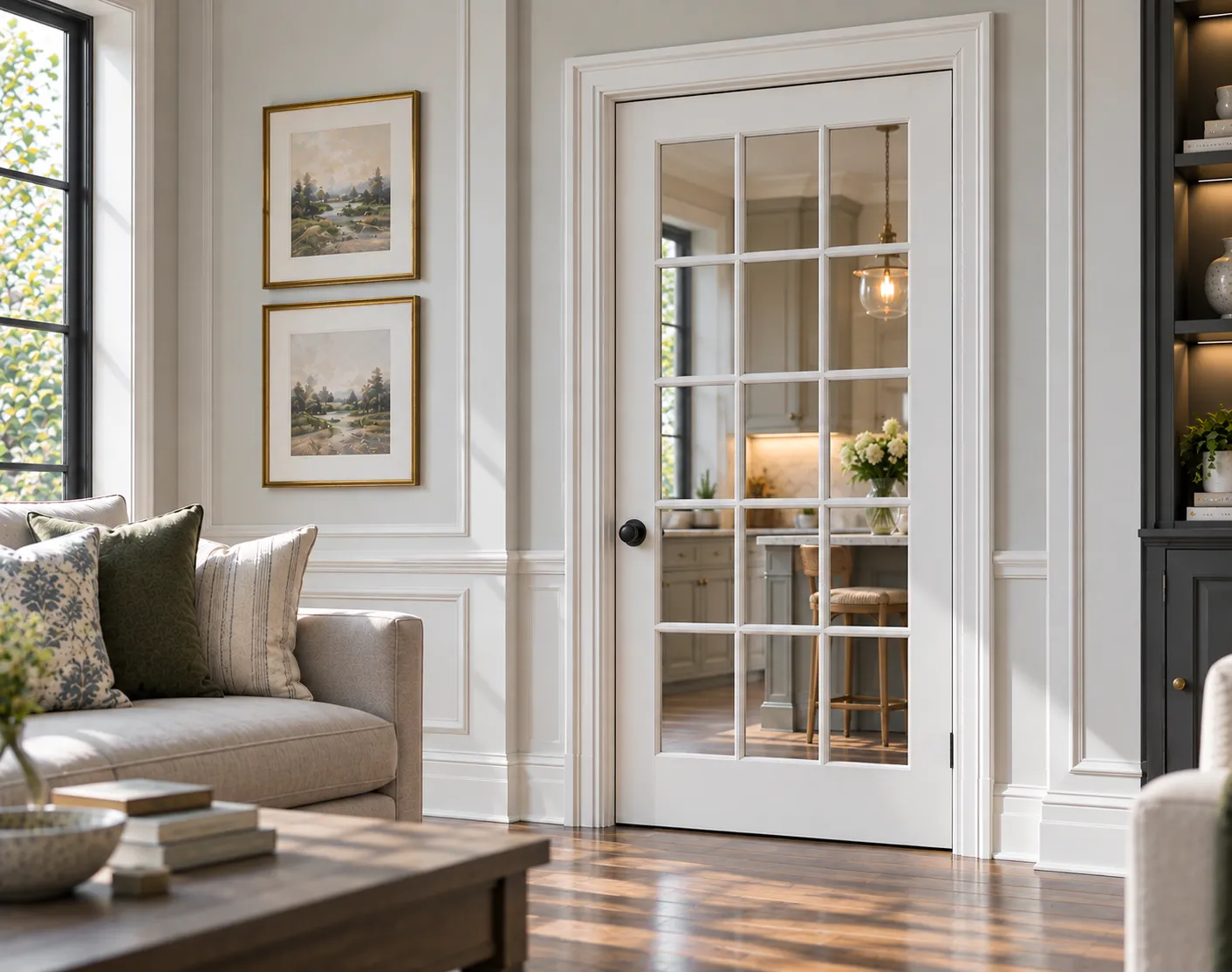
Where a primary living area benefits from shared natural light with an adjacent room.
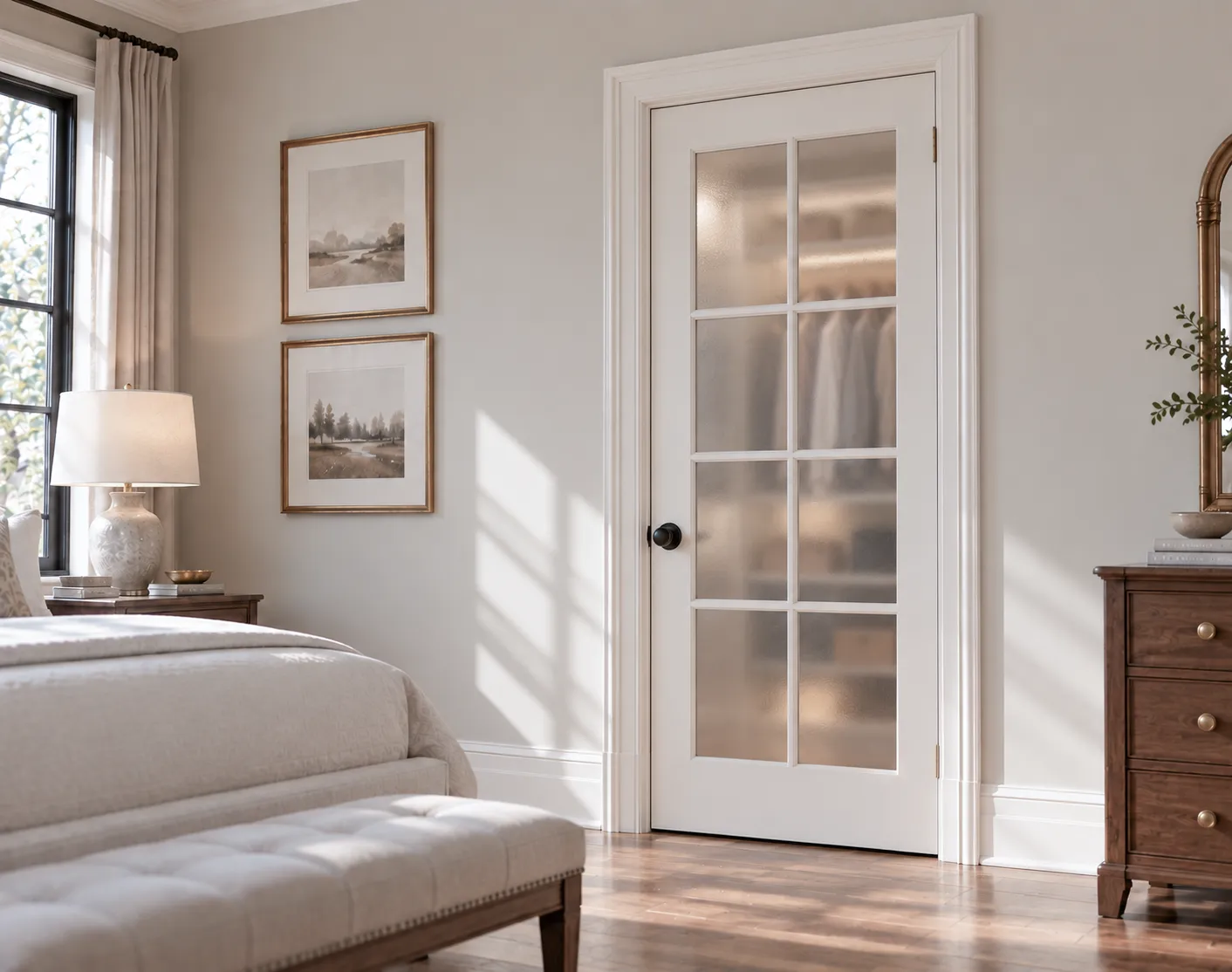
Glass or French-lite closet doors as a decorative upgrade from a plain flush or panel door.
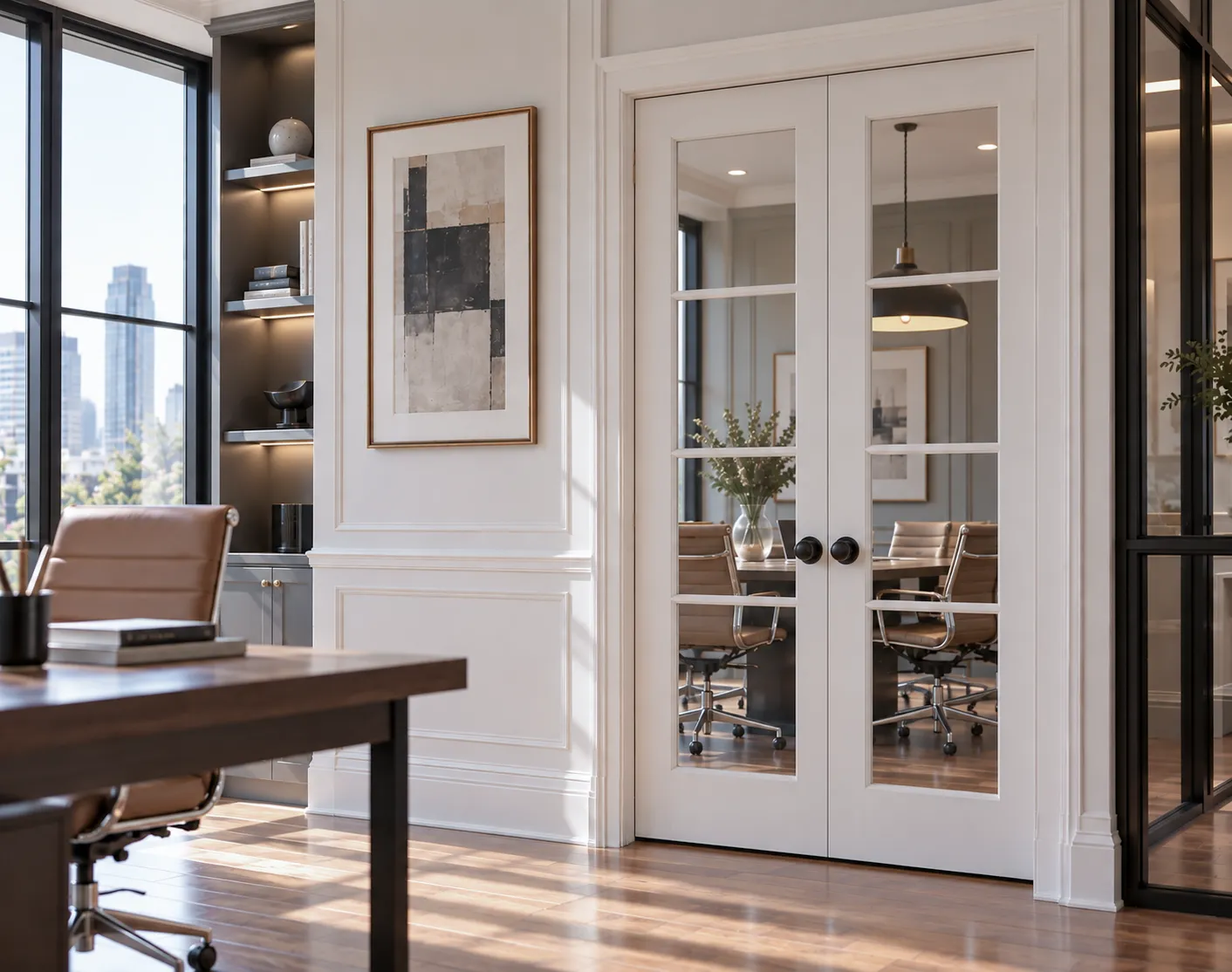
Glass doors (including bifold configurations) for conference rooms and partitioned office spaces.
Glass configurations are available as standard patterns or fully custom: base door line (Shaker, Veneer, or Stile and Rail), lite pattern or full-view layout, glass type (clear, frosted, tempered, or laminated), and single, double, or bifold configuration.
Sizing follows our standard interior door range— see [Standard Interior Door Sizes, Widths & Specifications →] for the full chart.
Assembly ships in the same Slab, Knock-Down, Semi-Prehung, and Prehung formats as our other lines (see [Slab vs. Knock-Down vs. Prehung — Which Do You Need? →] ), with astragal and flush-bolt hardware included on double-door orders.
In our line, a glass door isn't a separate construction — it's any of our Shaker, Veneer, or Stile and Rail doors built with a glass panel or insert instead of a solid one.
French is a specific glass style — a traditional divided-lite grid. A glass door is the broader category: it can be a French-style grid, a single full-view pane, or another configuration. Every French door is a glass door, but not every glass door is French.
Clear (maximum light, no privacy), frosted (privacy with light transfer), and tempered or laminated safety glass, which meets North American safety glazing standards required for glass in door applications.
At the factory — every glass insert is fitted to the door frame and hardware before it ships, so the door arrives ready to hang rather than needing the glass set on site.
Yes — a glass insert can replace the center panel on a Shaker door, a wood panel on a Stile and Rail door, or a solid panel on select Veneer finish tiers. See the construction comparison above.
Yes — lite pattern or layout, glass type, base construction, and single/double/bifold configuration can all be customized for qualifying order volumes. [Contact our team →]
Yes. One leaf is typically the active leaf (used day to day, carries the lockset) and the other is inactive (secured top and bottom with flush bolts). An astragal — a vertical strip on one leaf's edge — closes the gap between the two doors when both are shut.

The main types of glass for interior doors include clear, frosted, acid-etched, sandblasted, reeded, fluted, tinted, and patterned glass. Clear glass provides the greatest visibility, while frosted glass increases visual privacy by diffusing the view.

Shaker doors with glass feature a clean five-piece frame with one or more integrated glass panels. Their minimalist construction allows natural light to pass through while maintaining the simple proportions that define classic Shaker design.

The main types of interior glass doors for offices and commercial buildings are hinged or swing doors, sliding doors, and folding or bifold doors. These systems can use framed, minimal-frame, or frameless construction with different glass,
This website uses technologies such as cookies to enable basic website functions, as well as for analytics, personalization, and targeted advertising. To learn more, please view the following link: Privacy Policy.