Projects
Resources
Explore our products, understand their features, and discover the services we offer to support your project.
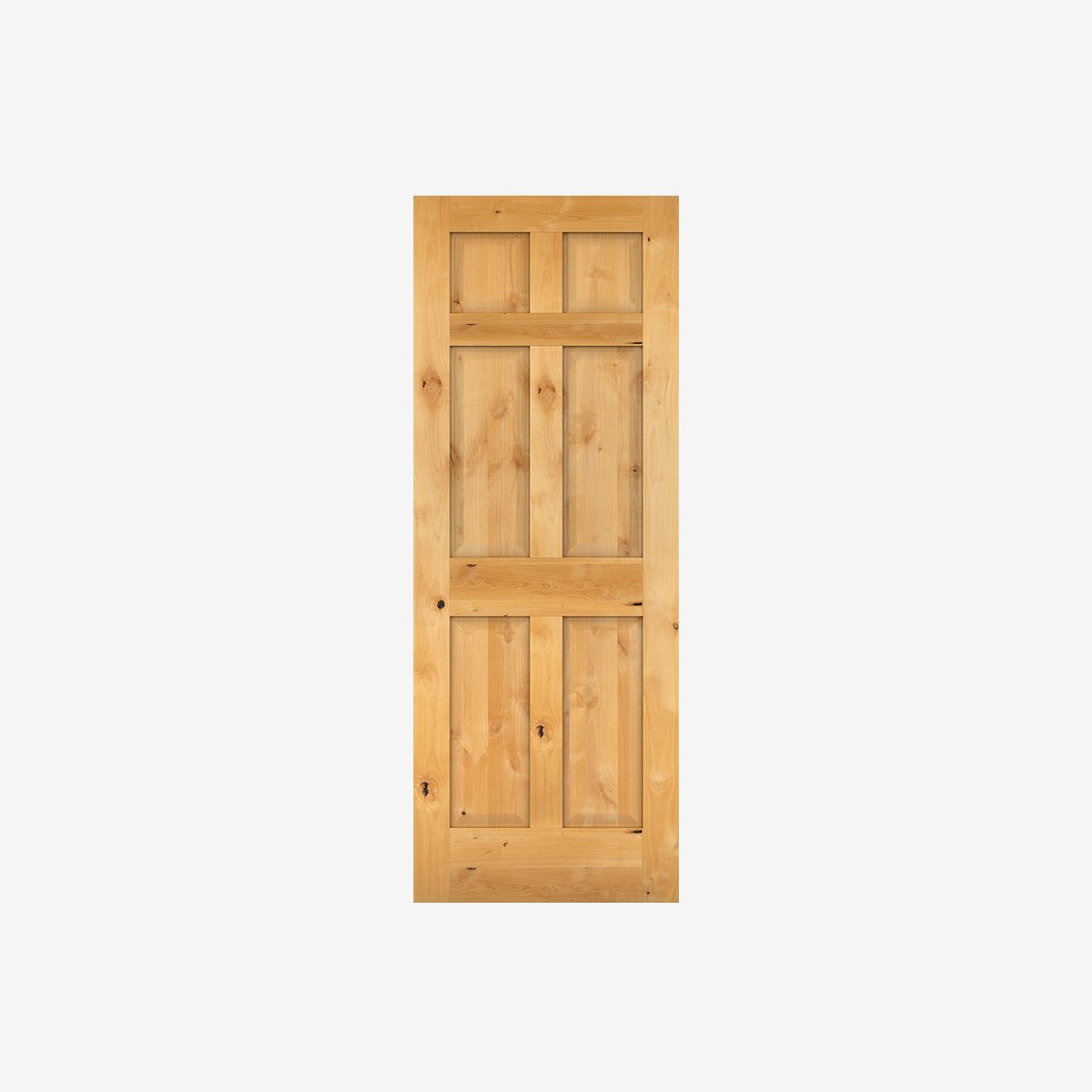
A stile and rail door is constructed from vertical stiles, horizontal rails, and one or more panels or glass inserts assembled into a structural frame. Unlike a molded door, where the panel pattern is formed into the door skin, a traditional stile and rail door uses separate structural components to create the door design.
What defines a stile and rail door is not simply its paneled appearance, but the way the door is assembled. Instead of forming the door face as a single molded surface, the frame, panels, and optional glass inserts are manufactured as separate components and then joined together.
This construction allows the panel layout, wood species, profile, glass configuration, and finish to be changed independently, making stile and rail doors particularly suited to projects that require traditional wood construction or more customized door designs.
Need a specific wood species, panel configuration, glass option, size, or finish? Send us your project requirements, drawings, or door schedule, and our team can review the specifications and recommend a suitable stile and rail door configuration.
The two outer stiles run vertically along the full height of the door, while the top and bottom rails connect them horizontally to form the main structural frame.
More detailed configurations may include additional components. A mid-rail divides panels vertically, while an intermediate stile or mullion divides panels side by side. The number and position of these components depend on the panel layout and overall door design.
In our stile and rail construction, the stiles and rails are joined using precision-drilled wood dowels. Matching holes are machined into each component, the dowels are glued in place, and the assembled frame is clamped to create strong, consistent joints.

The spaces within the stile and rail frame can be configured with wood panels, glass inserts, or a combination of both.
Wood panels may be recessed or raised, depending on the required profile and architectural style. Traditional designs may use more detailed panel profiles or decorative molding, while simpler configurations use cleaner, flatter panel surfaces.
Solid wood panels are typically fitted into grooves machined along the inside edges of the surrounding stiles and rails. Rather than being rigidly fixed on all four sides, the panel is allowed to accommodate the natural expansion and contraction of solid wood as humidity changes.
Glass inserts can be incorporated into the same structural frame, allowing different lite configurations without changing the basic stile and rail construction.

Solid wood naturally responds to changes in temperature and humidity, so material preparation and joint quality are especially important in stile and rail door production.
Our process starts with kiln-dried lumber and controlled moisture content before machining. Precision-cut components, properly fitted dowel joints, controlled gluing, clamping, and panel clearance all work together to help reduce the risk of warping, cracking, or joint separation over time.
For project buyers, this makes moisture control and machining consistency important specification points when comparing stile and rail doors from different manufacturers.


Stile and rail doors can be produced for either painted or stained finishes, depending on the wood species and surface specification.
For stain-grade applications, the visible solid wood surface can be finished with clear or tinted stains that preserve and highlight the natural grain of the material. This makes solid wood stile and rail doors suitable for projects where the appearance of real wood is an important part of the design.
Paint-grade options are better suited to projects that require a uniform color rather than visible wood grain.
Unlike PVC- or melamine-faced doors, which use a factory-applied decorative surface, stain-grade solid wood doors allow the natural wood itself to remain visible as part of the finished appearance.
All three of our door lines can produce a paneled look, but the construction underneath is not the same, and it's worth knowing which is which before you spec one.

Solid wood throughout — frame and panels are both solid wood, joined with doweled corners. The traditional, highest-material-cost construction of the three.

An engineered frame (FJP with a solid wood, tubular, or particleboard skeleton) around a flat MDF center panel — a flat, square-edged look at a lower material cost than solid wood.

A panel design pressed directly into an MDF skin, with no internal frame-and-panel joinery at all — the most economical of the three, and the fastest to produce at volume.
Which one should you choose? If a project calls out solid wood construction specifically, or the door needs to hold up to a lot of seasonal humidity swings without a paint-grade skin masking movement, stile and rail is the right spec. If the project is paint-grade and budget or lead time matters more than solid-wood construction, shaker or molded are worth a look instead.
A stile and rail door is constructed from vertical stiles, horizontal rails, and one or more panels or glass inserts assembled into a structural frame. Unlike a molded door, where the panel pattern is formed into the door skin, a traditional stile and rail door uses separate structural components to create the door design.
Stiles are the vertical frame members on the left and right edges of the door. Rails are the horizontal frame members at the top and bottom. Wider or more detailed doors may also have a mid-rail (a horizontal crossbar dividing panels above and below) and a mid-stile, or mullion (a vertical piece dividing panels side by side).
A molded door presses a panel design directly into an MDF skin, with no internal joinery. A stile and rail door is genuinely built from separate structural components — the stiles and rails — with panels or glass inserts set into the frame afterward.
"Solid core" usually describes a door's internal fill (as opposed to hollow), which is a distinction that applies to engineered doors like molded or shaker. A stile and rail door doesn't have a "core" in that sense — the stiles and rails are solid wood structural components, with a panel or glass insert set into the frame.
It can happen on poorly built doors, but it's preventable. The panels are set into a floating groove rather than glued in place, which lets solid wood expand and contract with humidity without stressing the joints, and the frame itself should be built from properly kiln-dried lumber and doweled, glued corners. Ask your supplier about moisture-content specs and joinery method before ordering — that's what actually determines long-term stability, not the wood species alone.
Yes — because the frame and panels are genuine solid wood, this is the door line in our range that supports true stain-grade finishing, where the wood grain shows through. Molded and veneer (PVC/melamine) doors can only be painted or given a printed wood-look finish, since there's no real wood on the visible surface to stain.
Yes — panel configuration, wood species, and sizing can all be customized for qualifying order volumes. [Contact our team →]
This website uses technologies such as cookies to enable basic website functions, as well as for analytics, personalization, and targeted advertising. To learn more, please view the following link: Privacy Policy.