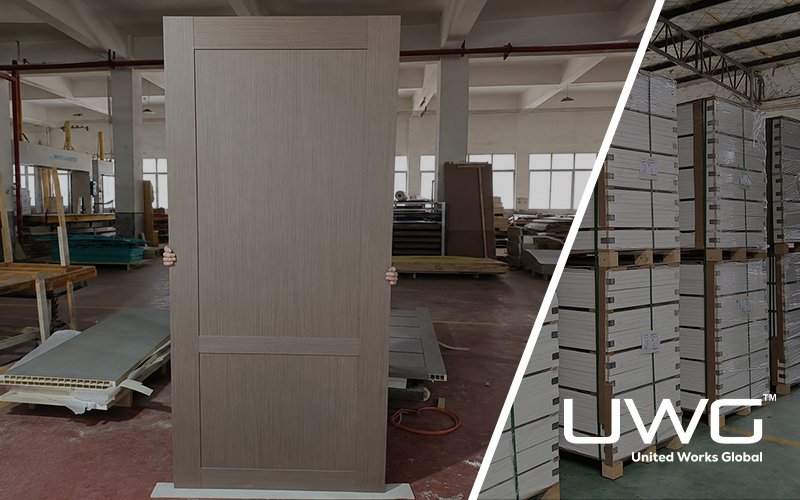
When selecting an interior door for a residential or commercial project, the surface finish affects not only its appearance but also its maintenance requirements, durability, and overall suitability for the intended application. Melamine-finish doors are commonly considered for projects that require consistent decorative finishes and a ready-to-use surface.
This article explains what a melamine door is, how its surface is constructed, and how Melamine Finish compares with other options such as Natural Wood Veneer, Engineered Wood Veneer, PVC, and HPL. It also covers the advantages and limitations of melamine doors, common applications, and the key specifications buyers should check before approving samples or placing an order.
What Is a Melamine Door?
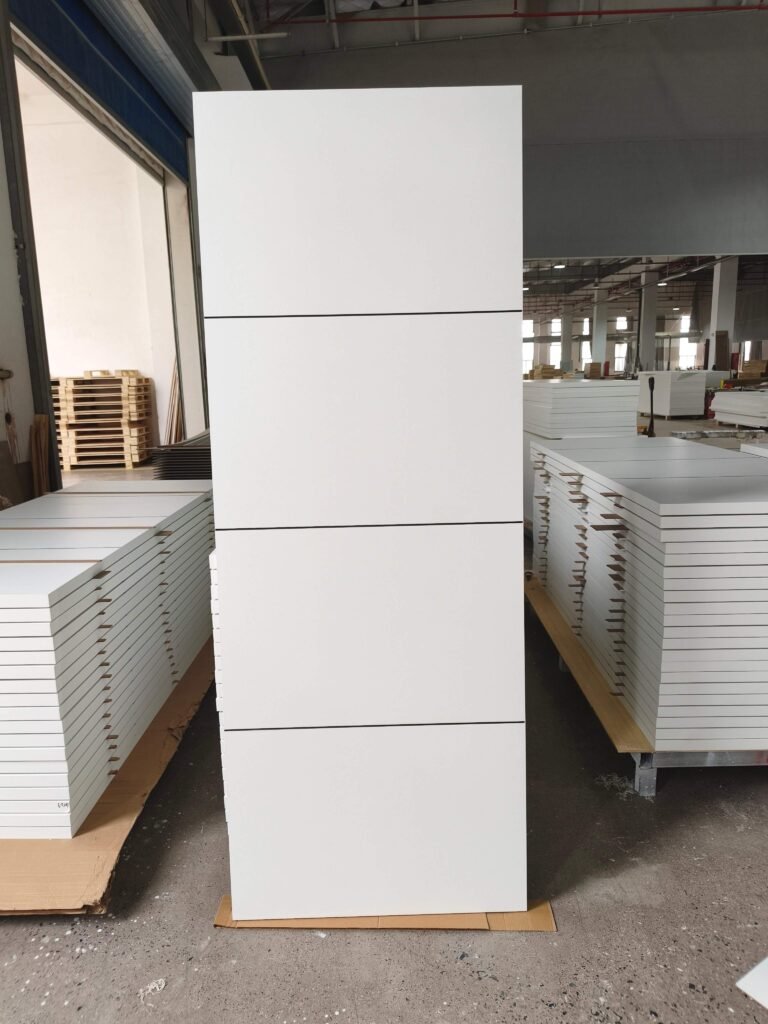
A melamine door has a decorative face made from paper impregnated with melamine resin. Heat and pressure cure the resin and bond the decorative layer to a suitable wood-based substrate. The paper carries the color or printed design, the resin forms the finished surface, and the substrate provides the panel body.
Melamine-faced doors may use this board as the leaf itself or as a face component over a separate core and perimeter. The core and hardware reinforcement are separate parts of the complete door specification.
How Is Melamine Different from Other Door Finishes?
Melamine is one of several surface finish options for interior doors. In UWG’s product classification, it belongs to the Veneer Finish category, alongside Natural Wood Veneer, Engineered Wood Veneer, PVC Finish, and HPL Finish. Paint finishes, such as water-based paint and PU paint, belong to a separate category.
The main differences lie in the surface material, finishing process, and resulting appearance.
| Finish Type | Surface Material and Process | Typical Appearance |
|---|---|---|
| Natural Wood Veneer | Thin layer of natural wood applied to the door surface | Authentic wood grain with natural variations |
| Engineered Wood Veneer | Reconstituted wood veneer applied to the door surface | Consistent wood grain and more uniform coloring |
| PVC Finish | PVC film applied to the door surface through vacuum forming or hot pressing | Solid colors and decorative wood-grain patterns |
| Melamine Finish | Decorative paper impregnated with melamine resin and bonded to a suitable board surface | Consistent solid colors, printed wood grain, and decorative patterns |
| HPL Finish | High-pressure decorative laminate bonded to a substrate | Wood-grain or solid-color surfaces with a durable laminate layer |
TFL is distinct from high-pressure laminate (HPL): TFL fuses the decorative paper directly to the board, while HPL is manufactured as a separate multilayer laminate and then bonded to a substrate. Both can contain melamine resin. Choose the specified surface construction rather than treating the resin name as a complete material description.
If you are deciding between these two surface finishes, see our PVC doors vs. melamine doors comparison for a closer look at their material characteristics, construction methods, appearance, and practical differences.
How Are Melamine Doors Constructed?
Melamine-faced MDF uses medium-density fiberboard, made from refined wood fibers bonded with resin. Its relatively fine, uniform structure provides a smooth face and generally allows clean machining with suitable tools.
Melamine-faced particleboard uses wood particles bonded with resin. Its structure is generally coarser, especially through the core, so edge machining may need more care to avoid breakout. Both can be used for melamine door panels, but their edge behavior and fixing requirements differ.
| Point to compare | MDF | Particleboard |
|---|---|---|
| Board structure | Refined wood fibers bonded with resin | Wood particles of varying sizes bonded with resin |
| Edge machining | Relatively uniform machined edge | More dependent on board grade and machining |
| Hardware fixing | Use screws specified for MDF; pilot-hole size and edge distance depend on board density and thickness | Use particleboard-rated screws; follow pilot-hole and edge-distance guidance to limit breakout and loss of holding strength |
| What to specify | Grade, density, thickness, and moisture classification where relevant | Grade, density, thickness, and moisture classification where relevant |
Neither material should be given a blanket durability or moisture-resistance ranking without its board specification. Both may be face substrates; neither automatically defines the core of a complete interior door.
Core, Perimeter, and Hardware Support
At a basic level, a door leaf may use a melamine-faced board as most of its body, with the exposed edges finished separately. Another design may use two decorative face panels or skins around a separate core, with perimeter members and local reinforcement for hinges or locks.
In a composite leaf, the core fills the space between the faces, while perimeter members form the edges and provide defined fixing zones. Hardware support may be built into selected locations rather than provided by the decorative facing itself.
The product cross-section should identify the facing, face substrate, core, perimeter members, and hardware support for the selected series. These details distinguish a faced board from a complete interior door leaf.
How Are Melamine Door Panels Finished and Edged?
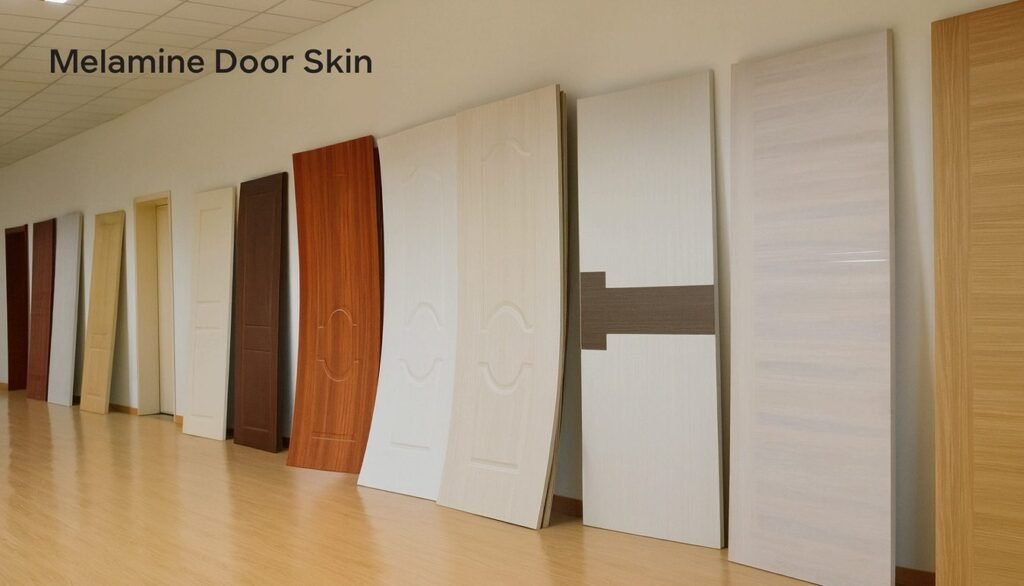
A Melamine Door is an interior door featuring a door skin with a melamine finish. The decorative surface is made using paper impregnated with melamine resin, which is bonded to a suitable substrate under heat and pressure to create the finished surface.
The melamine-finished door skin provides the door’s decorative appearance, including solid colors, printed wood-grain patterns, and various textures. Unlike the surface finish, the internal door construction is a separate consideration and may include different core fillers and perimeter structures depending on the selected product configuration.
For a complete door specification, it is important to distinguish between the melamine surface finish, the door skin substrate, the core filler, and the perimeter structure. These components serve different purposes and together determine the door’s overall construction and hardware support.
What Finishes and Designs Are Available for Melamine Doors?
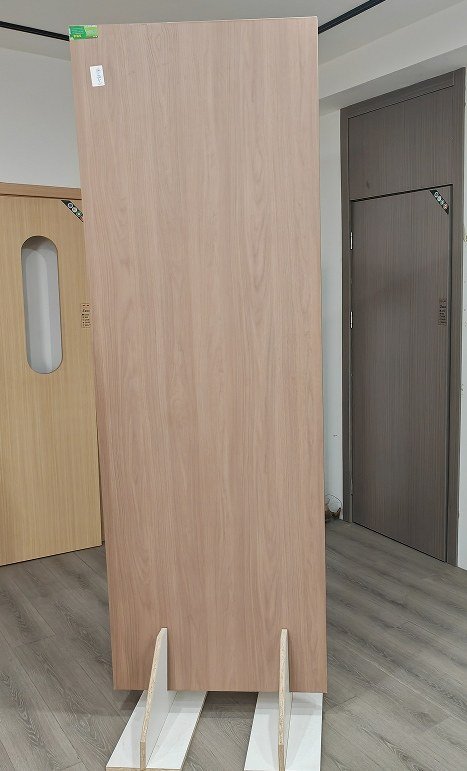
Solid Colors, Woodgrain and Decorative Patterns
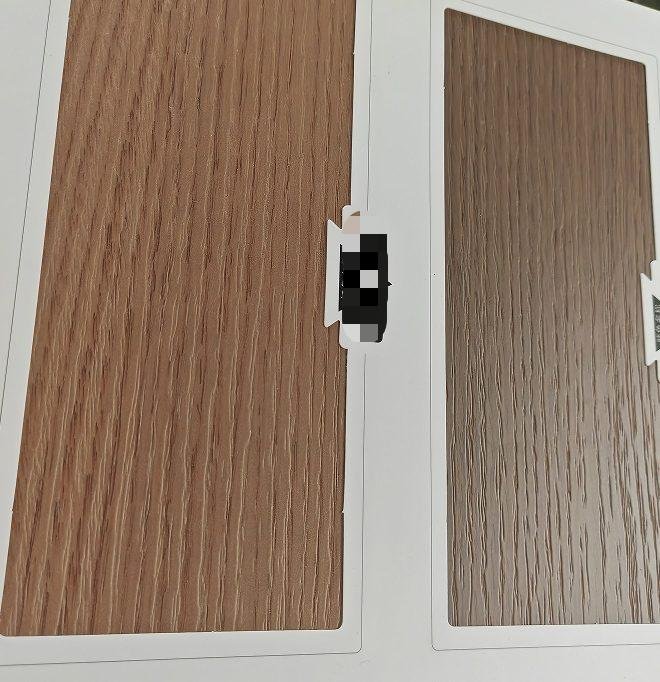
Melamine decors include solid colors, printed wood-grain designs, and other patterns. A printed wood grain is a decorative image, not a layer of natural wood veneer. Available choices depend on the selected surface collection.
Sheen Options
Melamine surfaces may be available in matte or higher-gloss finishes. Sheen describes how much light the surface reflects and should be specified separately from color and pattern.
Surface Texture and Sample Approval
Texture describes the surface feel and relief, from smooth to embossed. A wood-grain print may be paired with an embossed texture, but embossing alone does not prove a particular level of scratch or wear resistance.
Approve a physical sample under project-like lighting. Review the face and edge together, compare the finish with adjacent materials, and record the chosen decor, sheen, and texture. Allow for the supplier’s stated production tolerances rather than assuming every batch will look identical.
What Are the Pros and Cons of Melamine Doors?
Advantages of Melamine Doors
- Consistent appearance: Printed colors and patterns help coordinate multiple doors.
- Ready-finished surface: The decorative face normally arrives finished and does not require a separate site-applied paint finish.
- Everyday surface performance: Suitable grades can resist routine abrasion, scratches, and stains. Actual performance depends on the product specification; the surface is not scratchproof.
Limitations of Melamine Doors
- Exposed edges: Moisture can enter through unprotected edges, joints, or machining openings and affect the substrate.
- Repair limitations: Deep scratches, chips, or damaged decorative layers are difficult to repair invisibly.
- Substrate and fixing differences: MDF and particleboard have different edge-machining and fastener requirements. Hardware support must suit the actual door construction.
Melamine is a surface finish, not a guarantee that the complete door is waterproof or suitable for every environment.
Where Are Melamine Interior Doors Commonly Used?
Melamine interior doors are a practical option for suitable dry interiors where coordinated decor and a ready-finished face are priorities. Use the opening’s demands to narrow the specification:
| Project or Exposure | Selection Direction |
|---|---|
| Dry residential rooms and closets | Start with the required decor, door size, hardware support, and care needs |
| Repeated apartment layouts | Standardize decor codes, sheen, texture, and approved batch samples |
| High-traffic commercial interiors | Verify the proposed surface’s wear and impact suitability, hardware support, and any required assembly performance |
| Persistent humidity or direct water exposure | Do not select by the melamine name alone; use a system documented for that exposure or another suitable option |
Commercial use is not automatically excluded, but an ordinary residential specification should not be assumed to meet higher traffic or performance requirements.
How Do You Choose the Right Melamine Door?
Project Specification Checklist
Before approving a product or placing an order, confirm:
- Face and substrate: decorative finish, substrate type, board grade, and thickness.
- Core and perimeter: single-board or composite construction, plus edge formation.
- Edge treatment: edge-band material, face-to-edge coordination, and protection after machining.
- Hardware support: hinge and lock fixing zones, reinforcement, and permitted machining.
- Exposure and use: moisture, cleaning, traffic, and durability requirements.
- Sample and supply scope: approved decor, sheen, texture, dimensions, product series, and included components.
Project Recommended
The ideal melamine door depends on the building type, expected traffic, and performance requirements.
| Project Type | Recommended Core | Recommended Finish |
|---|---|---|
| Apartments | Hollow Core | Wood Grain or Solid Color |
| Single-Family Homes | Particleboard or MDF | Wood Grain |
| Hotels | Solid Core | Matte Wood Grain |
| Office Buildings | Solid Core | Matte or Solid Color |
| Schools & Healthcare | Solid Core | Textured or Easy-Clean Finish |
When specifying doors, builders should also consider factors such as door thickness, hardware compatibility, fire-rating requirements (where applicable), moisture exposure, and local building codes. Selecting the right combination of core and finish can improve occupant comfort, reduce maintenance costs, and extend the service life of the installation.
Frequently Asked Questions About Melamine Doors
Are Melamine Doors Waterproof?
Not automatically. A melamine surface may tolerate routine cleaning, but exposed edges, joints, and cut-outs can allow moisture to reach the substrate. Check the product’s stated application and care instructions.
Does a Melamine Door Always Have an MDF Core?
No. Melamine describes the decorative facing. MDF may be used as the face substrate, while the core and perimeter may use a different construction. The product cross-section or specification identifies the actual build.
Are Melamine Doors Easy to Clean and Maintain?
Many melamine surfaces can be wiped with a soft cloth and a suitable mild cleaner. Avoid abrasive pads or aggressive chemicals unless the manufacturer’s care instructions allow them.
Can Melamine Doors Be Repaired if the Surface Is Damaged?
Minor marks may be manageable, depending on the finish. Deep chips or scratches can expose the substrate and are harder to conceal. Repair options depend on the decor, edge treatment, and extent of damage.
Conclusion
A melamine door combines a decorative resin-treated surface with a substrate and a construction suited to its intended use. Compare the facing, core, perimeter, edge treatment, and hardware support as separate specification items. An approved sample and clear product cross-section help confirm that the door meets project requirements.