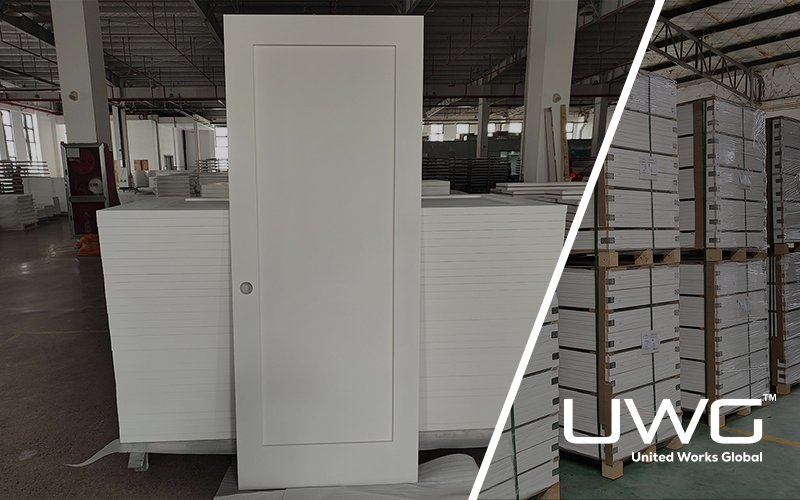
About 40% of our existing customers first came to us for our Shaker doors. Their clean lines, balanced proportions, and minimalist aesthetic make them a perfect fit for contemporary, transitional, and farmhouse interiors. Once we offered both Shaker-style and Shaker doors, customers often asked: what’s the difference between them?
From our experience working with developers, distributors, and contractors, one common point of confusion is the difference between “Shaker Door” and “Shaker Style Door.” These terms are often used interchangeably, but in real manufacturing and procurement scenarios, they can represent different structures, materials, and price levels.
In addition, buyers often compare Shaker doors with another major category: molded doors, which further complicates decision-making.
Understanding these differences is essential when evaluating cost, durability, manufacturing method, and project suitability.
In this article, we will break down the differences from a real production perspective, combining structural analysis, cost comparison, and industry experience to help you make the right choice.
What Is a Shaker Door?
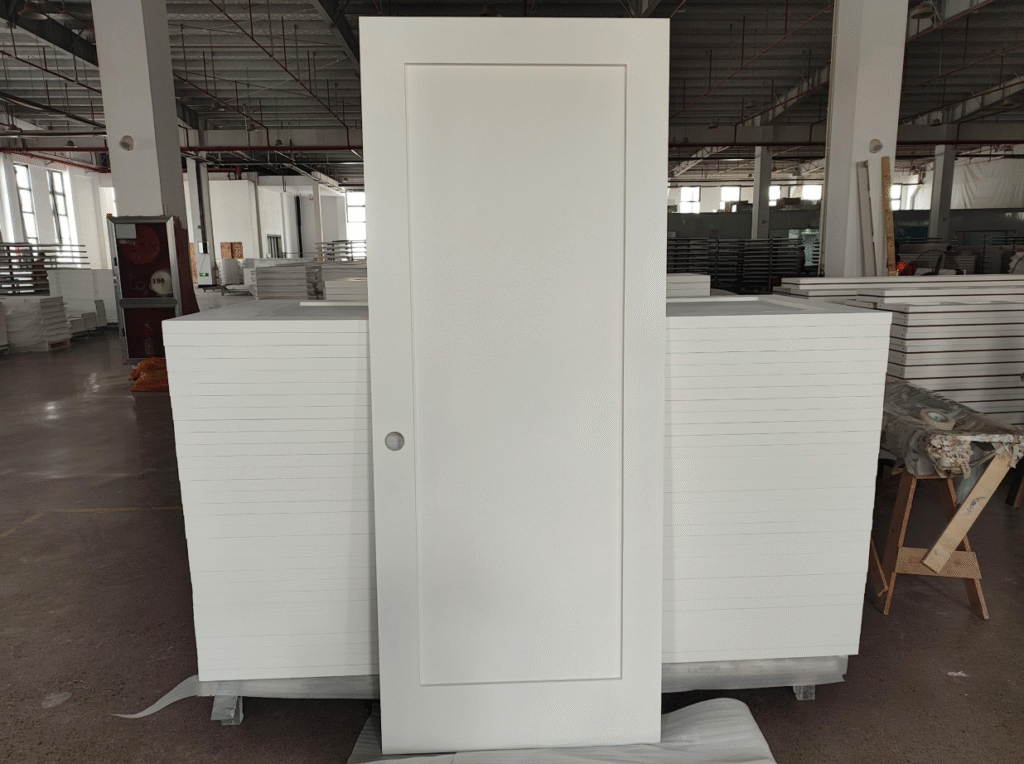
A Shaker door originates from the design philosophy of the 18th-century Shaker community, emphasizing simplicity, functionality, and craftsmanship.
Key Characteristics:
- True frame-and-panel construction
- Clean, straight lines
- Recessed center panels
- No decorative elements
Structural Insight (From Manufacturing Experience)
A real Shaker door consists of:
- Stiles (vertical frame)
- Rails (horizontal frame)
- Panel (center board)
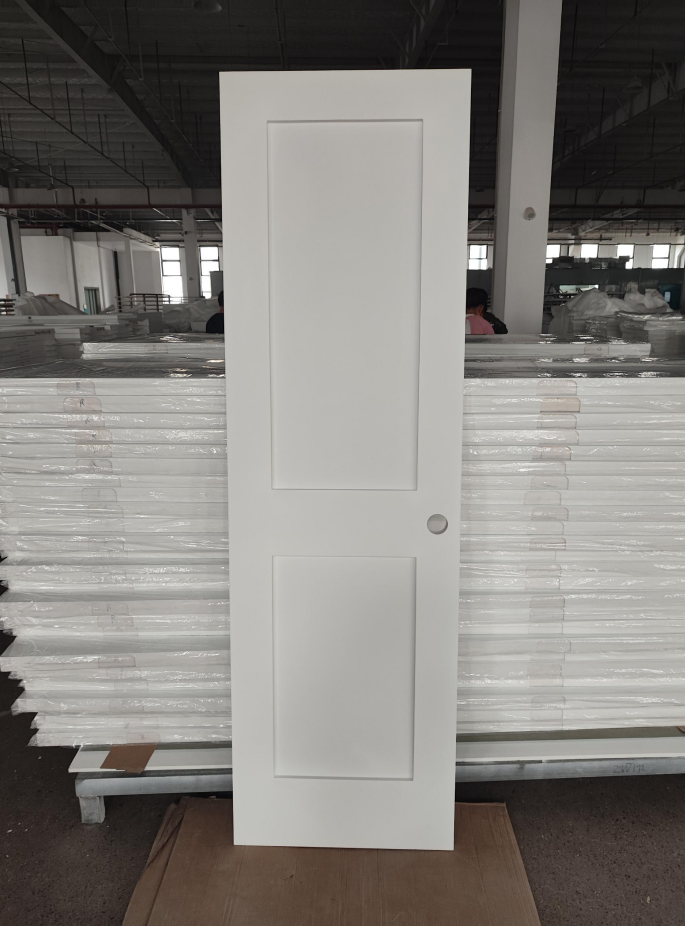
These components are connected using mortise and tenon joinery, which creates:
- Strong structural integrity
- Long-term durability
- Clean, sharp 90° panel edges
Additionally, inside the frame, there is a support structure often referred to as the “skeleton”, which forms the core strength of the door.
Common skeleton structures include:
- Solid wood (highest strength)
- Solid wood + tubular chipboard (balanced cost and weight)
- Solid wood + particle board (higher density and durability)
This structure is a key reason why Shaker doors are considered more premium and durable.
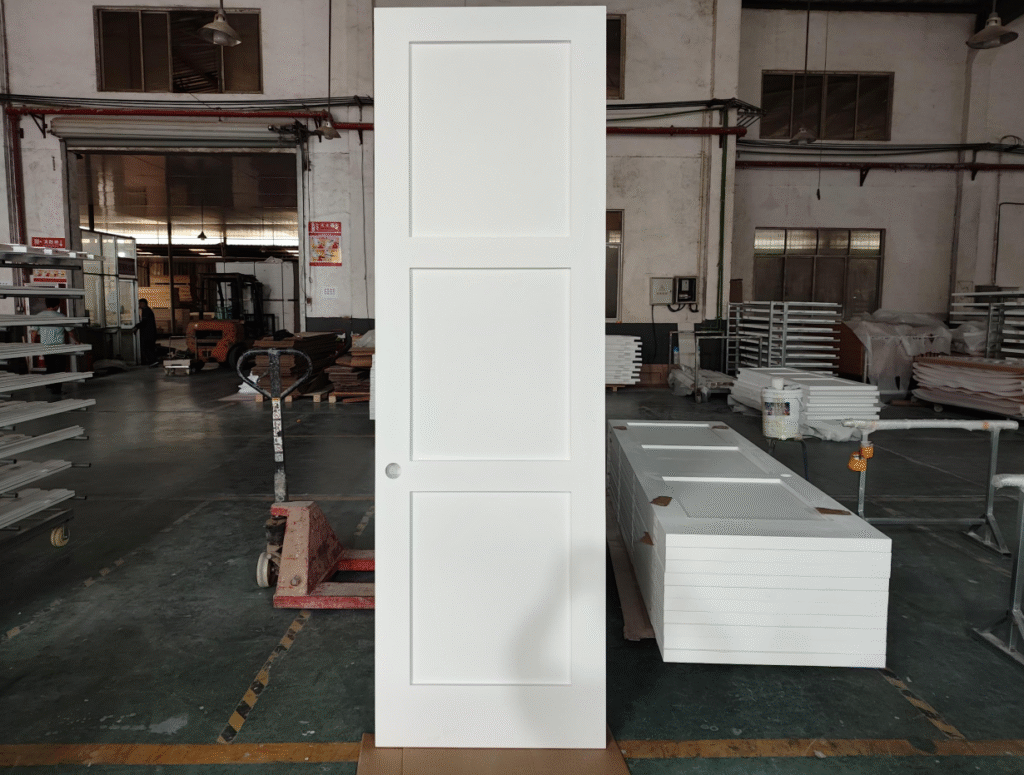
What Is a Shaker Style Door?
A Shaker-style door refers to any door that visually resembles a Shaker door but may not follow traditional construction methods.
In real-world production, many Shaker-style doors are actually molded doors designed to imitate Shaker design.
Typical Features:
- MDF molded door skins
- Engineered wood or hollow cores
- Simplified structure
- Recessed designs created by pressing
Unlike real Shaker doors, these doors are manufactured using molding technology rather than joinery.
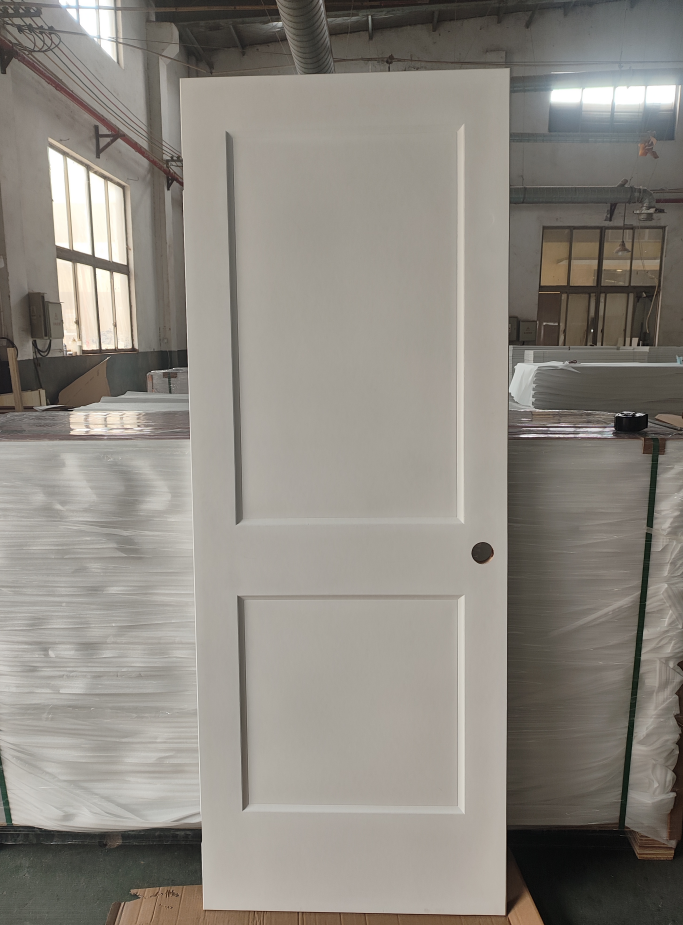
Key Structural Difference:
- Shaker door → assembled structure (frame + panel)
- Shaker-style molded door → pressed skin structure
Because of this, the recessed panel area often has:
- 45° angled edges (molded)
- instead of sharp 90° edges (true Shaker)
Technical Explanation: Molded Door vs Shaker Door
To fully understand Shaker-style doors, it is important to compare them with molded doors, since many Shaker-style doors fall into this category.
Molded Door Structure
A molded door typically consists of three parts:
- Top and bottom door skins (usually MDF)
- Core material (honeycomb, EPS, or solid core materials)
- Internal frame support
The core determines whether the door is:
- Hollow core (lightweight, cost-effective)
- Solid core (heavier, more durable)
This structure allows manufacturers to produce doors efficiently using molds.
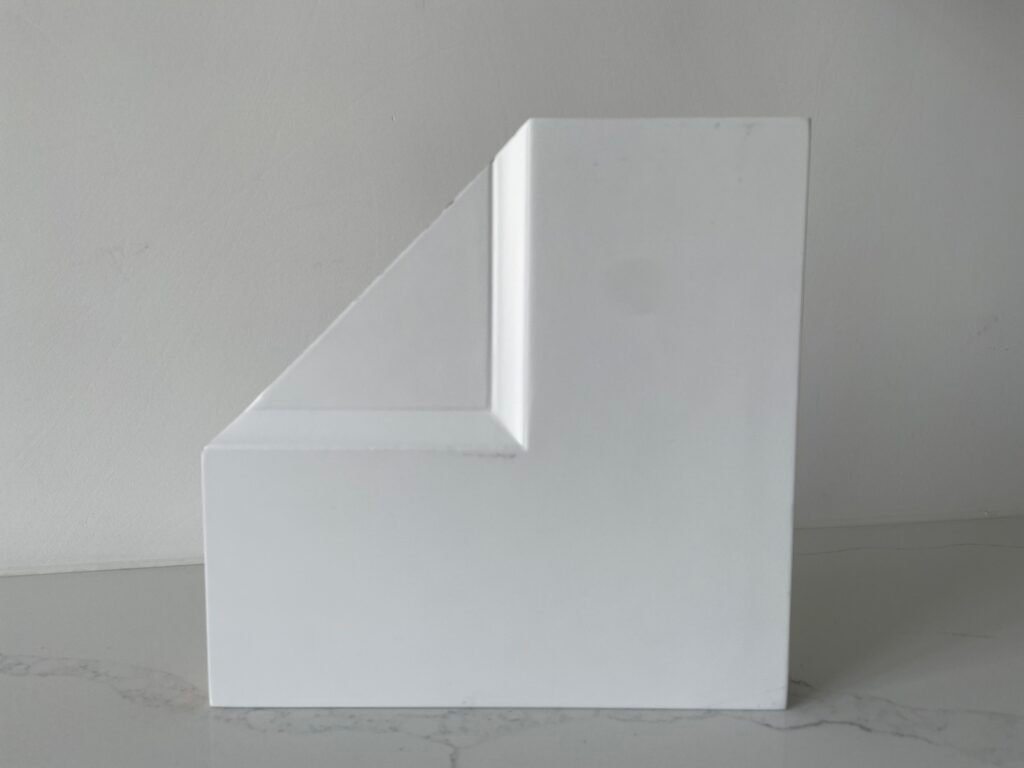
Shaker Door Structure
In contrast, a Shaker door is:
- Built from assembled components
- Uses joinery instead of pressing
- Has stronger structural integrity
Panel thickness is also carefully defined:
- 8mm panel → standard 80″ doors (~35mm thick)
- 12mm panel → thicker or 96″ doors
These technical details directly affect door strength and performance.
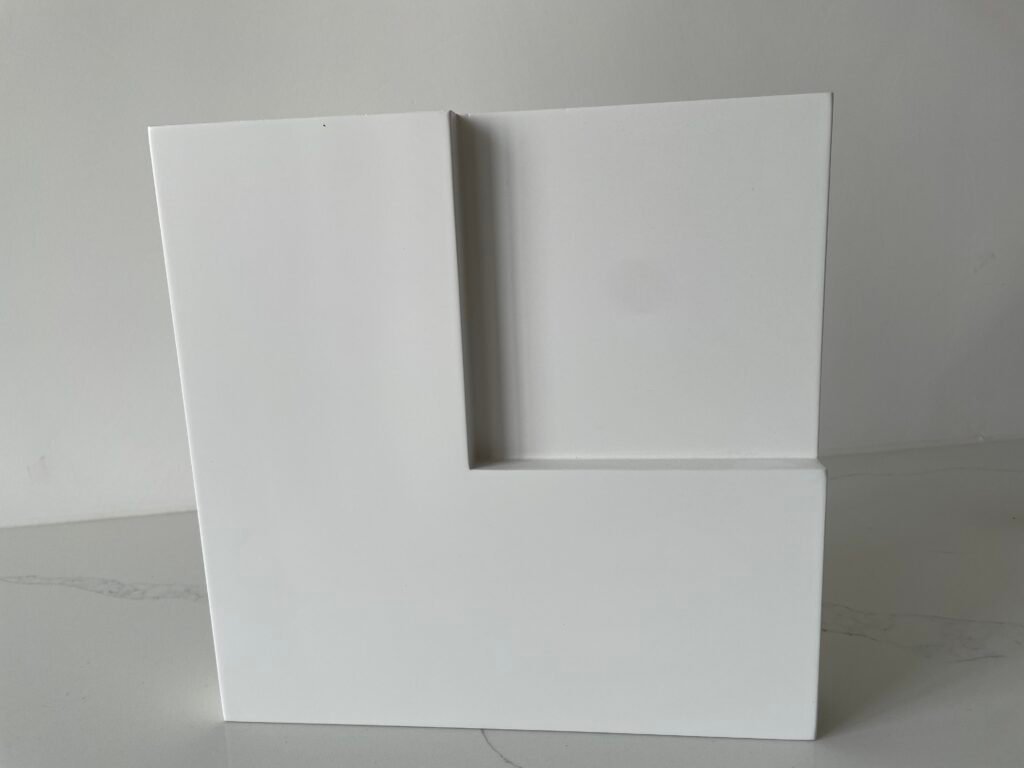
Comparison Table: Shaker Door vs Shaker Style vs Molded Door
| Feature | Shaker Door | Shaker Style Door | Molded Door |
|---|---|---|---|
| Structure | Frame + panel (joinery) | Usually molded | Molded skin |
| Manufacturing | Assembly | Pressed / simplified | Fully pressed |
| Panel Edge | 90° sharp | Often 45° slope | 45° slope |
| Materials | Wood / MDF panel | MDF / engineered | MDF skins |
| Core | Skeleton structure | Hollow or solid | Hollow or solid |
| Cost | High | Medium | Low |
| Durability | High | Medium | Medium |
| Application | High-end projects | Mid-range projects | Budget projects |
Pros and Cons Analysis
Shaker Doors (Traditional)
Advantages
- Strong and durable structure
- Authentic craftsmanship
- Premium market positioning
Disadvantages
- Higher cost (often 3–4× molded doors)
- More complex production
Molded / Shaker-Style Doors
Advantages
- Cost-efficient for large projects
- Lightweight options available
- Consistent mass production quality
Disadvantages
- Less structural authenticity
- Softer design edges
Shaker-Style Molded Doors (Hybrid Option)
This is a very important real-market category:
- Looks like a Shaker door
- Manufactured like a molded door
- Balanced cost and appearance
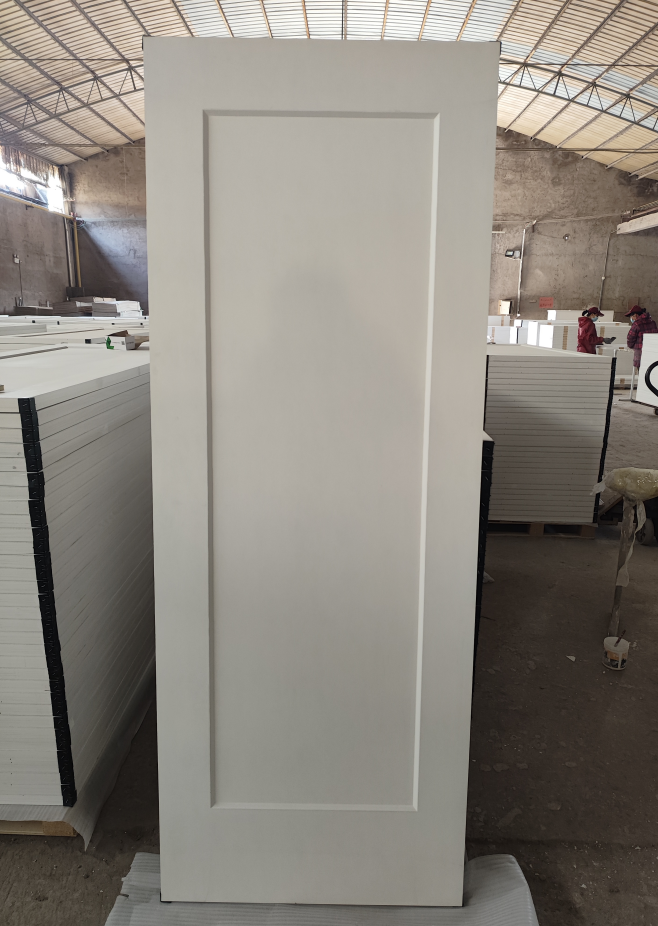
This option is widely used in U.S. residential developments.
Industry Insights: Real Market Preference
From actual supply and project experience:
- Shaker-style doors dominate 40%–50% of new residential projects
- Molded doors are preferred for budget-sensitive developments
- True Shaker doors are used in:
- Custom homes
- High-end residential projects
Developers often prioritize:
- Cost control
- Installation efficiency
- Consistency across units
Expert Recommendation: How to Choose
Choose Shaker Doors if:
- You need premium quality
- Budget is sufficient
- Project targets high-end market
Choose Molded or Shaker-Style Doors if:
- You need cost control
- You have large quantities
- You prioritize consistency
Choose Shaker-Style Molded Doors if:
- You want Shaker appearance
- You need to reduce cost
- You want balanced performance
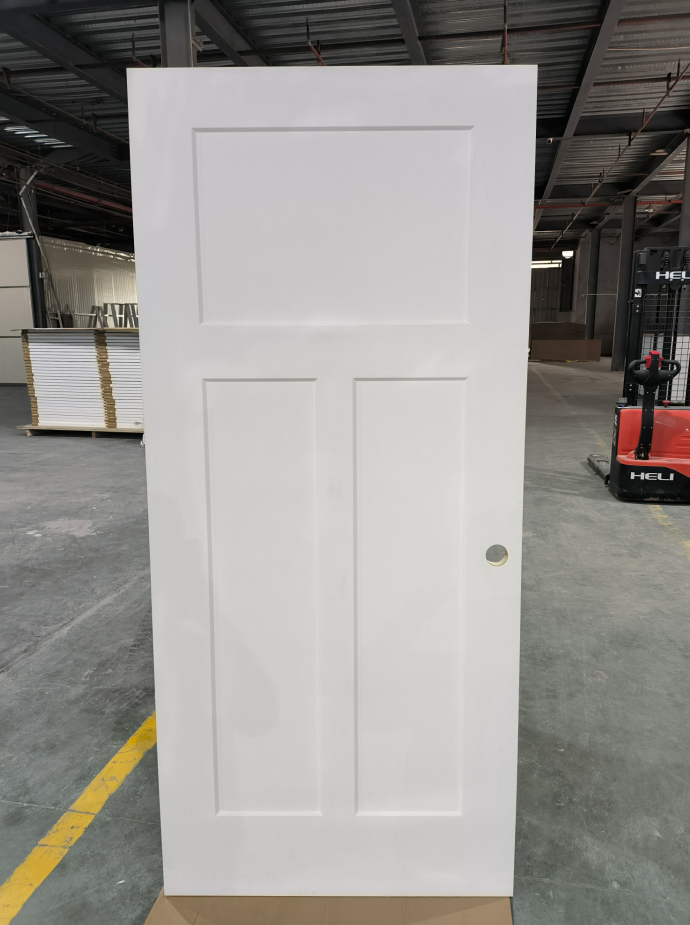
Conclusion
Shaker doors and Shaker-style doors share the same visual DNA but differ significantly in structure, materials, and cost.
A true Shaker door represents craftsmanship and durability through traditional joinery, while a Shaker-style door often reflects modern manufacturing efficiency using molded technology.
In today’s market, a third category—Shaker-style molded doors—has become a practical solution that balances design and cost.
By understanding these distinctions, buyers can make more informed decisions and choose the right product based on project requirements, budget, and performance expectations.
Frequently Asked Questions About Shaker vs Shaker-Style Doors
Q: What is the main difference between a true Shaker door and a Shaker-style door?
A: The primary difference lies in their manufacturing and structural construction. A true Shaker door uses traditional frame-and-panel construction with mortise-and-tenon joinery, creating a strong, assembled structure with sharp 90-degree internal edges. A “Shaker-style” door typically refers to a molded door that uses an MDF skin pressed over a core to imitate the visual look of a Shaker door, often resulting in slightly sloped (45-degree) internal panel edges.
Q: Are Shaker-style doors less durable than true Shaker doors?
A: Generally, yes. True Shaker doors are considered premium because their solid wood or heavy MDF stile-and-rail skeleton offers superior structural integrity, impact resistance, and sound insulation. Shaker-style molded doors, while cost-effective and perfectly suitable for mid-range residential builds, rely on pressed skins over hollow or solid cores, which are inherently less structurally robust than actual joinery.
Q: How can I visually tell if a door is a true Shaker or just a molded Shaker-style?
A: The easiest way to tell the difference is to examine the inside corner where the flat center panel meets the outer frame (the stiles and rails). A true Shaker door will have a crisp, sharp 90-degree right angle at this junction. A molded Shaker-style door will typically feature a subtle, smooth, or slightly angled (usually 45-degree) slope to allow the MDF skin to be successfully pressed during manufacturing.
Q: Which door type is better for large-scale residential developments?
A: It depends on the project’s budget and positioning. For luxury custom homes or premium properties, true Shaker doors are the standard due to their authentic craftsmanship and heavy feel. For high-volume multi-family developments, entry-level homes, or strict budget projects, Shaker-style molded doors are the optimal choice because they provide the highly desired minimalist aesthetic at a fraction of the cost.