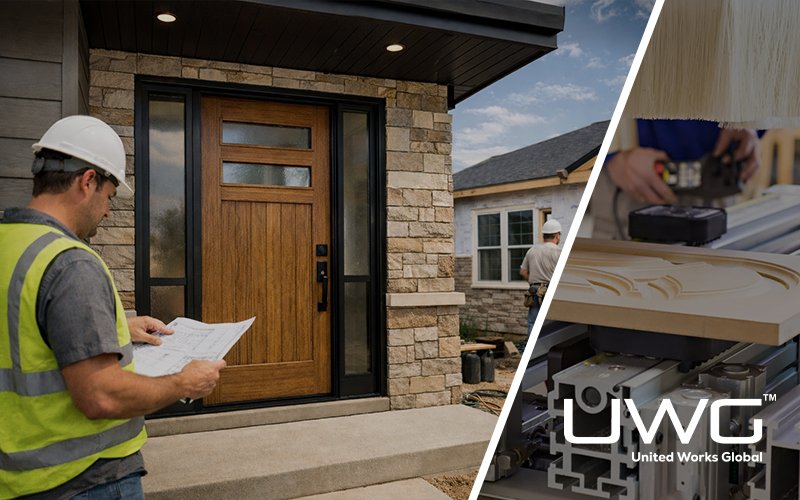
Builders today face a constant challenge—reducing costs without sacrificing quality. Traditional wood doors may look premium, but they often warp, crack, and demand ongoing maintenance. In 2026, many builders are choosing a smarter, more reliable alternative.
Builders are switching to wood-look fiberglass doors in 2026 because they combine the appearance of real wood with superior durability, energy efficiency, and low maintenance. Unlike wood, fiberglass doors resist warping, rot, and moisture damage, while offering better insulation due to their polyurethane core. This makes them a cost-effective and long-lasting solution for modern construction projects.
So what’s really driving this shift across the construction industry? Let’s look at it from a builder’s perspective.
What Is a Wood-Look Fiberglass Door?
A fiberglass wood look front door is designed to replicate the texture and appearance of real wood using advanced molding and finishing technology. Manufacturers use high-definition grain molds and layered stains to create a realistic wood effect.
Inside, these doors are built with a polyurethane foam core, which improves insulation and structural stability. From a distance—and even up close—most homeowners can’t tell the difference between fiberglass and real wood.
What Is Better: Fiberglass or Wood Doors?
When comparing a wood vs fiberglass door, builders need to think beyond appearance.
Wood doors offer natural beauty and customization, but they are highly sensitive to weather. Over time, they expand, contract, and may crack or rot.
Fiberglass doors, on the other hand, are engineered for consistency.
- Durability: Fiberglass won’t warp, split, or rot
- Stability: Performs well in all climates
- Lifespan: Longer service life with minimal upkeep
From a technical standpoint, fiberglass doors maintain structural integrity far better than solid wood, especially in large-scale projects.
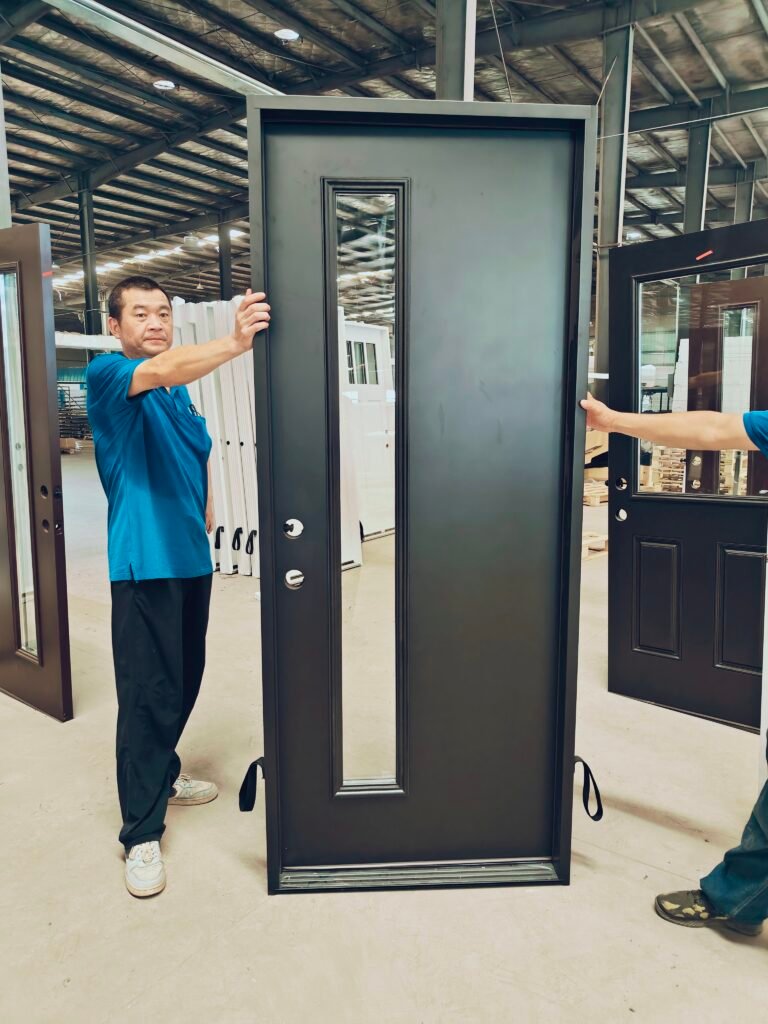
Fiberglass vs Wood Door Cost: Which One Saves Builders More?
At first glance, wood doors may seem comparable in price. But the real difference shows over time.
When evaluating fiberglass vs wood door cost, builders should consider:
- Maintenance costs (painting, sealing, repairs)
- Replacement frequency
- Labor and callbacks
Fiberglass doors significantly reduce post-installation issues. Fewer complaints and repairs mean lower long-term costs and higher project profitability.
How Durable Are Fiberglass Front Doors in Harsh Climates?
One major reason builders prefer fiberglass front doors is their ability to handle extreme environments.
Unlike wood, fiberglass is:
- Resistant to moisture and humidity
- Immune to insect damage
- Stable in temperature fluctuations
This makes fiberglass ideal for coastal, tropical, and high-humidity regions where wood doors often fail.
In real-world applications, this translates to fewer warranty claims and better long-term performance.
Are Fiberglass Doors Secure and Energy Efficient?
Security and energy performance are key concerns in modern construction.
In terms of fiberglass vs wood door security, fiberglass doors are built with reinforced frames and can support multi-point locking systems.
Energy efficiency is another major advantage. Thanks to the insulated core, fiberglass doors offer significantly better thermal resistance.
Some industry data suggests fiberglass doors can be up to 5 times more energy-efficient than wood doors.
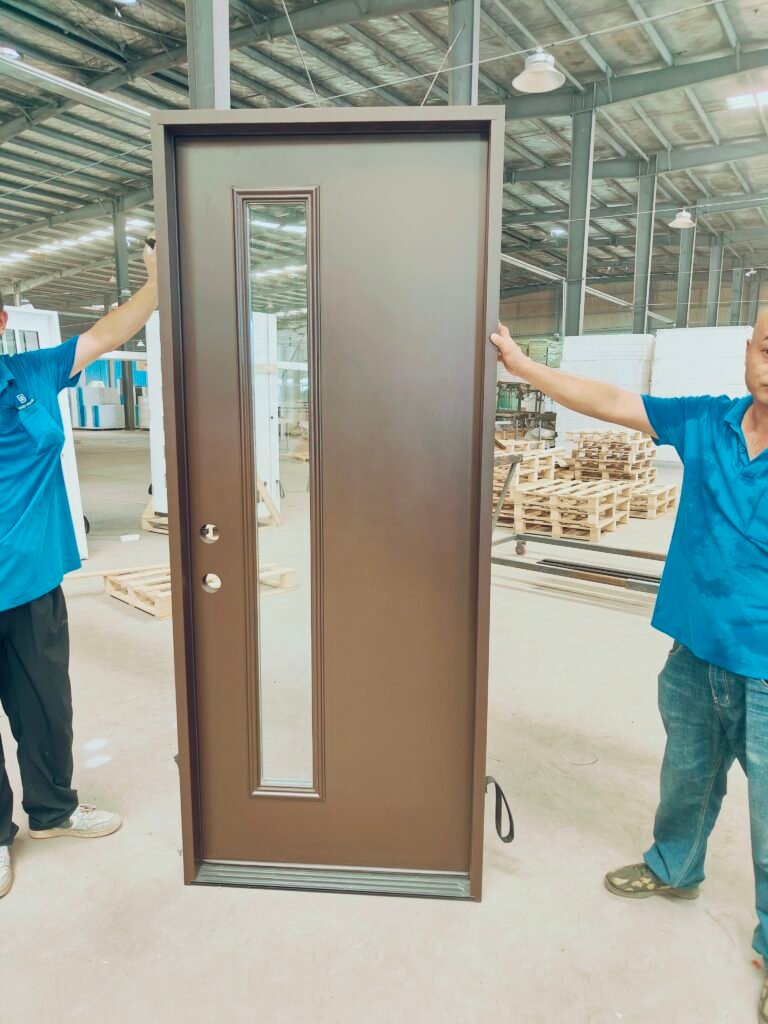
Are There Any Disadvantages of Fiberglass Doors?
No material is perfect, and builders should understand the full picture.
Common concerns about disadvantages of fiberglass doors include:
- Limited ultra-high-end custom designs compared to solid wood
- Slightly higher upfront cost in some markets
However, modern wood-grain technology has significantly reduced the visual gap. For most residential and commercial projects, fiberglass delivers a near-identical look with far better performance.
Fiberglass vs Steel Door: Which Is Better for Builders?
Builders often compare fiberglass door vs steel door when choosing materials.
Steel doors are strong and cost-effective but can dent, rust, and lack visual warmth.
Fiberglass offers a more balanced solution:
- Better aesthetics (especially wood-look finishes)
- No rust or corrosion
- Strong durability without sacrificing design
For projects that require both appearance and performance, fiberglass is often the preferred choice.
Why Builders Prefer Fiberglass Wood Look Front Doors in 2026
The shift toward fiberglass wood look front doors reflects a broader trend in construction—building smarter, not harder.
Builders are prioritizing:
- Lower maintenance materials
- Higher energy efficiency
- Better long-term ROI
At the same time, homeowners still want the classic look of wood. Fiberglass bridges that gap perfectly.
As building standards continue to evolve in 2026, this material is quickly becoming the default choice across residential and light commercial projects.
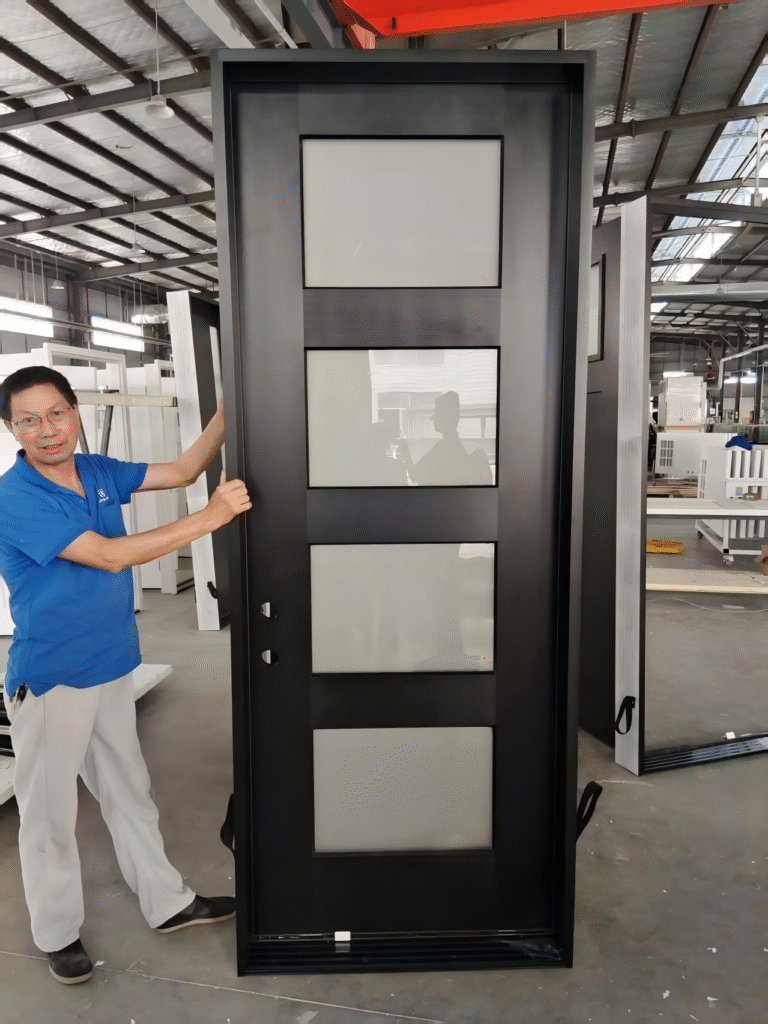
Frequently Asked Questions About Wood-Look Fiberglass Doors
Q: What exactly is a wood-look fiberglass door?
A: A wood-look fiberglass door is an exterior door engineered with a strong, molded fiberglass outer shell designed to perfectly replicate the deep texture and grain of natural wood. The interior is typically filled with a dense polyurethane foam core, providing immense structural stability and exceptional thermal insulation.
Q: Why are builders choosing fiberglass doors over solid wood?
A: Builders prefer fiberglass because it completely eliminates the maintenance headaches and costly callbacks associated with solid wood. While real exterior wood doors expand, contract, warp, and rot when exposed to humidity and harsh weather, fiberglass remains perfectly dimensionally stable and weather-resistant year after year.
Q: Are fiberglass front doors energy efficient?
A: Yes, fiberglass doors are highly energy-efficient. Unlike solid wood or heat-conducting steel, the combination of a non-conductive fiberglass exterior and a dense polyurethane foam core provides superior thermal resistance. In many cases, a high-quality fiberglass door can be up to five times more energy-efficient than a traditional wood door.
Q: How does the cost of a fiberglass door compare to wood or steel?
A: While a premium fiberglass door may have a slightly higher upfront material cost than a basic steel door, its total lifecycle cost is much lower. Fiberglass offers the luxurious aesthetic of an expensive solid wood door but completely bypasses the costly ongoing maintenance, frequent repainting, and eventual replacement, making it a highly profitable choice for developers.
Summary
Wood-look fiberglass doors offer builders the ideal mix of style, durability, and cost efficiency. As demand grows for low-maintenance, high-performance materials, they are becoming a smart, future-proof investment for modern construction.
Articles that you may be interested in:
Fiberglass Doors vs Steel Doors: Performance, Cost, and Aesthetic Comparison
Trending Door Materials: MDF, Veneered, Fiberglass, and Steel