Choosing the right 36 inch exterior door with glass can be tricky for builders and distributors. With so many materials, glass types, and price points, it’s easy to make costly mistakes. In this guide, I’ll walk you through the essentials so you can source smarter and meet customer expectations.
A 36 inch exterior door with glass (typically 36×80 inches) is a standard entry door that combines materials like wood, fiberglass, or steel with glass panels to improve natural light and visual appeal. These doors are widely used in residential and light commercial projects. For builders and distributors, the key factors include durability, insulation performance, security, and cost efficiency—especially when purchasing bulk quantities or prehung configurations.
To make the right decision, it helps to break down the types, materials, and features that really impact performance and pricing.
What Is a 36 Inch Exterior Door with Glass?
A 36×80 exterior door with glass is one of the most common entry door sizes in North America, widely used in single-family homes, apartments, and light commercial buildings. This standard size provides comfortable access while meeting typical building requirements.
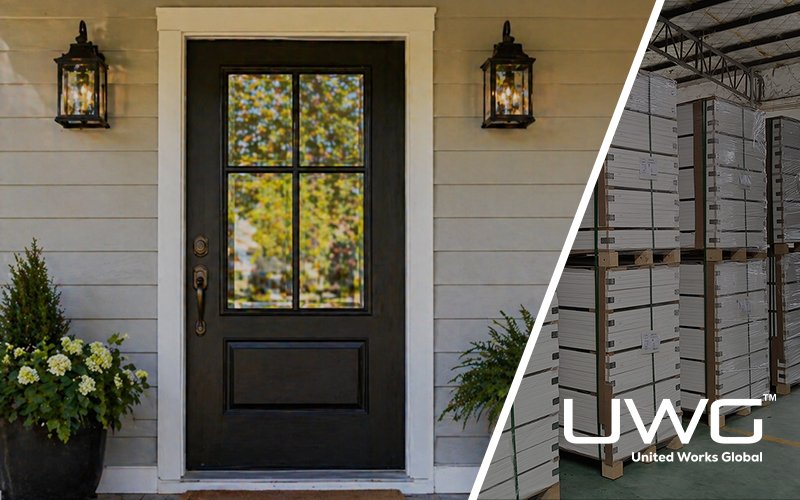
The “with glass” feature refers to integrated glass inserts within the door, which can range from small decorative panels to larger sections that allow natural light into the entryway. Common styles include full lite, half lite, and 3/4 lite configurations, depending on the desired balance of light, privacy, and design.
These doors are typically available in two main formats:
- Prehung doors – supplied with a frame, making installation faster and more consistent
- Slab doors – door only, offering more flexibility for custom frames or replacement projects
In practice, prehung doors are often preferred in large projects and distribution channels because they simplify installation and reduce on-site labor, while slab doors are commonly used for renovations or custom applications.
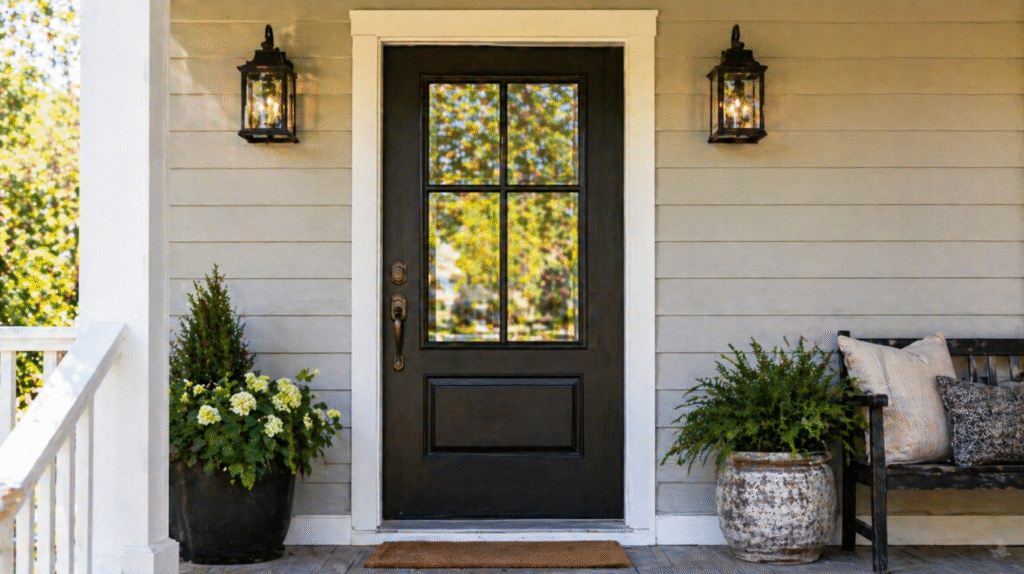
Types of Exterior Doors with Glass
Exterior doors with glass are available in several configurations, depending on how much glass is integrated into the door design. Each type offers a different balance of natural light, privacy, and visual impact.
- Full Lite Doors – Almost entirely glass, providing maximum natural light and a modern, high-end appearance
- 3/4 Lite Doors – Large glass area with a solid lower section, offering a balance between openness and structure
- Half Lite Doors – Glass on the upper half, one of the most common residential options for balancing light and privacy
- Decorative Glass Doors – Feature frosted, textured, or patterned glass, often with grids or inserts for added design and privacy
- Double Doors – Two 36-inch doors paired together, typically with glass inserts, used for wider and more prominent entrances
Some projects may also use quarter lite doors, which include smaller glass sections, but these are less commonly specified in standard residential construction.
In practice, the choice depends on the desired level of light, privacy, and architectural style, as well as the overall entrance design.
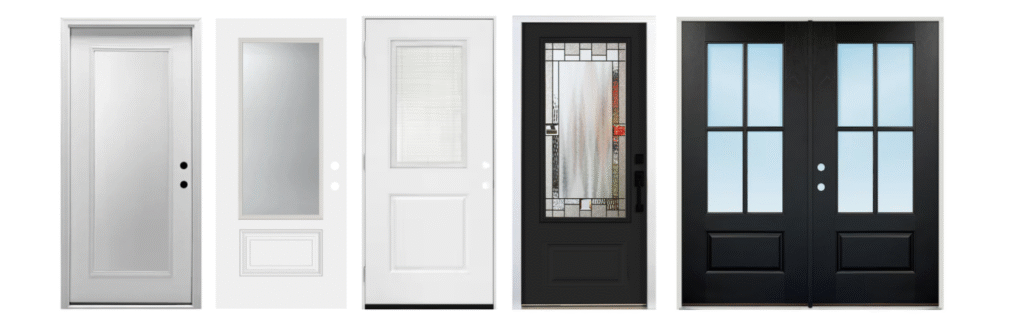
Glass Options Explained
The type of glass used in an exterior door plays a key role in safety, energy efficiency, and privacy. Understanding the different options helps ensure the door performs well in real-world conditions.
- Tempered Glass This is the most common safety glass used in exterior doors. It is heat-treated to be stronger than standard glass and designed to break into small, less harmful pieces.
- Insulated (Double-Glazed) Glass Consists of two glass layers with an air or gas-filled space in between. This improves thermal insulation and helps reduce heat transfer, making it suitable for exterior applications.
- Low-E Glass A coated glass designed to reflect heat while allowing light to pass through. It improves energy efficiency by keeping interiors cooler in summer and warmer in winter.
- Frosted or Textured Glass Provides increased privacy while still allowing natural light to enter. Commonly used for front doors facing streets or neighboring properties.
- Decorative or Patterned Glass Includes etched, beveled, or grid designs that enhance visual appeal. Often used to create a more distinctive or upscale entrance.
- Impact-Resistant Glass Designed for areas prone to storms or hurricanes. It offers added strength and security, helping protect against strong winds and debris.
What type of glass is best for exterior doors?
Insulated or Low-E glass is usually the best choice. It improves energy efficiency and helps reduce heating and cooling costs—important for both homeowners and large-scale projects.
What is smart glass on exterior doors?
Smart glass (also called switchable glass) can change from clear to opaque with a switch. It’s a premium option often used in modern builds where privacy and innovation are selling points.
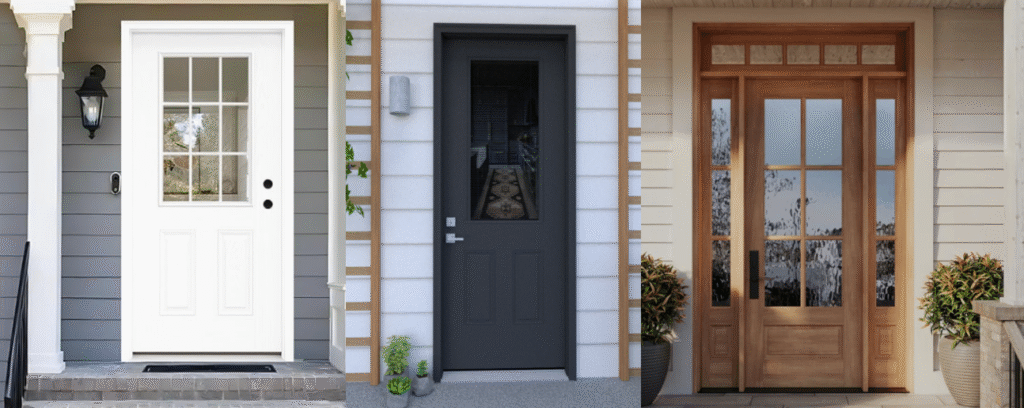
Door Material Options
The material of an exterior door with glass plays a key role in its durability, security, maintenance, and overall performance. The most common options include fiberglass, steel, and wood, each with different advantages depending on the application.
- Fiberglass Doors Fiberglass is one of the most popular choices for exterior doors. It offers excellent durability, moisture resistance, and energy efficiency, making it suitable for a wide range of climates. It can also mimic the look of wood while requiring less maintenance.
- Steel Doors Steel doors are known for their strength and security. They are typically more cost-effective and provide good resistance to impact. However, they may be prone to dents or corrosion if not properly finished or maintained.
- Wood Doors Wood doors offer a premium, natural appearance and are often used in high-end or custom projects. While they provide strong visual appeal, they generally require more maintenance and may be affected by humidity or weather changes.
In practice, fiberglass and steel are commonly used for standard residential and multifamily projects, while wood is often selected for custom or design-focused applications. The right material depends on the balance between performance, maintenance, and budget.
Key Features to Consider
When choosing a 36-inch exterior door with glass, several key features should be evaluated to ensure the door meets both performance and design requirements.
- Security Consider the strength of both the door material and the glass. Options like tempered or impact-resistant glass and reinforced frames help improve overall security.
- Energy Efficiency Look for features such as insulated cores, double-glazed glass, and Low-E coatings, which help reduce heat transfer and improve indoor comfort.
- Weather Resistance Exterior doors should withstand moisture, temperature changes, and exposure to the elements. Materials like fiberglass and properly finished steel perform well in varying climates.
- Privacy Depending on the location, privacy may be important. Frosted, textured, or decorative glass can allow light in while limiting visibility from outside.
- Maintenance Requirements Some materials, such as wood, require more upkeep, while fiberglass and steel typically offer lower maintenance over time.
- Design and Curb Appeal The style of the door, including glass configuration and finish, should complement the overall look of the property.
These features can significantly influence both 36 inch exterior door with glass types features price and long-term value.
Pros and Cons
Different door materials offer varying performance when combined with glass inserts.
| Material | Pros | Cons |
|---|---|---|
| Fiberglass Doors | Durable and moisture-resistant; low maintenance; good energy efficiency; can mimic wood appearance | Higher upfront cost than steel; less premium feel than real wood |
| Steel Doors | Strong and secure; cost-effective; good for basic applications | Can dent or rust over time; limited design flexibility; less insulating than fiberglass |
| Wood Doors | Premium natural appearance; highly customizable; strong visual impact | Requires regular maintenance; sensitive to moisture and temperature; higher cost |
In practice, fiberglass is often the most balanced option for residential projects, while steel is chosen for cost and security, and wood is preferred for high-end or design-focused applications.
How to Choose the Right Door
From our experience working with builders and distributors, choosing the right 36-inch exterior door with glass usually comes down to a few key factors:
- Project type – Residential projects often prioritize design and comfort, while commercial applications focus more on durability and performance
- Material selection – Fiberglass offers a balanced solution, steel is more cost-driven, and wood is typically used for high-end designs
- Glass type and privacy – Clear, frosted, or decorative glass should be selected based on light and privacy needs
- Energy and climate considerations – Features like insulated glass and Low-E coatings are important in areas with temperature variations
- Budget and volume – Balancing cost and performance is key, and bulk orders often allow for better pricing
- Supplier reliability – Consistent quality and stable lead times are critical, especially for large projects
In practice, many large projects involve comparing different options across types, features, and total cost, rather than focusing on a single factor. A well-informed selection helps ensure both performance and long-term value.
Frequently Asked Questions About 36-Inch Exterior Doors with Glass
Q: What are the standard dimensions for a residential exterior door with glass?
A: In the North American market, the most common standard size for an entry door is 36 inches wide by 80 inches high (36″ x 80″). This standard width ensures compliance with most building codes for primary entrance accessibility and allows for the easy movement of furniture and heavy equipment into the home.
Q: What is the difference between Full Lite, Half Lite, and 3/4 Lite doors?
A: These terms describe the vertical percentage of the door slab that is occupied by glass. A “Full Lite” door features a glass insert that runs nearly the entire height of the door, maximizing natural light and curb appeal. A “3/4 Lite” door has a large glass section with a small solid bottom panel for added structural weight. A “Half Lite” door contains glass only on the top 50%, offering a balanced compromise between natural light and entryway privacy.
Q: Which material is best for an exterior door with glass: Fiberglass, Steel, or Wood?
A: It depends on your project goals. Fiberglass is widely considered the best all-around choice for residential builds because it perfectly replicates wood grain, offers superior energy efficiency, and won’t warp, rot, or dent. Steel is a highly secure and budget-friendly option for standard housing units. Wood offers the most premium, high-end aesthetic but requires significant ongoing maintenance and can be sensitive to extreme moisture and temperature changes.
Q: How does M4B support builders with large-scale exterior door orders?
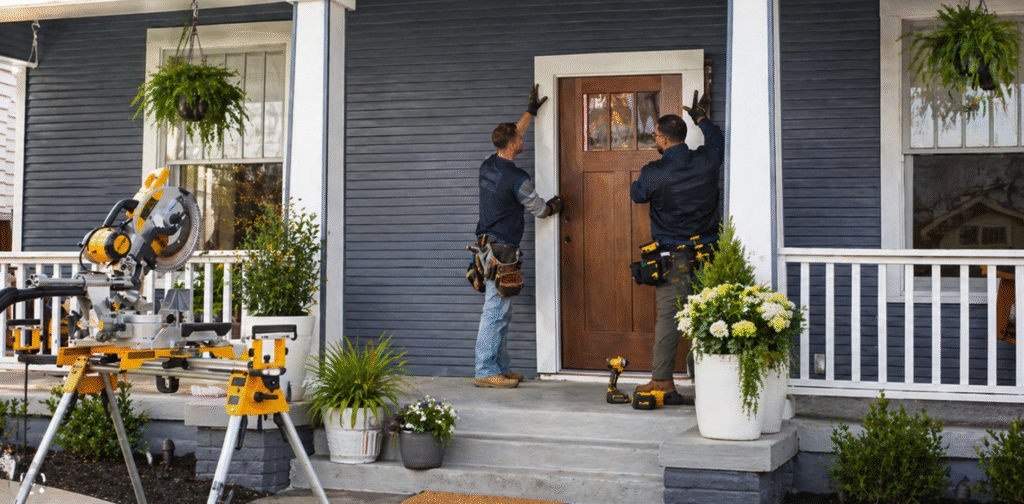
A: M4B specializes in the factory-direct supply of high-volume exterior door orders for developers and multifamily projects. By providing prehung systems that include energy-efficient Low-E insulated glass, M4B helps contractors drastically reduce on-site installation time while ensuring high thermal performance and consistent quality across every unit of the development.
Summary
A 36 inch door exterior with glass is a versatile and in-demand option for many projects. By understanding types, materials, and key features, you can make smarter sourcing decisions, reduce costs, and deliver better value to your customers.
We support projects by providing exterior doors along with related products such as interior doors and trim, helping maintain consistency and simplify sourcing across different project needs. If there are specific requirements or questions, reviewing options early can help identify the most suitable solution.
Articles that you may be interested in:
Why Builders Are Switching to Wood-Look Fiberglass Doors in 2026?
Barn Door Selection Guide: Styles, Materials, and Hardware Options