
How can builders keep up with evolving interior door design trends without sacrificing durability, code compliance, maintenance efficiency, and budget control?
In large-scale residential and commercial developments, door selection is about more than aesthetics. While design trends continue to influence buyer expectations and project appeal, builders must also consider how each door performs throughout the building’s lifecycle. The challenge is finding the right balance between style and function.
In large-scale projects, the most effective approach is to define functional requirements first and then select door styles that support those needs. By aligning aesthetics with performance, builders can improve project consistency, simplify procurement, reduce maintenance concerns, and deliver a better long-term experience for occupants.
A successful door package doesn’t force a choice between appearance and performance. Instead, it integrates both from the earliest stages of project planning.
Why Style Alone Is Not Enough in Large-Scale Projects
Interior doors contribute significantly to a building’s overall appearance, but in large-scale developments, aesthetics are only one part of the decision-making process. Unlike custom homes, where design preferences often drive product selection, multi-family communities, student housing, senior living facilities, hospitality properties, and mixed-use developments must balance visual appeal with a wide range of operational and performance requirements.
A door package that works well across hundreds of openings must do more than support the project’s design vision.
It must withstand daily wear in high-traffic environments, comply with fire and life-safety requirements, contribute to occupant comfort, and remain practical to maintain throughout the building’s lifecycle. At the same time, builders must consider procurement efficiency, installation consistency, and the impact that specification decisions can have on schedules and budgets.
This is where many projects face challenges. A door style that looks impressive in a showroom or design presentation may not be the most effective solution once factors such as durability, maintenance, code compliance, and long-term ownership costs are taken into account.
For large-scale projects, successful door selection begins by understanding how the doors are expected to perform within the building. Once those functional requirements are clearly defined, teams can evaluate which styles best support both the design goals and the practical demands of the project.
Current Interior Door Style Trends
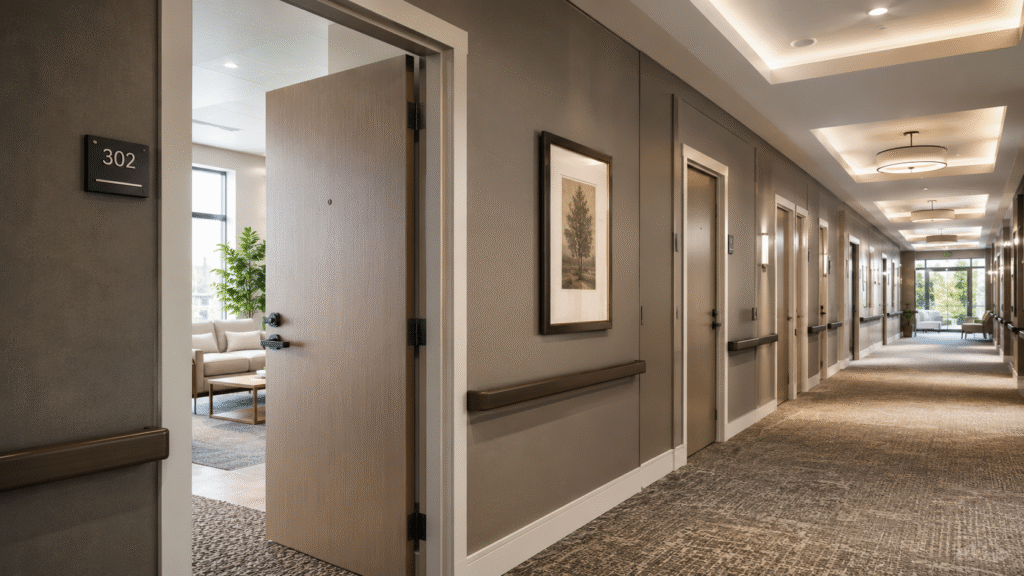
Interior door design trends have continued to evolve as developers, builders, and designers look for ways to create modern, appealing spaces while maintaining practical project requirements. Across many multi-family, hospitality, and mixed-use developments, the trend is moving toward cleaner and more versatile door styles that can be applied consistently throughout a property.
One of the most noticeable shifts is the growing preference for minimalist door designs. Flush doors and simplified shaker-style profiles remain popular because they complement a wide range of architectural styles without creating unnecessary visual complexity. Their clean appearance also makes them easier to standardize across multiple unit types, which is an important consideration in large-scale projects.
At the same time, finish selections are becoming increasingly focused on durability and consistency. Wood-look laminates, engineered surfaces, and other low-maintenance finishes continue to gain popularity because they provide the warmth of natural wood while offering greater resistance to wear and everyday use. Many developers view these finishes as a practical way to achieve a premium appearance without introducing additional maintenance concerns.
Color trends have also shifted toward neutral and natural tones. Black, charcoal, warm gray, and wood-inspired finishes remain common choices because they work well across different interior design schemes and tend to remain relevant over time. Rather than following highly specific design trends, many project teams are prioritizing finishes that offer long-term flexibility and broad market appeal.
Perhaps the most important trend for large-scale developments is the growing emphasis on consistency. Instead of creating numerous door variations throughout a property, many builders are standardizing styles and finishes across units and common areas. This approach not only creates a cohesive design language but also simplifies procurement, installation, inventory management, and future maintenance.
While these trends continue to shape the market, appearance alone should not determine the final specification. Understanding how doors are expected to perform within the building remains the foundation of any successful door package strategy.Understanding Functional Requirements Before Selecting Door Styles
The most successful door packages begin with performance requirements rather than design preferences.
Different projects place different demands on interior doors, and these requirements often determine which styles and materials are practical..
Durability Requirements
Doors in apartment buildings, student housing, and hospitality environments may experience significantly more use than doors in private residences.
Builders should evaluate:
- Impact resistance
- Surface durability
- Edge protection
- Long-term wear performance
Fire-Rated Requirements
Many openings throughout a building must meet fire-rating requirements established by local codes and project specifications.
The selected door style must be compatible with the required fire-rated construction.
Acoustic Performance
Noise control is often a priority in multi-family developments.
Doors located between living spaces, corridors, and shared areas may require enhanced acoustic performance to improve occupant comfort.
Moisture Resistance
Areas such as laundry rooms, utility spaces, and certain amenity areas may require doors that can better withstand humidity and moisture exposure.
Maintenance Considerations
Building owners and property managers often prioritize products that are easy to clean, repair, and replace.
A door that looks attractive on day one should also perform well after years of use.
Budget and Procurement Efficiency
Large projects may require hundreds or thousands of doors. Excessive customization can complicate procurement, increase lead times, and create inventory challenges during construction.
Once these requirements are established, builders can begin evaluating which door styles best support project goals.
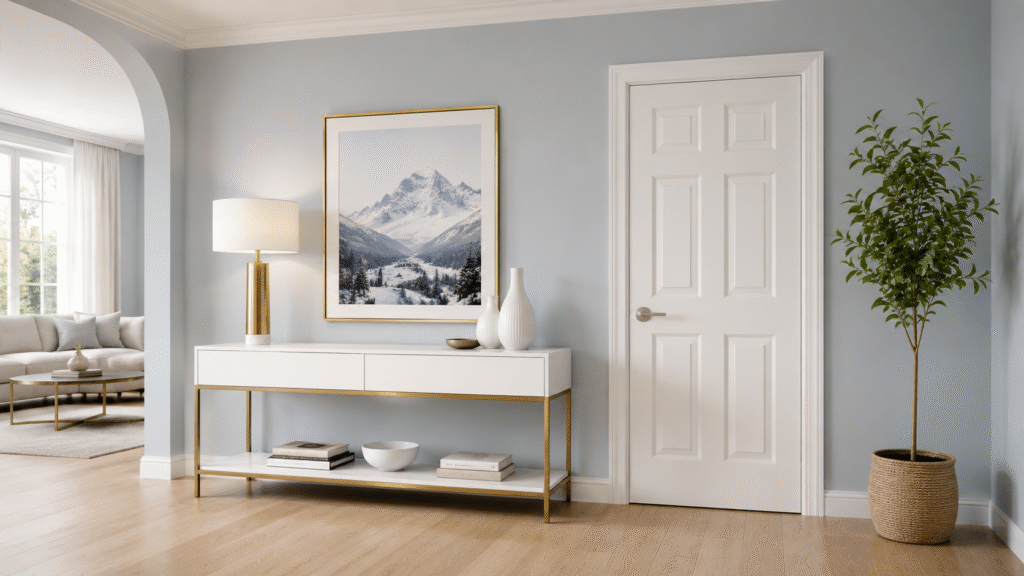
How to Match Door Styles with Functional Needs
Successfully matching door styles with functional requirements is not about choosing between appearance and performance. Instead, it requires a structured decision-making process that evaluates both factors together.
In large-scale projects, builders often achieve better results by defining performance expectations first and then identifying door styles that support those requirements. This approach helps ensure that aesthetic selections remain practical, buildable, and aligned with long-term project goals.
| Decision Factor | Questions to Consider | Impact on Style Selection |
|---|---|---|
| Durability | How much daily traffic will the door experience? | May favor flush doors or durable engineered finishes |
| Fire-Rating Requirements | Does the opening require a fire-rated assembly? | Limits material and construction options |
| Acoustic Performance | Is sound control a priority? | May influence door construction and hardware choices |
| Maintenance Expectations | How often will the door need to be cleaned or repaired? | Encourages low-maintenance finishes |
| Design Objectives | What architectural style is the project targeting? | Guides panel design, finish, and color selections |
| Procurement Efficiency | How many variations can the project realistically support? | Often favors standardized specifications |
Rather than beginning with aesthetics alone, this framework helps project teams evaluate the factors that have the greatest impact on long-term performance and project execution. Once requirements such as durability, fire ratings, maintenance, and acoustic performance have been established, selecting an appropriate door style becomes significantly easier.
In practice, the most successful door packages are rarely those with the most customization. Instead, they are the ones that achieve a balance between visual consistency, functional performance, and procurement efficiency across the entire project.
Applying This Strategy in Large-Scale Projects
Matching style and functionality becomes increasingly important as project size grows. A design choice that affects a few doors in a custom home may impact hundreds of openings in a multi-family development, making consistency and coordination critical throughout the project lifecycle.
Balance Design Consistency with Operational Efficiency
One of the most effective ways to apply this strategy is to limit unnecessary variations in door styles, finishes, and specifications. While offering multiple design options may seem attractive during planning, excessive customization often complicates procurement, inventory management, and installation. By standardizing key door types and finishes, builders can maintain a cohesive design while simplifying project execution.
Coordinate Design Decisions Early in the Procurement Process
Style selections should not be made independently from procurement and construction planning. Door styles, hardware requirements, fire ratings, and finish selections all influence lead times, budgets, and installation schedules. Coordinating these decisions early allows project teams to avoid late-stage specification changes that can create delays and additional costs.
Think Beyond Initial Installation
Successful projects consider not only how doors look when the building is completed, but also how they will perform throughout their lifecycle. Maintenance requirements, replacement costs, durability, and occupant expectations should all influence the final selection. In many cases, a door solution that balances appearance with long-term performance delivers greater value than one chosen primarily for aesthetics.
When style and functionality are aligned from the beginning, builders can create door packages that support project efficiency, design consistency, and long-term building performance.
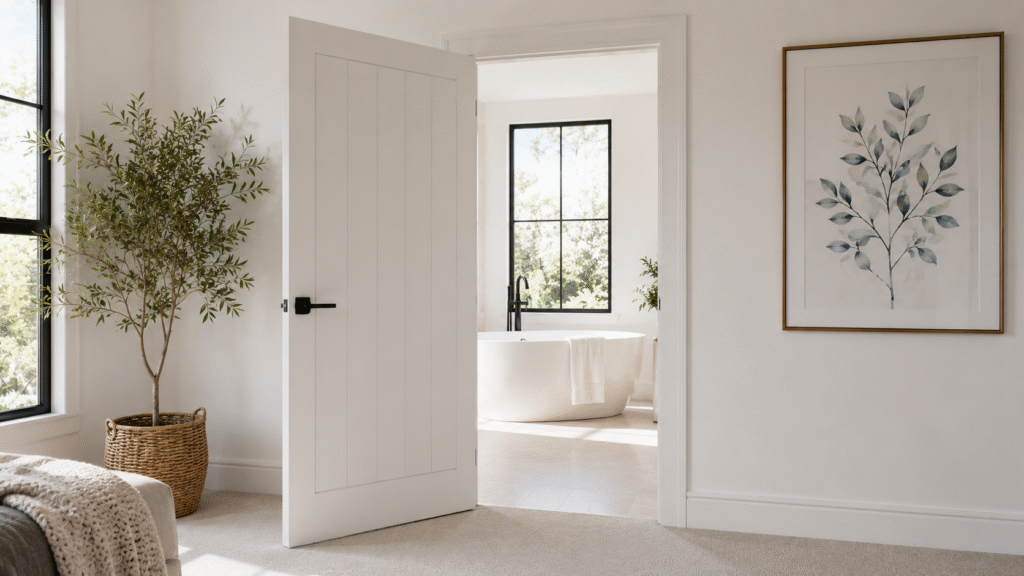
Common Mistakes When Balancing Style and Function
Even experienced project teams can encounter challenges when trying to balance design preferences with practical performance requirements. One of the most common mistakes is allowing aesthetics to drive decisions before key functional needs—such as fire ratings, durability, acoustic performance, and maintenance requirements—have been clearly defined. This often leads to specification revisions later in the project, creating unnecessary costs and procurement delays.
Another challenge arises when projects introduce too many door styles, finishes, or custom configurations in an effort to create variety. While this may enhance visual differentiation, it can also complicate purchasing, inventory management, installation, and future maintenance. Similarly, teams sometimes focus heavily on initial appearance while overlooking long-term ownership considerations, including repair frequency, replacement costs, and finish durability.
Coordination issues can also create significant problems. When architects, builders, suppliers, and procurement teams are not aligned early in the process, inconsistencies between design intent and project requirements may emerge. Fire-rated openings, hardware specifications, accessibility requirements, and finish selections all need to be coordinated before ordering begins. Projects that successfully balance style and function typically achieve this through early planning, clear documentation, and a disciplined approach to standardization.
Frequently Asked Questions About Interior Door Selection
Q: How can builders maintain a cohesive design style across a large-scale project?
A: Builders can ensure design consistency by establishing a standardized library of door specifications. This involves selecting uniform molding profiles, panel configurations, and hardware finishes that apply to every unit, which creates a cohesive visual language while simplifying the procurement process.
Q: Why is it important to prioritize material performance over pure aesthetic trends?
A: While trends in door design are important, material performance—such as fire resistance, moisture durability, and structural integrity—is non-negotiable for project longevity. Prioritizing these functional requirements prevents widespread field failures, maintains compliance with safety codes, and reduces long-term maintenance costs for the property.
Q: How do material choices impact the budget and installation efficiency in bulk projects?
A: Utilizing engineered material alternatives, such as high-quality molded doors, allows builders to achieve a premium look while significantly reducing material costs and freight weight compared to solid wood options. Additionally, these materials offer consistent dimensions that minimize installation time and reduce the need for site adjustments.
Q: What role does early procurement planning play in balancing style and function?
A: Early coordination between architectural design and procurement is essential to ensure that stylistic choices do not conflict with critical functional requirements, such as ADA accessibility or fire-rating standards. Addressing these constraints during the design phase avoids costly change orders and prevents project delays caused by material incompatibility.
Conclusion
In large-scale projects, door selection is rarely just a design decision. Every choice affects procurement, installation, maintenance, and the long-term performance of the building. While style trends continue to evolve, the most successful projects are those that evaluate aesthetics and functionality together rather than treating them as separate priorities.
By defining performance requirements early and aligning them with the project’s design goals, builders can create more consistent door packages, simplify project execution, and avoid many of the challenges that arise later in construction. Ultimately, the goal is not to choose between style and function, but to ensure that both work together to support the overall success of the project.
Articles that you may be interested in:
What to Consider When Choosing Hardware for High-Use Interior Doors