
French doors are widely used in residential and light commercial projects because they bring more natural light into a space while adding an elegant architectural look. Builders and wholesalers often choose French doors for patios, balconies, living rooms, dining rooms, home offices, and interior room dividers.
However, the glass option is one of the most important decisions when selecting French doors. The type of glass affects not only the appearance of the door but also privacy, lighting, cost, maintenance, and overall project suitability.
Among the most common French door glass options, clear glass, frosted glass, and decorative grids are the three choices builders and wholesalers often compare. Each option has different advantages, limitations, and best-use scenarios. Understanding these differences can help buyers choose the right product for the right project.
Clear Glass vs Frosted Glass vs Decorative Grids
| Factor | Clear Glass | Frosted Glass | Decorative Grids |
|---|---|---|---|
| Light Transmission | Highest | Medium to high | High, depending on glass type |
| Privacy Level | Low | High | Medium |
| Visual Style | Clean, open, modern | Soft, private, minimal | Decorative, classic, structured |
| Best For | Patios, living rooms, bright spaces | Bathrooms, offices, bedrooms | Traditional, farmhouse, colonial designs |
| Cost Level | Usually lower | Medium | Medium to higher |
| Maintenance | Easy to clean | May show smudges depending on finish | More grid details to clean |
| Builder Use Case | Standard residential projects | Privacy-focused areas | Design-driven projects |
| Main Risk | Lack of privacy | Less direct visibility | Style may not fit all projects |
In simple terms, clear glass maximizes light and visibility, frosted glass improves privacy while keeping natural light, and decorative grids add architectural detail and design character.
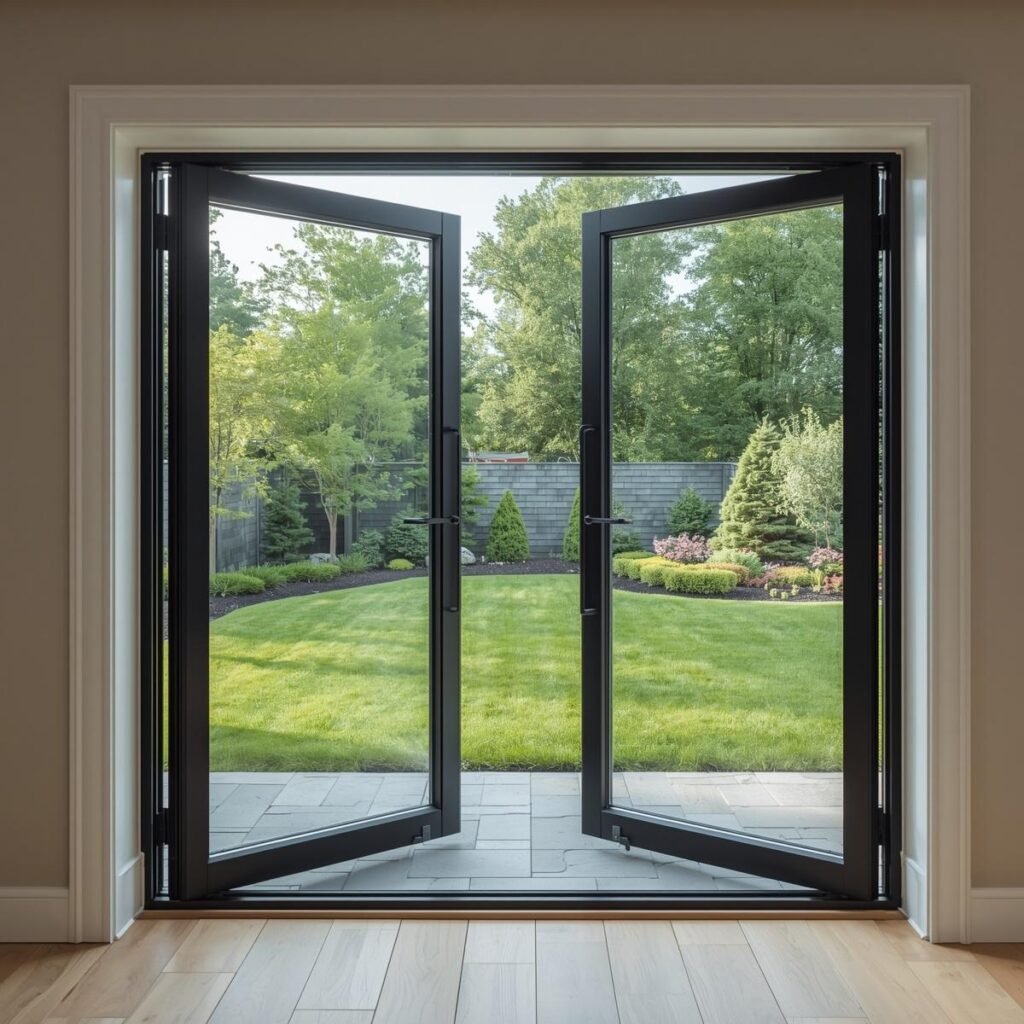
Clear Glass French Doors
Definition
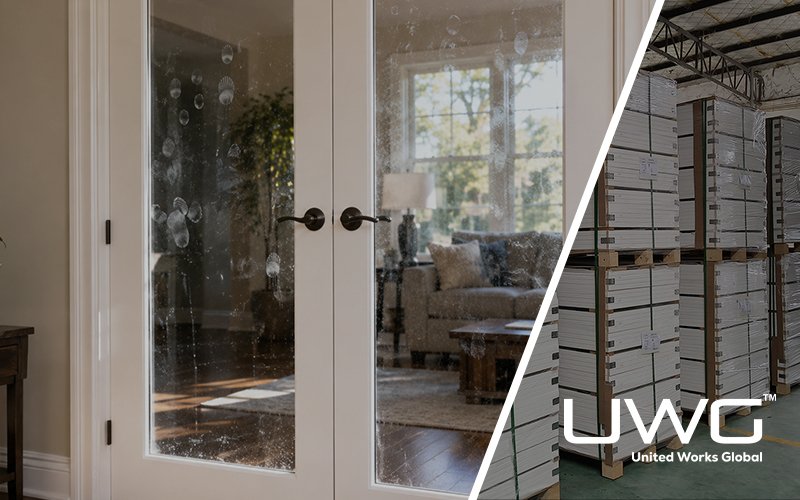
Clear glass French doors use transparent glass panels that allow direct visibility through the door. This is one of the most common and cost-effective French door glass options.
Clear glass is often used when the goal is to create an open, bright, and connected space. It works well for both interior and exterior French doors, especially when privacy is not the main concern.
Advantages of Clear Glass
Clear glass offers the highest level of light transmission. It allows natural light to pass freely between indoor and outdoor spaces or between two interior rooms. This makes the room feel larger, brighter, and more open.
For builders and wholesalers, clear glass is also a practical standard option because it is easy to specify and commonly accepted in many residential projects.
Key benefits include:
- Maximum natural light
- Open and unobstructed view
- Clean and simple appearance
- Suitable for modern and traditional homes
- Usually more cost-effective than specialty glass
- Easy to clean and maintain
- Works well for patios, balconies, living rooms, and dining rooms
Potential Drawbacks of Clear Glass
The main drawback of clear glass is privacy. Since the glass is transparent, it is not ideal for bathrooms, bedrooms, private offices, or spaces where visual separation is needed.
Clear glass may also require additional window treatments such as curtains, blinds, or privacy film. For exterior French doors, builders should also consider energy performance. If the door is exposed to sunlight or outdoor temperature changes, options such as tempered glass, Low-E glass, double glazing, or insulated glass units may be necessary.
Common concerns include:
- Low privacy
- Not suitable for private spaces
- May require curtains or blinds
- Fingerprints, dust, and water marks are more visible
- Exterior applications may need energy-efficient glass options
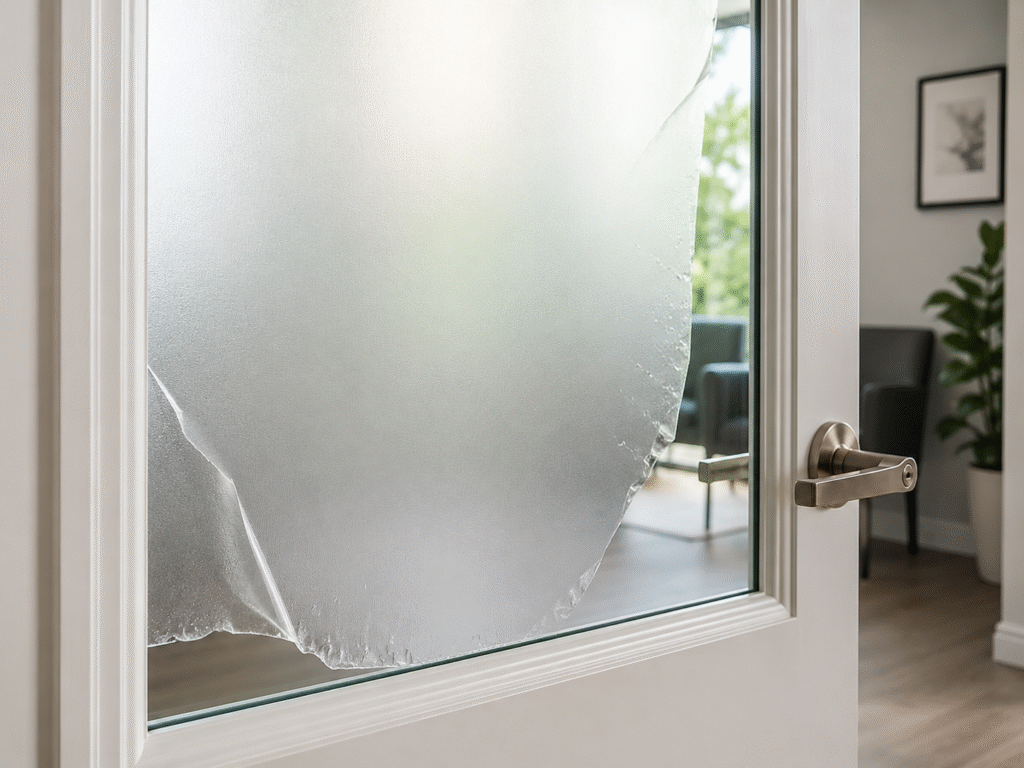
Frosted Glass French Doors
Definition
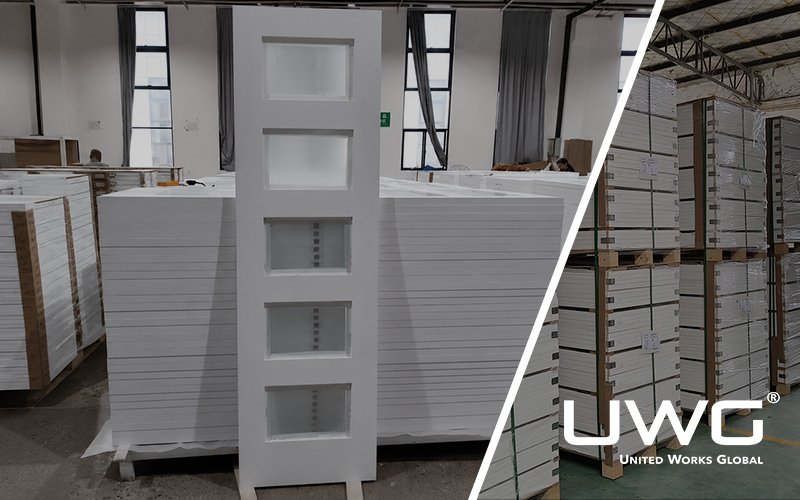
Frosted glass French doors use glass with a surface treatment that reduces visibility while still allowing light to pass through. The frosted effect can be created through etching, sandblasting, acid treatment, textured glass, or film application.
Frosted glass is commonly used when a space needs both light and privacy.
Advantages of Frosted Glass
The biggest benefit of frosted glass is privacy. It blocks direct visibility while still allowing natural light to enter the space. This makes it useful for rooms where privacy is needed but a solid door would feel too closed or dark.
Frosted glass also provides a softer visual effect than clear glass. It can make a space feel cleaner, calmer, and more modern.
Key benefits include:
- Better privacy than clear glass
- Still allows natural light
- Soft and modern appearance
- Reduces the need for curtains or blinds
- Suitable for bathrooms, bedrooms, offices, and clinics
- Good option for interior French doors in private areas
Potential Drawbacks of Frosted Glass
Frosted glass does not provide the same open view as clear glass. If the project goal is to connect indoor and outdoor views, frosted glass may not be the best option.
Cost can also be higher than standard clear glass, depending on the treatment method. Some frosted surfaces may show fingerprints, smudges, or water marks more easily. If the frosted effect is created by film instead of permanent glass treatment, long-term durability should be reviewed carefully.
Common concerns include:
- Less direct visibility
- Usually higher cost than clear glass
- Some surfaces may show smudges
- Frosted effect may vary between suppliers
- Film-applied frosted glass may age or peel over time
- Batch consistency matters for bulk orders
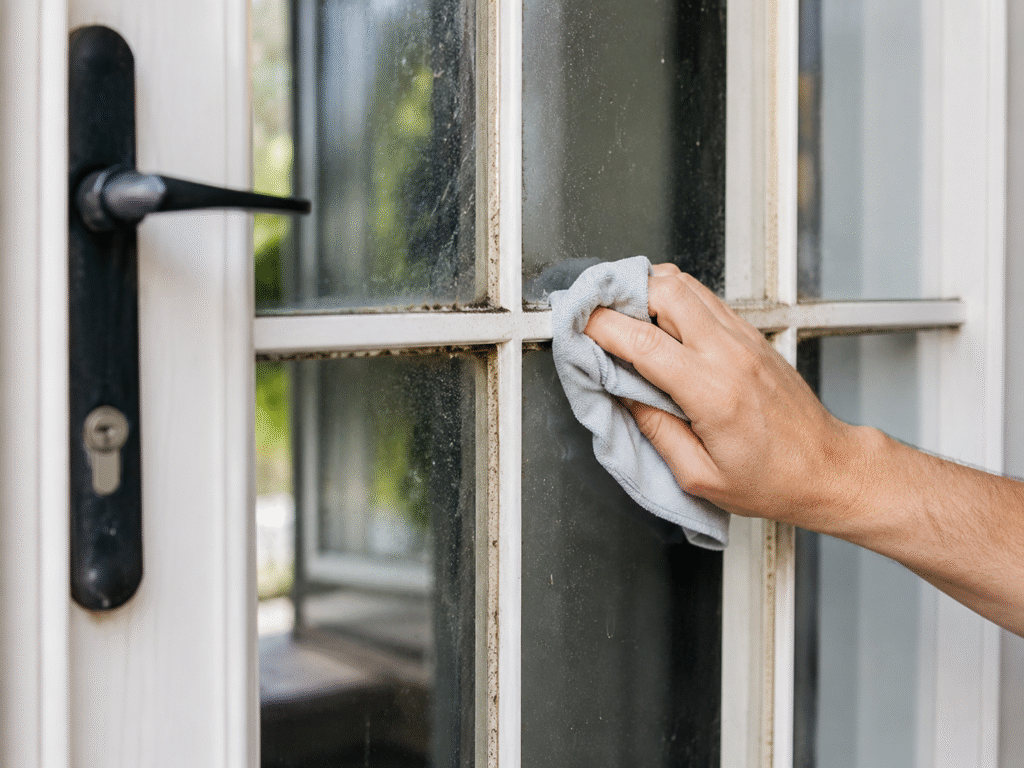
Decorative Grid French Doors
Definition
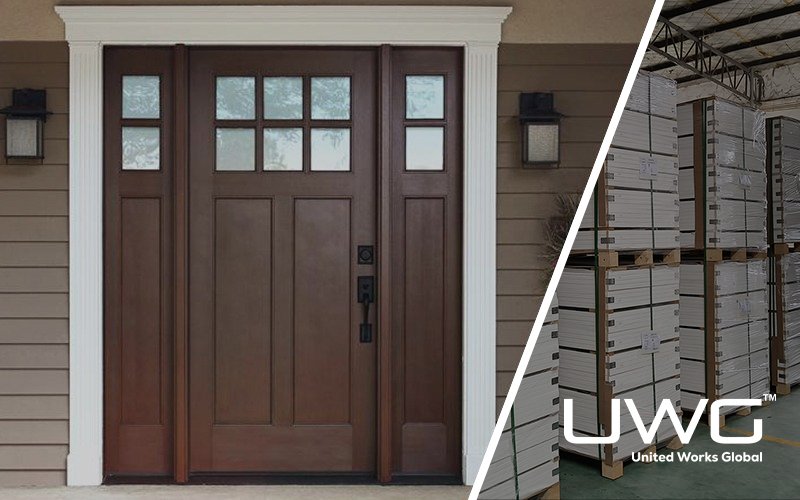
Decorative grid French doors include muntins or grille patterns that divide the glass visually into smaller sections. These grids can be placed between the glass panes, applied on the glass surface, or built as true divided lites.
Decorative grids are used to add architectural detail and create a more classic or structured appearance.
Common Grid Types
Common decorative grid options include:
- GBG, or grids between glass: The grid is sealed between glass panes, making cleaning easier.
- SDL, or simulated divided lite: The grid is applied to the glass surface to create the appearance of separate panes.
- TDL, or true divided lite: Each section has separate glass pieces, often used in higher-end or traditional designs.
- Surface-applied grids: Grids are attached to the surface of the glass and may be removable or fixed.
Advantages of Decorative Grids
Decorative grids add visual detail and architectural character. They are especially popular in traditional, farmhouse, colonial, and classic residential projects.
For builders, grid French doors can help create a stronger design identity. They are also useful in model homes, front entries, patios, and feature areas where the door is part of the visual design.
Key benefits include:
- Strong decorative effect
- Classic and structured appearance
- Suitable for farmhouse, colonial, and traditional homes
- Adds architectural detail to large glass areas
- Can improve perceived product value
- Works well in design-focused residential projects
Potential Drawbacks of Decorative Grids
Decorative grids may cost more than plain clear glass, depending on the grid type and design. They may also require more careful cleaning, especially if the grids are applied on the surface.
Another important factor is style compatibility. Decorative grids may look attractive in traditional or farmhouse homes, but they may not fit minimal or modern projects. If the grid pattern is poorly made or inconsistent, the door can look low-quality.
Common concerns include:
- Higher cost than standard clear glass
- More details to clean if grids are surface-applied
- Not suitable for every design style
- Poor grid alignment can affect appearance
- Grid pattern must remain consistent in bulk projects
- Some grid types may increase production complexity
How to Choose the Right Glass Option for Your Project
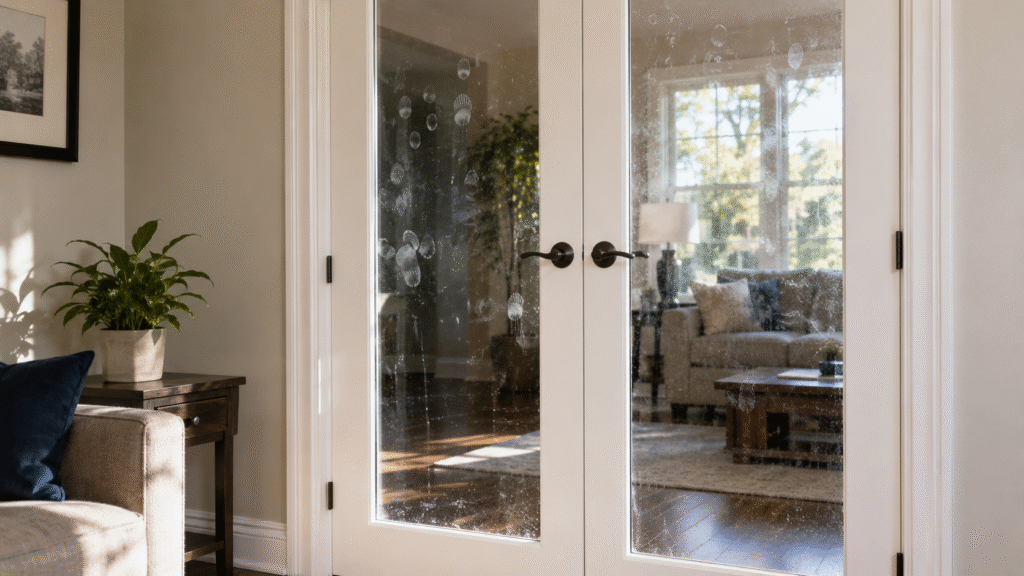
Choosing the right French door glass option depends on the project’s function, design style, budget, and target market.
If the Project Prioritizes Natural Light
Choose clear glass.
This is the best option for patios, balconies, living rooms, dining rooms, sunrooms, and open spaces. It helps maximize daylight and create a more spacious feeling.
If the Project Requires Privacy
Choose frosted glass.
This option works well for bathrooms, bedrooms, home offices, clinics, laundry rooms, and apartment interiors. It provides privacy without making the room feel dark.
If the Project Needs Architectural Character
Choose decorative grids.
Decorative grids are suitable for farmhouse, colonial, traditional, or design-driven projects. They are especially effective in feature spaces where the French door is part of the overall design statement.
If the Project Is Budget-Sensitive
Clear glass is usually the most economical option. However, for exterior French doors, builders should still confirm glass safety and energy requirements, such as tempered glass, Low-E coating, or insulated glass units.
If the Project Is for Bulk Residential Supply
For bulk orders, consistency is critical. Builders and wholesalers should confirm glass type, grid layout, privacy level, door size, packaging, and repeat order availability before finalizing production.
Frequently Asked Questions About French Door Glass Options
Q: Why choose clear glass for French doors?
A: Clear glass is the ideal choice for creating a sense of openness and maximizing natural light. It is commonly used in spaces where you want to maintain a seamless visual connection between rooms, such as between a living room and a patio or a formal dining area and a kitchen.
Q: When is frosted glass the better option for French door installations?
A: Frosted (or obscured) glass is best for areas where privacy is the primary requirement while still allowing light to filter through. It is highly effective for home offices, bathrooms, or bedrooms where you want to partition a space without sacrificing brightness or creating a “closed-off” feeling.
Q: How do decorative grids (lites) impact the design of French doors?
A: Decorative grids add a classic, architectural character to French doors, often evoking a traditional or Craftsman-style aesthetic. They break up the glass area into smaller lites, which can help integrate the door design with the window patterns throughout the rest of the building.
Q: Can I combine these glass options within a single project?
A: Yes, specifying the right glass type based on room function is a common design strategy. For example, a builder might use clear glass for common areas to promote flow and use frosted glass for private home offices or interior suites to ensure occupant privacy, all while maintaining a cohesive look through matching door profiles.
Conclusion
French door glass options should be selected based on how the space will be used, not only based on appearance.
For builders and wholesalers, the best choice depends on project positioning, privacy needs, design style, glass performance, and long-term customer expectations. A well-selected glass option can improve both the function and perceived value of the French door system.
Articles that you may be interested in: