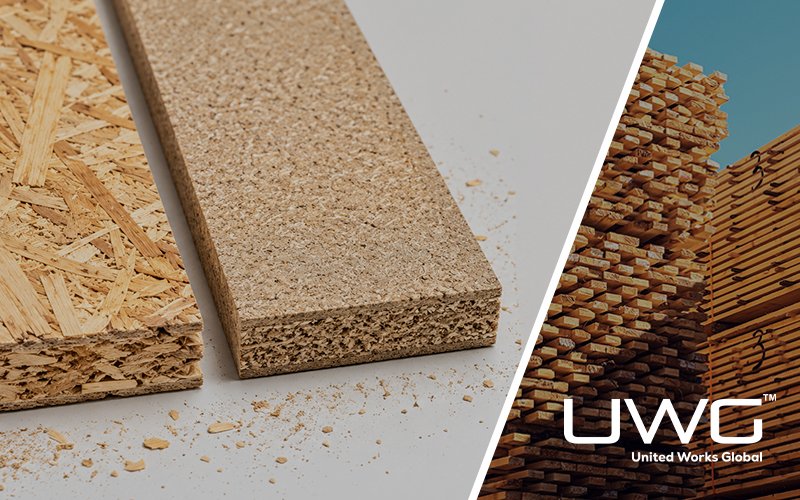
Engineered wood products have become essential materials in modern construction, furniture manufacturing, and interior design. Among the most widely used options are Oriented Strand Board (OSB) and Particle Board. Although both products are manufactured from wood-based materials and adhesives, they differ significantly in structure, strength, moisture resistance, applications, and overall performance.
Because they are often less expensive than solid wood and plywood, many homeowners, contractors, builders, and furniture manufacturers compare OSB and particle board when selecting materials for flooring, wall sheathing, cabinetry, furniture, and other projects. However, choosing the wrong material can lead to reduced durability, moisture damage, or unnecessary costs.
What Is OSB?
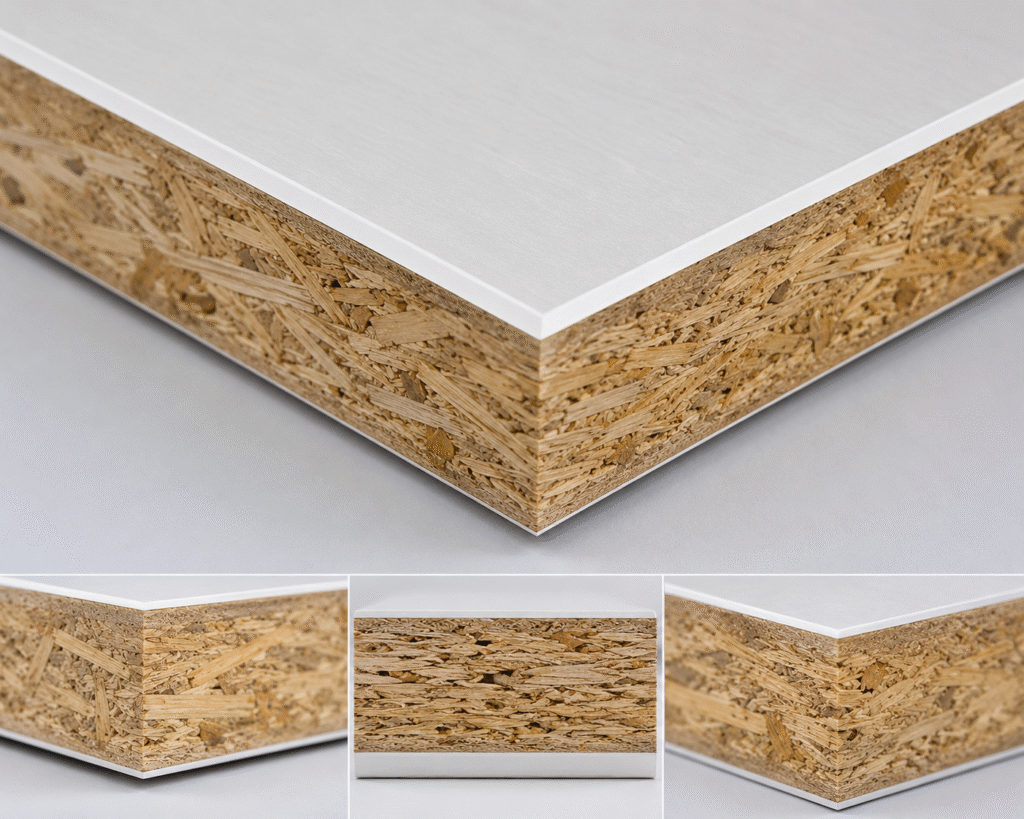
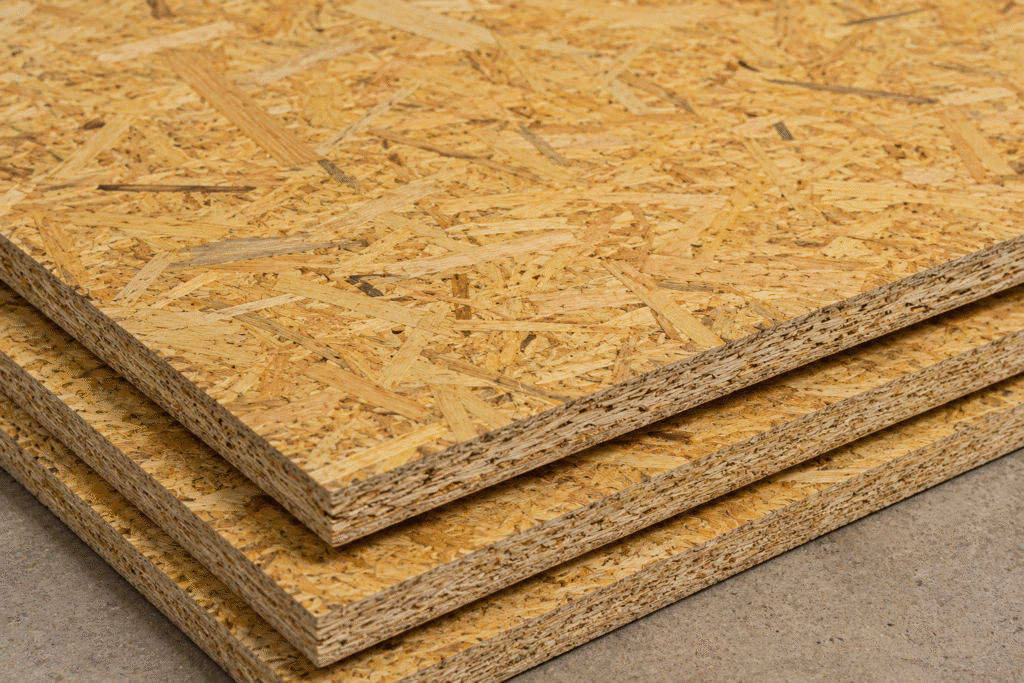
OSB, or Oriented Strand Board, is an engineered wood panel made from large wood strands that are arranged in specific orientations and bonded together under heat and pressure.
The manufacturing process involves:
- Cutting wood into long strands
- Aligning strands in multiple layers
- Applying waterproof adhesives and wax
- Compressing the layers under high pressure
The orientation of the wood strands gives OSB excellent structural strength and load-bearing capacity.
Common Applications of OSB
- Wall sheathing
- Roof decking
- Subflooring
- Structural panels
- Residential construction
- Commercial construction
Because of its strength and affordability, OSB has become one of the most widely used structural panel products in North America.
What Is Particle Board?
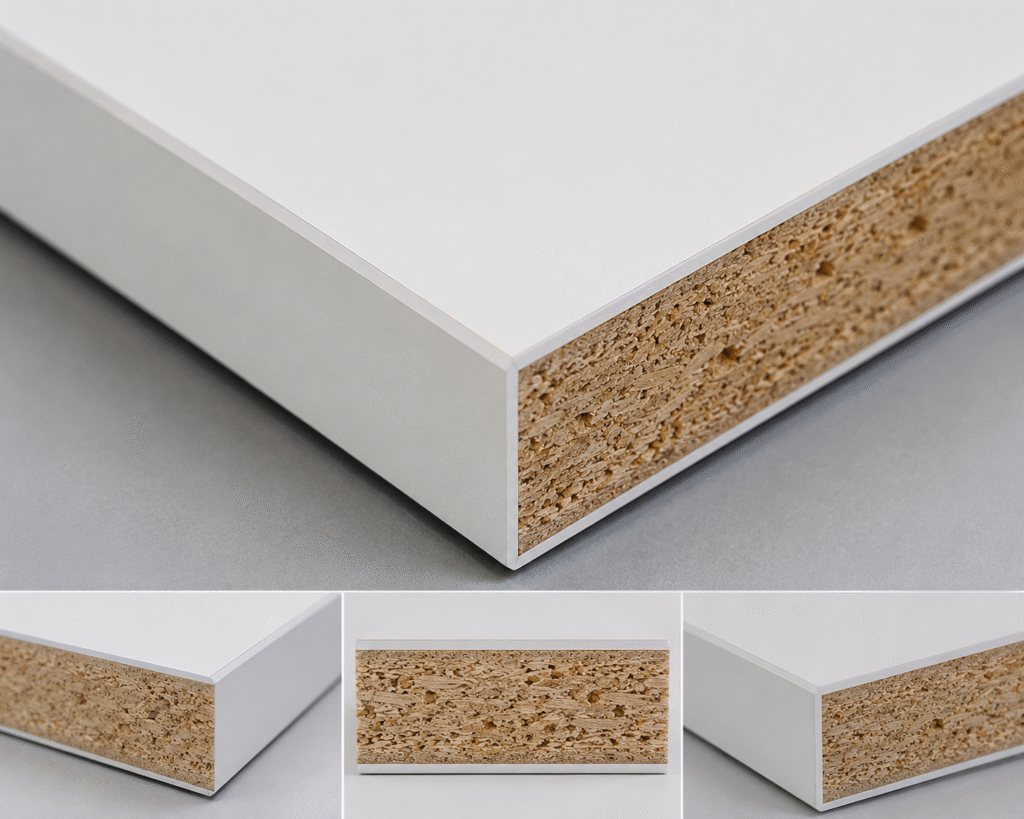
Particle board, sometimes called chipboard, is an engineered wood product made from small wood particles, wood chips, and sawdust bonded together with resin and compressed into panels.
Unlike OSB, particle board does not have an organized strand structure.
The manufacturing process includes:
- Collecting wood waste materials
- Mixing particles with resin
- Compressing the mixture into flat panels
- Sanding the surface smooth
The result is a dense and smooth panel that is ideal for furniture and decorative applications.
Common Applications of Particle Board
- Ready-to-assemble furniture
- Cabinets
- Shelving
- Countertop substrates
- Interior furniture components
- Decorative laminated panels
Particle board is widely used because of its low cost and smooth surface.
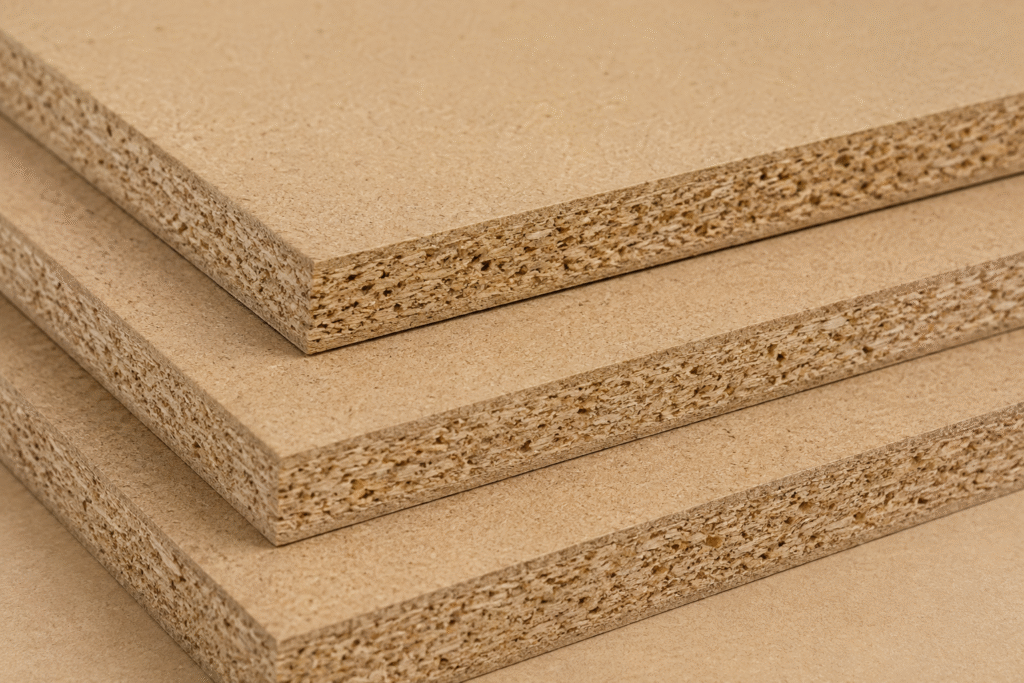
OSB vs. Particle Board: Key Differences
Manufacturing Structure
The most important difference lies in how the materials are constructed.
OSB uses large wood strands arranged in layers, creating a strong internal structure.
Particle board uses random wood particles and sawdust, resulting in lower structural integrity.
Strength and Load Capacity
OSB is significantly stronger than particle board.
Because the wood strands are oriented strategically, OSB can withstand greater loads and structural stress.
Particle board is more brittle and can crack or break under heavy loads.
Moisture Resistance
OSB generally performs better in humid environments.
Modern OSB panels use moisture-resistant adhesives and wax treatments that help reduce water absorption.
Particle board absorbs moisture quickly and may swell, warp, or lose strength when exposed to water.
Surface Quality
Particle board has a smoother and more uniform surface than OSB.
This makes it ideal for:
- Lamination
- Veneering
- Painting
- Furniture manufacturing
OSB’s textured strand surface is less suitable for decorative finishes.
OSB vs. Particle Board Comparison Table
| Feature | OSB | Particle Board |
|---|---|---|
| Material Structure | Oriented wood strands | Wood particles and sawdust |
| Strength | High | Moderate to low |
| Structural Use | Yes | No |
| Moisture Resistance | Good | Poor |
| Load Capacity | High | Low |
| Surface Smoothness | Rough | Smooth |
| Furniture Applications | Limited | Excellent |
| Construction Applications | Excellent | Limited |
| Cost | Moderate | Low |
| Durability | High | Moderate |
Advantages and Disadvantages of OSB
Advantages
- High structural strength
- Good load-bearing performance
- Better moisture resistance
- Cost-effective alternative to plywood
- Widely accepted in construction
Disadvantages
- Rough surface appearance
- Heavier than some alternatives
- Edges may swell if exposed to excessive moisture
Advantages and Disadvantages of Particle Board
Advantages
- Lower cost
- Smooth surface
- Easy to laminate and veneer
- Consistent thickness and density
Disadvantages
- Poor moisture resistance
- Lower structural strength
- Shorter lifespan under heavy use
- Fasteners may loosen over time
Which Is Better?
The answer depends on the application.
Choose OSB If You Need:
- Structural performance
- Subflooring
- Roof decking
- Wall sheathing
- Construction-grade durability
- Better moisture resistance
Builders and contractors typically prefer OSB for construction projects because it offers a strong balance of performance and affordability.
Choose Particle Board If You Need:
- Budget-friendly furniture
- Cabinet interiors
- Shelving
- Decorative laminated panels
- Smooth finishing surfaces
Furniture manufacturers often select particle board because it provides a flat and economical substrate for laminates and veneers.
How to Make the Strategic Choice
From a building and construction perspective, OSB is generally the superior material due to its strength, durability, and moisture resistance. This is why it is commonly used in structural applications throughout North America.
However, particle board remains a practical and cost-effective solution for indoor furniture and decorative products where structural strength is not a primary concern.
Before selecting either material, consider:
- Load requirements
- Moisture exposure
- Intended application
- Budget constraints
- Expected service life
Choosing the right material based on actual project needs will deliver better performance and long-term value.
Conclusion
While OSB and particle board are both engineered wood products, they serve different purposes. OSB is designed primarily for structural applications and offers superior strength, durability, and moisture resistance. Particle board is designed for furniture and interior applications where cost savings and smooth surfaces are more important than structural performance.
For construction projects, subflooring, wall sheathing, and roofing, OSB is generally the better choice. For furniture, cabinetry, and decorative interior products, particle board remains an economical and practical option.
Understanding the strengths and limitations of each material allows builders, manufacturers, and homeowners to make informed decisions and select the best product for their specific needs
Frequently Asked Questions About OSB and Particle Board
Q: What is the main structural difference between OSB and particle board?
A: The main difference lies in their composition. OSB is engineered from large wood strands oriented in multiple strategic layers and bonded under high pressure, which provides excellent structural strength. Particle board is manufactured from random, unorganized wood particles, chips, and sawdust compressed with resin, yielding a uniform density but lower structural integrity.
Q: Can particle board be used for structural applications like wall sheathing or subflooring?
A: No, particle board is not rated for structural use. It has low load-bearing capacity and can crack or break under heavy structural stress. OSB is specifically designed and widely accepted in North America for structural panels, wall sheathing, subflooring, and roof decking.
Q: How do OSB and particle board compare regarding moisture resistance?
A: OSB offers much better moisture performance because modern panels use moisture-resistant adhesives and wax treatments to reduce water absorption. Particle board has poor moisture resistance; it absorbs water quickly, which can cause it to swell, warp, or lose its structural strength when exposed to humidity or liquid water.
Q: Why do cabinet and furniture manufacturers prefer particle board over OSB?
A: Particle board features an exceptionally smooth, flat, and uniform surface, making it an excellent, low-cost substrate for lamination, veneering, painting, and interior shelving. OSB has a rough, textured strand appearance that makes it less suitable for decorative decorative finishes.
Articles that you may be interested in:
Plywood vs. Particle Board Cabinets: Which Is Better for Your Project?
What Is S4S Wood and Why Builders Prefer It for Trim Boards?